- LET'S PLAN YOUR SAFARI
- +256 200 921 002
- +256 793 194 703
- info@pickandtransfersafaris.com

Gorilla Trekking in Uganda Without Flying to Entebbe
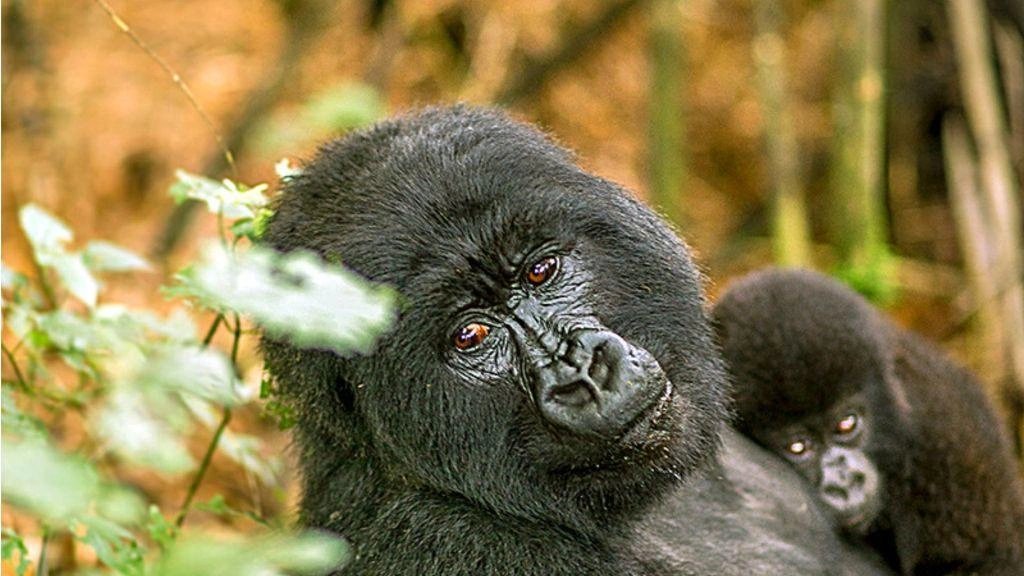
Gorilla Trekking in Uganda Without Flying to Entebbe. Almost every Uganda gorilla trekking guide assumes you’ll be flying into Entebbe International Airport, and for travellers heading straight to Kampala or planning a long, multi-park Uganda circuit, that’s often the right assumption. But if gorilla trekking is the actual reason for your trip, flying into Entebbe can mean landing at the wrong end of the country entirely. Uganda’s gorilla parks sit in the far southwest, and Entebbe is a further eight to nine hours’ drive beyond them. Fly into Kigali instead, and you’re only two to five hours from the same trek — no Entebbe landing, no Kampala transit, and no wasted day spent simply getting into position.
Why Entebbe Isn’t the Obvious Choice It Seems
Entebbe makes sense as an entry point when Uganda itself, rather than one specific corner of it, is the destination — travellers building a longer circuit through Murchison Falls, Kampala, or the country’s central and eastern regions genuinely benefit from starting there. But Mgahinga Gorilla National Park and Bwindi Impenetrable Forest sit at the opposite end of the country from Entebbe, close enough to the Rwandan border that flying into Kigali and driving the rest of the way is, for a huge number of travellers, both faster and cheaper than the Entebbe alternative.
The maths is straightforward once it’s laid out: from Kigali, Mgahinga is two to three hours away and Bwindi is four to five. From Entebbe or Kampala, the same two parks are eight to nine hours away. If your entire Uganda visit is built around a single gorilla trek, that difference is the whole trip.
What Flying Into Kigali Actually Involves
Landing at Kigali International Airport puts you in Rwanda, not Uganda, which means your gorilla trek involves an overland border crossing rather than a domestic transfer. This is entirely routine — the Cyanika and Gatuna (Katuna) border posts handle exactly this kind of crossing daily, and Ugandan and Rwandan operators alike are set up to manage the paperwork and timing as standard practice. You’ll need a valid passport, the appropriate Uganda visa arrangement for your nationality — either a standard visa or the East Africa Tourist Visa, both of which can typically be arranged in advance — and a current yellow fever vaccination certificate, all of which apply whether you enter Uganda by air at Entebbe or overland at either border post.
The Cost Advantage That Comes With It
Choosing Kigali over Entebbe as your entry point often lines up with the other major cost saving available on this route: Uganda’s gorilla permit costs USD 800 per person, against Rwanda’s USD 1,500 equivalent at Volcanoes National Park. Travellers flying into Kigali specifically to save on the permit are, by definition, also avoiding Entebbe, and the two decisions reinforce each other — a shorter, cheaper flight into Rwanda, followed by a shorter, cheaper overland trip to the gorillas, rather than a longer flight into Uganda followed by a long drive across the country.
What the Trip Actually Looks Like
Once you’ve landed in Kigali, the structure of the trip is the same regardless of which Uganda park you’re heading to. For Mgahinga, a two-to-three-hour drive gets you to Ntebeko Gate, either as a single-day round trip or with one overnight near the park for a more comfortable schedule. For Bwindi, the four-to-five-hour drive to the southern Rushaga or Nkuringo sectors makes a two-day minimum the sensible structure, given the additional time on the road. In both cases, the trek itself follows the same format as it would from any other starting point — an early briefing, a search through the forest guided by rangers and trackers, and a strict one-hour encounter once the family is located.
Flying Directly Into a Bwindi Airstrip Instead
For travellers who’d rather avoid a long overland drive entirely, there’s a third option worth knowing about: charter flights connect Kigali to small airstrips near Bwindi, cutting the transfer down to roughly an hour in the air rather than half a day on the road. This costs more than the overland route but still avoids Entebbe altogether, and it’s a genuine option for travellers with limited time or a strong preference for minimising road travel, without requiring a return to flying via Uganda’s own capital.
When Entebbe Still Makes Sense
None of this is an argument that Entebbe is the wrong choice for every traveller. If your Uganda plans extend well beyond the gorillas — Queen Elizabeth National Park, Kibale Forest National Park, Murchison Falls, or Kampala itself — flying into Entebbe and building a longer circuit that finishes at the gorilla parks, or starts there and continues onward, often makes more sense than routing everything through a Rwandan border crossing. The Kigali route earns its advantage specifically when the gorillas are the primary or sole focus of the trip, and starts to matter less the more of the rest of Uganda you intend to see.
Practical Considerations Before You Book
If you’re planning to fly into Kigali rather than Entebbe, it’s worth confirming a few things ahead of time. Check your Uganda visa or East Africa Tourist Visa arrangements early, since these need to be sorted before you reach the border rather than assumed on arrival. Confirm which border crossing your itinerary is routed through — Cyanika for Mgahinga and southern Bwindi, or Gatuna for a more direct route toward Kabale and Bwindi’s northern sectors — since this affects both your drive time and which sector your gorilla permit is likely to be allocated to. And build in a little schedule flexibility around the crossing itself, since border processing times, while generally straightforward, aren’t always perfectly predictable.
Making the Logistics Work Smoothly
Because this route involves an international border crossing rather than a single domestic transfer, coordinating the permit, the cross-border transfer, and any accommodation through an operator experienced with this specific route removes most of the uncertainty that comes with piecing together flights, a border crossing, and a gorilla permit independently. This matters more here than it would for a straightforward Entebbe arrival, simply because there are more moving parts involved in getting from one country’s airport to another country’s forest.
Is Skipping Entebbe the Right Call for You
If gorilla trekking is the primary reason for your Uganda visit, flying into Kigali rather than Entebbe is very often the better decision — shorter flights, shorter drives, a cheaper permit, and none of the wasted time spent crossing a country you weren’t planning to explore in the first place. It only stops making sense once your Uganda itinerary grows to include destinations that genuinely sit closer to Entebbe than to the Rwandan border, at which point the calculation shifts back in Uganda’s own capital’s favour.
If you’re weighing up Kigali against Entebbe for your own trip, get in touch with our travel experts and we’ll help you figure out which entry point actually makes sense given everything else you want to see. Our destinations page covers both Uganda’s gorilla parks and the wider circuit beyond them, whichever direction your trip ends up taking.