- LET'S PLAN YOUR SAFARI
- +256 200 921 002
- +256 793 194 703
- info@pickandtransfersafaris.com

Group Gorilla Safaris in Uganda Starting from Kigali
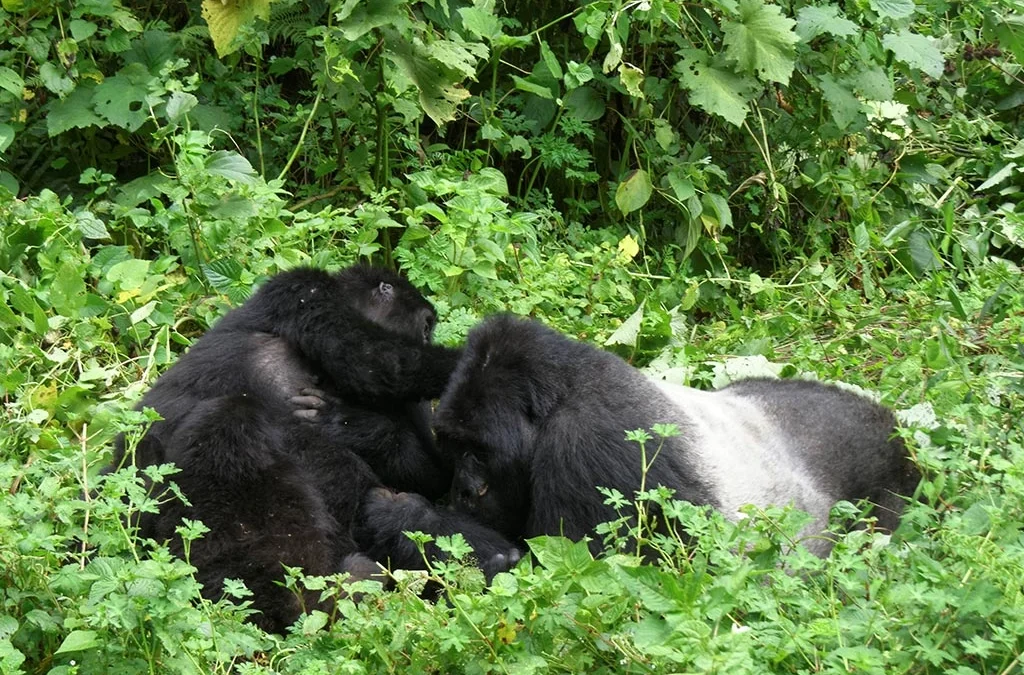
Group Gorilla Safaris in Uganda Starting from Kigali. Kigali has become the practical starting point for a surprising number of Uganda gorilla treks — not because the gorillas are in Rwanda, but because Kigali International Airport is often the easiest, most direct way to reach this part of the continent, with better long-haul connections than many travelers realize. From there, it’s a manageable drive across the Cyanika border into southwestern Uganda, putting Mgahinga and Bwindi’s gorilla families within a day or two of touchdown. Add a genuine group departure to that already-efficient routing, and the combination becomes one of the more cost-effective ways to experience Uganda gorilla trekking without either sacrificing the lower Uganda permit price or paying for a fully private vehicle alone.
“Group” gorilla safari is a phrase that gets used loosely in this industry, and it’s worth understanding exactly what it means before you book, because it affects both your price and your experience. This guide covers what a group gorilla safari from Kigali actually looks like, the real difference between the group you trek with and the group you travel with, and how to find a genuine cost-sharing departure rather than a private trip marketed with group-friendly language. For the full range of options, start with our gorilla safaris overview.
Why Start a Uganda Gorilla Safari from Kigali
Kigali International Airport carries more direct long-haul connections than Uganda’s Entebbe for travelers coming from parts of Europe, the Middle East, and North America, and Rwanda’s straightforward, efficient visa and entry process makes it a genuinely convenient port of entry even when your actual trekking happens across the border. Add in Kigali’s short, easy drive to the Cyanika crossing — considerably shorter than the drive from Entebbe to Bwindi — and starting a Uganda gorilla trip from Kigali becomes less of a workaround and more of a deliberate, efficient routing choice.
This is exactly why products like this 1-day Uganda gorilla safari starting from Kigali and this 2-day Uganda gorilla tour from Kigali exist as named itineraries in their own right, rather than as an afterthought bolted onto a Rwanda trip. For travelers who want Uganda’s lower permit price without giving up Kigali’s convenience as an entry point, this routing genuinely delivers both.
What “Group Gorilla Safari” Actually Means
This phrase covers two genuinely different things, and conflating them is where most confusion starts. The first meaning is the trekking group — the cluster of up to 8 visitors the Uganda Wildlife Authority assigns to a single gorilla family on trek day, regardless of how each individual booked their trip. You could arrive in eight separate private vehicles, from eight separate operators, and still end up trekking together as one UWA-assigned group once you reach the forest.
The second meaning is the travel group — a set of travelers who share a vehicle, driver-guide, and itinerary from departure to return because they booked together, or because an operator pooled several separate bookings into one shared departure to split costs. This is what most people actually mean when they ask about a “group safari,” and it’s the one that genuinely affects price. The rest of this guide focuses on the travel group, since the trekking group forms automatically regardless of what you book.
The Trekking Group vs the Travel Group: Why the Distinction Matters
Understanding this split matters because it changes what you should actually be asking a tour operator when they advertise a “group” gorilla safari. Every trekker, private or shared, joins the same kind of UWA-assigned trekking group at the trailhead — so asking “will I be trekking with other people” isn’t really the useful question, since the answer is almost always yes regardless of how you booked.
The useful question is “will I be sharing my vehicle, driver-guide, and transport costs with other travelers,” because that’s the part that determines your price. A private trip, like the 1-day and 2-day Kigali-start itineraries referenced above, means your own dedicated 4×4 and driver-guide for the full route, at a correspondingly higher per-person price if you’re travelling alone or as a couple. A genuine shared group departure pools multiple bookings onto one vehicle and one guide, splitting that cost across everyone on board.
How Joining a Scheduled Group Departure Saves You Money
The savings from a genuine shared departure come almost entirely from the vehicle and driver-guide cost, which is charged per day rather than per person and would otherwise be paid in full by a solo traveler or couple. Spread across four to eight travelers instead of one or two, that daily cost per person drops substantially, while lodging and the permit itself — the two costs that don’t scale with group size — stay the same regardless.
Operators running genuine scheduled group departures typically require a minimum number of confirmed travelers before a date is locked in, commonly around five people, and price the trip per person once that threshold is met. Kenlink Tours’ group tours page describes this model directly, with scheduled departures priced per person once a group of five or more is confirmed — a structure worth asking about specifically if cost-sharing, not just companionship, is your goal in seeking out a group option.
1-Day Group Gorilla Safari from Kigali: What It Looks Like
The 1-day option is the most intense version of this route and works specifically because Mgahinga Gorilla National Park sits close enough to the Cyanika border to make a single, very long day feasible. A typical schedule departs Kigali around 3:00–3:30 a.m., crosses into Uganda by roughly 6:30–7:00 a.m., reaches Mgahinga park headquarters for briefing by 7:30–8:00 a.m., treks from 8:00 a.m. to around 1:00 p.m., and returns to Kigali by early evening — a genuinely full 14 to 16-hour day.
As currently offered, this route is priced and run as a private trip — around US$1,100 per person as a starting rate on this 1-day itinerary — reflecting the dedicated vehicle needed to make such a tight schedule work reliably. Because the day is so tightly timed, a shared group departure on this specific route needs everyone in the group ready to move on exactly the same early-morning schedule, which is one reason 1-day itineraries are less commonly run as pooled departures than longer trips with more built-in flexibility.
2-Day Group Gorilla Safari from Kigali: What It Looks Like
The 2-day version relaxes the schedule considerably and heads to Bwindi rather than Mgahinga, giving access to a wider range of habituated families. A typical structure: depart Kigali mid-morning on Day 1, cross at Cyanika, and arrive at a lodge in Bwindi’s Rushaga or Nkuringo sector by early afternoon, with time for an optional community walk before dinner. Day 2 starts with an early breakfast and a 7:00 a.m. ranger briefing, followed by the trek itself, then the return drive to Kigali that evening.
This route is offered as a private trip on both sides — our own 2-day itinerary from roughly US$1,200 per person, and Kenlink Tours’ comparable 2-day Uganda gorilla safari from Kigali, which lists the Uganda gorilla permit’s US$800 base cost separately within its package. Both note that per-person pricing improves for larger travelling parties, which is the practical entry point into group-rate savings on this exact route even without a formally advertised shared departure.
3+ Day Group Gorilla and Wildlife Safaris from Kigali
Extending beyond two days opens up genuinely more flexible group logistics, since a longer itinerary has more built-in buffer for coordinating multiple travelers’ arrival times and preferences. A 3-day route crossing at Cyanika into Bwindi, similar to Kenlink Tours’ 3-day Bwindi gorilla safari from Kigali, adds a buffer day that makes it considerably easier to pool several travelers onto one shared vehicle without everyone needing to land in Kigali at the exact same hour.
Longer still, a route like this 5-day Uganda gorilla and chimps safari starting from Rwanda or Kenlink Tours’ 5-day Uganda-Rwanda double gorilla safari adds a second trek and savannah wildlife, and is exactly the kind of multi-day itinerary where genuine scheduled group departures are most commonly run, since the extra days absorb the logistics of pooling travelers far more comfortably than a tightly timed 1 or 2-day route.
At the longer end, a week-plus itinerary such as this 7-day Uganda safari or Kenlink Tours’ 10-day Uganda-Rwanda combining safari typically adds Queen Elizabeth National Park and sometimes chimpanzee tracking alongside the gorilla trek, and these longer, more varied routes are where genuine scheduled group departures are most reliably published with fixed calendar dates, since the itinerary has enough natural flexibility to absorb travelers arriving from different directions.
The Cyanika Border Crossing for Group Departures
Nearly every Kigali-starting Uganda gorilla itinerary, private or group, uses the Cyanika border post rather than the busier Katuna crossing further east, since Cyanika sits closest to both Mgahinga and Bwindi’s southern sectors (Rushaga and Nkuringo). It’s a comparatively quiet crossing, and border formalities for a group travelling together on one operator’s paperwork are generally straightforward, with your driver-guide handling the bulk of the process.
Travelling as a group through the border doesn’t meaningfully change the crossing process itself — each traveler still needs their own passport, visa, and yellow fever certificate checked individually — but it does mean the whole group needs to be present and ready at the same time, since one vehicle waits for all its passengers rather than processing them separately. This is worth factoring in if your group includes travelers arriving in Kigali on different flights the night before, since everyone needs to be at the departure point together, not trickling in over the course of the morning.
Cost Comparison: Solo Private vs Group Departure
Putting real numbers against this makes the savings concrete. On a 2-day Kigali-start Uganda gorilla itinerary priced privately around US$1,200 per person, roughly US$700–850 of that reflects the gorilla permit itself (fixed regardless of group size), leaving the remainder covering the dedicated vehicle, driver-guide, fuel, and one night of accommodation. For a solo traveler, that remaining few hundred dollars is carried entirely alone.
Spread across a shared group of five to six travelers instead, that same vehicle-and-guide cost — commonly in the US$150–250 per day range for the route — divides down to a fraction of what a solo traveler pays, often bringing the per-person total for the non-permit portion of the trip down by 40–60%. The permit cost stays identical either way, which is exactly why the savings from group travel show up most dramatically for solo travelers and couples, and why the percentage saving shrinks the larger your own private travelling party already is.
What’s Included in a Group Package (and What Isn’t)
A well-structured group package covers the same core elements as a private one: the gorilla permit, shared ground transport with a driver-guide, accommodation for the itinerary’s length, specified meals, bottled water, and government taxes. What changes is simply how the vehicle and guide cost is divided — split across the group rather than carried by one traveler or couple alone.
What typically isn’t included, regardless of group or private booking: international flights, visa fees, tips for your guide and rangers, porter fees, travel insurance, and personal items. It’s worth getting an itemized breakdown from any operator advertising a “group” rate, specifically confirming whether the quoted price already assumes a full group is confirmed or is contingent on enough other travelers joining — a distinction that affects whether your quoted price is guaranteed or provisional. Kenlink Tours’ Uganda safari packages generally lay this out clearly per itinerary, which is worth using as a comparison template when reviewing any quote.
Minimum Group Size and How Departures Are Confirmed
Genuine scheduled group departures typically need a minimum number of confirmed, paid travelers before an operator commits to running the trip on that date — commonly around five people, though this varies by operator and itinerary length. Booking early into an advertised departure date improves your chances of the group actually reaching that threshold and the trip running as planned, rather than being cancelled or converted to a smaller private booking at a higher price closer to departure.
It’s worth asking directly, before paying a deposit, how many travelers are currently confirmed for your target date and what happens if the minimum isn’t reached — some operators will still run the trip at a private-tier price if the group doesn’t fill, while others will offer a date change instead. Getting this policy in writing avoids an unpleasant surprise a few weeks before departure. A route through our full range of safari packages can be quoted either way — as a firm private booking or a provisional group-rate booking — depending on what you tell us about your flexibility on dates.
Scheduled Departure Dates: What to Expect
Where genuine scheduled group departures exist, they’re typically published with fixed dates months in advance, priced per person, and often offered across a couple of accommodation tiers. Kenlink Tours’ scheduled departure safaris illustrate the model well: multi-day Uganda itineraries with confirmed dates spread across the year, priced per person and requiring a minimum group size to run, with a modest price difference between budget and mid-range accommodation tiers on the same fixed date.
If a specific Kigali-starting route isn’t currently listed among an operator’s confirmed scheduled dates, it doesn’t necessarily mean group pricing isn’t available — many operators, including through a direct enquiry, can quote a provisional group rate for a Kigali-start itinerary and then work to fill it, rather than only offering pre-published fixed dates. It’s always worth asking directly rather than assuming a route not listed as “scheduled” means group travel isn’t an option.
Seasonality also affects how easily a scheduled group actually fills. The June-to-September and December-to-February peak months see the highest volume of independent travelers booking gorilla trips, which paradoxically makes it easier to fill a group departure to its minimum size during these months, even though it’s also when permits themselves are hardest to secure. The quieter shoulder seasons offer better permit availability and lower accommodation rates, but a thinner pool of other travelers to pool into a group, so a scheduled departure during April, May, or November may take longer to confirm, or may convert to a smaller private booking if it doesn’t fill in time.
Trek Day Logistics When You’re Part of a Larger Group
On trek day itself, being part of a larger travel group doesn’t necessarily mean trekking together with everyone from your vehicle — UWA assigns trekking groups of up to 8 based on gorilla family and fitness level, so a travel group of six sharing one vehicle could still be split across two different gorilla families if that’s how the day’s assignments work out. This is worth knowing in advance so it doesn’t come as a surprise at registration.
Registration itself, at 7:00 a.m. at the relevant park headquarters, works the same way for group and private travelers alike — everyone needs their own passport and permit confirmation checked individually, regardless of which vehicle they arrived in. The practical benefit of travelling as a group shows up before and after the trek, in shared transport and often shared meals and conversation, rather than during the trek itself, which is assigned by the park rather than by your travel arrangements.
Porters, hired individually at the trailhead rather than as part of the group booking, are worth arranging the same way regardless of how you travelled to get there — a shared vehicle doesn’t extend to a shared porter, since each trekker’s pack and pace are managed separately once the trek itself begins. If your group includes travelers with noticeably different fitness levels, it’s worth discussing porter hire as a group before you reach Kinigi or Bwindi’s sector headquarters, simply so no one feels awkward being the only one who hires help on the morning itself.
Accommodation Considerations for Group Travelers
Group departures generally book a fixed lodge or small set of nearby properties for the whole party, rather than letting each traveler choose independently, which keeps everyone together for meals and the early departure to registration. This usually means a mid-range property near Bwindi rather than a top-tier luxury lodge, since group departures are priced to be broadly accessible rather than built around a single premium property.
If accommodation choice matters more to you than group savings, it’s worth clarifying upfront whether a specific group departure’s lodge is fixed or whether some flexibility exists to upgrade your own room independently while still sharing the group’s transport and guiding. Some operators accommodate this hybrid arrangement readily; others run a genuinely fixed package where the lodge is part of the group booking itself, similar to how Kenlink Tours’ scheduled departures offer a choice between two fixed accommodation tiers rather than fully open selection.
What to Pack and Prepare When Travelling as Part of a Group
Packing for a group departure isn’t meaningfully different from a private trip in terms of gear — waterproof boots, a rain jacket, gardening gloves, and the standard trekking essentials apply regardless of how you booked. What does change slightly is timing discipline: a shared vehicle waits for the whole group before departing, both at the start of the trip in Kigali and at each subsequent morning departure, so arriving late affects everyone on board rather than just yourself.
It’s worth building in a buffer before your group’s departure time, particularly on the first morning in Kigali if you’ve just landed on a long-haul flight the night before. Confirming pickup logistics — hotel or airport pickup, exact meeting time, and a contact number for your driver-guide — a day ahead of departure avoids the one scenario that genuinely inconveniences an entire group: one traveler holding up a vehicle that six other people are also waiting on.
Who a Group Safari from Kigali Is Best Suited For
A genuine shared group departure suits solo travelers and couples most clearly, since they’re the ones absorbing the full private-vehicle cost alone otherwise — for this segment, the savings from joining a group are the largest in percentage terms. It also suits travelers with some flexibility on exact dates, since matching into an existing group, or waiting for one to fill, generally works better than an entirely fixed travel window.
It suits less well travelers who want full control over their daily pace, who are travelling with mobility considerations that might not match the group’s average fitness level, or whose dates are genuinely fixed and don’t align with an operator’s confirmed departure calendar. For that segment, a private itinerary — even at the higher solo or couple rate — often ends up the more practical choice despite the higher sticker price, since it removes the dependency on other travelers’ schedules altogether.
Age and travel style also factor in more than most people expect. Younger, more social travelers and first-time visitors to the region often actively prefer a group departure for the shared experience it offers beyond the cost savings — swapping notes with fellow trekkers over dinner, splitting the pre-dawn nerves before registration, and having company on the long drive back to Kigali. Honeymooners, travelers celebrating a specific occasion, or anyone prioritizing a quiet, unhurried pace typically get more value from a private booking, even at the premium, simply because the experience they’re optimizing for isn’t primarily about cost.
Group vs Private: Which Should You Choose
The honest trade-off is cost versus control. A private trip, like this 2-day Uganda gorilla tour from Kigali, gives you a fixed departure time built entirely around your own schedule, full flexibility on stops and pacing, and certainty that the trip runs exactly as booked regardless of what anyone else is doing. A group departure trades some of that control for a materially lower per-person price, particularly valuable for solo travelers and couples.
For larger travelling parties of four or more already booking together, the price gap between “private” and “group” narrows considerably, since a private vehicle’s cost is already being split across enough people to approach group-rate efficiency — in that case, the deciding factor becomes flexibility and pacing rather than price, and a private booking, like Kenlink Tours’ cross-border gorilla safari options, may be the better fit even without the group-rate discount.
Combining a Kigali-Start Group Trek with More of Rwanda
Because your trip already starts in Kigali, it’s worth considering whether a day or two on the Rwanda side, either before or after the Uganda crossing, fits naturally into your plans, particularly if your group departure has a rest day built in anyway. A short Kigali city tour, or a Rwanda-side gorilla trek added onto the Uganda leg, turns a Uganda-only group departure into a genuine cross-border trip without needing to restructure the whole itinerary.
Routes like this 2-day Volcanoes gorilla trek from Kigali, or Kenlink Tours’ Rwanda vs Uganda comparison, are useful references if you’re weighing whether to extend a Kigali-start group trip to include Rwanda-side trekking as well, effectively getting both countries’ gorilla families into one coordinated trip built around the same Kigali starting point.
How to Find and Book a Genuine Group Departure
Start by asking any operator directly whether they run scheduled group departures with published dates, or whether “group safari” on their site actually just means the standard UWA trekking-group assignment that applies to every trekker regardless of booking type — the two are marketed with similar language surprisingly often, and the distinction matters for your price. Ask specifically for the minimum group size required, how many travelers are currently confirmed for your target date, and what the fallback plan is if the group doesn’t fill.
Cross-reference published scheduled departure pages, like Kenlink Tours’ scheduled departures or group tours listing, against the specific Kigali-starting route you want, since not every combination of route and date will have a pre-filled group ready to join. Where no exact match exists, ask an operator to actively build a group around your preferred dates rather than assuming the absence of a published listing means the option doesn’t exist at all.
Travel Insurance and Flexibility When Booking a Group Trip
Travel insurance matters slightly differently for a group booking than a private one, mainly because your own ability to change plans can be constrained by what the rest of the group is doing. If you need to cancel or reschedule after a group departure is confirmed, your permit and accommodation portion is typically handled the same way it would be for any traveler, but the shared transport cost you were counting on may not be refundable in the same way if the group has already been finalized around your participation.
A policy that explicitly covers trip cancellation and permit loss, rather than a generic travel policy, is worth having on a group booking for exactly this reason — it protects you against being the one person whose change of plans either costs the group its minimum size or leaves you paying a cancellation fee tied to a shared arrangement rather than a purely individual one. Confirming this with your operator before booking, alongside the group-minimum policy covered earlier, rounds out the full picture of what happens if anything about the trip changes after you’ve paid.
Common Mistakes When Booking a “Group” Safari
The most common mistake is assuming that being told “you’ll be in a group” refers to a shared, cost-splitting travel arrangement, when it actually just describes the standard UWA trekking-group assignment every trekker receives regardless of how they booked — always ask the direct question about vehicle and guide sharing, not just whether you’ll trek with other people. A second common mistake is paying a deposit into a provisional group departure without confirming, in writing, what happens if the minimum group size isn’t reached by a certain date.
A third mistake is assuming group travel means giving up quality or safety standards — a well-run group departure through an established operator uses the same caliber of vehicle, driver-guide, and lodge partners as their private trips, simply shared across more travelers. Finally, booking a group departure with genuinely fixed, non-negotiable travel dates and no contingency plan if the group doesn’t materialize on schedule is a risk worth pricing against the savings before committing.
A less obvious mistake is assuming every traveler in your shared vehicle is on the same overall itinerary as you. Some group departures pool travelers who are doing slightly different combinations of activities — one couple adding a chimp trek, another skipping it — sharing only the common legs of the route. This isn’t a problem in itself, but it’s worth clarifying exactly which parts of your trip are genuinely shared with the group and which are personalized, so you know what you’re actually paying the group rate for versus what remains a private add-on within the same trip.
Frequently Asked Questions About Group Gorilla Safaris from Kigali
Will I definitely trek with the same people I travelled with in the vehicle? Not necessarily — trek-day gorilla family assignments are made by the Uganda Wildlife Authority based on fitness and gorilla location, not by your travel booking, so a shared vehicle group can be split across different families or even different park sectors on the day.
Is a group safari from Kigali less safe than a private one? No — the vehicle, driver-guide standard, and safety protocols are the same regardless of group or private booking through a reputable operator; the only functional difference is how many travelers share the cost of that same vehicle and guide.
Can solo travelers ask to be matched with an existing group rather than paying the solo private rate? Yes, and this is one of the most effective ways for a solo traveler to reduce cost — ask your operator directly whether any other confirmed travelers are booked around your preferred dates before defaulting to a private quote.
Does joining a group safari affect gorilla permit availability? No — each traveler’s permit is booked and confirmed individually regardless of group or private arrangement, so joining a group doesn’t change how or when your specific permit is secured.
Can I switch from a group departure to a private trip if the group doesn’t fill? Usually yes, though it typically means paying the difference up to the private-tier rate for your itinerary — this is exactly the policy worth confirming in writing before you pay a deposit, since it determines your worst-case cost if the group doesn’t reach its minimum size.
Is a Kigali-start group safari a good option for a family with teenagers? Yes, provided everyone meets the 15-year minimum trekking age — families travelling together already function similarly to a small private group in terms of vehicle sharing, and can sometimes join a larger scheduled departure to reduce costs further if the group’s pace and itinerary suit a mixed-age travelling party.
Group Gorilla Safaris in Uganda Starting from Kigali
Starting a Uganda gorilla safari from Kigali is a genuinely efficient routing choice on its own merits, and adding a real cost-sharing group departure on top of it can meaningfully lower the price for solo travelers and couples in particular — provided you ask the right questions upfront about what “group” actually means for the specific trip you’re booking. The trekking group at the park forms automatically either way; the travel group is the one worth actively seeking out if cost-sharing is your goal.
Whichever route you choose, the two questions worth asking before you pay any deposit stay the same regardless of operator: exactly what “group” means for that specific booking, and exactly what happens if the group you’re counting on doesn’t come together. Get clear answers to both, and a Kigali-start gorilla safari — group or private — becomes a straightforward, well-understood booking rather than a gamble on other people’s travel plans.
If you’d like us to check current group availability for your preferred Kigali-start dates, or quote both a private and a group-rate option side by side, browse our full range of Uganda and Rwanda safari packages or get in touch — we’ll tell you honestly whether a group departure is realistic for your dates or whether a private booking makes more sense.
7 Days Uganda Safari – One week tour
This 7-day itinerary is the classic one-week introduction to Uganda, covering the country’s three most iconic wildlife experiences: chimpanzee tracking in Kibale Forest National Park, Big Five game drives and a boat cruise in Queen
Tour Details →
10 Days Uganda Primates and Wildlife
This 10-day Uganda Grand Safari is the most complete Uganda itinerary we offer at Pick and Transfer Safaris. It begins with a scenic northward drive from Entebbe to the vast open plains of Murchison
Tour Details →
2 Days Uganda Gorilla Tour Starting from Kigali
This is the gentler cousin of our 1-Day Uganda Gorilla Safari Starting from Kigali — same idea, twice the breathing room. Instead of squeezing a 3,000-metre forest trek and two border crossings into a single very long day
Tour Details →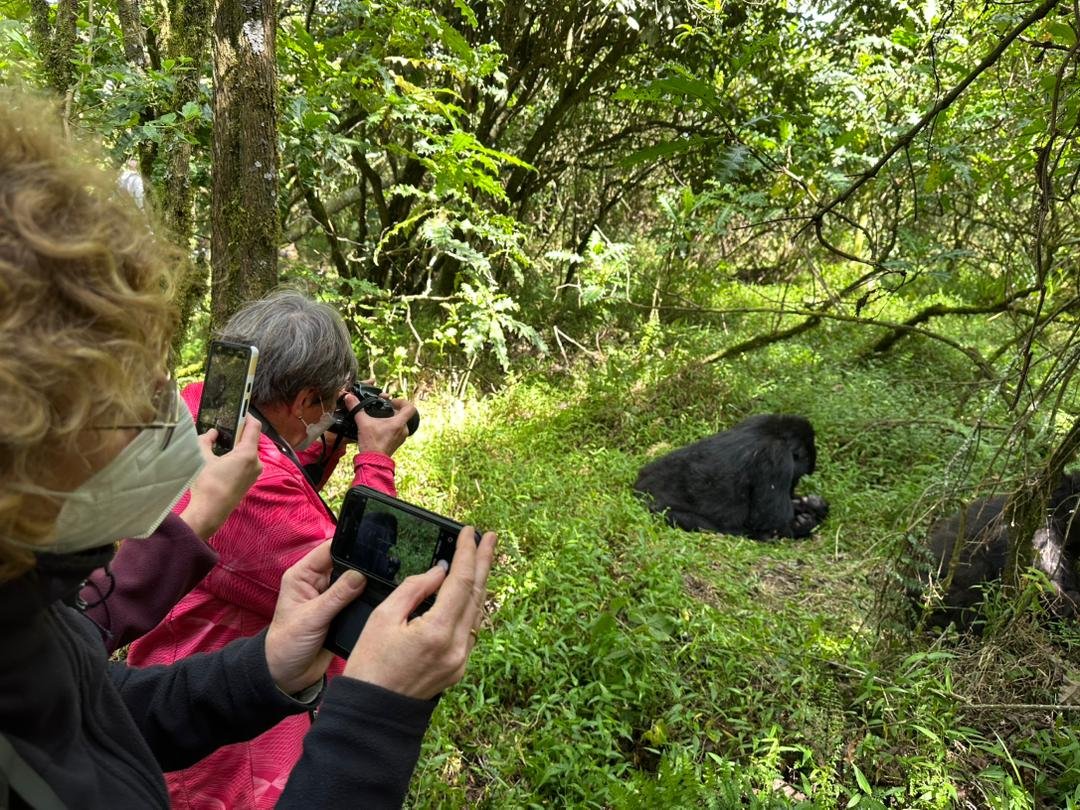
5-Day Uganda Gorilla and Chimpanzee Safari
This itinerary can be combined with a Rwanda extension or a wildlife-focused add-on through Queen Elizabeth National Park — browse our Uganda & Rwanda Safaris and Primate Safaris collections for ideas.
Tour Details →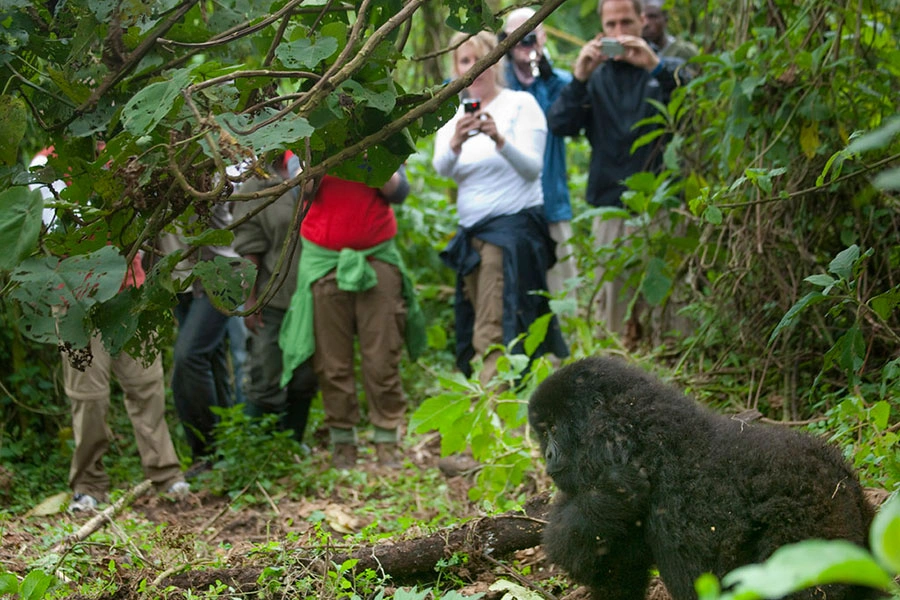
5 Days Rwanda Wildlife and Gorillas
This 5-day itinerary brings together Rwanda’s two flagship wildlife experiences: open savannah game drives and a boat safari in Akagera National Park, followed by a face-to-face encounters
Tour Details →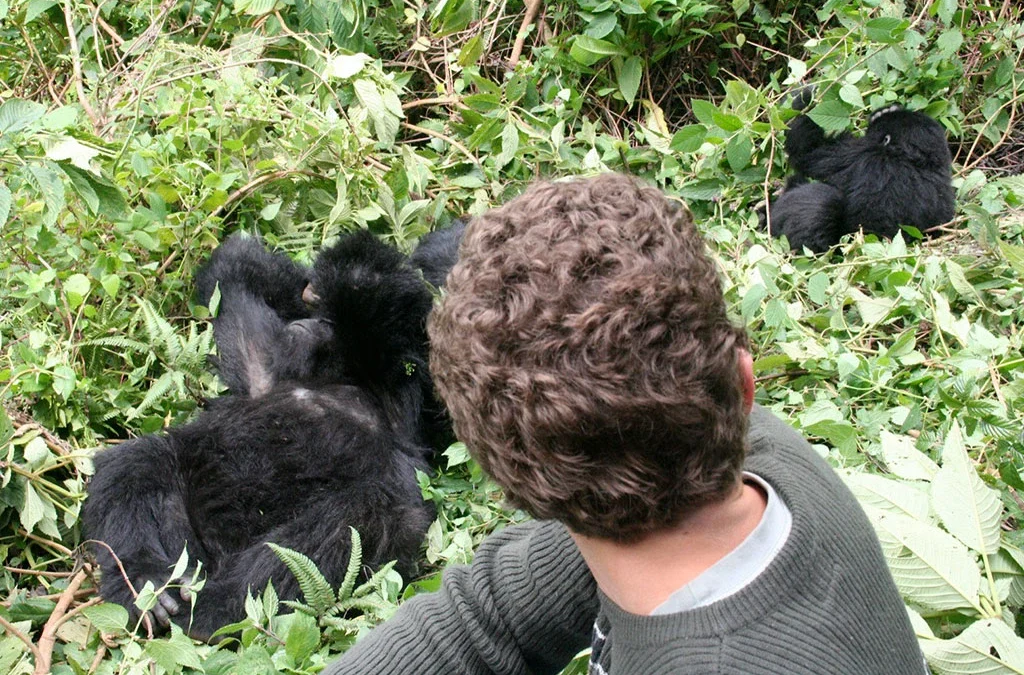
3 Days Uganda Gorilla Safari
For travelers who arrive in Entebbe with a tight schedule and a clear ambition, a 3-day gorilla safari to Bwindi Impenetrable Forest National Park is the most focused and rewarding short trip the country has to offer.
Tour Details →