- LET'S PLAN YOUR SAFARI
- +256 200 921 002
- +256 793 194 703
- info@pickandtransfersafaris.com

How Difficult Is Gorilla Habituation in Bwindi?
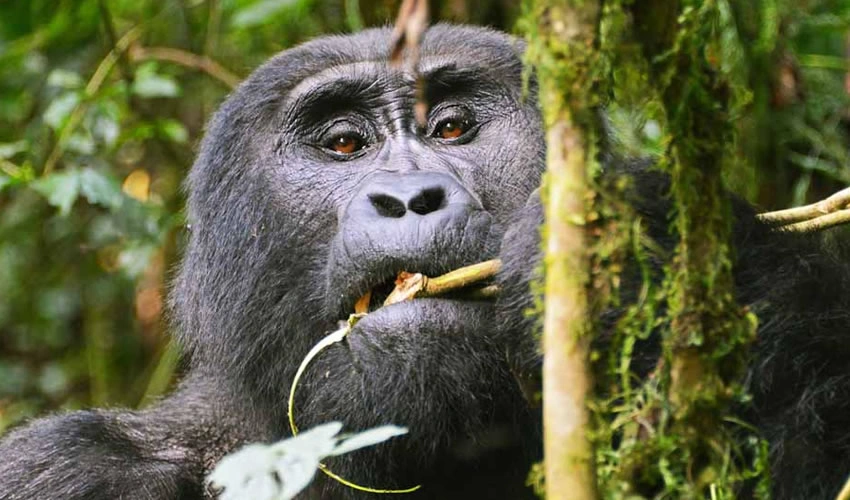
How Difficult Is Gorilla Habituation in Bwindi? Of all the questions travelers ask before booking the Gorilla Habituation Experience, this is probably the one worth the most honest, unhedged answer. It’s genuinely demanding, more so than standard gorilla trekking, and considerably more so than most travelers expect going in. At Pick and Transfer Safaris, we’d rather set accurate expectations upfront than have someone discover the difficulty level partway through an eight-hour forest day, so this guide gives a straightforward assessment of exactly what you’re taking on.
The Baseline: Bwindi’s Terrain Is Already Demanding
Even before accounting for the habituation experience’s extended length, Bwindi Impenetrable National Park earns its name honestly. The forest sits at altitudes ranging from roughly 1,160 to 2,607 meters, with steep, often muddy trails cutting through dense vegetation. Rushaga specifically, where the Gorilla Habituation Experience takes place, involves genuine elevation change and uneven footing throughout, regardless of which particular route the day’s trek follows. This is the foundation every other difficulty factor builds on top of.
What Makes the Habituation Experience Harder Than Standard Trekking
Standard gorilla trekking involves the same challenging terrain, but the Gorilla Habituation Experience compounds it in two specific ways. First, the observation window itself runs up to four hours rather than the standard trek’s fixed one hour, meaning considerably more time spent standing, crouching, and moving carefully in close proximity to the gorillas, on top of the approach and return treks. Second, the overall day is simply longer, typically eight to ten hours from briefing to return, compared to standard trekking’s four-to-eight-hour range. This isn’t a minor difference; it roughly doubles the physical commitment of an already demanding activity.
The Approach Trek: The Biggest Wildcard
The single most unpredictable variable in how difficult your day feels is how far the semi-habituated family has moved since the previous evening. The approach trek can take anywhere from one to five hours depending on this, and there’s no way to know in advance which end of that range you’ll get. A short approach makes for a genuinely manageable day; a long one, especially combined with difficult terrain or wet conditions, can make for a seriously taxing one. This unpredictability is worth internalizing before you commit, since you can’t plan around it the way you might plan around, say, a fixed-distance hike with a known elevation profile.
How Altitude Factors In
While Bwindi’s altitude isn’t extreme enough to cause the kind of altitude sickness associated with much higher peaks, the elevation does mean thinner air and cooler temperatures than lowland trekking, which some visitors notice as added breathlessness on steep sections, particularly those arriving directly from sea-level destinations without any acclimatization. This effect is generally mild but worth factoring in if you’re already concerned about fitness, since it adds a small additional layer of difficulty on top of the terrain itself.
Who Tends to Find It Manageable
Despite how demanding this sounds, a wide range of travelers do complete the Gorilla Habituation Experience successfully, including people well into their sixties and seventies, and travelers recovering from various injuries or medical procedures. What tends to matter more than raw age or fitness level is a combination of realistic pacing, willingness to accept help, hiring a porter, using a walking stick, taking breaks when needed, and genuine motivation. Guides and trackers are also experienced in adjusting pace to the group’s ability, and it’s entirely normal, not a failure, to trek considerably slower than the fastest possible pace.
Who Should Think Carefully Before Booking
That said, honesty matters here more than encouragement. Travelers with serious cardiovascular conditions, significant joint problems that limit mobility on uneven ground, or genuine concerns about sustained physical exertion over many hours should have a candid conversation with both their doctor and their tour operator before committing to this specific activity, given how much longer and more demanding it is than standard trekking. For travelers in this position, the standard one-hour trek, still challenging but considerably shorter, may be the more sensible choice, or the sedan chair service, discussed below, may make the habituation experience accessible where it otherwise wouldn’t be.
Tools That Genuinely Reduce Difficulty
A few practical measures make a real difference. Hiring a porter, generally arranged on the morning of your trek at the park headquarters, means someone experienced in this exact terrain carries your daypack and provides a steadying hand on difficult sections, a small cost that meaningfully reduces physical strain over an eight-hour day. A walking stick, typically available at no extra cost from the park, provides real stability on slippery or steep ground. For travelers with more significant mobility limitations, a sedan chair service, sometimes informally called the “African helicopter,” carried by a team of local porters, is available through most operators and genuinely opens up the experience to travelers who couldn’t otherwise attempt it, though this should be arranged well in advance rather than requested on the day.
Preparing Physically Before Your Trip
For travelers with any uncertainty about their fitness, some genuine preparation in the weeks before travel helps considerably. Regular hiking on varied, uneven terrain, ideally including some hill walking, builds the specific kind of stamina this activity demands more directly than gym-based cardio alone. Breaking in hiking boots well ahead of the trip avoids blisters compounding an already long day, and general cardiovascular conditioning, even simply regular walking, makes a genuine difference to how the day feels overall.
Weather’s Effect on Difficulty
Season matters more here than for many other activities, given how much wet, muddy trails add to an already long day. As covered in our guide to the best time to visit Rushaga, the dry seasons, June through September and December through February, offer firmer trails and meaningfully easier underfoot conditions, while the rainy months, March to May and September to November, add genuine difficulty on top of the baseline terrain. Travelers with any hesitation about their fitness should lean toward dry-season dates specifically for this reason.
Comparing the Difficulty to Other Uganda Activities
For context, the Gorilla Habituation Experience sits at the more demanding end of Uganda’s wildlife activities. Golden monkey trekking at Mgahinga is considerably gentler, generally wrapping up in around three hours on lower-altitude, less steep terrain. Standard chimpanzee trekking in Kibale is also less demanding than the habituation experience, given its shorter duration and generally gentler terrain. Among gorilla-related activities specifically, only Bwindi’s Nkuringo sector, known for having some of the park’s steepest standard trekking terrain, comes close to matching the habituation experience’s physical demands, and even then, without the added length of the extended four-hour observation window.
Setting Realistic Expectations Before You Book
The honest summary is this: the Gorilla Habituation Experience is genuinely one of the more physically demanding wildlife activities available anywhere, considerably more than a typical safari day, and meaningfully more than standard gorilla trekking itself. It’s absolutely achievable for most reasonably fit travelers with the right preparation and support, but it shouldn’t be approached casually or booked without giving real thought to your own physical readiness.
Visa and Border Requirements
Since most travelers reach Rushaga via Rwanda, the East African Tourist Visa tends to be the most convenient option, covering multiple entries across Uganda, Rwanda, and Kenya over 90 days for 100 US dollars through Uganda’s official immigration portal. A standard single-entry Uganda Tourist Visa works just as well for travelers not planning to re-enter Rwanda. A valid yellow fever vaccination certificate is required for entry into Uganda regardless of visa type.
Planning Your Gorilla Habituation Experience with Pick and Transfer Safaris
Understanding the genuine physical demands of this activity before you book means fewer surprises and a better-prepared, more enjoyable day when you’re actually in Rushaga’s forest. If you would like an honest conversation about whether this experience suits your fitness level, help arranging a porter or sedan chair, or support planning your private transfer from Kigali, get in touch through our Contact Us page. We’d rather help you make the right choice for your own body than oversell an experience that might not suit you.