- LET'S PLAN YOUR SAFARI
- +256 200 921 002
- +256 793 194 703
- info@pickandtransfersafaris.com

How many Gorillas are in Mgahinga Gorilla National Park
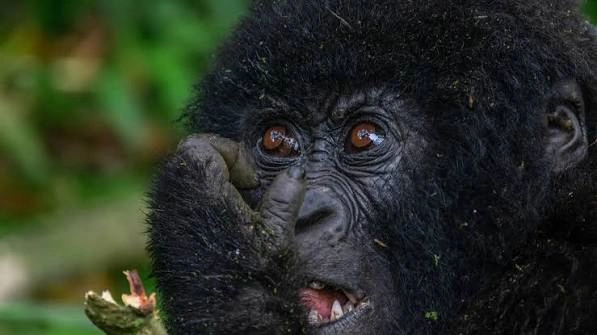
How many Gorillas are in Mgahinga Gorilla National Park. Tucked into Uganda’s far southwestern corner, where three volcanic cones straddle the borders of Uganda, Rwanda, and the Democratic Republic of Congo, Mgahinga Gorilla National Park is one of the smallest yet most fascinating gorilla trekking destinations in Africa. It is also one of the most misunderstood, because the honest answer to “how many gorillas live here” is more nuanced than a single number. In short: Mgahinga is home to one habituated gorilla family available for tourism, the Nyakagezi group, which has numbered between roughly nine and eleven individuals in recent years, while the park itself sits within the wider Virunga Massif, a transboundary ecosystem shared with Rwanda and the DR Congo that supports around 604 mountain gorillas in total, according to the last comprehensive regional census.
That distinction, between the number of gorillas physically resident in the small Ugandan section of the park at any given moment and the far larger population of the Virunga Massif they belong to, is the key to understanding Mgahinga properly. This guide, from Pick and Transfer Safaris, breaks down exactly how many gorillas you can expect to see, why the Virunga’s gorillas move freely across three countries, how the Nyakagezi family came to settle permanently in Uganda, and what all of this means for planning your own gorilla trek.
Quick Answer: Gorilla Numbers in Mgahinga at a Glance
For readers who want the short version before the full detail: Mgahinga Gorilla National Park has exactly one gorilla family habituated for tourist trekking, known as the Nyakagezi family, which has been recorded at various times with 9, 11, and other similar counts of individual gorillas as births, deaths, and group transfers occur. There is no separate habituated family based permanently on the Ugandan side beyond Nyakagezi, which is why Mgahinga issues a maximum of eight trekking permits per day, compared with the dozens of daily permits available across Bwindi’s four sectors. The wider Virunga Conservation Area that Mgahinga forms part of, spanning into Rwanda’s Volcanoes National Park and DR Congo’s Virunga National Park, is home to roughly 604 mountain gorillas as of the last full census, out of a total worldwide mountain gorilla population of approximately 1,063 individuals.
Where Mgahinga Gorilla National Park Fits in the Bigger Picture
Mgahinga Gorilla National Park is Uganda’s smallest national park by area, covering just 33.7 square kilometers of Afromontane forest and bamboo zone on the northern slopes of the Virunga volcanoes: Mount Muhabura, Mount Gahinga, and Mount Sabinyo. It sits at the exact meeting point of Uganda, Rwanda, and the Democratic Republic of Congo, and this geography matters enormously when answering questions about its gorilla population, because Mgahinga is not an isolated island of forest with its own self-contained gorilla group. It is the northernmost tip of a single, continuous forest ecosystem, the Virunga Massif, that gorillas move through freely regardless of the international borders humans have drawn across it.
This is why you will find slightly different numbers depending on which source you consult and when. A gorilla family recorded in Mgahinga one year may drift into Rwanda’s Volcanoes National Park or DR Congo’s Virunga National Park the next, and vice versa, since mountain gorillas do not recognize national boundaries. The Nyakagezi family itself is the clearest example of this pattern in action.
A Short History of Mgahinga Gorilla National Park
Mgahinga was gazetted as a national park in 1991, having previously existed as a game sanctuary since the 1930s under British colonial administration, primarily to protect the mountain gorillas and golden monkeys inhabiting the Ugandan slopes of the Virunga volcanoes. Its creation mirrored similar conservation efforts already underway across the border in what was then Zaire and in Rwanda, gradually knitting together the transboundary protection framework that the three Virunga range countries still coordinate today. For much of its early history as a park, Mgahinga’s gorilla population was considered unpredictable for tourism purposes precisely because the resident family moved so freely across the newly formalized international boundaries, only settling into a more consistent pattern of residence within Uganda from around 2012 onward.
Today, alongside gorilla and golden monkey trekking, Mgahinga also offers hiking trails up its three volcanic peaks, Mount Muhabura, Mount Gahinga, and Mount Sabinyo, along with a cultural walk exploring the heritage of the Batwa people, who lived in these forests as hunter-gatherers for generations before the park’s creation relocated them outside its boundaries. Visitors interested in learning more about the park’s landscape and full range of activities beyond gorilla trekking can explore our dedicated Mgahinga Gorilla National Park destination guide.
Meet the Nyakagezi Family: Mgahinga’s One Habituated Gorilla Group
The Nyakagezi family is the single gorilla group habituated for tourism on the Ugandan side of the Virunga Massif, and it has an unusual history that makes it one of the more remarkable gorilla families anywhere in the region. For years, this group ranged widely across the borders of Uganda, Rwanda, and the DR Congo, at times disappearing from Mgahinga entirely for extended periods while it foraged in neighboring countries, which occasionally left Uganda’s side of the park without any trekkable gorillas at all. Since around 2012, however, the family has settled more permanently within Mgahinga’s boundaries, giving Uganda Wildlife Authority the confidence to offer regular daily trekking permits for the group.
Nyakagezi is also notable within the gorilla research community for having an unusually high number of silverbacks living peacefully within a single family, a structure that is comparatively rare among mountain gorilla groups, which typically have just one dominant silverback. Reports on the family’s exact composition vary slightly by year and source, generally placing its size somewhere between nine and eleven members, including several silverbacks, adult females, and a mix of juveniles and infants. One particularly striking detail often noted about this family is the presence of an elderly silverback, believed to be well over fifty years old, who remained with the group even after losing his position as dominant male, an unusual arrangement since displaced silverbacks typically leave to live alone or die in isolation elsewhere.
Why Gorilla Numbers in Mgahinga Change Over Time
Anyone researching this topic will quickly notice that different articles, blogs, and even official-sounding sources quote slightly different numbers for the Nyakagezi family, and this is not necessarily a sign of unreliable reporting; it reflects the genuinely fluid nature of gorilla family life. Births add new infants to the group, older individuals die of natural causes or occasionally from conflict with rival groups, young blackbacks sometimes leave to start their own families or join others, and, as described above, the entire group has historically shifted its home range across international borders. A count that was accurate at the time it was published can therefore become slightly outdated within a year or two without anyone having made an error.
For this reason, we recommend treating any specific number you read, including the figures in this article, as an approximate and time-bound snapshot rather than a permanent statistic, and confirming the very latest count directly with your safari operator or Uganda Wildlife Authority before your trek if the exact figure matters to you.
What Makes Mountain Gorillas Different From Other Gorillas
Mountain gorillas, the subspecies found in Mgahinga, Bwindi, and across the Virunga Massif, are one of only two recognized subspecies of eastern gorilla, distinguished from their lowland cousins by notably thicker, longer fur that insulates them against the cold, high-altitude forests they inhabit, often at elevations exceeding 2,500 meters. An adult male silverback can weigh close to 200 kilograms and stand roughly 1.7 meters tall when upright, making them among the largest living primates, while adult females are considerably smaller. Unlike lowland gorillas, mountain gorillas have never survived successfully in captivity, which means every mountain gorilla in the world, all 1,063 of them, lives wild in the forests of Uganda, Rwanda, or the DR Congo, adding a particular weight to the conservation numbers discussed throughout this article.
Mountain gorillas live in cohesive family groups typically led by a single dominant silverback, spend the bulk of each day foraging for leaves, shoots, stems, and bamboo, and build a fresh nest of bent vegetation to sleep in each night, a pattern that census teams rely on heavily when estimating population numbers across the forest.
How Are Mountain Gorilla Populations Actually Counted?
Counting wild mountain gorillas is a painstaking, resource-intensive process carried out periodically by a coalition of wildlife authorities and conservation organizations across Uganda, Rwanda, and the DR Congo, rather than an ongoing daily tally. Census teams conduct sweeps through the forest recording nest sites, footprints, feeding trails, and genetic material collected from dung samples, which is analyzed in laboratories to distinguish individual gorillas and avoid double-counting animals encountered in different locations. Because this process takes months to complete across such rugged, transboundary terrain, comprehensive censuses happen only every several years rather than annually.
The last full census of this kind, completed in 2018, recorded 604 mountain gorillas across the Virunga Massif and 459 across the separate Bwindi-Sarambwe ecosystem, bringing the total known mountain gorilla population worldwide to approximately 1,063 individuals, a figure that has been steadily rising for several decades thanks to intensive conservation efforts across all three range countries. Because Mgahinga forms only the small Ugandan tip of the much larger Virunga Massif survey area, there is no separate official census figure isolating exactly how many of those 604 gorillas are within Uganda’s borders at any given time, precisely because the animals move freely across the wider ecosystem.
Mgahinga’s Role Within the Wider Virunga Massif Population
The Virunga Massif is shared unevenly between its three constituent parks. Rwanda’s Volcanoes National Park and DR Congo’s Virunga National Park cover considerably more of the massif’s forested slopes than Uganda’s comparatively tiny Mgahinga, which explains why the great majority of the Virunga’s 604 gorillas, spread across roughly ten habituated families available for tourism region-wide, are trekked from the Rwandan or Congolese sides rather than from Uganda. Mgahinga’s contribution is modest but meaningful: it is the only point at which travelers can trek a Virunga gorilla family without leaving Uganda, and its bamboo forest also happens to be a favored feeding ground for the region’s golden monkeys, an added draw for visitors already in the park.
For travelers who want to understand how Mgahinga compares with Uganda’s other, much larger gorilla stronghold, it helps to look at Bwindi Impenetrable Forest National Park, which sits in a completely separate ecosystem roughly thirty kilometers north and is not part of the Virunga Massif at all.
Mgahinga Versus Bwindi: Two Different Gorilla Populations
It surprises many first-time visitors to learn that Uganda’s two gorilla trekking destinations, Mgahinga and Bwindi, belong to entirely separate gorilla populations that do not intermix. Bwindi Impenetrable Forest is part of the Bwindi-Sarambwe ecosystem, home to roughly 459 mountain gorillas spread across dozens of habituated families in four trekking sectors: Buhoma, Ruhija, Rushaga, and Nkuringo. Mgahinga, by contrast, belongs to the separate Virunga Massif population and offers just the single Nyakagezi family for trekking.
This means Bwindi issues vastly more daily trekking permits than Mgahinga simply because it has far more habituated families to distribute visitors across, which is why travelers seeking a wider choice of trekking sectors, or a higher likelihood of securing last-minute permits, generally look toward Bwindi through options such as our 3-day Uganda gorilla safari, while those drawn specifically to Mgahinga’s quieter, more exclusive single-family experience, or to its golden monkey tracking, plan around the Nyakagezi group’s availability directly.
How Many Trekking Permits Does Mgahinga Issue Per Day?
Because Mgahinga has only one habituated gorilla family, Uganda Wildlife Authority limits daily gorilla trekking permits for the park to a maximum of eight visitors, matching the standard rule applied to every individual gorilla family across Uganda and Rwanda to minimize stress on the group. This is a considerably smaller daily allocation than Bwindi’s combined total across its four sectors and multiple families, which is worth knowing if you are choosing between the two parks purely on the basis of permit availability, particularly during the busier June-to-September and December-to-February trekking seasons.
Because the Nyakagezi family has, at times in its history, ranged outside Uganda’s borders for extended periods, it is worth confirming with your operator or directly with Uganda Wildlife Authority that the family is currently based in Mgahinga before finalizing a trip built specifically around this park, since the family’s location can occasionally shift for weeks at a time.
Golden Monkeys: Mgahinga’s Other Primate Draw
Alongside its single gorilla family, Mgahinga is one of only two places in Uganda, alongside a small population in nearby Kibale-adjacent forests, where visitors can track golden monkeys, an endangered and strikingly colored primate found only in the bamboo zones of the Virunga volcanoes. Golden monkey tracking is considerably less physically demanding than gorilla trekking, generally takes place within the park’s lower bamboo forest, and is often combined with a gorilla trek on the same visit for travelers who want to make the most of a trip specifically to Mgahinga.
Travelers interested in seeing golden monkeys alongside gorillas across the Virunga Massif more broadly, rather than only in Uganda, can also look at Rwanda-based options through our 2-day Volcanoes gorilla trek from Kigali, since Rwanda’s side of the same ecosystem offers golden monkey tracking on a considerably larger scale with more habituated troops available.
How Mgahinga’s Gorilla Population Compares Region-Wide
Placed in a full regional context, Mgahinga’s single gorilla family is a small but genuine piece of a much larger conservation success story. Rwanda’s Volcanoes National Park, part of the same Virunga Massif, hosts around a dozen habituated families and receives the largest share of Virunga gorilla trekking visitors, which travelers can explore in more depth through Rwanda-focused options such as our 5-day best of Rwanda primate safari. DR Congo’s Virunga National Park also hosts several habituated families but has, at various points, restricted tourist access due to regional security conditions, making Uganda and Rwanda the more consistently accessible gateways to this particular gorilla population.
Uganda’s separate Bwindi-Sarambwe population, with its considerably larger 459-strong count and dozens of habituated families, remains the country’s primary gorilla trekking destination by volume, while Mgahinga functions as a smaller, quieter alternative for travelers specifically interested in the Virunga Massif experience, golden monkey tracking, or a shorter add-on to a Rwanda-based itinerary.
What to Expect on the Day You Trek the Nyakagezi Family
A Mgahinga gorilla trek begins with an early morning registration and briefing at the park headquarters near Ntebeko, where rangers assign the small group of up to eight permit holders to a guide team before setting off into the forest. Because Nyakagezi has settled into a relatively consistent home range since 2012, treks here are often somewhat shorter and more predictable than in parts of Bwindi, though the terrain on the lower slopes of the volcanoes can still be steep, and trekkers should be prepared for anywhere from one to several hours of hiking each way depending on where the family is feeding that day.
Once the family is located, visitors are permitted exactly one hour in their presence, observing feeding, resting, and social behavior at a respectful distance under close ranger supervision, before making the return hike. Porters are available at the park headquarters for a modest fee to carry daypacks and assist less experienced hikers on steeper sections, and we generally recommend booking one regardless of fitness level, both for the practical assistance and because porter fees form an important part of local household income around the park.
Best Time to Trek the Nyakagezi Family in Mgahinga
Gorilla trekking in Mgahinga is possible year-round, since the forest is permanently inhabited by the Nyakagezi family whenever it remains within Uganda’s borders, but conditions and visitor numbers shift with the seasons in the same way they do across the rest of Uganda’s gorilla trekking parks. The two dry seasons, roughly December to February and June to September, bring firmer trails and are generally the most popular and most comfortable months to trek, while the wetter months from March to May and October to November bring muddier conditions but noticeably fewer visitors competing for the park’s limited eight daily permits.
Because Mgahinga’s single-family structure means permit availability is tighter than at Bwindi, we recommend booking as far in advance as possible regardless of season, particularly if your travel dates fall within the peak dry months.
Sample Itinerary: Trekking Mgahinga’s Gorillas From Uganda or Rwanda
Because of its location directly on the Rwanda border near Kisoro, Mgahinga is unusually easy to combine with a Rwanda-based itinerary as well as a Uganda-based one. Travelers starting from Kigali can cross into Uganda specifically for a Mgahinga trek through routes similar to our one-day Uganda gorilla safari starting from Kigali or the slightly longer 2-day Uganda gorilla tour from Kigali, both of which can be adapted toward Mgahinga rather than Bwindi depending on permit availability and the Nyakagezi family’s current location.
Travelers approaching from within Uganda more commonly combine a Mgahinga gorilla trek with a stop in Bwindi for a second trek in a completely different gorilla population, an itinerary style reflected in our broader 3-day Uganda gorilla safari from Rwanda and the more extensive 10-day Uganda primates and wildlife safari, which can be tailored to include both parks for travelers keen to compare Uganda’s two separate gorilla populations on the same trip.
Why the Exact Number Matters Less Than the Experience
It is worth stepping back from the statistics for a moment, because the precise headcount of the Nyakagezi family, whether nine, ten, or eleven individuals in a given year, matters far less to most visitors than the quality of the encounter itself. Because Mgahinga issues only eight permits per day for a single family, trekking here tends to feel noticeably more exclusive and less crowded than Bwindi’s busier sectors, and the presence of multiple silverbacks within one peaceful group gives visitors an unusually rich view of gorilla social dynamics that is genuinely rare to witness elsewhere.
Travelers drawn to Mgahinga specifically for this quieter, more intimate style of trekking, alongside the chance to add golden monkey tracking on the same visit, are often just as interested in the broader Uganda wildlife circuit, which our wildlife safari packages and extended safari itineraries can weave together into a single, well-paced trip covering both primates and savannah game.
Trekking Rules That Help Protect Mgahinga’s Small Gorilla Population
Because Mgahinga’s entire trekkable gorilla population rests on the health of a single family, Uganda Wildlife Authority enforces a strict set of rules designed to minimize disease transmission and disturbance during every visit. Visitors displaying symptoms of a cold, flu, or other communicable illness are asked not to trek, since mountain gorillas share close to ninety-eight percent of their DNA with humans and are highly susceptible to human respiratory infections that can spread rapidly through a small, closely bonded family group. A minimum distance of around seven meters is maintained between visitors and the gorillas wherever possible, group size is capped at eight visitors plus guides and rangers, and the one-hour viewing limit is strictly enforced regardless of how engaging the encounter becomes.
Flash photography is prohibited, loud noises and sudden movements are discouraged, and eating or drinking near the gorillas is not permitted, all measures aimed at keeping the experience as low-stress as possible for a family whose entire local population in Uganda numbers only in the single digits to low double digits. These rules apply identically whether trekking Nyakagezi in Mgahinga or any of Bwindi’s larger roster of habituated families, reflecting a shared regional commitment to gorilla welfare over visitor convenience wherever the two come into tension.
Conservation Efforts Protecting Mgahinga’s Gorillas
The recovery of the Virunga Massif’s gorilla population, from a low point of roughly 250 individuals recorded decades ago to over 600 today, is widely regarded as one of the great conservation success stories in African wildlife management, driven by coordinated anti-poaching patrols, veterinary intervention programs, and community-based conservation initiatives across all three range countries. Uganda Wildlife Authority’s management of Mgahinga forms one part of this transboundary effort, working alongside Rwanda Development Board and Congolese park authorities to monitor gorilla health, deter poaching, and manage the delicate balance between tourism revenue and gorilla welfare.
A significant share of gorilla permit revenue across the region is directed back into park protection and community development programs in the districts surrounding the parks, and we are proud to support the Kigezi Foundation, a community development initiative working in the areas around Uganda’s gorilla parks, for travelers who want their trip to contribute directly to the communities living alongside these forests.
Combining Mgahinga With the Rest of Uganda’s Gorilla and Wildlife Circuit
Because Mgahinga’s single-family structure suits travelers seeking a shorter, more exclusive gorilla encounter, it pairs naturally with a broader trip rather than standing entirely on its own. Many of our travelers combine a Mgahinga trek with time in Queen Elizabeth National Park for tree-climbing lions and a Kazinga Channel boat cruise, a stop in Kibale Forest National Park for chimpanzee tracking, or an extension north to Murchison Falls National Park for classic savannah game viewing along the Nile.
For travelers approaching from the Rwanda side, a visit to Akagera National Park adds a genuine Big Five safari experience within a short drive of the Uganda border, rounding out a trip that touches gorillas, golden monkeys, and classic African wildlife within a single, well-planned regional itinerary. Our full range of safari packages and destination guides can help you see how Mgahinga fits into a wider circuit built around your own travel dates.
Further Reading on Mgahinga and Uganda’s Gorilla Parks
For travelers who want to dig deeper into Uganda’s gorilla trekking parks before booking, additional background is available through resources such as this overview of Mgahinga’s gorilla population and this general Uganda travel overview, both useful starting points for understanding how Mgahinga fits within Uganda’s broader gorilla trekking landscape. Travelers comparing Uganda’s parks against Rwanda’s side of the same Virunga ecosystem may also find this Rwanda safaris overview and this dedicated 3-day Rwanda gorilla safari itinerary useful for comparison.
Travelers specifically interested in pairing gorilla trekking with golden monkey tracking across the Virunga Massif can also review this 4-day Rwanda-Uganda golden monkey and gorilla trekking itinerary, while those approaching from Kigali may find this 2-day Uganda gorilla safari from Kigali and this 3-day Bwindi gorilla safari from Kigali useful for comparing routes into Uganda’s two separate gorilla populations, alongside a broader Uganda safaris overview for general planning. Travelers wanting to see how a Mgahinga or Bwindi trek can be paired with wider wildlife viewing may also find this 7-day gorilla and wildlife safari in Uganda and this operator background overview useful when comparing how different companies structure similar routes.
Frequently Asked Questions About Mgahinga’s Gorilla Population
How many gorilla families can be trekked in Mgahinga? Only one, the Nyakagezi family, which is currently the sole habituated group available for tourist trekking on the Ugandan side of the Virunga Massif, unlike Bwindi, which offers multiple families across four separate trekking sectors.
Why does the Nyakagezi family’s size seem to change between sources? Gorilla family composition shifts naturally through births, deaths, and individuals leaving to join or form other groups, and the family has also historically moved across international borders within the Virunga Massif, meaning counts recorded in different years, and sometimes reported with different levels of precision, can genuinely differ without any source being wrong.
Is Mgahinga’s gorilla population separate from Bwindi’s? Yes. Mgahinga belongs to the Virunga Massif gorilla population, shared with Rwanda and DR Congo, while Bwindi Impenetrable Forest belongs to the entirely separate Bwindi-Sarambwe population. The two groups of gorillas do not intermix, and Uganda is unique in hosting representatives of both populations within its borders.
How many mountain gorillas are there in total worldwide? The most recent comprehensive census work puts the global mountain gorilla population at approximately 1,063 individuals, combining roughly 604 in the Virunga Massif and 459 in the Bwindi-Sarambwe ecosystem, a total that has grown steadily over recent decades thanks to sustained conservation efforts across Uganda, Rwanda, and the DR Congo.
Can I track gorillas in Mgahinga if the Nyakagezi family has moved to Rwanda or DR Congo? If the family has temporarily moved outside Uganda’s section of the Virunga Massif, Mgahinga may not be able to offer gorilla trekking until it returns, which is why we always recommend confirming the family’s current location with your operator before finalizing a trip built specifically around this park, and considering Bwindi or Rwanda’s Volcanoes National Park as reliable alternatives.
Is it better to trek gorillas in Mgahinga or Bwindi? Neither is objectively better; they simply suit different priorities. Mgahinga offers a smaller, more exclusive experience with just eight daily permits for one family, golden monkey tracking in the same forest, and volcano hiking, while Bwindi offers considerably more permit availability across four sectors and multiple families, making it easier to book at short notice and giving a wider choice of trekking difficulty levels.
Does Mgahinga’s gorilla population ever reach zero? In practical terms this has not happened since the Nyakagezi family settled more permanently within the park around 2012, though in earlier decades extended cross-border movement occasionally left the Ugandan side of the park without a trekkable family for periods of time, which is part of why UWA now closely monitors the group’s location before confirming bookings.
Why Plan Your Mgahinga Gorilla Trek With Pick and Transfer Safaris
Because Mgahinga’s single-family structure and its position on Uganda’s border with Rwanda and DR Congo make it a slightly more specialized trekking destination than Bwindi, planning a trip here benefits from working with a team that tracks the Nyakagezi family’s current location, permit availability, and seasonal conditions closely. Our team coordinates gorilla and golden monkey permits, private vehicle transfers, and accommodation across Mgahinga and the rest of Uganda’s gorilla and wildlife circuit as a single, well-paced itinerary rather than a series of separate bookings.
Whether you want a focused gorilla safari built specifically around Mgahinga, a combined trip pairing it with Bwindi and Uganda’s savannah parks, or a cross-border extension into Rwanda, our team can tailor the route to your time and budget. Learn more on our about us page, browse our destination guides, and get in touch with our team when you are ready to start planning your trek.
How many Gorillas are in Mgahinga Gorilla National Park
The honest, complete answer to how many gorillas live in Mgahinga Gorilla National Park is that one habituated family, Nyakagezi, currently numbering somewhere between nine and eleven individuals, is available for trekking, while the park itself forms a small but genuine part of the wider Virunga Massif population of roughly 604 mountain gorillas, itself part of a worldwide total of around 1,063. Rather than a single static statistic, Mgahinga’s gorilla numbers are a living, shifting reflection of one of conservation’s genuine success stories, and trekking the Nyakagezi family remains one of the more exclusive and memorable ways to witness it firsthand.
If you would like help planning a gorilla trek in Mgahinga, or combining it with Bwindi, Rwanda’s Volcanoes National Park, or Uganda’s wider wildlife circuit, our team at Pick and Transfer Safaris is ready to build a tailored itinerary around your dates and interests. Explore our full range of safari packages to see how a Mgahinga gorilla trek could fit into your own East Africa adventure.
7 Days Uganda Safari – One week tour
This 7-day itinerary is the classic one-week introduction to Uganda, covering the country’s three most iconic wildlife experiences: chimpanzee tracking in Kibale Forest National Park, Big Five game drives and a boat cruise in Queen
Tour Details →
10 Days Uganda Primates and Wildlife
This 10-day Uganda Grand Safari is the most complete Uganda itinerary we offer at Pick and Transfer Safaris. It begins with a scenic northward drive from Entebbe to the vast open plains of Murchison
Tour Details →
2 Days Uganda Gorilla Tour Starting from Kigali
This is the gentler cousin of our 1-Day Uganda Gorilla Safari Starting from Kigali — same idea, twice the breathing room. Instead of squeezing a 3,000-metre forest trek and two border crossings into a single very long day
Tour Details →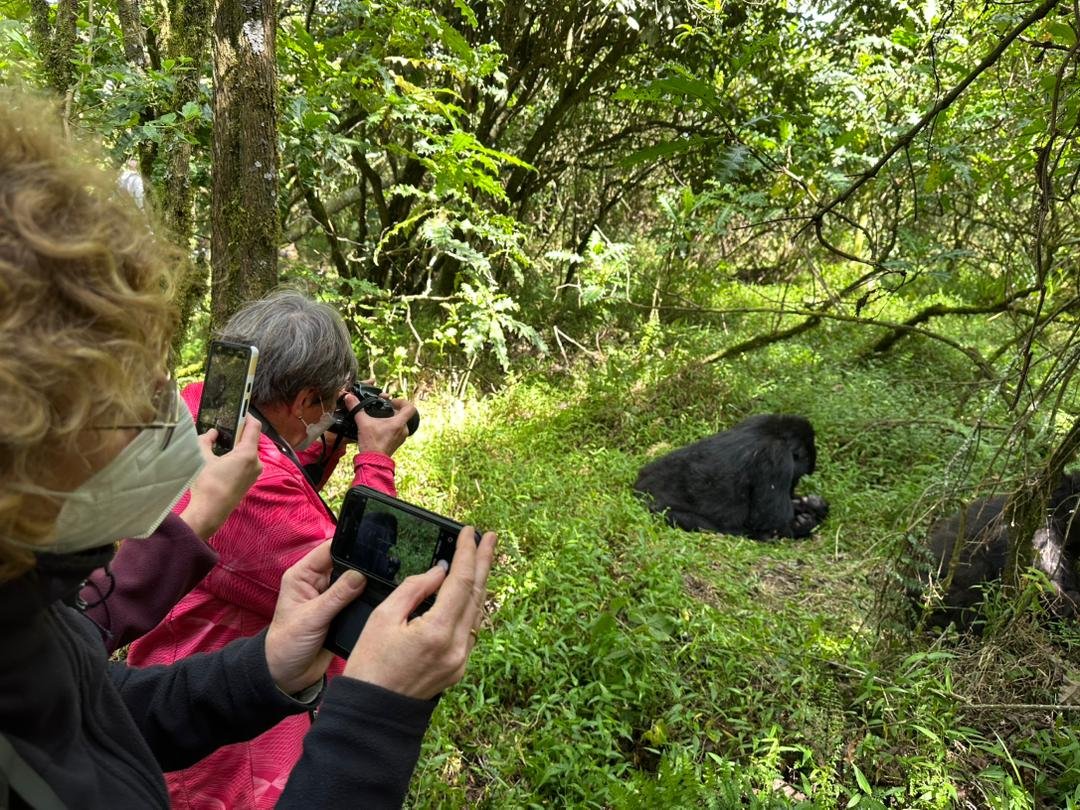
5-Day Uganda Gorilla and Chimpanzee Safari
This itinerary can be combined with a Rwanda extension or a wildlife-focused add-on through Queen Elizabeth National Park — browse our Uganda & Rwanda Safaris and Primate Safaris collections for ideas.
Tour Details →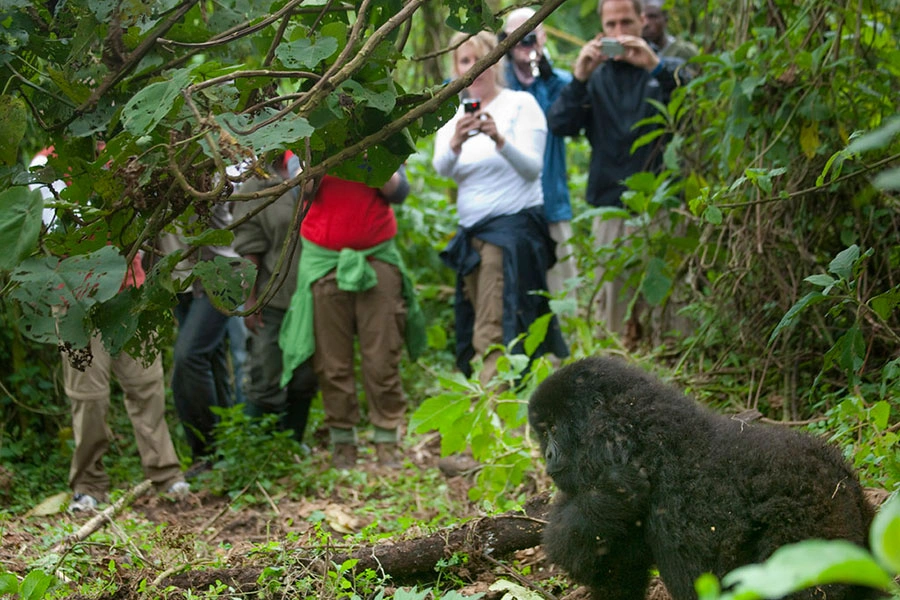
5 Days Rwanda Wildlife and Gorillas
This 5-day itinerary brings together Rwanda’s two flagship wildlife experiences: open savannah game drives and a boat safari in Akagera National Park, followed by a face-to-face encounters
Tour Details →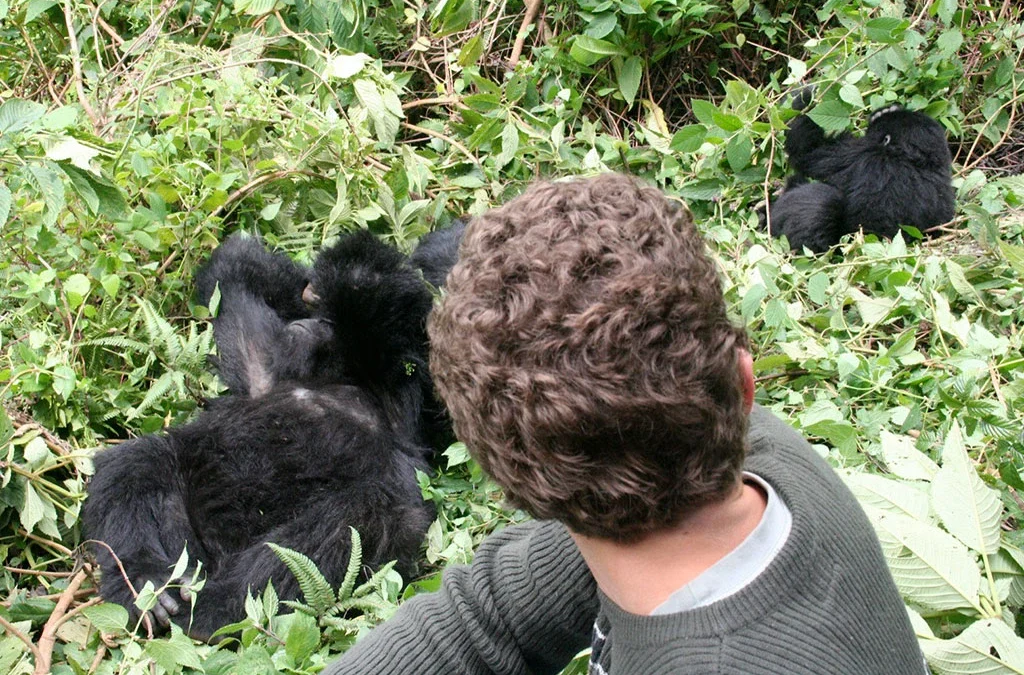
3 Days Uganda Gorilla Safari
For travelers who arrive in Entebbe with a tight schedule and a clear ambition, a 3-day gorilla safari to Bwindi Impenetrable Forest National Park is the most focused and rewarding short trip the country has to offer.
Tour Details →