- LET'S PLAN YOUR SAFARI
- +256 200 921 002
- +256 793 194 703
- info@pickandtransfersafaris.com

How Much Does Gorilla Trekking in Rwanda Cost?
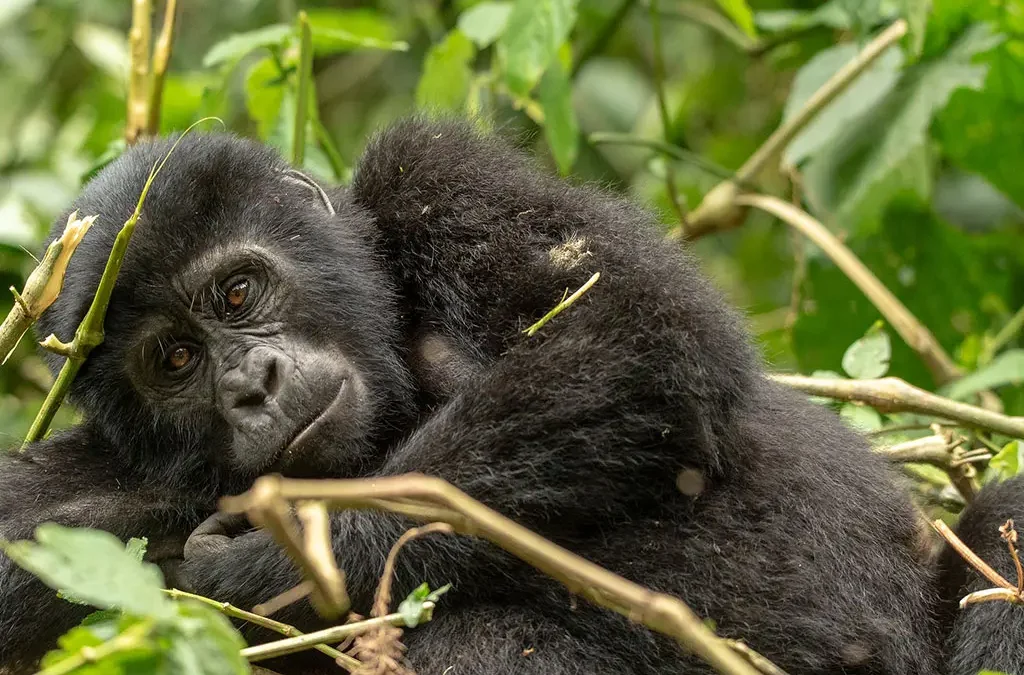
How Much Does Gorilla Trekking in Rwanda Cost? Gorilla trekking is, permit for permit, one of the single most expensive wildlife experiences on earth, and Rwanda’s price tag is the highest of any country that offers it. That fact alone stops a lot of travellers before they ever get to the more useful question, which is not simply “how much is the permit” but “what does an actual trip, start to finish, really cost.” This guide breaks down every line item behind a Rwanda gorilla trekking trip, the permit itself, discounts you may qualify for, porter and guide tips, visas, transport, accommodation at every price tier, and meals, then puts real numbers against three realistic trip budgets so you can plan with confidence rather than guesswork.
At Pick and Transfer Safaris, cost is the question we field more than any other when travellers first enquire about our Rwanda gorilla safari packages, and it deserves a straight, detailed answer rather than a single headline number. All prices below reflect 2026 rates, but permit fees, park rules and lodge pricing do shift over time, so treat this as a working budget framework and confirm exact current figures with your operator before booking.
What makes gorilla trekking cost so much harder to estimate than a typical safari day is that the fee structure is genuinely two-tiered. One part, the government permit, is completely fixed and identical no matter who you book through or how far in advance you plan. The other part, everything from the vehicle that gets you to Volcanoes National Park to the lodge you sleep in afterward, is entirely flexible and can be scaled up or down to fit almost any budget. Understanding which costs are fixed and which are flexible is the single most useful mental model for planning this trip, and it is the framework this guide follows section by section below.
The Short Answer: What a Rwanda Gorilla Trek Actually Costs
For a single traveller booking independently, the non-negotiable core cost is the $1,500 gorilla permit. Once you add a realistic minimum for transport, one or two nights of accommodation, meals, guide and porter tips, and a Rwanda visa, a bare-bones two- to three-day gorilla trekking trip from Kigali typically lands somewhere between $2,000 and $2,500 per person at the budget end, $3,500 to $6,000 for a comfortable mid-range trip, and anywhere from $8,000 to well over $15,000 per person for a multi-night stay at Rwanda’s premium lodges. The permit is the same fixed price regardless of which tier you choose; everything else, mainly accommodation, is what actually moves your total up or down.
The Gorilla Permit: Rwanda’s Core, Non-Negotiable Cost
The gorilla trekking permit is issued exclusively by the Rwanda Development Board and is priced at a fixed $1,500 per person for international, non-African visitors in 2026. This is not a price an operator can discount or negotiate; every licensed tour company, including ours, sells the permit at exactly this government-set rate, and any offer significantly below it should be treated with real caution, since it likely signals an unlicensed or fraudulent booking channel. The permit is valid for a single, specific trekking date assigned when you book, is non-transferable to another name once issued, and must be paid in full at the time of booking, well before your trip. Because Rwanda issues only around 96 gorilla permits per day across its dozen habituated family groups, popular dates in the June to September and December to February high seasons routinely sell out three to six months in advance, so booking early is as much a budgeting decision as a scheduling one.
Who Qualifies for Discounted Permits
Not every visitor pays the full $1,500. Rwandan citizens and other East African Community nationals pay a heavily discounted $200, while foreign residents of Rwanda and citizens of other African Union countries pay $500. These reduced rates exist specifically to make Rwanda’s flagship wildlife experience accessible to residents and regional travellers, and if you hold an EAC or relevant African passport, or Rwandan residency, it is worth confirming your eligibility directly with the Rwanda Development Board or your operator before paying the standard international rate.
The Low-Season Combo Discount Explained
International visitors have one legitimate way to reduce the $1,500 permit price: a 30 percent low-season discount, bringing the cost down to roughly $1,050, available from November through May for travellers who also book a minimum of two nights in either Akagera National Park or Nyungwe Forest National Park as part of the same trip. The discount is a deliberate policy tool designed to spread tourism revenue across Rwanda’s other parks during quieter months rather than a general promotion, so it will not apply to a gorilla-trekking-only itinerary, no matter the season. For travellers with flexible dates, pairing gorilla trekking with a few nights chasing Akagera’s Big Five or Nyungwe’s chimpanzees is one of the few ways to meaningfully lower the single largest cost of the trip while also seeing considerably more of the country.
What the Permit Does and Doesn’t Include
It is worth being precise about what $1,500 actually buys, since it is easy to assume the permit covers more than it does. The fee includes park entrance, an escorted trek with Rwanda Development Board rangers and trackers, and up to one hour observing a habituated gorilla family once the group is located. It does not include porter fees, guide and tracker tips, transport to or from Volcanoes National Park, accommodation, meals, travel insurance, or a Rwanda visa, all of which are separate costs covered in the sections below. Trip packages sold by operators, including our own 2-Day Volcanoes Gorilla Trek from Kigali, typically bundle the permit together with transport, accommodation and guiding into a single quoted price, which is usually the simplest way to see your true total cost upfront rather than assembling each piece separately.
Porter Fees: A Small Cost Worth Paying
Porters are local community members licensed to carry bags and offer a steadying hand on steep or muddy sections of the trek, and hiring one costs between $10 and $20 for the day, arranged at the trailhead or in advance through your operator. This is, by a wide margin, one of the best-value line items on the entire trip: porter income goes directly to households living around Volcanoes National Park, it materially eases the physical demand of the climb even for fit trekkers, and it is customary, not optional, in the local trekking culture. We recommend every client hire a porter regardless of fitness level, both for the community benefit and for the practical help carrying camera gear and water on what can be a genuinely strenuous climb.
Guide and Tracker Tips
Tipping is not built into the permit price and is expected, though not legally mandatory, at the end of a successful trek. A reasonable guideline is $15 to $30 total per trekker, commonly split as roughly $10 each for the lead guide, the tracker team and the porter, adjusted upward for exceptional service or a particularly long or difficult trek. Tips are generally given in cash, in US dollars or Rwandan francs, directly to the guide at the end of the encounter. Budgeting $20 to $30 per person for tips across the full day, on top of the permit and porter fee, is a sensible planning figure most travellers find accurate.
The Gorilla Habituation Experience: A Pricier, Longer Alternative
Rwanda also offers a gorilla habituation experience for travellers who want more than the standard one-hour encounter, spending up to four hours with a gorilla family that is still in the process of becoming accustomed to human presence, alongside the researchers and trackers doing that habituation work. Pricing and availability for this experience in Rwanda shift more than the standard permit and are not always published as consistently, so it is worth confirming current cost and dates directly with the Rwanda Development Board or your operator if this longer, more research-focused encounter interests you; neighbouring Uganda’s equivalent habituation permit, for comparison, is priced at $1,800 as of mid-2026. Because it demands considerably more stamina and a longer day in the field, we generally recommend the habituation experience for repeat visitors or travellers with a specific interest in gorilla conservation research, rather than a first Rwanda trip.
Visa Costs and Entry Requirements
Most nationalities can obtain a Rwanda visa on arrival or in advance online, and the cost depends heavily on citizenship. Citizens of African Union member states, Commonwealth countries and La Francophonie members enter visa-free or at no charge, while most other nationalities pay $50 for a single-entry visa or $70 for a multiple-entry visa. Travellers combining Rwanda with Uganda or Kenya can also apply for the East Africa Tourist Visa, a single $100 visa valid for travel across all three countries within a defined period, which is often the more economical choice for a regional itinerary that pairs Rwanda gorilla trekking with a Uganda or Kenya safari extension.
Getting to Volcanoes National Park: Transport Costs
Volcanoes National Park sits roughly two and a half hours from Kigali International Airport by road, and getting there is not optional or walkable, so transport is a real line item in your budget. A private vehicle with driver-guide for a round trip typically runs $100 to $350 depending on vehicle type and trip length, while a shared shuttle service can bring the per-person cost down to $50 to $100 for solo travellers or couples on a tighter budget. Almost every packaged gorilla trekking itinerary, including our own, bundles this transport into the overall trip price along with a suitable 4×4 vehicle for the unpaved sections around the park, which is generally the more reliable and cost-effective option compared with arranging car hire independently, though travellers who prefer full control over their own driving schedule can compare independent car hire options through operators such as Kenlink Tours’ car hire service.
Accommodation Costs: Budget, Mid-Range and Luxury
Where you sleep is, by far, the single biggest variable in your total trip cost, since the permit price stays fixed regardless of tier. Budget guesthouses and simple lodges around Musanze and the park boundary run roughly $50 to $120 per night and are a perfectly comfortable option for travellers prioritising the trek itself over lodge luxury. Mid-range lodges, offering more comfortable rooms, better food and closer proximity to the park gate, run from around $150 to $400 per night. At the top end, Rwanda is home to some of the most expensive lodges on the African continent, several running from $800 up to $2,500 or more per night, reflecting all-inclusive rates, exceptional design, and direct volcano-slope locations. A typical two- to three-night stay therefore ranges from roughly $100 to $360 at the budget tier, $300 to $1,200 at mid-range, and anywhere from $1,600 to well over $7,000 at the luxury tier, a spread wide enough that accommodation choice alone can more than double or triple your total trip cost.
Meals and Daily Expenses
Food costs scale with your accommodation choice in much the same way lodging does. Simple local restaurants and guesthouse meals run roughly $2 to $6 per meal, mid-range restaurant dining runs $8 to $15 per meal, and dining at higher-end lodges, where meals are frequently included in the nightly rate, can be valued at $20 to $40 per meal if itemised separately. Most mid-range and luxury lodges around Volcanoes National Park include breakfast and dinner in the room rate, which simplifies budgeting considerably; budget travellers staying at simpler guesthouses should plan for $15 to $30 per day in food costs on top of accommodation.
Full Sample Budgets: Three Realistic Trip Costs
Bringing every line item together, a budget-conscious two- to three-day trip, staying in simple guesthouses, using shared transport and skipping the habituation experience, typically totals around $2,000 to $2,500 per person: roughly $1,500 for the permit, $50 to $200 for transport, $150 to $350 for accommodation and meals, and $50 to $80 for porter, tips and visa combined. A mid-range trip of four to five days, staying in comfortable lodges with private transport and a day or two added at Akagera or Nyungwe, generally lands between $3,500 and $6,000 per person once the permit, better accommodation, private vehicle hire and additional park activities are included. A luxury trip of five days or more, built around Rwanda’s premium volcano-slope lodges, private transfers, and often a second gorilla trek or the habituation experience, commonly runs from $8,000 to $15,000 or more per person, with lodge accommodation alone accounting for the majority of that total. Our 5-Day Rwanda Gorilla and Chimpanzee Safari and 5-Day Best of Rwanda Primate Safari both sit comfortably in the mid-range band described here, with the flexibility to move up or down in accommodation tier depending on your budget.
Group Size and Cost: Solo Travellers vs Couples vs Groups
The permit price itself never changes with group size, since it is charged per person regardless of how many people you travel with, but nearly every other cost in this budget shrinks meaningfully as your group grows. A private vehicle and driver-guide costing $250 for a round trip from Kigali works out to $250 for a solo traveller, but only $62.50 per person split across a group of four, and the same logic applies to a private guide’s daily rate, boat safaris, and many lodge packages that price accommodation per room rather than strictly per person. This is one of the strongest practical arguments for travelling with a partner, friends or joining a small group departure rather than trekking entirely solo, and it is a large part of why our multi-day itineraries and Kenlink Tours’ own group tour departures consistently work out cheaper per person than the equivalent solo, independently arranged trip.
Cost of Extending Your Trip: Adding a Second Trek or a Second Country
Many travellers, once they have committed to the $1,500 permit and the transfer time to reach Rwanda, choose to extend their trip rather than fly home immediately afterward, and the marginal cost of doing so is usually lower than travellers expect. A second gorilla trek on a subsequent day costs a full additional $1,500 permit and is rarely worth it for most visitors; a far better-value extension is adding a Nyungwe chimpanzee trek at roughly $100, or two to three nights at Akagera for the Big Five, both of which add substantial new wildlife content for a fraction of the gorilla permit price and, as covered earlier, can unlock the low-season discount at the same time. Travellers extending into Uganda for a second country’s gorilla or chimpanzee trekking should budget for the additional $800 Uganda gorilla permit or $150 to $200 Kibale chimpanzee permit, plus two to three extra travel days for the border crossing; our partner Kenlink Tours’ 6-Day Rwanda Adventure covering great apes and Lake Kivu and 8-Day Uganda Gorilla, Chimpanzee and Wildlife Safari are both useful cost benchmarks for pricing out a longer, two-country primate itinerary.
Currency, Payment Methods and Practical Money Tips
Gorilla permits and most packaged tour costs are quoted and paid in US dollars, typically by bank transfer or card payment through your operator well in advance of travel, so this is generally the most predictable part of your budget. On the ground in Rwanda, US dollars are widely accepted for tips, souvenirs and incidental purchases, though notes should be clean, unmarked and printed after 2009 to be accepted at most lodges and shops, a small but frequently overlooked detail that catches travellers out. Rwandan francs are useful for smaller local purchases, markets and tipping in situations where dollar change is not readily available, and can be withdrawn from ATMs in Kigali and Musanze at reasonably favourable rates. Carrying a mix of small-denomination dollars for tips and porter fees, alongside a card for lodge bills and larger purchases, is the most practical approach for most travellers.
How to Save Money on a Rwanda Gorilla Trekking Trip
While the $1,500 permit itself cannot be discounted for international visitors outside the low-season combo offer, several genuine savings are available elsewhere in the trip. Travelling in the November to May low season, and pairing your trek with two nights at Akagera or Nyungwe, saves $450 off the permit alone while adding meaningful additional wildlife viewing to the trip. Choosing a budget or mid-range lodge over a premium volcano-slope property is the single biggest lever available, given the enormous spread in nightly rates described above. Booking a shared shuttle rather than a private vehicle for solo travel, travelling in a small group to split private transport costs, and booking permits and accommodation well in advance to avoid last-minute premium pricing all meaningfully reduce total cost without touching the trekking experience itself. Bundling your permit, transport and accommodation into a single packaged itinerary through an established operator, rather than booking each piece separately, also frequently works out cheaper than assembling the trip yourself piece by piece, since operators secure negotiated lodge rates unavailable to independent bookers.
Choosing a Reliable, Licensed Operator: Why It Affects Your Real Cost
Because the permit price is fixed and identical everywhere, the biggest cost risk in gorilla trekking is not overpaying for the permit itself but losing money to an unlicensed or unreliable operator who takes payment and fails to deliver a properly booked trek, correctly arranged transport, or accurate lodge reservations. Rwanda Development Board maintains a list of licensed tour operators, and it is worth confirming any company you book through appears on it before transferring permit funds. Established operators with a verifiable track record, a real physical presence, and transparent, itemised quotes, whether that is our own team at Pick and Transfer Safaris or a long-standing regional partner such as Kenlink Tours, whose credentials are laid out on their about us page and who can be reached directly through their contact page for a rate confirmation, are worth the modest peace of mind compared with the lowest quote from an unfamiliar source found online. A genuinely fraudulent gorilla permit booking, though rare, is one of the few travel scams capable of costing a traveller the full $1,500 with nothing to show for it, which makes operator due diligence a real, if often overlooked, part of managing your total trip cost.
Rwanda vs Uganda: Comparing Gorilla Trekking Costs
Cost is the single biggest reason travellers weigh Uganda’s Bwindi Impenetrable Forest against Rwanda’s Volcanoes National Park. Uganda’s gorilla permit costs around $800, roughly half Rwanda’s $1,500 rate, and Uganda’s accommodation options generally run cheaper across every tier as well, making a Uganda gorilla trek meaningfully more affordable overall, particularly for budget-conscious travellers. The trade-off is largely one of convenience and comfort: Rwanda’s trekking terrain and road infrastructure around Volcanoes National Park are generally considered gentler and better maintained than Uganda’s steeper, more remote Bwindi trails, and Rwanda sits closer to its main international airport, cutting transfer time and cost. Travellers focused purely on minimising trip cost often lean toward Uganda, while those prioritising comfort, shorter transfers and a slightly easier trek tend to choose Rwanda despite the higher permit price. For travellers weighing both, our partner Kenlink Tours runs a well-regarded 3-Day Uganda Gorillas Safari and 7-Day Gorilla and Wildlife Safari in Uganda, both useful cost benchmarks if you are deciding between the two countries, alongside their own 3-Day Rwanda Gorilla Safari for direct comparison.
Seasonal Price Calendar: When Costs and Crowds Peak
Beyond the permit’s formal low-season discount, the broader cost of a Rwanda gorilla trekking trip fluctuates with the calendar in ways worth planning around. The June to September and December to February dry seasons are peak demand periods across the board, not just for permits: lodge rates climb toward the top of their published range, flights into Kigali cost more, and popular properties near Volcanoes National Park sell out months ahead, which can push travellers who book late into pricier last-minute alternatives. The shoulder and low-season months, particularly April, May, October and November, combine lower lodge rates, better flight availability and, for four of those months, the direct permit discount, making them the strongest overall value window for cost-conscious travellers willing to accept a higher chance of rain during the trek itself. Travellers who can be flexible on exact dates within a two- to three-week window generally have the most leverage to capture lower lodge pricing even outside the official discount period.
Hidden or Easy-to-Miss Costs
A handful of smaller costs regularly catch first-time trekkers off guard. Gorilla trekking gear, sturdy waterproof boots, gardening gloves, a rain jacket and long trousers, is worth budgeting $50 to $150 for if you do not already own suitable hiking equipment. Travel insurance with adequate medical evacuation coverage, essential given the remote, physically demanding nature of the trek, typically adds $50 to $150 depending on trip length and coverage level, and should never be skipped to save money. Domestic flights, if you choose to fly rather than drive between Volcanoes National Park and Nyungwe or Akagera on a multi-park itinerary, can add $150 to $300 per short hop. Finally, permit cancellation and rebooking due to illness or missed flights is possible but not automatic or free, so confirming your operator’s or the Rwanda Development Board’s current rebooking policy before travel is a cost worth understanding upfront rather than discovering after the fact.
Is Gorilla Trekking in Rwanda Worth the Price?
For most travellers who complete the trek, the answer is an emphatic yes, and it is worth understanding why the price is what it is rather than viewing it purely as an expense. Permit revenue funds the ranger patrols, veterinary monitoring and anti-poaching work that brought Rwanda’s mountain gorilla population back from the brink of extinction, and a meaningful share of every permit fee is channelled directly into community projects around Volcanoes National Park, giving local communities a direct economic stake in protecting the gorillas rather than encroaching on their habitat. Beyond the conservation argument, the encounter itself, an hour spent metres away from a wild gorilla family, remains one of the most consistently described “worth every cent” experiences in African travel, precisely because it is rare, tightly limited, and impossible to replicate anywhere else on the planet outside a handful of Central African forests.
It is also worth putting the price in context against comparable wildlife experiences elsewhere. A single gorilla permit costs more than an entire multi-day safari in many East African parks, yet demand for Rwanda’s limited daily permits continues to outstrip supply year after year, which is itself a signal of how highly past trekkers value the experience relative to its cost. Travellers who arrive expecting a transactional wildlife sighting sometimes underestimate how differently a gorilla encounter feels in practice, since mountain gorillas are calm, curious and often strikingly indifferent to a small group of quiet observers a few metres away, an intimacy that few other wildlife experiences on earth can match at any price.
How Booking Through a Tour Operator Affects Your Total Cost
Because the permit itself is fixed at the same government rate regardless of who sells it, booking through a licensed operator does not add a markup to the permit fee, contrary to what some independent travellers assume. What an experienced operator does add is negotiated lodge rates, often below what an individual booking directly could secure, correctly sequenced logistics that avoid costly last-minute transport or accommodation gaps, and a single point of accountability if a permit needs to be rebooked. For most first-time visitors, the modest operator fee built into a packaged price is offset, and often more than offset, by these savings and the reduced risk of an expensive planning mistake, which is why the majority of gorilla trekkers, including highly experienced independent travellers, still choose to book through an operator such as our own gorilla safari packages rather than assembling every piece independently.
Sample Cost-Optimised Itineraries
For travellers who want a concrete starting point, our 2-Day Volcanoes Gorilla Trek from Kigali is the leanest, most cost-focused itinerary we offer, built around a single overnight and one trekking day, ideal for travellers on a tight schedule or budget who still want the full permit experience without additional nights. Our 3-Day Rwanda Gorilla Tracking and Cultural Tour adds a cultural village visit and a more relaxed pace for a modest additional cost, while the 10-Day Rwanda Wildlife and Gorilla Tour spreads the fixed permit cost across a much fuller circuit including Akagera and Nyungwe, which is often the better value-per-day option for travellers who have the time, since it also unlocks the low-season permit discount described earlier. If your itinerary extends into Uganda, our partner Kenlink Tours’ Rwanda safaris and Uganda safaris collections, along with their group tour departures, are worth reviewing for shared-cost options that can lower per-person transport and guiding fees on a longer regional trip.
Frequently Asked Questions About How Much Does Gorilla Trekking in Rwanda Cost?
What is the cheapest way to do gorilla trekking in Rwanda? Travel during the November to May low season, combine your trek with two nights at Akagera or Nyungwe to unlock the $1,050 discounted permit, stay at a budget guesthouse near Musanze, and use shared shuttle transport rather than a private vehicle.
Does the $1,500 permit include accommodation or transport? No. The permit covers park entry, the guided trek and one hour with the gorillas only. Accommodation, transport, meals, tips and visa costs are all separate and must be budgeted independently or bundled into a packaged tour price.
Is Uganda cheaper than Rwanda for gorilla trekking? Yes, generally. Uganda’s gorilla permit costs around $800, roughly half Rwanda’s rate, and accommodation options in Uganda tend to be less expensive across every tier as well.
How much should I budget for tips? Plan for $15 to $30 in guide and tracker tips per trekker, plus $10 to $20 for a porter, so roughly $25 to $50 total per person on trekking day.
Can I get a refund if I miss my gorilla trekking date? Gorilla permits are generally non-refundable once booked, though rebooking to a new date may be possible in some circumstances depending on notice given and Rwanda Development Board policy at the time. Comprehensive travel insurance with trip-interruption coverage is strongly recommended given this risk.
Is it worth paying for a luxury lodge instead of a budget guesthouse? That depends entirely on your priorities and budget. The trekking experience and permit are identical regardless of where you sleep; a luxury lodge buys comfort, service, scenery and often a shorter drive to the trailhead, not a better gorilla encounter.
Does travelling in a group reduce the cost per person? Yes, substantially, for everything except the permit itself. Private transport, guiding and many accommodation packages are priced per vehicle or per room rather than strictly per person, so a group of three or four can cut per-person transport and lodging costs by more than half compared with solo travel.
Are there any additional government taxes or fees beyond the permit price? The quoted $1,500 permit price is generally all-inclusive of park entry and the trek itself, but travellers should budget separately for Rwanda’s visa fee, any applicable value-added tax on lodge bills, which is commonly included in quoted lodge rates but worth confirming, and airport departure requirements, which are typically built into international airline ticket prices rather than paid separately on departure.
How much extra does the low-season discount actually save across a full trip? The permit discount alone saves $450 per person. Combined with generally lower lodge rates and easier availability in the same November-to-May window, total trip savings for a mid-range traveller commonly reach $600 to $900 per person compared with booking the identical itinerary in peak season.
Should I buy travel insurance specifically for gorilla trekking? Yes. Given the size of the non-refundable permit fee and the remote, physically demanding nature of the trek, a policy that covers trip cancellation, medical evacuation and, ideally, permit-specific cancellation cover is one of the more important purchases in your overall trip budget, typically costing a small fraction of the permit price itself for meaningful protection.
Get a Personalised Gorilla Trekking Cost Estimate
Every travel budget is different, and the fastest way to get an accurate total cost for your specific trip, permit, accommodation tier, group size and travel dates included, is to talk directly to an operator who books Rwanda gorilla trekking regularly. A written, itemised quote covering the permit, transport, accommodation, meals and estimated tipping costs, requested well before you commit to travel dates, remains the single best tool for avoiding budget surprises once you are already on the ground in Rwanda.
Whether you are working with a fixed maximum budget or simply want to understand where your money goes before you commit, spending a few minutes with a detailed quote almost always reveals more flexibility than travellers expect, particularly around accommodation tier and trip length, both of which can be adjusted without changing the permit cost or the trekking experience itself.
To recap the framework, the permit is fixed at $1,500 for international visitors, discountable to $1,050 in low season when combined with a stay at Akagera or Nyungwe, and every other cost in the trip, transport, accommodation, meals, tips and visa, scales with your choices rather than the calendar. Plan around that structure, book early, and the rest of your budget will follow naturally from decisions well within your control.
At Pick and Transfer Safaris, we build transparent, itemised quotes for every gorilla trekking package we sell, whether you are looking at our lean 2-Day Volcanoes Gorilla Trek or a fuller 7-Day Best of Rwanda circuit. Browse our full range of Rwanda and Uganda safari packages, read more about us, or get in touch through our contact page for a no-obligation quote built around your exact budget and travel dates. For more on what to expect once you’re in the forest, see our companion guides on gorilla trekking versus chimpanzee trekking in Rwanda and where to see the Big Five in Akagera.
7 Days Uganda Safari – One week tour
This 7-day itinerary is the classic one-week introduction to Uganda, covering the country’s three most iconic wildlife experiences: chimpanzee tracking in Kibale Forest National Park, Big Five game drives and a boat cruise in Queen
Tour Details →
10 Days Uganda Primates and Wildlife
This 10-day Uganda Grand Safari is the most complete Uganda itinerary we offer at Pick and Transfer Safaris. It begins with a scenic northward drive from Entebbe to the vast open plains of Murchison
Tour Details →
2 Days Uganda Gorilla Tour Starting from Kigali
This is the gentler cousin of our 1-Day Uganda Gorilla Safari Starting from Kigali — same idea, twice the breathing room. Instead of squeezing a 3,000-metre forest trek and two border crossings into a single very long day
Tour Details →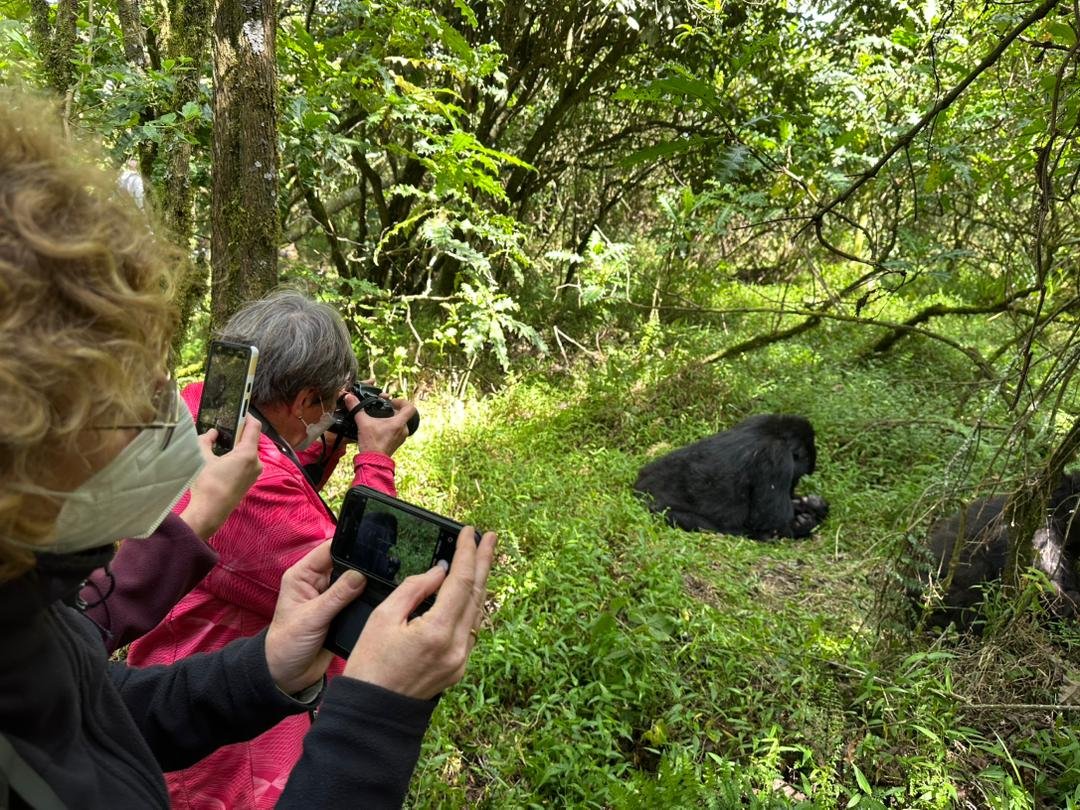
5-Day Uganda Gorilla and Chimpanzee Safari
This itinerary can be combined with a Rwanda extension or a wildlife-focused add-on through Queen Elizabeth National Park — browse our Uganda & Rwanda Safaris and Primate Safaris collections for ideas.
Tour Details →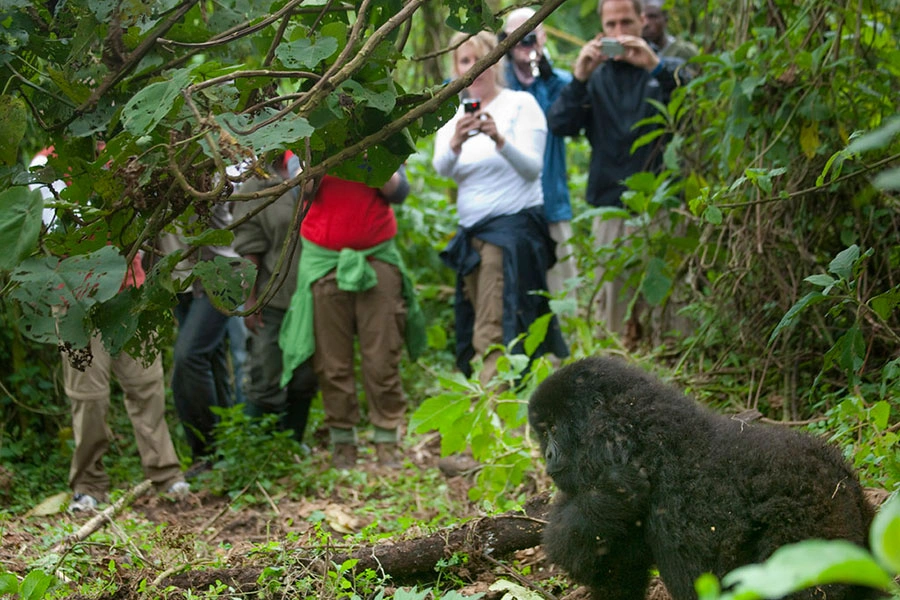
5 Days Rwanda Wildlife and Gorillas
This 5-day itinerary brings together Rwanda’s two flagship wildlife experiences: open savannah game drives and a boat safari in Akagera National Park, followed by a face-to-face encounters
Tour Details →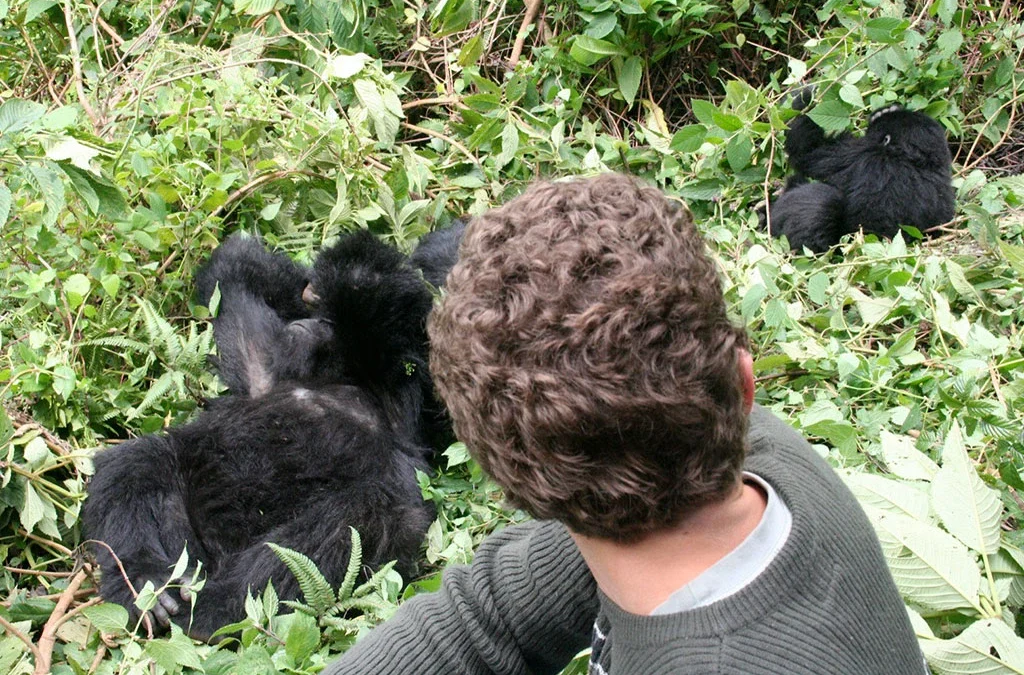
3 Days Uganda Gorilla Safari
For travelers who arrive in Entebbe with a tight schedule and a clear ambition, a 3-day gorilla safari to Bwindi Impenetrable Forest National Park is the most focused and rewarding short trip the country has to offer.
Tour Details →