- LET'S PLAN YOUR SAFARI
- +256 200 921 002
- +256 793 194 703
- info@pickandtransfersafaris.com

How to Plan a Cross-Border Gorilla Trek from Rwanda to Uganda
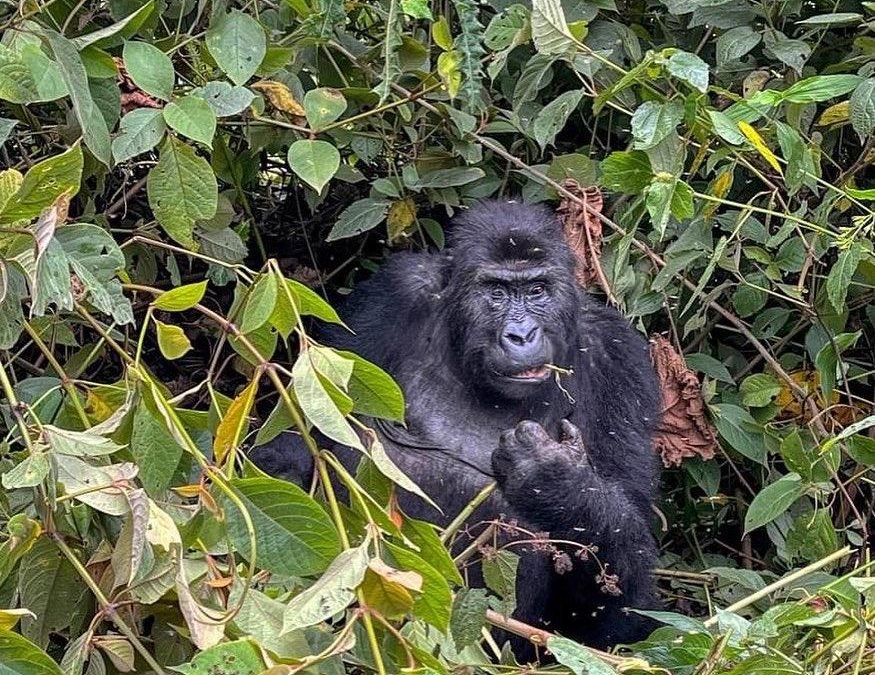
Planning a cross-border gorilla trek from Rwanda to Uganda can be straightforward with proper preparation, as thousands successfully cross the border each year without issues. This guide offers practical steps to ensure that the border crossing is a simple formality, allowing travelers to enjoy a seamless experience between Kigali and Uganda without the stress of potential complications.
We’ll cover the planning timeline, document checklist, route and border-post details, permit coordination between the two countries’ systems, how to choose the right itinerary length, and the specific small decisions — vehicle choice, lodge location, timing — that separate a genuinely smooth cross-border trip from a stressful one.
Start With the Right Itinerary Length for Your Trip
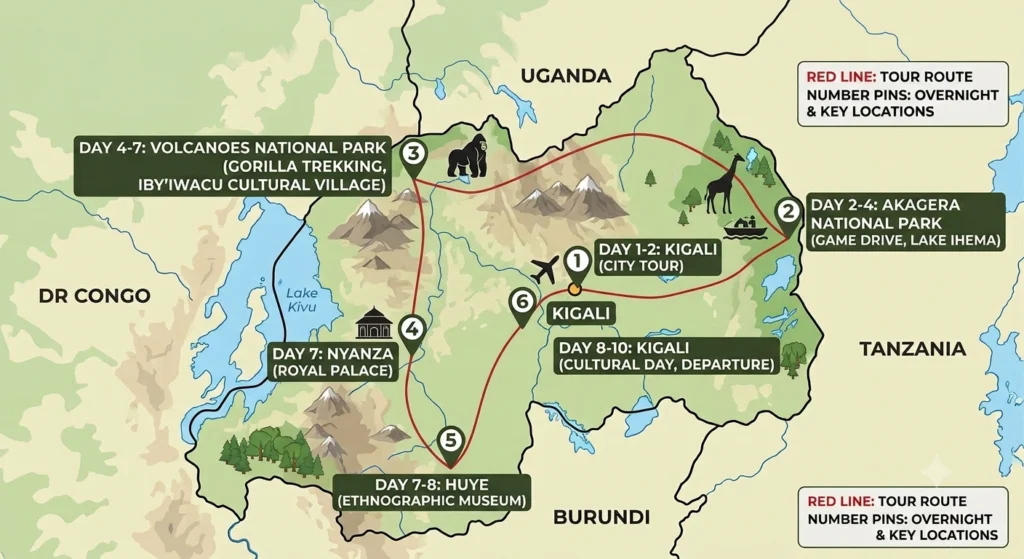
As you plan How to Plan a Cross-Border Gorilla Trek from Rwanda to Uganda before any document or booking decision, the single biggest factor in how seamless your cross-border trip feels is choosing an itinerary length that actually matches your schedule and comfort level. Trying to compress a trip into fewer days than it comfortably needs is the most common source of a rushed, stressful crossing experience — not border logistics themselves.
A one-day trip — crossing into Uganda, trekking, and returning to Kigali the same day — is genuinely possible and regularly run, but it leaves almost no margin for delay at either crossing. It’s the right choice only for travelers with a single free day and a realistic tolerance for a long, tightly scheduled day; our Express Gorilla Trek guide covers exactly what that day involves.
A two-day trip with one overnight near the trailhead removes the single biggest source of pressure — the need to make both crossings and complete the trek within one calendar day — while still keeping the trip compact. Full details are on our 2-Day Bwindi Gorilla Safari from Kigali page.
A three-day trip adds a second night and genuine breathing room on both ends, which is often the most comfortable structure for travelers planning their first cross-border trip and wanting the lowest-stress version of the experience; see our 3-Day Rwanda to Uganda Gorilla Express for the full breakdown.
If you’re unsure which length suits you, err toward the longer option — an extra night is a small cost against a meaningfully lower-stress crossing experience, particularly on your first attempt at this kind of trip.
Understand the Two Border Posts You’ll Actually Use
How to Plan a Cross-Border Gorilla Trek from Rwanda to Uganda
Nearly every Rwanda-to-Uganda gorilla trekking route uses one of two border crossings, and knowing which one applies to your trip removes a surprising amount of uncertainty from the planning process.
Cyanika, roughly 2.5 to 3 hours from Kigali via Musanze, is the crossing used for trips heading to Mgahinga Gorilla National Park and the town of Kisoro. It’s a smaller, quieter post than Katuna, generally processed quickly outside of peak holiday periods.
Katuna (also called Gatuna), roughly 3.5 to 4.5 hours from Kigali, is the crossing used for trips heading to Bwindi Impenetrable National Park‘s southern Rushaga and Nkuringo sectors. It’s one of the busiest tourist and commercial crossings in the region, well-organized but occasionally slower during peak trekking season.
Both posts are staffed year-round and used daily by tour vehicles, so neither is remotely unusual or risky to cross — the main planning task is simply knowing which one your itinerary uses and building a realistic time estimate around it.
The Document Checklist That Makes a Border Crossing Effortless
Almost every delay or stress point at a border crossing comes down to a document that wasn’t ready, not a systemic problem with the crossing itself. A complete, organized document set is the single highest-leverage thing you can prepare in advance.
A passport valid for at least six months beyond your travel dates — a standard requirement across the region that’s worth double-checking well before departure, not the week of your trip.
A Uganda visa, ideally arranged in advance through Uganda’s e-visa portal rather than relying on visa-on-arrival, which remains available at both Cyanika and Katuna but adds processing time that a pre-approved e-visa avoids entirely.
A yellow fever vaccination certificate — mandatory for entry into both Rwanda and Uganda, and checked at the border on both sides of the crossing. Carry the physical certificate alongside your passport; a photo on your phone is not considered acceptable by border officials.
Your gorilla permit confirmation, printed or easily accessible digitally, along with confirmation of your park sector and trekking date — this is checked again at the park headquarters, not just the border, so keep it accessible throughout the day rather than buried in luggage.
Any relevant travel insurance documentation, while not typically checked at the border itself, is worth having accessible for the trip as a whole, particularly given the remoteness of the trekking sectors on the Ugandan side.
Organizing these into a single folder or document wallet before you leave home — rather than assembling them the morning of the crossing — is, in our experience, the single most effective thing travelers can do to make the border crossing feel like a non-event.
Coordinating Permits Across Two Countries’ Systems
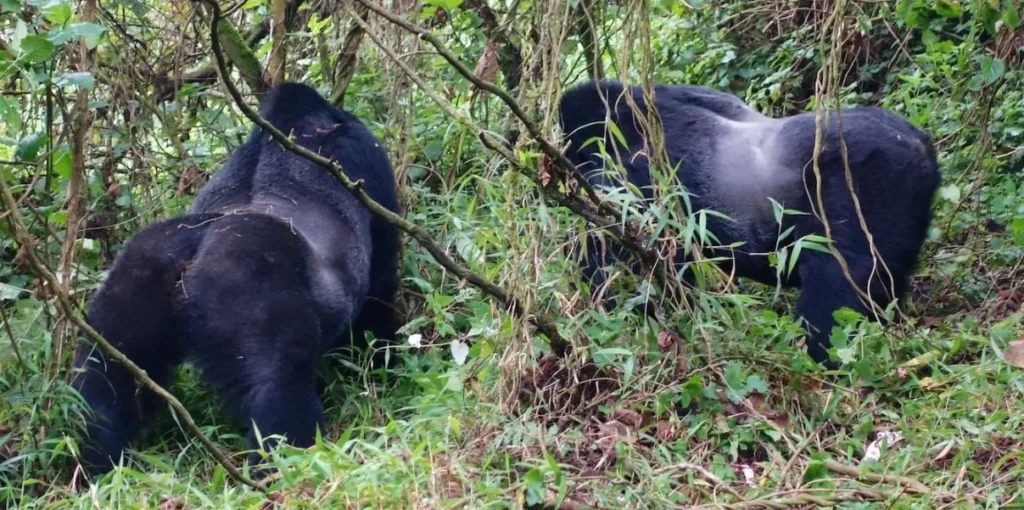
One detail that catches first-time cross-border trekkers off guard: Rwanda and Uganda operate entirely separate tourism and permit systems, run by different national authorities, and a permit purchased for one country’s park has no relevance in the other. If your plan is to trek gorillas in Uganda while based in Rwanda, your permit is a Uganda Wildlife Authority permit, priced and booked entirely separately from anything Rwanda-side.
This matters for two practical reasons. First, permit booking timelines differ from visa or accommodation booking timelines — Uganda gorilla permits for popular dates in June–September and December often sell out three to six months ahead, well before most travelers think about finalizing accommodation, so booking the permit early and building the rest of the trip around a confirmed date, rather than the reverse, avoids the most common planning mistake in cross-border trips. Second, if you’re combining a Uganda trek with a Rwanda-side trek — for instance in Volcanoes National Park — you’re managing two entirely separate permit bookings, potentially with two different lead times, and it’s worth confirming both dates are realistic together before committing to either.
We handle Uganda permit booking directly as part of every itinerary, coordinating the date against your Kigali arrival and any Rwanda-side plans, so you’re not managing two separate booking systems yourself.
Choosing the Right Vehicle and Driver-Guide
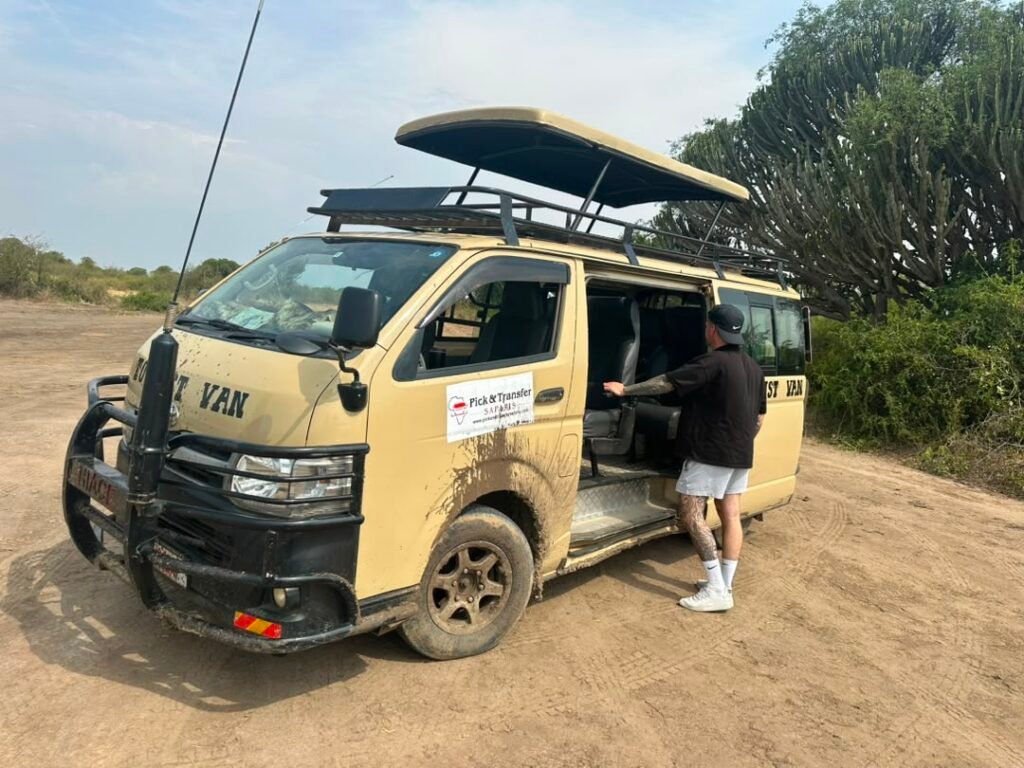
A cross-border trip is the one context where vehicle and driver choice genuinely changes the experience, more than on a single-country itinerary. A private 4×4, rather than a standard sedan, matters both for comfort on the unpaved stretches near Bwindi’s trailheads and for reliability — breaking down on a remote stretch of road between the border and the park is a far bigger complication on a tight schedule than it would be on a flatter, better-paved single-country route.
Equally important is a driver-guide genuinely experienced with the specific border post your itinerary uses. Someone who crosses Cyanika or Katuna regularly knows which paperwork to have ready, roughly how long the crossing typically takes at different times of day, and how to handle the practical coordination with border officials — all of which meaningfully reduces the friction of the crossing itself compared with a driver encountering the post for the first time alongside you.
Timing Your Crossing to Avoid Delays
Border crossing times vary meaningfully by time of day and season, and building this into your planning avoids one of the more common sources of an unexpectedly long day. Both Cyanika and Katuna tend to be busiest in the mid-morning, as tour vehicles converge heading toward the parks for the standard 7:30–8:00 AM trekking briefing, and again in the afternoon as return traffic picks up. Crossing earlier in the morning, where your itinerary allows it, or accepting a slightly later evening return on the way back, generally means a faster, quieter crossing experience.
Peak season — June through September and December through February — brings higher overall crossing volumes on both sides, simply because more tourists are moving through the region during these months. If your trip falls during peak season, building an extra 30 to 45 minutes of buffer into your crossing estimate is a reasonable, low-cost way to protect the rest of your day’s schedule.
Choosing Where to Stay Around the Crossing
For two and three-day itineraries, lodge location plays a bigger role in how seamless the trip feels than it might first appear. Staying at a lodge close to the trailhead — rather than, for instance, further back toward the border — minimizes the amount of driving squeezed into the trekking day itself, which matters given how early gorilla trekking mornings already start. It also means your first evening after crossing the border is spent settling in rather than continuing to drive, which noticeably changes the feel of the trip’s pacing.
We match lodge selection to both your budget and your itinerary’s border-crossing point as part of every booking, since a lodge that’s perfectly positioned for a Cyanika-based Mgahinga trip may add unnecessary driving time to a Katuna-based Bwindi trip, and vice versa. This kind of routing detail is exactly the sort of thing worth flagging when you get in touch to plan your trip.
What a Seamless Day Actually Looks Like
A seamless border crossing typically involves your driver parking in a designated area, escorting your group to the immigration window with organized documents, and having passports stamped quickly, followed by a brief walk or drive between checkpoints. The process is repeated on the Ugandan side, resulting in a total time of about 30 to 60 minutes. The experience largely depends on document preparation and the driver’s familiarity with the crossing, both of which can be managed during trip planning.
Combining a Cross-Border Trek With a Rwanda-Side Experience
Travelers planning a gorilla trek often build their Rwanda itineraries around it, with effective combinations like pairing the Uganda gorilla trek with a visit to Akagera National Park for Big Five game drives and boat safaris without needing a second border crossing, exemplified by the 5 Days Rwanda Wildlife and Gorillas itinerary. For those wanting to experience gorilla trekking in both countries, adding a trek in Rwanda’s Volcanoes National Park alongside the Uganda trek is an option, with the 2 Days Volcanoes Gorilla Trek from Kigali available to schedule before or after the Uganda crossing for those with sufficient time.
Money, Currency, and Payments Across the Border
A small but often-overlooked part of cross-border planning is currency. Rwanda uses the Rwandan franc and Uganda uses the Ugandan shilling, and while US dollars are widely accepted for larger payments like permits, lodges, and tips on both sides of the border, small purchases — roadside snacks, craft stalls, tips for individual staff — are easier with a modest amount of local currency in hand. It’s worth carrying a small amount of Ugandan shillings before crossing if your itinerary includes any Uganda-side stops beyond the trek itself, since currency exchange options directly at the border posts are limited and not always offering favorable rates.
US dollar bills for permit-related and lodge payments should be relatively recent (post-2006 series bills are generally preferred across East Africa) and free of tears, stains, or excessive wear, since older or damaged notes are sometimes refused by lodges and vendors in both countries. Card payment infrastructure is improving steadily around Bwindi and Mgahinga but remains inconsistent, so treating cash as the primary payment method for the Uganda leg of your trip, rather than a backup, avoids unnecessary complications.
Staying Connected During the Crossing
Mobile connectivity is a smaller but genuinely practical part of a smooth cross-border trip. Rwandan SIM cards generally lose signal shortly before or at the border, and Ugandan networks pick up on the other side, so travelers relying on a Rwandan SIM for navigation or communication should expect a coverage gap around the crossing itself. Purchasing a Ugandan SIM card is possible at some border-area shops, though signal near the trekking sectors themselves — particularly deep in the forest — is patchy at best regardless of provider.
For most travelers, the practical solution is simpler than solving for full connectivity: let family, colleagues, or anyone expecting updates know in advance that you’ll likely be offline for a stretch of the trip, particularly during the trek itself, and rely on your driver-guide’s local knowledge and radio contact with rangers rather than your own phone signal for anything time-sensitive during the crossing and trekking day.
Packing for Two Climates in One Trip
Kigali and the areas immediately around it sit at a slightly lower elevation and generally milder, more temperate climate than Bwindi and Mgahinga’s higher, cooler, and often wetter forest environment. A cross-border trip effectively asks you to pack for both in one bag: lighter layers for the Rwandan side of the journey, and the full waterproof, layered trekking kit — boots, rain jacket, gloves, gaiters — for the Uganda forest leg. Packing everything as adaptable layers, rather than climate-specific outfits, keeps your bag manageable across both environments without needing to overpack for either.
Common Planning Mistakes That Undermine a Seamless Trip
Booking accommodation before confirming the permit date. Because Uganda gorilla permits can sell out months ahead in peak season, locking in lodging around a permit date that later turns out to be unavailable creates unnecessary rebooking stress — confirm the permit first.
Assuming visa-on-arrival will always be fast. It usually is, but pre-arranging a Uganda e-visa removes one more variable from a schedule that, on shorter itineraries especially, has limited room to absorb delay.
Packing the yellow fever certificate away in checked luggage or a phone photo only. This single document causes more border delays than any other, almost always because it wasn’t immediately accessible.
Underestimating driving time on the Ugandan side. The final stretch into Bwindi’s southern sectors in particular includes unpaved, switchbacked sections that run slower than GPS estimates suggest — build in extra time rather than planning to the minute.
Choosing an unfamiliar or shared vehicle for a cross-border route. Given how much smoother a crossing runs with an experienced driver-guide, this is one area where it’s worth prioritizing operator experience over the lowest quoted price.
Not communicating onward flight or schedule details. If your trip needs to connect with a flight out of Kigali, flagging this in advance lets your driver-guide build the day’s schedule with a realistic buffer, rather than discovering the constraint partway through the trip.
A Sample Planning Timeline
For travelers who like a concrete framework, here’s a reasonable planning timeline for a cross-border gorilla trek, working backward from your travel dates.
Three to six months ahead: Confirm your travel dates and itinerary length, and book your Uganda gorilla permit — the single most time-sensitive step, particularly for June–September and December travel.
Two to three months ahead: Confirm accommodation near your chosen trailhead, apply for your Uganda e-visa, and check that your passport’s validity comfortably covers your travel dates.
Four to six weeks ahead: Arrange travel insurance covering trekking activities and emergency evacuation, and confirm your yellow fever vaccination is current (the vaccine itself, if you don’t already have it, typically needs to be administered at least ten days before travel for the certificate to be valid).
One to two weeks ahead: Finalize packing, print or download all key documents (permit confirmation, visa approval, yellow fever certificate), and confirm pickup timing with your driver-guide, including any flight details relevant to your first or last day.
The night before your crossing: Organize all documents into one easily accessible folder, pack a daypack rather than a large bag for the trekking day itself, and get a genuinely early night if your itinerary includes a pre-dawn start.
How This Compares to Planning a Single-Country Trip
It’s worth being clear that a cross-border trip does require a bit more planning discipline than a single-country Rwanda-only or Uganda-only itinerary — there’s a second visa, a second country’s permit system, and a border crossing to account for. In practice, though, none of these add meaningfully to the trip’s cost or difficulty once properly planned; they simply move a few planning steps earlier in the process. For a like-for-like comparison of how a Uganda-based operator structures a similar cross-border route, Kenlink Tours’ 2 Days Uganda Gorilla Safari Starting from Kigali and 3 Days Bwindi Gorilla Safari Starting from Kigali are useful references worth reviewing alongside our own itineraries.
Frequently Asked Questions About Planning a Cross-Border Gorilla Trek
Do I need separate travel insurance for Rwanda and Uganda? No — most comprehensive travel insurance policies cover multi-country trips within a single policy; just confirm your policy explicitly covers trekking activities and emergency evacuation in both countries before you travel.
Can the same driver-guide take me across the border and back, or do I need to switch vehicles in Uganda? A private tour with a Rwanda-registered driver-guide experienced on this route typically handles the entire journey, though some cross-border logistics occasionally involve a vehicle or guide handoff at the border depending on operator and vehicle registration rules — worth confirming directly when booking.
What happens if my Uganda visa application is delayed? This is exactly why applying several weeks ahead rather than the week of travel matters; a delayed e-visa with enough lead time rarely becomes a real problem, while a last-minute application leaves little room to resolve an issue before your trip.
Is the crossing different for a one-day trip versus a two or three-day trip? The crossing process itself is identical regardless of itinerary length — what changes is how much schedule buffer surrounds it, which is the main reason one-day trips carry more risk of feeling rushed.
Can I bring a drone to photograph the crossing or the trek? Drones are heavily restricted in both countries’ national parks and generally require separate permits or are prohibited outright near the gorilla trekking sectors — check current rules with your operator well before packing one, since confiscation at the border is a real possibility for undeclared equipment.
What if I want to cross the border more than once during my trip? This is entirely possible — some itineraries build in two crossings, for instance combining a Uganda trek with a later Rwanda-side one — and simply requires confirming your visa terms allow multiple entries if needed.
Planning Your Cross-Border Trek With Pick and Transfer Safaris
A cross-border gorilla trek from Rwanda to Uganda is far more routine than it sounds on paper — the crossings themselves are quick and well-established, and nearly every source of stress in a trip like this comes down to preparation rather than the border itself. At Pick and Transfer Safaris, we handle every layer of that preparation directly: permit booking with Uganda Wildlife Authority, visa guidance, a private 4×4 with a driver-guide experienced on both the Cyanika and Katuna routes, and lodge selection matched to your chosen crossing point and budget.
To start planning, browse our full Gorilla Safaris collection to compare itinerary lengths, or reach out directly through our contact page with your travel dates, preferred park, and group size. We’ll confirm permit availability, build a realistic crossing and trekking schedule, and handle the paperwork on both sides of the border — so the only thing you need to plan is what to pack.