- LET'S PLAN YOUR SAFARI
- +256 200 921 002
- +256 793 194 703
- info@pickandtransfersafaris.com

Kigali & Rwanda History
Kigali & Rwanda History. Most visitors arrive in Rwanda for the gorillas, and leave having fallen for something they didn’t expect: a country whose history explains almost everything about how it looks, feels and functions today. Kigali’s cleanliness and order, the reverence around its memorial sites, the discipline behind its conservation programs, and the quiet pride Rwandans carry in their country’s recovery all trace back to a history that spans an ancient centralized kingdom, a difficult colonial period, one of the twentieth century’s darkest chapters, and one of its most remarkable recoveries. At Pick and Transfer Safaris we believe a Rwanda trip is richer when travelers understand this history before they land, not just at the Genocide Memorial itself. Resources such as Kenlink Tours, including their own 1 Day Kigali City Tour, cover much of this same ground for travelers planning a dedicated history day in the capital. This guide walks through Rwanda’s full story — the pre-colonial kingdom, colonization, the 1959 revolution, the genocide against the Tutsi, and the reconciliation and rebuilding that followed — along with practical guidance on visiting Kigali’s historical sites respectfully. Broader background reading through Kenlink Tours’ own Rwanda Safaris overview is a useful companion if you want additional context on how this history intersects with the country’s parks and wildlife programs.
Why Understanding Rwanda’s History Deepens Your Visit
Gorilla trekking and wildlife safaris are what bring most travelers to Rwanda, but skipping the country’s history means missing the context behind everything else you’ll see. Kigali’s order and safety aren’t accidental; they reflect a deliberate, decades-long national project of rebuilding trust and institutions after 1994. Understanding that history transforms a visit to the Genocide Memorial from an obligatory stop into something genuinely meaningful, and it adds real depth to conversations with Rwandan guides, drivers and lodge staff, many of whom lived through or were shaped by the events covered in this article. Travelers who take even a little time to learn this history before arriving consistently report a noticeably richer trip than those who treat the Genocide Memorial as a box to tick between more “enjoyable” activities — the two aren’t in competition, and this history is part of what makes the wildlife-conservation story elsewhere in the country feel so significant.
Rwanda’s Pre-Colonial Kingdom: The Mwami and a Centralized Monarchy
Long before European contact, the Kingdom of Rwanda was one of the most centralized and organized pre-colonial states in the African Great Lakes region, ruled by a monarch known as the Mwami. The kingdom expanded steadily from around the sixteenth century, consolidating smaller chiefdoms under royal authority backed by a structured court, regional administrators and a formal system of cattle clientship that bound subjects to patrons across the kingdom. This wasn’t a loose collection of villages but a genuine state with its own administrative logic, one that later colonial powers would exploit rather than invent when they arrived. Royal power was reinforced through elaborate court ritual, a standing military structure, and a network of regional chiefs who answered directly to the Mwami, giving pre-colonial Rwanda a level of administrative cohesion that surprised early European visitors accustomed to assuming the region had no organized governance of its own before their arrival.
Life and Society in Pre-Colonial Rwanda
Rwandan society before colonization was organized around a complex social hierarchy in which the labels Hutu, Tutsi and Twa originally described social and economic categories rather than fixed ethnic groups in the modern sense — categories tied to occupation, cattle ownership and proximity to the royal court, with real mobility between them over a lifetime or generation. Twa communities, the country’s earliest inhabitants, were traditionally associated with forest life and pottery; Hutu communities were predominantly associated with farming; Tutsi communities were more closely associated with cattle-keeping and court life, though the lines were considerably blurrier in practice than colonial administrators would later insist. This shared language, shared culture and shared religion across the three groups is an important fact often lost in simplified retellings of Rwanda’s story, and it’s precisely why historians and Rwandans themselves are careful to describe what followed under colonial rule as the hardening of a flexible social system into something far more rigid and consequential, rather than the discovery of some pre-existing, immutable ethnic divide.
German East Africa: Rwanda’s First Colonial Period (1897–1916)
Germany claimed Rwanda as part of German East Africa beginning in the 1890s, ruling largely through the existing monarchy rather than replacing it outright, a system historians call indirect rule. German administrators worked through the Mwami and existing chiefs, extracting resources and asserting nominal control while making relatively few direct changes to Rwandan society itself in this initial period. This changed dramatically with the colonial power that followed. German administrators had neither the resources nor, in this early period, the specific policy intent to fundamentally restructure Rwandan society, and their brief tenure ended with Germany’s defeat in the First World War, transferring control of the territory to Belgium under a League of Nations mandate rather than allowing German colonial policy to fully mature.
Belgian Rule and the Hardening of Ethnic Division (1916–1959)
Belgium took control of Rwanda during the First World War and formalized its rule under a League of Nations mandate, later a United Nations trusteeship, administering Rwanda and neighboring Burundi jointly as Ruanda-Urundi. Belgian administrators dramatically intensified the pre-colonial social hierarchy, introducing identity cards in the 1930s that fixed Hutu, Tutsi and Twa as rigid, hereditary ethnic categories rather than the more fluid social groupings they had previously been. Belgian colonial policy also favored Tutsi elites for education and administrative roles for much of this period, embedding a racialized hierarchy that historians now widely agree was significantly more rigid and more consequential than anything that existed before European rule — a colonial legacy that set the stage for the violence to come. Belgian administrators also relied heavily on Catholic missionary education, which reinforced these same categories through the church-run schools that produced much of Rwanda’s early twentieth-century elite, embedding the classification system into institutions that long outlasted Belgian rule itself.
The 1959 Revolution and the Road to Independence
Rwanda’s colonial-era hierarchy began to unravel in November 1959, when a wave of Hutu-led violence against Tutsi elites, combined with organized political mobilization, evolved into what’s now known as the Rwandan Revolution. Belgium, shifting its own colonial policy, backed the Hutu political movement led by Grégoire Kayibanda, and Rwanda declared itself a republic in January 1961, forcing the Tutsi monarch into exile. Formal independence followed in July 1962, but the revolution had already displaced large numbers of Tutsi into neighboring countries, planting the seeds of instability that would recur for decades. Belgium’s abrupt policy reversal — having spent decades favoring Tutsi elites before switching support to the Hutu-led movement in its final years of colonial rule — is itself widely cited by historians as a telling example of how colonial administrations shaped Rwanda’s trajectory right up to the moment they departed, rather than simply stepping aside at independence.
Independence in 1962 and Its Turbulent Aftermath
Post-independence Rwanda under President Kayibanda, and later President Juvénal Habyarimana after a 1973 coup, institutionalized ethnic quotas and periodic violence against Tutsi communities, driving repeated waves of refugees into Uganda, Burundi, Tanzania and Congo over the following decades. These decades were not uniformly violent — Rwanda experienced periods of relative stability and even modest economic development under both presidents — but the underlying ethnic quota system in education, employment and government positions meant discrimination remained a structural feature of daily life for Tutsi citizens throughout, rather than an occasional or isolated problem. Many of these refugees and their children, raised largely in exile, would later form the core of the Rwandan Patriotic Front, a rebel movement that invaded Rwanda from Uganda in 1990, triggering a civil war that ran alongside escalating extremist rhetoric inside the country through the early 1990s. This decades-long refugee experience, spanning multiple generations born entirely outside Rwanda, is part of why so many senior figures in Rwanda’s post-genocide government spent significant portions of their lives in Uganda specifically, a connection that still shapes the close relationship — and periodic tension — between the two countries today.
The Road to 1994: Civil War and Rising Extremism
The early 1990s saw a fragile peace process, including the 1993 Arusha Accords intended to share power between the Habyarimana government and the Rwandan Patriotic Front, run in parallel with an increasingly organized campaign of anti-Tutsi propaganda by Hutu extremist media and militia groups. Weapons were distributed, target lists were prepared, and hate radio broadcasts normalized dehumanizing language well before the killing began, evidence that has since been central to establishing the genocide’s premeditated nature in international tribunals. International peacekeepers were present in Rwanda under a limited UN mandate during this period, but their mission was neither resourced nor authorized to intervene forcefully as tensions escalated, a gap that would prove catastrophic once violence actually began.
The Genocide Against the Tutsi: April–July 1994
On April 6, 1994, President Habyarimana’s plane was shot down over Kigali, an event extremist leaders used as the trigger for a campaign planned well in advance. Over roughly one hundred days between April and July 1994, extremist militias and ordinary citizens mobilized by propaganda killed an estimated 800,000 to one million people, the vast majority Tutsi, along with moderate Hutu who resisted or were targeted for opposing the killing. Violence occurred across the entire country, in homes, churches, schools and government buildings, and Kigali itself was both the site of some of the earliest killings and the eventual focus of the military campaign that ended them. This is difficult history, and it’s presented here only in the factual terms necessary for understanding modern Rwanda, not in graphic detail — the Kigali Genocide Memorial itself is the appropriate place to engage with this history more deeply, and does so with considerable care. What’s often underappreciated by first-time visitors is the speed and organization involved — this wasn’t spontaneous communal violence but a coordinated campaign using existing local administrative structures, which is part of why the death toll climbed so quickly and why the international community’s failure to intervene sooner remains such a significant point of historical reckoning.
How the Genocide Ended and What Came After
The genocide ended in July 1994 when the Rwandan Patriotic Front, advancing from the north, captured Kigali and defeated the forces responsible for the killing, establishing a new government committed to national unity. In the aftermath, more than a million people, including many perpetrators, fled into neighboring countries, principally what was then Zaire, creating a refugee and security crisis that would shape the region’s politics for years afterward. The international community’s slow and limited response during the genocide itself remains a significant and widely acknowledged failure, one that has directly influenced how seriously Rwanda’s government now approaches early warning and prevention in its own foreign policy. Rwanda has since become an active contributor to international peacekeeping missions elsewhere in Africa, a stance its leadership has explicitly connected back to the international community’s failure to act in 1994, turning a national trauma into a consistent thread in the country’s modern foreign policy identity.
Reconciliation, Gacaca Courts and National Healing
Rebuilding a functioning society after 1994 required Rwanda to prosecute an almost unimaginable number of suspects, and the country developed a distinctive approach to do it. Alongside the International Criminal Tribunal for Rwanda, which prosecuted senior organizers, Rwanda revived a traditional community court system known as gacaca to try lower-level participants at the local level, ultimately processing well over a million cases through a combination of testimony, confession and community judgment. The gacaca system was controversial even within Rwanda and among international legal observers, criticized by some for inconsistent standards while praised by others for achieving a scale and speed of justice the formal court system alone could never have managed — a genuine trade-off the country accepted in order to move forward rather than leave hundreds of thousands of cases permanently unresolved. The government also invested heavily in national reconciliation programs, deliberately moving away from the rigid Hutu-Tutsi-Twa identity categories in official life and promoting a shared Rwandan national identity as the foundation for rebuilding trust between communities that had to keep living side by side. Reconciliation villages, where survivors and released perpetrators live as neighbors under structured community programs, remain one of the more striking and, to many outside visitors, unexpected features of this process — a deliberate choice to prioritize coexistence over prolonged separation, however difficult that choice has been for individual families involved.
Rwanda’s Remarkable Recovery: Vision 2020 and Vision 2050
Rwanda’s post-genocide government, led since 2000 by President Paul Kagame, set out an ambitious long-term development plan known as Vision 2020, aiming to transform Rwanda from a low-income, aid-dependent economy into a middle-income, knowledge-based one within two decades. The plan drove major investment in governance, healthcare, education, technology and infrastructure, and much of what visitors notice about Rwanda today — reliable roads, widespread mobile connectivity, a genuinely low crime rate, and Kigali’s noticeably clean streets — traces directly back to this sustained policy focus. Rwanda has since followed with Vision 2050, an even longer-term plan targeting high-income status, with tourism, including exactly the kind of gorilla trekking and wildlife safaris covered elsewhere on our Wildlife Safaris and Gorilla Safaris pages, identified as a central pillar of that strategy. Kigali’s own convention and technology sector growth is part of the same plan, positioning the city as a regional hub for conferences and business travel that now complements, rather than competes with, its role as the gateway to Rwanda’s national parks — reading through Kenlink Tours’ overview of the best Rwanda safari experiences for nature lovers gives a useful sense of how central tourism has become to that broader national strategy.
Kigali’s Own History: From Colonial Outpost to Africa’s Cleanest Capital
Kigali itself began not as a traditional royal capital but as a colonial administrative post, founded in 1907 by German colonial officer Richard Kandt on a hill chosen largely for its central, defensible location. It remained a relatively modest town through the German and Belgian colonial periods and even into the early years of independence, only growing into Rwanda’s primary urban center gradually over the twentieth century. Its selection as capital over other, older settlements was itself largely a colonial-era decision tied to its central geography and defensible hilltop terrain, features that continue to shape the city’s distinctive layout across a series of ridges and valleys rather than a single flat urban grid. Kigali’s transformation into the tidy, orderly capital travelers encounter today — regularly cited among Africa’s cleanest cities — is a distinctly post-genocide story, built through deliberate urban planning, a nationwide ban on plastic bags, and monthly community clean-up mornings known as Umuganda that remain mandatory civic practice today. Visitors are sometimes surprised to learn that Umuganda, held on the last Saturday of every month, involves the president and senior officials alongside ordinary citizens, a small but telling detail about how seriously the post-genocide government has treated collective civic responsibility as part of the country’s rebuilding. Our Kigali City destination page covers the practical side of visiting the modern capital in more detail.
The Kandt House Museum and Kigali’s Colonial Roots
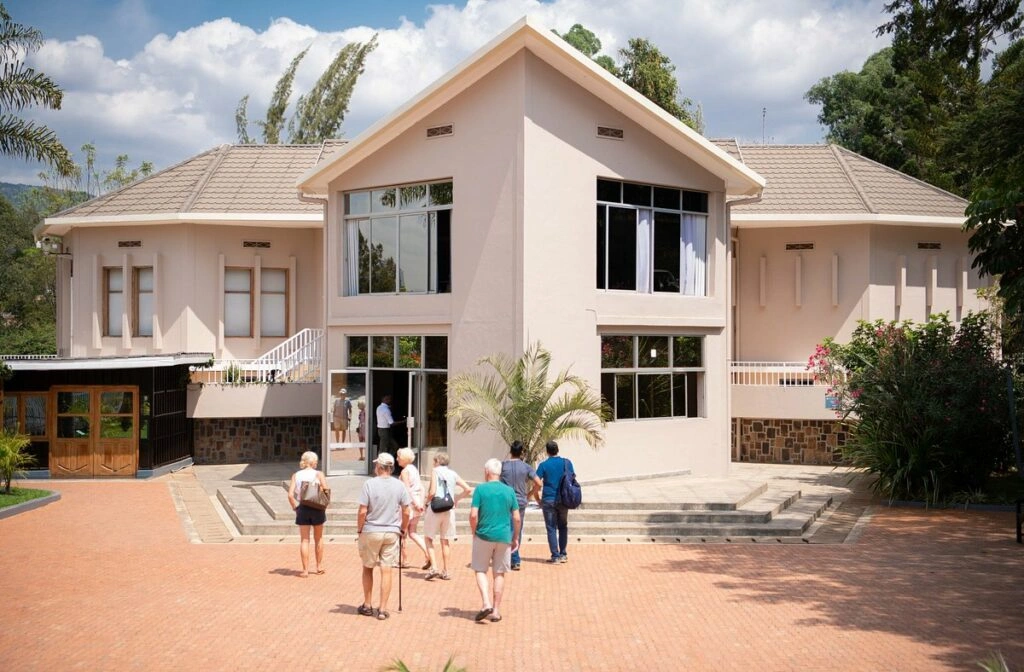
Richard Kandt’s original colonial residence still stands in Kigali and today houses the Kandt House Museum, also known as the Natural History Museum, covering the city’s founding and colonial-era history alongside Rwanda’s natural history. It’s a smaller, quieter stop than the Genocide Memorial but a genuinely useful complement to it, giving visitors a clearer sense of how Kigali physically began before tracing the harder history that followed. Exhibits cover both Kandt’s own role as the city’s colonial founder and a broader natural history collection, including displays on Rwanda’s snakes and regional wildlife, making it a lighter, family-friendly stop that pairs well with a more demanding morning at the memorial. Independent coverage of the 1 Day Kigali City Tour includes a stop here alongside the city’s other historical landmarks, and it’s an easy addition to any Kigali-based itinerary, typically requiring no more than an hour and easily combined with a stop at nearby Kimihurura for lunch or coffee afterward.
Visiting the Kigali Genocide Memorial Today
The Kigali Genocide Memorial, resting place for more than 250,000 victims, is the country’s primary site of remembrance and the place most visitors should prioritize for understanding this history properly and respectfully. Its exhibitions move chronologically from pre-colonial Rwanda through colonization, the genocide itself, and the country’s reconciliation process, presented with considerable care and without gratuitous imagery. A dedicated section on the memorial’s upper floor also documents genocides in other parts of the world, situating Rwanda’s experience within a broader, sobering pattern of twentieth-century mass violence rather than presenting it as an isolated national tragedy — a curatorial choice many visitors find adds important context rather than diluting the specificity of what happened in Rwanda itself. Most visitors find that budgeting at least ninety minutes, and treating the rest of the day gently afterward, makes for a far more meaningful visit than a rushed walkthrough squeezed between other activities. The memorial’s outdoor gardens, including the mass graves where victims are buried and a wall of names still being added to as identification work continues decades later, are as important to the experience as the indoor exhibition itself, and many visitors find the quiet, deliberately landscaped grounds allow for a kind of reflection the exhibition halls alone don’t provide. This is consistently the most highly recommended stop within our own Kigali City guide and within most well-planned Kigali itineraries generally.
Other Genocide Memorial Sites Worth Understanding
Kigali and the surrounding region hold several other sites connected to this history, each offering a different lens on the same period. The Presidential Palace Museum, the former residence of President Habyarimana, focuses on the events surrounding his death and the start of the genocide. The Campaign Against Genocide Museum, housed at Parliament, documents the Rwandan Patriotic Front’s military campaign that ended the killing. Hotel des Mille Collines, which sheltered more than a thousand people during the genocide and later inspired the film Hotel Rwanda, remains a working hotel today, and many visitors choose to stop for a drink or meal there specifically because of its history, though the hotel itself keeps the association relatively understated rather than turning it into a tourist attraction. Independent coverage through the Kigali city tour itinerary includes several of these sites for travelers who want a fuller historical picture beyond the main memorial alone; most travelers, however, find the Kigali Genocide Memorial sufficient and appropriately paced for a first visit. Nyamata Church, roughly forty-five minutes outside Kigali, is a more intense site than the memorial itself, preserving physical remnants of the violence that took place there — it’s worth discussing with your guide in advance whether this level of directness is right for you, since it affects far more visitors emotionally than the more curated memorial exhibition does.
How Rwanda’s History Shapes Modern Conservation and Tourism
Rwanda’s post-genocide recovery and its conservation success are more connected than they might first appear. Akagera National Park, largely stripped of wildlife and encroached upon by returning refugees in the aftermath of the genocide, was rebuilt into a functioning Big Five ecosystem through a deliberate, well-funded partnership between the Rwandan government and international conservation organizations — a recovery story that mirrors the national one. Coverage of a dedicated Akagera game drive safari and Nyungwe Forest National Park tour both touch on this same theme — that Rwanda’s wildlife recovery and its national recovery were never entirely separate projects, but two expressions of the same post-genocide commitment to rebuilding what had been lost or degraded. Our Akagera National Park and Volcanoes National Park destination pages both touch on this connection between national history and modern conservation, and gorilla permit revenue’s direct funding of community development is itself an extension of the same post-genocide philosophy: shared national investment as the foundation for reconciliation and stability.
Rwanda’s Culture and Traditions Rooted in Its History
Traditional Rwandan culture — intore dance performances, drumming, basket weaving and oral storytelling — survived colonization and genocide and remains very much alive today, often presented to visitors through community-based cultural tourism that channels income directly to local artisans and performers. Our 3 Days Rwanda Gorilla Tracking and Cultural Tour pairs gorilla trekking with exactly this kind of cultural experience, and independent coverage of a similar wildlife and cultural tour shows how the regional tourism industry generally weaves history and culture into wildlife-focused itineraries rather than treating them as separate add-ons. This same principle extends to Uganda, where independent coverage of a cultural and gorilla tour reflects a broader regional pattern of pairing primate trekking with community cultural experiences across East Africa’s leading safari destinations.
A Suggested Kigali History Day: What to See and How Long to Spend
For travelers who want to dedicate a full day to Kigali’s history, a sensible structure starts with the Kigali Genocide Memorial in the morning while energy and attention are highest, followed by a lighter stop at the Kandt House Museum before lunch. Afternoons work well for something more restorative — Kimironko Market, Inema Arts Center, or a walk through the Kimihurura neighborhood’s galleries and cafés — rather than scheduling anything else emotionally demanding on the same day. Nyamirambo, one of Kigali’s older and more traditionally lively neighborhoods, is another strong afternoon option, particularly through a community-run walking tour that offers a more grounded, everyday view of the city than the more polished districts nearer the center. Travelers with a second day available can add the Presidential Palace Museum or a half-day trip to Nyamata, though most short itineraries do well to treat the main memorial as the priority and build outward from there only if time allows.
How to Visit Respectfully: Etiquette at Memorial Sites
Photography is restricted in parts of the Kigali Genocide Memorial’s exhibition halls, and visitors should expect and respect this, along with a generally quiet, reflective tone throughout the grounds. Dressing modestly, speaking quietly, and allowing extra time rather than rushing through on a tight schedule are all appreciated, as is engaging thoughtfully if a guide or fellow visitor wants to share a personal connection to this history — many Rwandan guides have their own family stories tied directly to these events. It’s generally considered inappropriate to ask a guide directly about their personal experience of the genocide unless they raise it themselves — most are glad to share context and history, but the choice of how much to disclose about their own family’s story should always remain theirs. Children are welcome at the memorial gardens, though the indoor exhibition content is more appropriate for older visitors given its subject matter. If you’re arranging transport independently rather than through a full-service operator, comparing options through Kenlink Tours’ car hire page alongside your main operator’s transfer service is worth doing, though most travelers find a guided visit considerably smoother than navigating memorial site logistics independently.
Combining History with Wildlife: Where Kigali Fits in a Rwanda Safari
Most well-planned Rwanda itineraries build a Kigali history day in at the start or end of the trip, bookending the wildlife-focused days in Volcanoes, Akagera or Nyungwe. Our 4 Days Rwanda Wildlife and City Tour is built specifically around this combination, and both our longer 5-Day Rwanda Safari Itinerary and full 10-Day Rwanda Safari Itinerary include dedicated Kigali time at the start of the trip for exactly this reason. Treating history and wildlife as complementary parts of one trip, rather than choosing between them, is consistently what past travelers say made their visit to Rwanda feel complete rather than one-dimensional. Scheduling the history day at the start of a trip, rather than the end, also tends to work better logistically — arriving after a long flight with a lighter, more reflective first day gives most travelers a gentler introduction to the country than launching straight into an early-morning gorilla trek before they’ve properly adjusted.
Why Book Your Kigali History Tour with Pick and Transfer Safaris
Visiting sites connected to Rwanda’s history well requires more than simply showing up — it benefits from a guide who can provide accurate context, pace the day appropriately, and know when a visitor needs a quieter moment before moving on. Our Pick and Transfer Safaris team builds Kigali history days as a genuine part of the itinerary, not an afterthought squeezed between the airport and the parks, drawing on our full destinations coverage and safari packages to build a trip that fits your interests and pace. We work with guides who bring genuine local knowledge to Kigali’s historical sites, not just a fixed script, which makes a real difference in how meaningful these visits end up feeling — a point echoed in independent operator reviews such as Kenlink Tours’ own About Us page, which emphasizes the same value placed on experienced, community-connected guiding across the region. Our About Us page explains the approach we bring to every itinerary we design.
Frequently Asked Questions About Rwanda’s History
Is it appropriate to visit the Genocide Memorial as a tourist? Yes — Rwanda actively encourages visitors to learn this history, and the memorial itself is built to welcome respectful visitors as part of the country’s broader commitment to remembrance and education. How much time should I set aside for Kigali’s historical sites? At least half a day for the Genocide Memorial alone, with a full day recommended if you want to add the Kandt House Museum or other sites. Are children able to visit these sites? The memorial gardens are appropriate for most ages, though the indoor exhibition is generally recommended for older children and adults given the subject matter. How does this history connect to the gorilla trekking most visitors come for? Gorilla conservation funding and community development in Rwanda are directly tied to the same post-genocide national rebuilding philosophy, making the two experiences more connected than most first-time visitors expect. What’s the difference between visiting the Genocide Memorial and Nyamata Church? The memorial offers a curated, chronological exhibition suited to most visitors, while Nyamata presents more direct physical evidence of the violence and is generally recommended only for those who feel prepared for a more intense experience. Can I learn this history without visiting a memorial site directly? Yes, to some extent — the Kandt House Museum and a knowledgeable guide can provide meaningful historical context even for travelers who choose not to visit the Genocide Memorial itself, though most find the memorial the single most valuable stop for genuinely understanding modern Rwanda.
Book your trip to explore Kigali & Rwanda History with Pick and Transfer Safaris
Rwanda’s history — an ancient centralized kingdom, a colonial period that hardened division into catastrophe, a genocide that claimed as many as a million lives, and a recovery that has become a genuine model for post-conflict rebuilding — is not a footnote to a Rwanda trip; it’s the foundation that makes sense of everything else you’ll see, from Kigali’s spotless streets to the funding structure behind every gorilla permit. Our 4 Days Rwanda Wildlife and City Tour and full range of Rwanda itineraries are built to give this history its proper place alongside the wildlife. Visit our homepage to start planning, or reach out through our Contact Us page to build a Rwanda trip that gives both its history and its wildlife the time they deserve. Few countries anywhere ask as much of their visitors’ attention and reward it as fully — Rwanda’s history isn’t a difficult prelude to the “real” trip that follows; for most travelers who take the time to engage with it properly, it becomes the part of the journey they end up talking about the most.
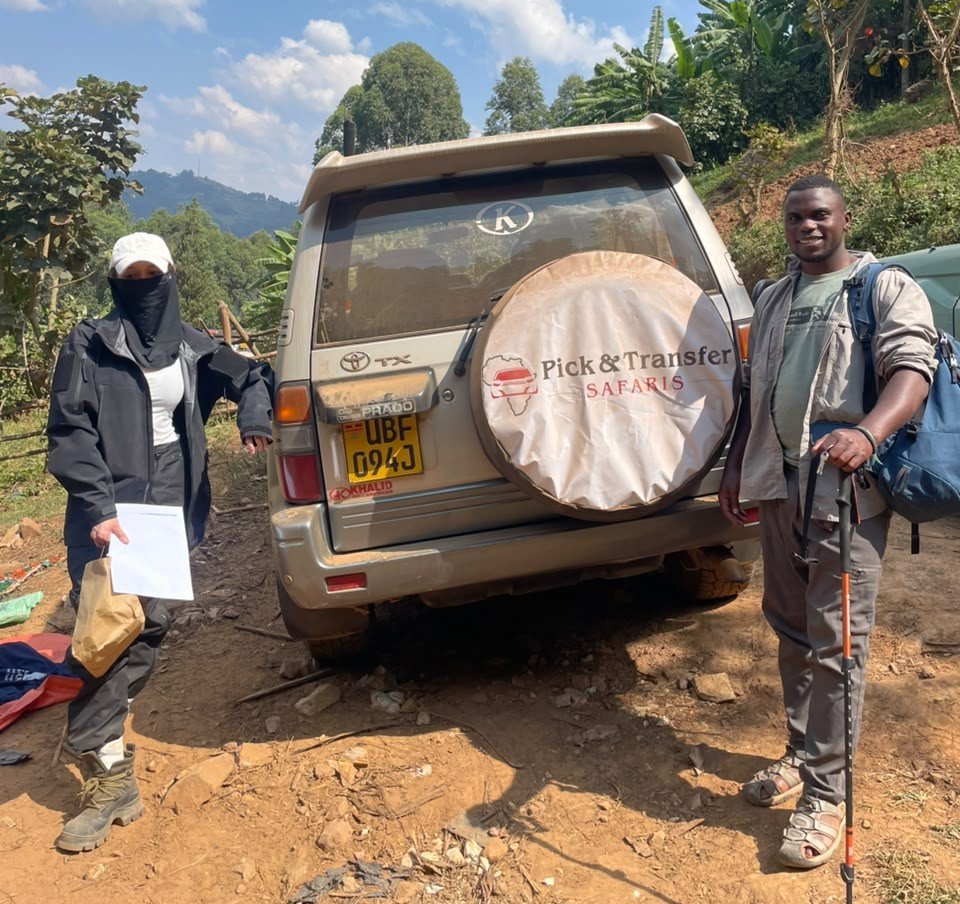
7 Days Uganda Safari – One week tour
This 7-day itinerary is the classic one-week introduction to Uganda, covering the country’s three most iconic wildlife experiences: chimpanzee tracking in Kibale Forest National Park, Big Five game drives and a boat cruise in Queen
Tour Details →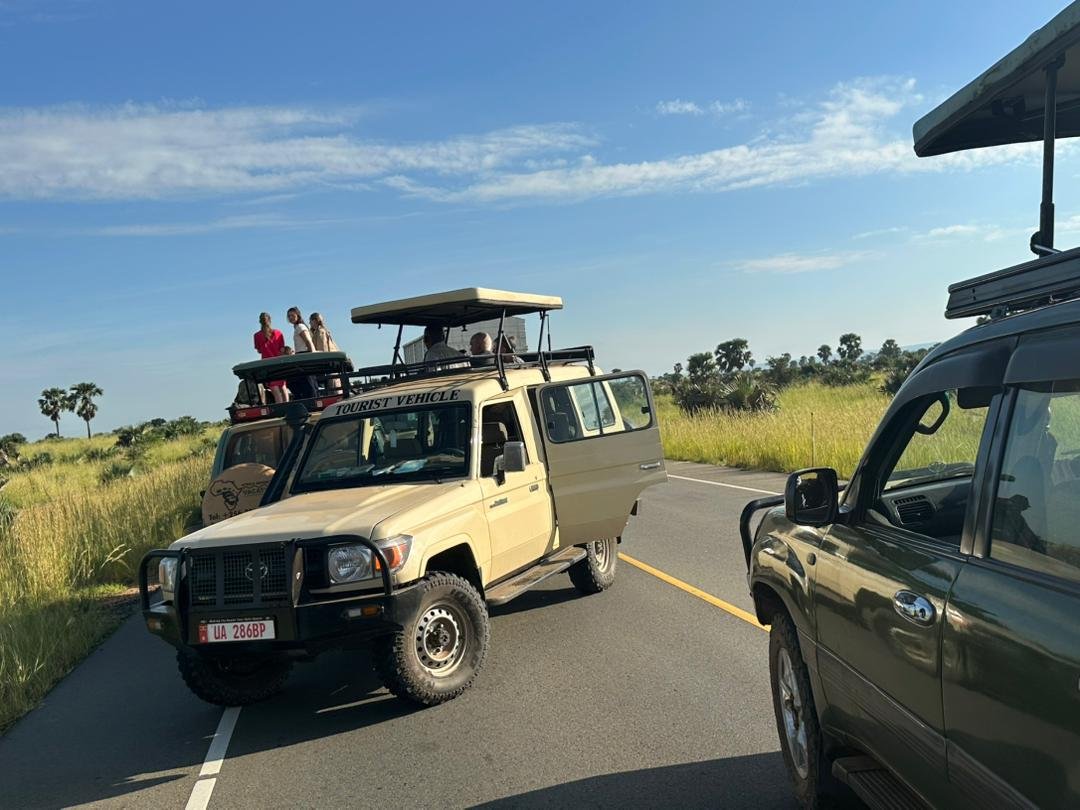
10 Days Uganda Primates and Wildlife
This 10-day Uganda Grand Safari is the most complete Uganda itinerary we offer at Pick and Transfer Safaris. It begins with a scenic northward drive from Entebbe to the vast open plains of Murchison
Tour Details →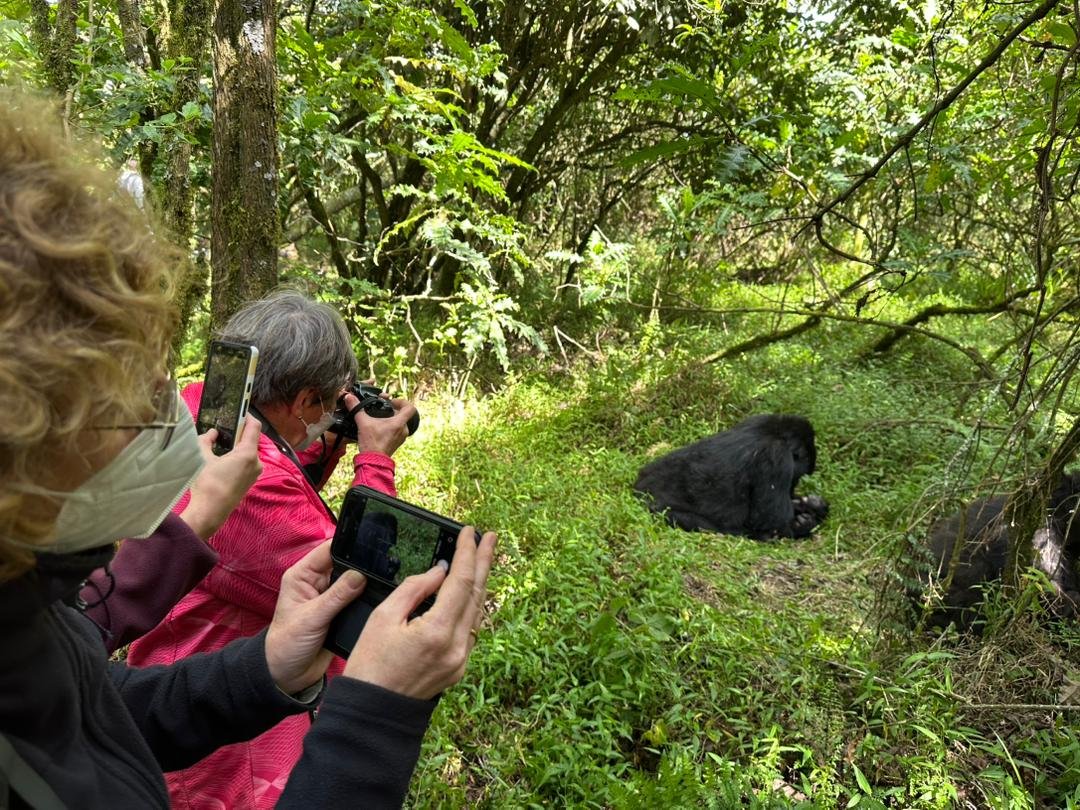
2 Days Uganda Gorilla Tour Starting from Kigali
This is the gentler cousin of our 1-Day Uganda Gorilla Safari Starting from Kigali — same idea, twice the breathing room. Instead of squeezing a 3,000-metre forest trek and two border crossings into a single very long day
Tour Details →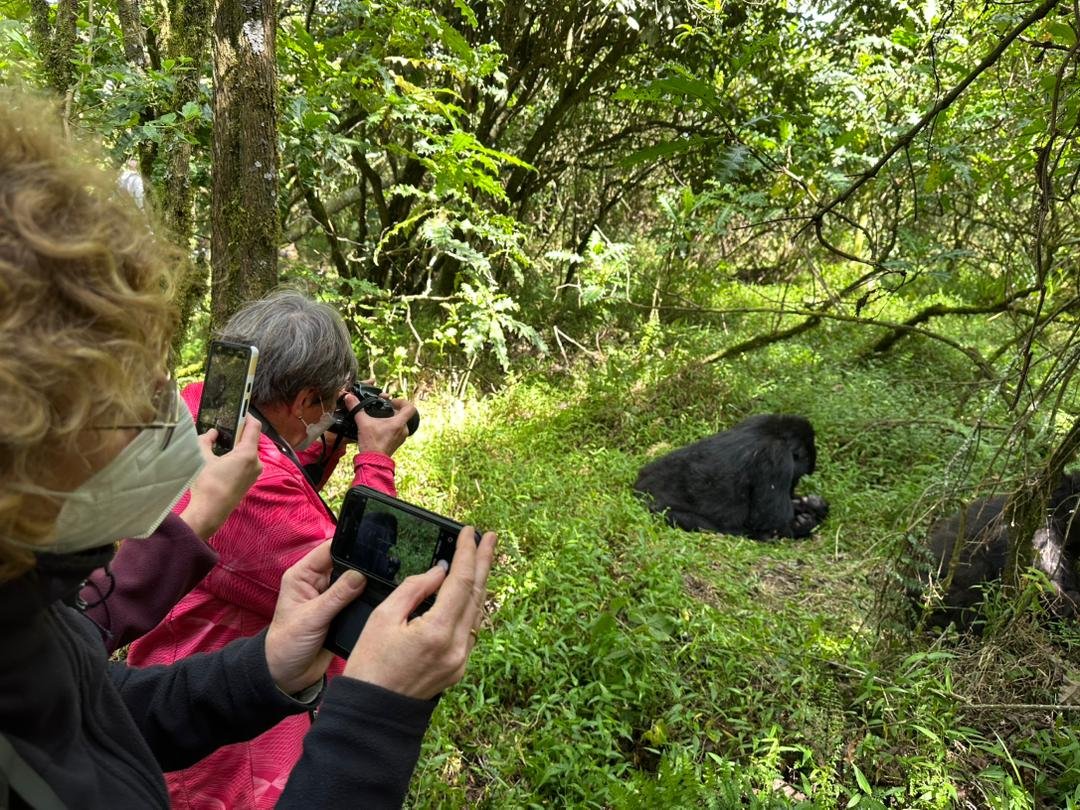
5-Day Uganda Gorilla and Chimpanzee Safari
This itinerary can be combined with a Rwanda extension or a wildlife-focused add-on through Queen Elizabeth National Park — browse our Uganda & Rwanda Safaris and Primate Safaris collections for ideas.
Tour Details →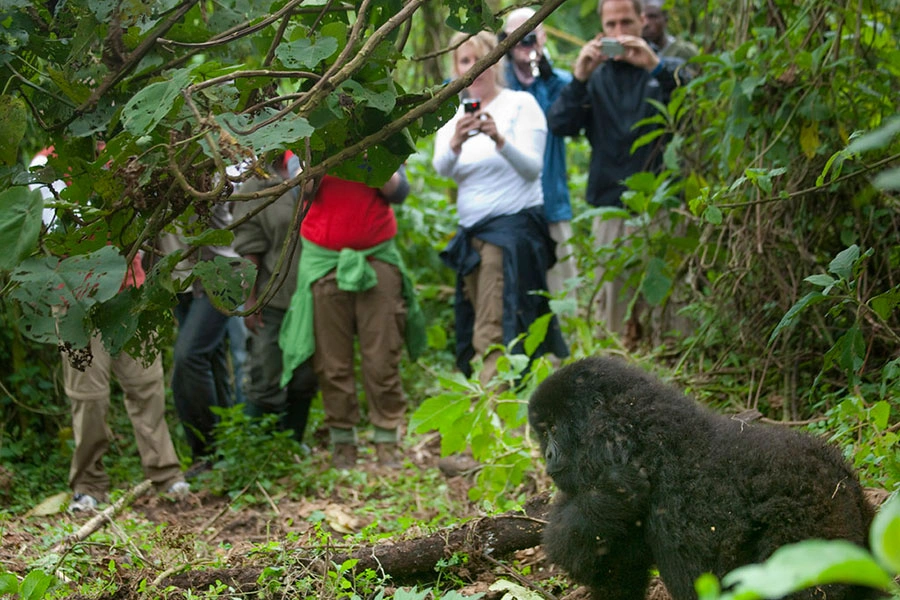
5 Days Rwanda Wildlife and Gorillas
This 5-day itinerary brings together Rwanda’s two flagship wildlife experiences: open savannah game drives and a boat safari in Akagera National Park, followed by a face-to-face encounters
Tour Details →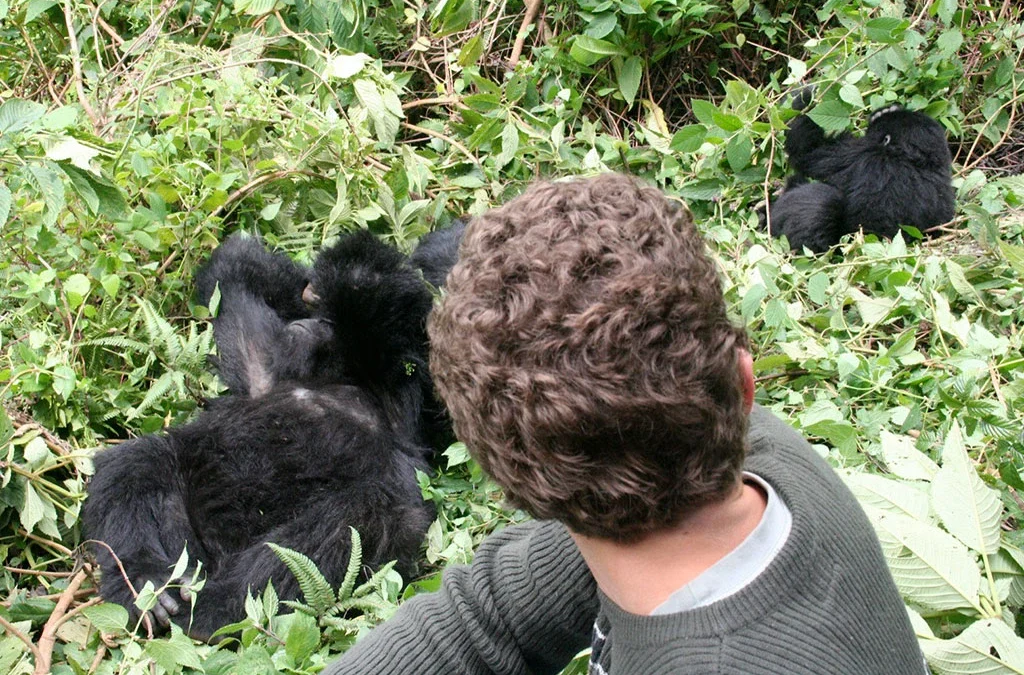
3 Days Uganda Gorilla Safari
For travelers who arrive in Entebbe with a tight schedule and a clear ambition, a 3-day gorilla safari to Bwindi Impenetrable Forest National Park is the most focused and rewarding short trip the country has to offer.
Tour Details →