- LET'S PLAN YOUR SAFARI
- +256 200 921 002
- +256 793 194 703
- info@pickandtransfersafaris.com

Kigali to Bwindi Gorilla Trek
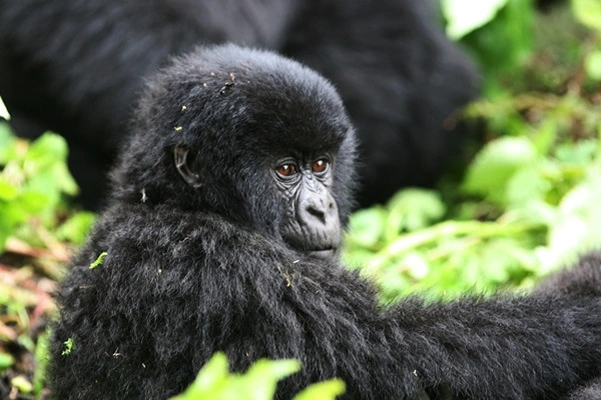
Kigali to Bwindi Gorilla Trek. For travellers based in Rwanda’s capital, Bwindi Impenetrable Forest is closer, in practical terms, than it is to Uganda’s own capital. The drive from Kigali takes four to five hours; the drive from Kampala takes eight or nine. That single fact has turned Kigali into the preferred starting point for a large share of Bwindi’s gorilla trekking visitors, and it’s worth understanding exactly how the journey works before you commit a permit booking to it.
Why the Route Exists
Bwindi sits in Uganda’s far southwest, close enough to the Rwandan border that the standard route from Kigali barely touches the rest of Uganda at all. Most itineraries cross at the Cyanika border post near the Ugandan town of Kisoro, putting travellers within a few hours of Bwindi’s southern sectors without ever routing through Kampala or Entebbe. For anyone whose Uganda visit exists solely to see the gorillas, this makes Kigali International Airport — not Entebbe — the more sensible point of arrival, and it’s a route that Ugandan and Rwandan operators alike are thoroughly set up to handle.
The Drive Itself
The journey from Kigali to Bwindi covers roughly 120 to 150 kilometres and takes around four to five hours, depending on traffic, road conditions, and time spent at the border. The Rwandan side of the drive follows well-maintained roads through the country’s terraced hill country before reaching Cyanika, where immigration formalities are usually straightforward provided your visa and yellow fever documentation are already in order. Once across into Uganda, the route continues through Kisoro town and on into Bwindi’s southern sectors — Rushaga and Nkuringo — which sit considerably closer to this crossing than Buhoma or Ruhija in the park’s north.
Roads on both sides are generally in reasonable condition, though the final stretch into the park itself, particularly around Rushaga, can turn rough and occasionally muddy during the wet season. A 4×4 vehicle is the standard and sensible choice for this leg, whether you’re self-driving or, as most travellers do, being driven by a guide familiar with current conditions.
Which Sector You’ll Likely Be Assigned
Because Rushaga and Nkuringo sit closest to the Cyanika crossing, travellers arriving from Kigali are typically allocated permits in one of these two southern sectors rather than the more northerly Buhoma or Ruhija. This works in your favour more often than not: Rushaga holds the greatest concentration of habituated gorilla families anywhere in Bwindi, and it’s the only sector offering the Gorilla Habituation Experience, which extends the standard one-hour encounter to as much as four. If you have a sector preference for a specific reason, it’s worth flagging early, since permit allocation is generally easier to influence in advance than on arrival.
Flying Instead of Driving
For travellers who’d rather avoid the road journey altogether, a charter flight is a genuine alternative. Flights from Kigali connect to small airstrips near Bwindi, cutting the transfer down to roughly an hour in the air rather than half a day on the road, with a short onward drive to your lodge from the airstrip itself. This costs considerably more than the overland route but is worth considering for travellers short on time, uncomfortable with long drives, or simply wanting to preserve energy for the trek itself rather than spend it in a vehicle.
Structuring the Trip Around the Drive Time
Because the Kigali–Bwindi drive runs longer than the equivalent trip to Mgahinga Gorilla National Park or Rwanda’s own Volcanoes National Park, a genuine same-day round trip isn’t a realistic option here the way it can be for Mgahinga. Almost every Kigali-to-Bwindi itinerary is built around at least one overnight near the park: travel and settle in on day one, an early trekking briefing and the encounter itself on day two, then the drive back to Kigali. Trying to compress this into a single day would mean arriving at the park exhausted and departing again almost immediately, which undermines the entire point of trekking in the first place.
What You’re Saving By Choosing Uganda
The financial case for this route rests entirely on the gap between Uganda’s and Rwanda’s gorilla permit prices. Uganda’s permit costs USD 800 per person; Rwanda’s costs USD 1,500. That USD 700 difference comfortably covers the cost of the additional lodge night and longer transfer that a Bwindi trip requires compared with a Rwanda-based trek from the same starting point, while still delivering a broadly comparable encounter — the same species, the same forest immersion, and the same strict one-hour visit with a habituated family.
Documentation and Timing
The details that most commonly derail this kind of trip are administrative rather than physical. Confirm your Uganda visa requirements well ahead of travel — a standard visa or the East Africa Tourist Visa, depending on your nationality — and make sure your yellow fever vaccination certificate is current, since both are generally expected at the Cyanika crossing. Gorilla permits across Bwindi’s sectors are limited and allocated by the Uganda Wildlife Authority well in advance, so booking early is particularly important during the June-to-September and December-to-February dry seasons, when demand from travellers in both Rwanda and Uganda peaks simultaneously.
Coordinating the Logistics
A Kigali-to-Bwindi trip involves more coordinated pieces than a straightforward domestic booking — a permit tied to a specific sector, a cross-border transfer, and a lodge reservation timed around an early trekking briefing the following morning. Working with an operator who manages this as a single, connected itinerary rather than booking each piece separately removes most of the risk of a mismatched sector allocation or a transfer that doesn’t align with your permit date.
Making It More Than a Gorilla Day Trip
Because Bwindi sits within reach of several of southwestern Uganda’s other major destinations, a Kigali-based trip can extend well beyond the trek itself if your schedule allows. Queen Elizabeth National Park, with its tree-climbing lions and Kazinga Channel boat cruise, lies a scenic drive from Bwindi’s northern sectors, while Kibale Forest National Park offers a second, larger chimpanzee trekking destination for travellers wanting to add primates beyond the gorillas. Neither requires backtracking through Kigali first — both can be woven into the same westward loop before you eventually return to the Rwandan border.
Bringing It Together
A Kigali-to-Bwindi gorilla trek is a longer, more deliberate undertaking than the equivalent trip to Mgahinga, but it rewards the extra drive time with far greater choice — around twenty habituated families across four sectors, the option of the Habituation Experience, and a far larger and more varied forest than Mgahinga’s compact volcanic slopes offer. It remains, throughout, a meaningfully cheaper way to see mountain gorillas than trekking on the Rwandan side of the border, without asking you to compromise on the quality of the encounter itself.
If you’re weighing this route against Mgahinga or a Rwanda-based trek, get in touch with our travel experts — we’ll help you choose the right sector, arrange the permit and cross-border transfer, and build in time for Queen Elizabeth or Kibale if you’d like to see more of Uganda while you’re already this close. Our destinations page covers everything else within reach of this route.