- LET'S PLAN YOUR SAFARI
- +256 200 921 002
- +256 793 194 703
- info@pickandtransfersafaris.com

Kigali to Lake Bunyonyi Tour
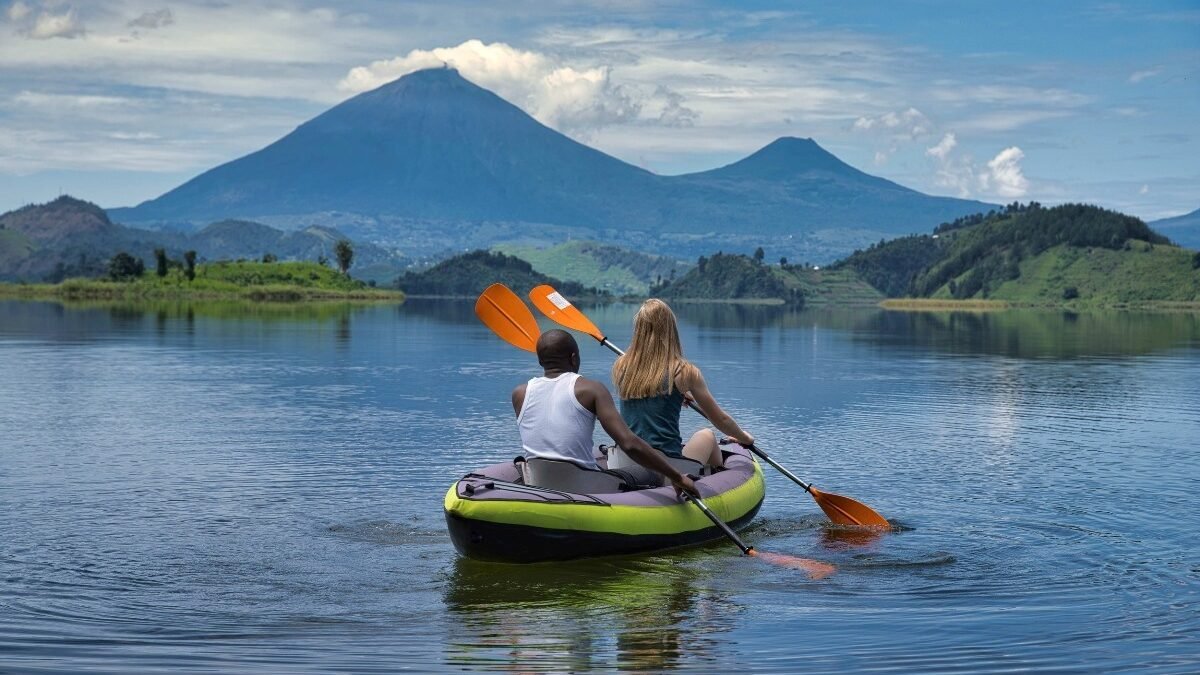
Kigali to Lake Bunyonyi Tour. Lake Bunyonyi rarely tops anyone’s list before they arrive in East Africa, and yet it’s one of the destinations travellers remember most fondly once they’ve been. Tucked into the terraced hills of southwestern Uganda, close enough to the Rwandan border that it’s genuinely closer to Kigali than it is to Kampala, Bunyonyi offers something most gorilla trekking itineraries don’t otherwise include: a few days of unhurried, low-key rest, on a lake with no crocodiles, no hippos, and nothing more demanding to do than paddle a dugout canoe between its islands.
Why Lake Bunyonyi, and Why From Kigali
Lake Bunyonyi sits between the towns of Kisoro and Kabale, at an altitude of nearly 2,000 meters, surrounded by densely cultivated hillsides that fold down to the water’s edge in tiers. It’s often described as the second-deepest lake in Africa, dotted with 29 islands, and — unusually for a lake in this part of the world — considered safe for swimming, since it holds neither hippos nor crocodiles. None of that alone would make it worth a special trip from Rwanda. What does is timing: Bunyonyi sits directly between Mgahinga Gorilla National Park and Bwindi Impenetrable Forest, which means travellers already making the trip from Kigali for gorilla trekking can add it on with very little extra driving.
For a lot of visitors, that’s exactly the appeal. A gorilla trek is physically demanding and emotionally intense, often the single biggest thing on the whole itinerary. Bunyonyi gives you somewhere to unwind immediately afterward, rather than turning straight back toward the border the same day.
The Drive From Kigali
The road from Kigali to Lake Bunyonyi covers roughly three hours, crossing into Uganda via either the Gatuna (Katuna) or Cyanika border post, depending on which route your driver takes. Gatuna is the more direct link toward Kabale and the lake itself, while Cyanika, further west near Kisoro, is the natural choice if you’re combining Bunyonyi with a Mgahinga gorilla trek beforehand. Either way, the drive passes through some of the most photogenic countryside in the region — Rwanda’s terraced “land of a thousand hills” giving way to Uganda’s own rolling farmland, banana plantations, and crater lakes as you approach Kabale.
Road conditions on both sides of the border are generally good, with paved surfaces for most of the journey and a final stretch of all-weather dirt road connecting Kabale to Rutinda, the small lakeside village that serves as Bunyonyi’s main tourist hub. A 4×4 isn’t strictly essential for this particular route the way it is for some of the steeper approaches into Mgahinga or Bwindi, but a comfortable, well-maintained vehicle still makes a noticeable difference given the length of the drive.
Combining Bunyonyi With a Gorilla Trek
The overwhelming majority of travellers who visit Lake Bunyonyi from Kigali do so as an extension of a gorilla trekking trip rather than as a standalone destination. Because Bunyonyi sits roughly midway between Mgahinga and Bwindi’s southern sectors — about a two-hour drive from either — it slots naturally into an itinerary that already includes one of them. A common structure looks something like: travel from Kigali and trek at Mgahinga or Bwindi, then continue on to Bunyonyi for one or two nights of rest before either returning to Kigali or continuing further into Uganda.
This is also where the choice of border crossing matters. Travellers coming from Mgahinga will typically already be near Kisoro, making the onward drive to Bunyonyi short and simple. Those trekking in Bwindi’s Rushaga or Nkuringo sectors are similarly well placed, with Bunyonyi lying roughly 59 kilometers away — an easy add-on rather than a detour.
What There Actually Is to Do
Bunyonyi’s appeal lies almost entirely in the fact that there isn’t very much to actively do, and that’s rather the point. Canoeing is the signature activity — dugout canoes are available to rent from almost every lodge and campsite around Rutinda, and a couple of hours spent paddling between islands, with no motorised traffic and only birdsong for company, is the standard way most visitors spend at least one morning or evening. Swimming is genuinely safe here, unlike almost anywhere else on this kind of itinerary, and many travellers treat it as the first proper swim of their entire trip.
Beyond the water, guided walks through the surrounding hills and villages offer a gentler alternative to forest trekking, and community visits with local Bakiga and Batwa communities give the lake a cultural dimension alongside its scenery. Birdwatchers are well served too — Bunyonyi’s name translates roughly to “place of many little birds,” and the surrounding wetlands and terraces hold well over 200 recorded species.
Where to Stay
Accommodation around Lake Bunyonyi ranges from simple campsites and dormitory-style lodges to considerably more comfortable island retreats, most concentrated around Rutinda village or on one of the lake’s own islands, such as Bushara. Given how central rest and recovery are to the appeal of this stop, most travellers lean toward the more comfortable end of the range after a physically demanding gorilla trek, though budget options are plentiful for those prioritising value.
Planning the Logistics
Because this trip involves an international border crossing regardless of which route you take, the same basic preparation applies here as it does for any Kigali-to-Uganda journey: a valid passport, the correct Uganda visa arrangement for your nationality, and a current yellow fever certificate, all confirmed before you travel rather than assumed at the border. Unlike a gorilla trek, there’s no permit booking to manage for Bunyonyi itself, which makes this one of the more straightforward legs of a cross-border itinerary to plan — the main variable is simply which border post and which preceding destination your route is built around.
Given that most Bunyonyi trips are really an extension of a gorilla trekking itinerary rather than a destination booked in isolation, coordinating the transfer, the trek, and the Bunyonyi stop as a single itinerary tends to work out considerably smoother than arranging each leg separately, particularly around which border crossing makes sense given your gorilla permit location.
Extending the Trip Further
For travellers with more time, Bunyonyi is also a natural staging point for continuing deeper into Uganda rather than turning back toward Kigali. Queen Elizabeth National Park, with its tree-climbing lions and Kazinga Channel boat cruise, and Kibale Forest National Park for chimpanzee trekking, are both accessible from this part of the country without backtracking through the border you originally crossed. In that sense, Bunyonyi can function either as the restful final chapter of a short gorilla-focused trip, or as the midpoint of a much longer western Uganda circuit.
Is It Worth the Detour
For almost anyone already making the journey from Kigali for gorilla trekking, yes. The extra driving involved in reaching Bunyonyi from either Mgahinga or Bwindi is genuinely minor, and the contrast it offers — quiet water, safe swimming, and nothing more strenuous than a canoe paddle — is exactly what most travellers want after a demanding forest trek. It’s not a destination that justifies a special trip from Kigali on its own merits alone, but as an addition to a gorilla itinerary that’s already crossing the border, it’s one of the easiest and most rewarding stops to include.
If you’d like Lake Bunyonyi built into your gorilla trekking itinerary, get in touch with our travel experts and we’ll work out the right combination of border crossing, trek location, and lakeside stay for your dates. Our destinations page covers the parks that pair most naturally with a Bunyonyi stop, whichever direction your trip is heading.