- LET'S PLAN YOUR SAFARI
- +256 200 921 002
- +256 793 194 703
- info@pickandtransfersafaris.com

Kigali to Nkuringo Gorilla Trekking
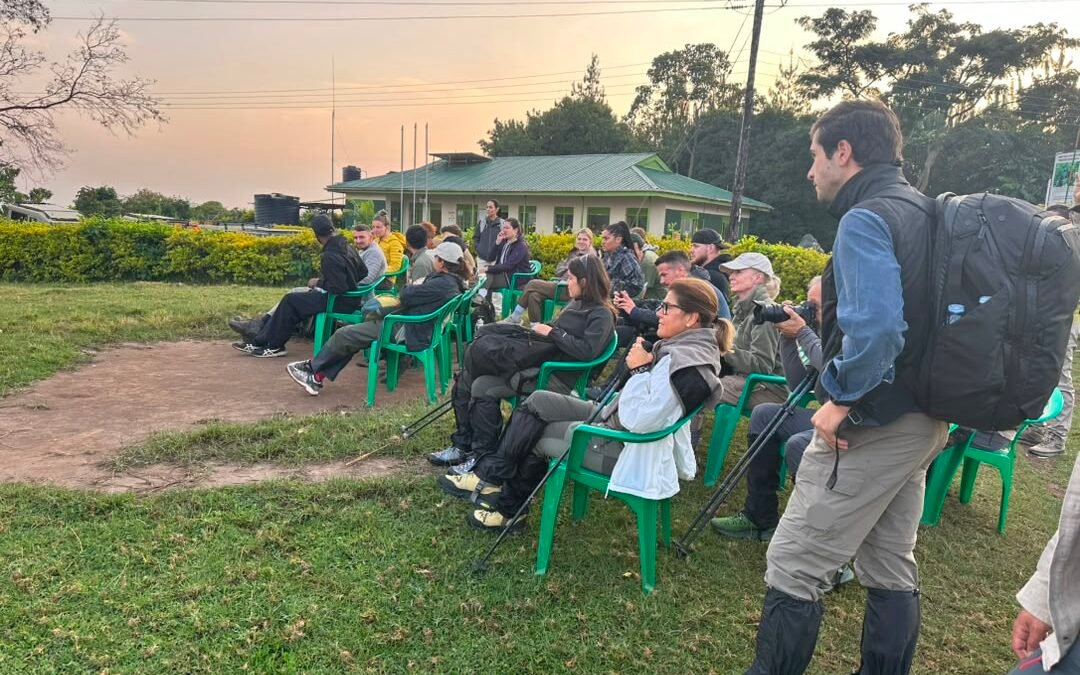
Kigali to Nkuringo Gorilla Trekking. Of Bwindi Impenetrable Forest’s four trekking sectors, Nkuringo has a reputation that precedes it: the steepest trails, the smallest crowds, and arguably the most dramatic scenery in the entire park. For travelers based in Kigali, reaching this remote southwestern corner of Uganda is entirely doable in a single day’s drive, and it rewards the effort with a gorilla trekking experience that feels genuinely wild rather than well-trodden. This guide covers everything you need to plan a Kigali to Nkuringo gorilla trekking trip in 2026 — the permit cost, the drive itself, how hard the trek really is, where to sleep, and exactly what a realistic budget looks like from start to finish.
Nkuringo is not the sector most first-time trekkers default to, and that is precisely its appeal. If you have already read gorilla trekking blogs comparing Bwindi’s sectors in general terms, this guide goes narrower and deeper, focused specifically on the Kigali-to-Nkuringo route, its unique logistics, and the costs that are particular to this corner of the park. If you are weighing Nkuringo against another sector, our broader Bwindi Impenetrable Forest destination guide is a useful companion piece.
Why Trek Gorillas in Nkuringo from Kigali?
Nkuringo sits in Bwindi’s extreme south, closer to the Rwandan border than any other sector, which makes it a natural fit for travelers starting their journey in Kigali rather than Uganda’s capital. Beyond the convenient geography, Nkuringo offers something increasingly rare in East African gorilla tourism: a sector where you are genuinely likely to be the only group on the trail that morning. Its reputation for tough terrain keeps visitor numbers low, and low visitor numbers mean a quieter, more personal encounter once you do reach the gorillas — a trade worth understanding before you commit to this specific sector over an easier alternative.
Quick Cost Summary: Kigali to Nkuringo Trip at a Glance
For a lean 2-day trip, expect to spend roughly $1,050 to $1,400 per person all-in. A comfortable 3-day midrange trip typically runs $1,600 to $2,300 per person, largely because Nkuringo’s limited lodge inventory skews slightly pricier than sectors with more budget competition. A luxury stay at one of Nkuringo’s two standout properties, paired with a habituation permit, can exceed $4,500 per person. These figures bundle the permit, private transfer, one or two nights of accommodation, meals, and a standard tipping allowance — each piece is broken down in detail below.
| Budget Style | Trip Length | Approx. Cost Per Person |
|---|---|---|
| Budget / Backpacker | 2 days | $1,050 – $1,400 |
| Midrange | 3 days | $1,600 – $2,300 |
| Luxury | 3–4 days | $3,200 – $4,800+ |
These ranges assume you are already based in Kigali and exclude international airfare, which is covered separately later in this guide. They also reflect Nkuringo’s slightly higher private transfer cost compared to sectors reached via a shorter or better-paved route, a difference worth keeping in mind if you have already seen lower quotes for a Buhoma or Rushaga trip and are wondering why a Nkuringo quote looks a little steeper for what appears to be the same permit.
Where Is Nkuringo and Why Is It Different from Other Bwindi Sectors?
Nkuringo sits on a ridge at the southern edge of Bwindi Impenetrable Forest, overlooking the Virunga volcanoes in the distance on a clear day. Unlike Buhoma, the park’s original and most accessible sector, Nkuringo was opened later specifically to relieve pressure on gorilla families elsewhere in the park, and its infrastructure has always been comparatively minimal. That relative remoteness is the entire point: fewer roads, fewer lodges, and fewer day-trippers combine to create a sector that feels more like genuine wilderness and less like a well-organized tourist circuit.
Gorilla Trekking Permit Cost for Nkuringo (2026/2027 Prices)
The permit price is identical across every Bwindi sector, Nkuringo included: $800 per person for foreign non-residents in 2026, $700 for foreign residents, $500 for other African nationals, and roughly UGX 300,000 for East African Community citizens. There is no premium or discount specifically for Nkuringo — what differs is everything around the permit, from transfer distance to accommodation choice, which is where your total Nkuringo trip cost will actually diverge from a trip to an easier sector like Buhoma.
Gorilla Habituation Experience vs Standard Nkuringo Permit
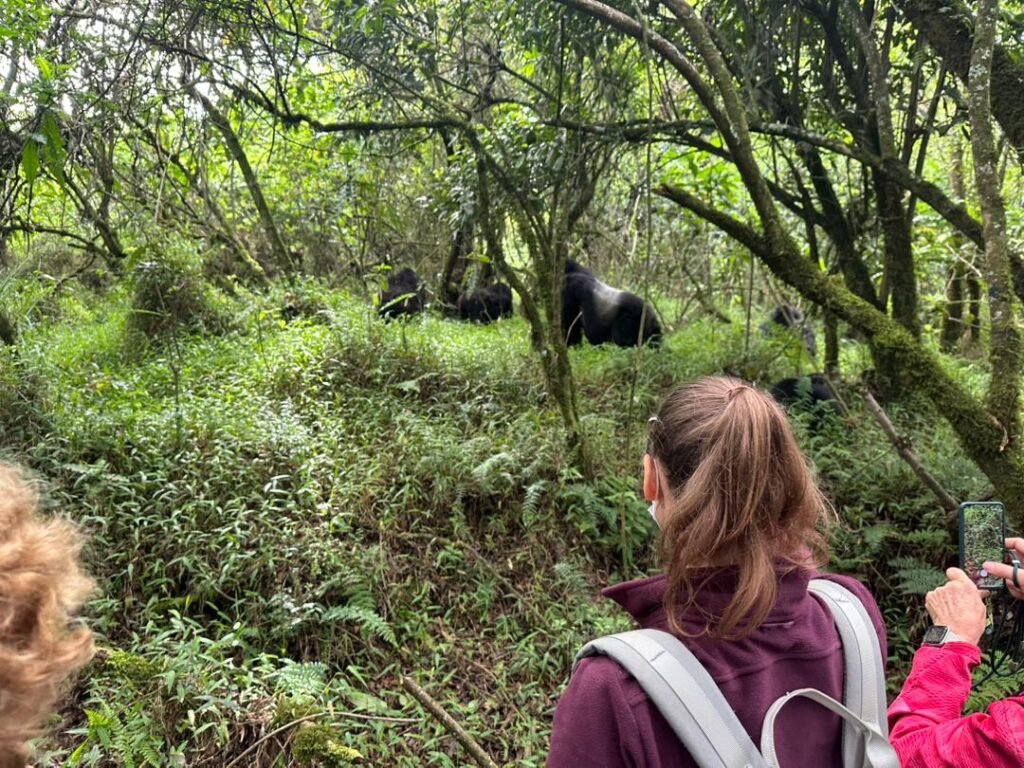
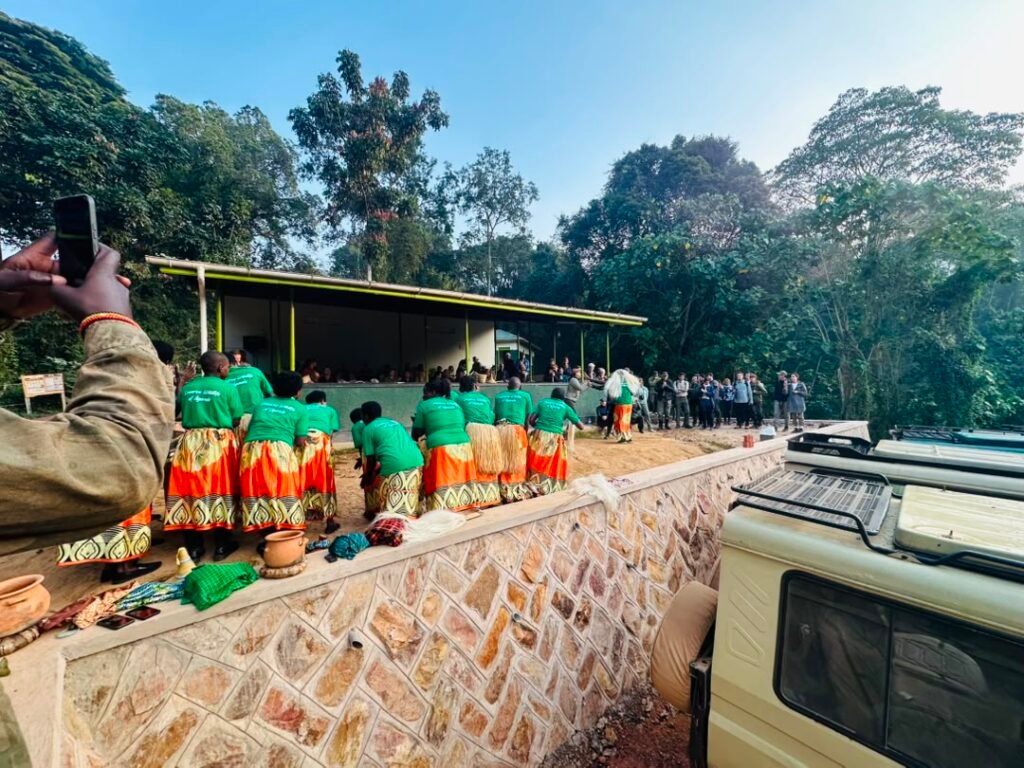
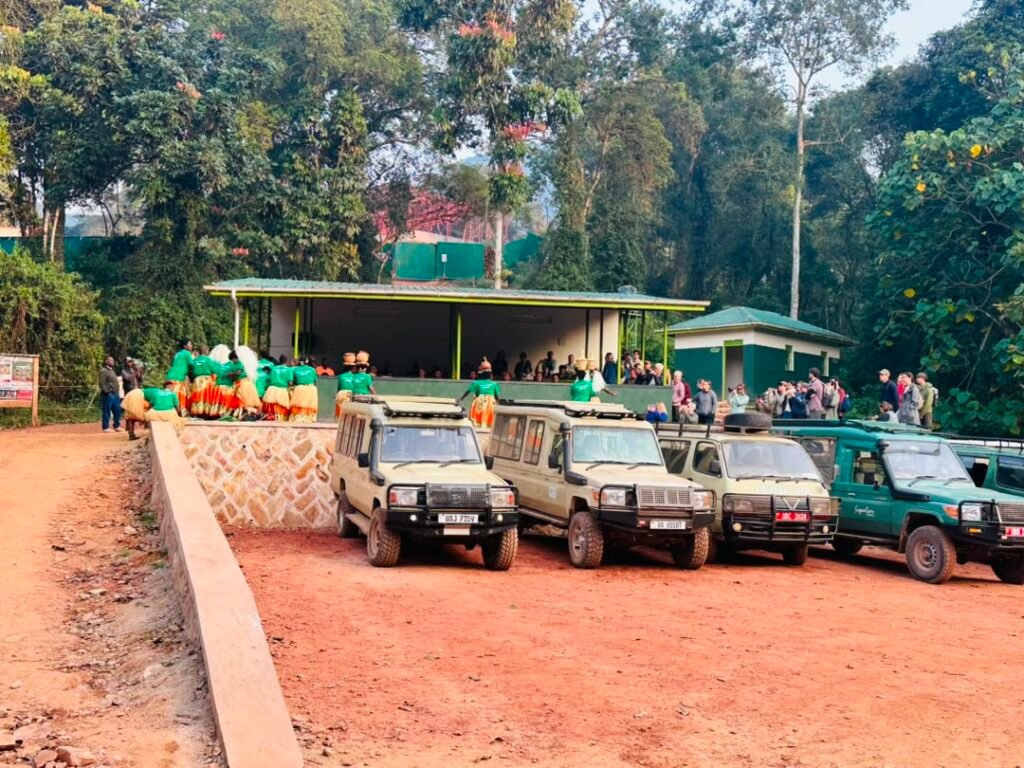
The gorilla habituation experience — four hours with a semi-habituated family rather than the standard one hour — is only offered in Bwindi’s Rushaga sector, not in Nkuringo. If you specifically want the extended habituation experience, you would need to book a separate permit for Rushaga on a different day, which some travelers combine with a Nkuringo trek as a two-sector itinerary. For a single, dedicated Nkuringo trip, you will be booking the standard $800 permit and trekking one of Nkuringo’s two habituated families for the customary one hour.
What Your Permit Covers on the Nkuringo Trek
Your $800 fee covers park entrance for trek day, an armed ranger guide, professional trackers who locate the gorilla family before your group sets out, a contribution to community development funds specific to the Nkuringo area, and a certificate afterward. It does not cover the transfer from Kigali, your lodge, meals, a porter, or tips — all separate line items you need to plan for, and all covered in detail further down this guide.
Visa Costs for Rwanda and Uganda Travelers
As with any Kigali-based Bwindi trip, you will need either a single-entry Uganda visa at roughly $50, or the East Africa Tourist Visa at $100, which also covers Rwanda and Kenya and allows multiple crossings for 90 days. Given that most Nkuringo itineraries involve crossing from Rwanda into Uganda and then back into Rwanda to fly home from Kigali, the East Africa Tourist Visa is usually the more sensible choice unless you are continuing onward from Uganda rather than returning.
Distance and Driving Time from Kigali to Nkuringo
Nkuringo is roughly 5 hours from Kigali by road, most of it on smoothly paved Rwandan highway, with only the final stretch on the Ugandan side — typically the last hour to hour and a half — turning to unpaved dirt road as you climb toward the sector. This makes Nkuringo one of the more straightforward sectors to reach directly from Kigali in a single day, despite its reputation for remoteness once you actually arrive at the trailhead.
Cyanika Border Crossing Route to Nkuringo
The Cyanika border crossing is the standard route for Nkuringo, following Kigali–Musanze–Cyanika–Kisoro–Nkuringo. After clearing immigration at Cyanika, most itineraries route through Kisoro town, roughly 1.5 hours from the border, where travelers can stop to stretch, use a restroom, or grab a coffee before the final 1.5-hour climb up to the Nkuringo lodges. Border processing itself typically adds 30 to 60 minutes on top of driving time and costs nothing beyond your visa fee.
Private Transfer Costs from Kigali to Nkuringo
A private 4×4 transfer from Kigali to Nkuringo typically runs $220 to $380 one-way, priced per vehicle rather than per person, making it a strong value for couples or small groups. Nkuringo’s final unpaved approach road means transfer operators generally use a properly equipped 4×4 rather than a standard minivan, which is reflected in the slightly higher price compared to a Rushaga or Buhoma transfer over similar distances. You can request a quote for your exact dates and group size through Pick and Transfer Safaris’ contact page.
Shared Shuttle and Budget Transport Options
Independent travelers can reach Kisoro from Kigali via shared minibus for $10 to $25, then arrange a local 4×4 hire for the final, rougher leg up to Nkuringo, which typically costs an additional $40 to $70 given the unpaved road and limited vehicle availability in the area. This route can save meaningfully compared to a private transfer but adds real logistical friction, particularly if your trek is scheduled the morning after your border crossing, since delays compound quickly on Nkuringo’s less-trafficked final approach.
Self-Drive vs Guided Transfer to Nkuringo
Self-driving to Nkuringo is considerably more demanding than self-driving to Buhoma or Rushaga, given the unpaved, steep final stretch and the general scarcity of signage once you leave Kisoro town. Rental costs may look attractive on paper, but most rental agreements exclude damage caused on unpaved sections, and a puncture or breakdown on Nkuringo’s final approach can be a serious problem given how few other vehicles pass that way. For this specific sector, a guided transfer with a driver who already knows the road is worth far more than the marginal savings of self-driving.
How Difficult Is the Nkuringo Gorilla Trek?
Nkuringo has a well-earned reputation as the most physically demanding of Bwindi’s four sectors. The trailhead itself sits at high altitude, and the terrain immediately drops into steep, forested valleys before climbing back out again, meaning trekkers face significant elevation change in both directions regardless of how quickly the gorilla family is found. Even experienced hikers often describe the return climb — sometimes called “Nkuringo hill” by local guides — as the hardest part of the day. Rangers do their best to match trekkers to gorilla families based on fitness levels reported at check-in, but anyone booking Nkuringo specifically should arrive prepared for a genuinely strenuous hike, not a casual forest walk.
Gorilla Families in Nkuringo Sector
Nkuringo is currently home to two habituated gorilla families available for trekking. The Nkuringo family is well established and known for relatively predictable, engaging behavior, making it a popular allocation for trekkers hoping for calmer viewing conditions. The Bushaho family ranges more widely across steep, hilly terrain, which can mean a longer and more physically demanding search before rangers locate them, but often rewards trekkers with a more dynamic, less choreographed encounter. Permit allocation to a specific family is managed by the Uganda Wildlife Authority and your operator, though you can request a preference in advance based on your fitness level.
Nkuringo’s Views: Why the Sector Attracts Photographers Beyond the Gorillas
Because Nkuringo sits on an exposed ridge rather than deep inside the forest canopy like Buhoma, several of its lodges and viewpoints offer clear sightlines across the Bwindi valley and, on especially clear mornings, toward the Virunga volcanoes on the Rwandan and Congolese side of the border. This is part of why Nkuringo attracts a disproportionate number of photographers relative to its visitor numbers — the sunrise and sunset views from the ridge are genuinely part of the draw, independent of the gorilla trek itself, and worth building a little unhurried time into your itinerary to actually enjoy rather than rushing straight from vehicle to trailhead and back.
Accommodation Costs Near Nkuringo: Budget Options
Nkuringo has a noticeably thinner budget accommodation market than other Bwindi sectors, reflecting its smaller visitor volume. Simple community-run guesthouses and basic camps in the area typically charge $50 to $120 per person per night on a full-board basis. Options are limited enough that budget travelers should book several weeks ahead rather than assuming a room will be available on short notice, particularly during the dry season.
Accommodation Costs Near Nkuringo: Midrange Lodges
Midrange properties around Nkuringo run roughly $180 to $400 per person per night and typically offer en-suite bathrooms, reliable solar or generator power, and views over the surrounding valleys or, on clear days, toward the distant Virunga volcanoes. Because Nkuringo’s midrange inventory is smaller than Rushaga’s or Buhoma’s, booking three to four months ahead is a sensible precaution, especially for dry-season dates.
Accommodation Costs Near Nkuringo: Luxury Lodges
Nkuringo’s luxury tier is anchored by two standout properties. Clouds Mountain Gorilla Lodge sits at nearly 7,000 feet at the Nkuringo trailhead itself, with stone cottages, fireplaces, and en-suite bathrooms, and is widely regarded as the finest lodge in the sector. Nkuringo Bwindi Gorilla Lodge, perched on Nteko Ridge with sweeping views across the forest, has picked up multiple regional travel awards and offers an eco-focused, carbon-neutral stay. Both properties typically run $500 to $1,200 per person per night on a full-board basis, and both are worth booking directly at the trailhead given how much time you save on the morning of your trek.
Meals and Food Costs
Most Nkuringo lodges operate on a full-board basis given the sector’s distance from any real town, so meals are usually already built into your nightly accommodation rate. Independent travelers eating outside their lodge should budget $15 to $30 per day, though options are genuinely limited this deep into the park, and most visitors find it simpler and more reliable to stick with their lodge’s included meals for the duration of their stay.
Porter Fees — Especially Important in Nkuringo
Given Nkuringo’s reputation as Bwindi’s toughest sector, hiring a porter here is less of a nice-to-have and more of a genuinely sensible decision for the vast majority of trekkers. A porter costs $15 to $20 for the day, carries your daypack, and offers a steadying hand on the sector’s notoriously steep, often slick sections of trail. The fee goes directly to a member of the local community, making it one of the highest-value, most directly impactful costs on your entire trip.
Tipping Guide for Guides, Porters, and Drivers
Tip your ranger guide $10 to $20 per person after the trek, your porter $15 to $20, and your driver-guide $10 to $15 per day if you booked a multi-day private transfer. Given how physically demanding the Nkuringo trek is, many travelers tip slightly above the standard range for their guide and porter as a genuine acknowledgment of the effort involved in getting a group safely up and down the sector’s terrain. Carry small, clean USD bills, since worn or older notes are frequently refused.
Sample Budget: 2-Day Kigali to Nkuringo Trip
A tight 2-day itinerary covers a morning transfer to Nkuringo, one night at your lodge, the trek the next morning, and a return transfer to Kigali that afternoon. Permit: $800. Private transfer round trip: roughly $500 to $600 shared per vehicle. One night’s accommodation: $180 to $400. Meals not included: $30. Porter and tips: $55. Visa: $50 to $100. A solo traveler lands around $1,600 to $1,950, while two people sharing a vehicle and room bring it down closer to $1,050 to $1,400 each.
Sample Budget: 3-Day Kigali to Nkuringo Trip
Adding a buffer night gives you time to recover after the climb and enjoy Nkuringo’s views without rushing straight back to the vehicle. Permit: $800. Transfer: $500 to $700 per vehicle round trip. Two nights’ midrange accommodation: $360 to $800. Meals and incidentals: $60. Porter and tips: $60. Visa: $50 to $100. This puts a solo traveler around $1,830 to $2,520, and two travelers sharing costs closer to $1,600 to $2,300 each. Our 3-day Uganda gorilla safari from Rwanda package can be tailored specifically to a Nkuringo permit on request.
Sample Budget: Luxury Nkuringo Experience
A luxury Nkuringo trip typically pairs the standard $800 permit with a stay at Clouds Mountain Gorilla Lodge or Nkuringo Bwindi Gorilla Lodge, plus a dedicated private vehicle throughout. Permit: $800. Transfer with dedicated vehicle: $500 to $750. Two to three nights’ luxury accommodation: $1,000 to $3,600. Meals, drinks, and premium tips: $200 to $350. Visa: $100. Altogether, a luxury Kigali to Nkuringo trip typically runs $2,600 to $5,600 per person, positioning it as one of the more exclusive gorilla trekking experiences in the region simply due to how few beds exist in the sector at any given time.
Best Time of Year for Nkuringo Trekking
Nkuringo’s steep terrain makes seasonal timing more consequential here than in flatter sectors like Buhoma. The dry seasons, June through August and December through February, keep the already-challenging slopes as manageable as they get, though this is also peak season with the highest lodge rates and earliest permit sell-outs. The rainy seasons, March through May and September through November, bring noticeably muddier, more treacherous conditions on Nkuringo’s steep sections specifically, but also thinner crowds and meaningful lodge discounts for travelers willing to trade some trail comfort for savings.
Age Limit, Fitness Requirements for Nkuringo Specifically
The standard Uganda Wildlife Authority minimum age of 15 applies in Nkuringo exactly as it does elsewhere in Bwindi. What differs is the fitness bar in practice: given Nkuringo’s steep elevation changes, operators and rangers generally recommend a genuinely good baseline fitness level for this sector specifically, more so than for gentler sectors like Buhoma. If you have any doubts about your fitness for a demanding, multi-hour hike on steep terrain, it is worth discussing honestly with your operator before booking Nkuringo over an easier alternative, since a sedan chair carried by porters is available for an additional fee but is not a substitute for reasonable baseline fitness.
Money-Saving Tips for Your Nkuringo Trip
Traveling with a companion to split the private transfer, which runs noticeably higher here than to other sectors, is the single biggest saving available. Booking three to four months ahead secures the better-value midrange rooms before Nkuringo’s limited inventory sells out. Choosing the rainy shoulder season captures real lodge discounts, provided you are comfortable with muddier trail conditions on already-steep terrain. Packing your own trekking poles and gaiters avoids the higher markup on gear bought locally near the trailhead, where selection is far thinner than in Kigali or Kisoro.
Combining Nkuringo with Other Experiences
Nkuringo’s ridge-top position makes it a natural base for a few worthwhile add-ons beyond the gorilla trek itself. The Ivi River walk and various community-run cultural walks around Nkuringo offer a lower-intensity alternative activity for a second day, typically costing $20 to $40 per person. Many travelers also use Nkuringo as one leg of a longer two-country itinerary, pairing it with a Volcanoes National Park gorilla trek back on the Rwandan side. Our 2-day Volcanoes gorilla trek from Kigali and 3-day Rwanda gorilla tracking and cultural tour are both natural extensions, and Kenlink Tours’ 5-day Uganda-Rwanda double gorilla safari is a useful comparison if you want to see how a similar dual-country route is priced by another operator.
Weather and What to Expect on the Nkuringo Trail
Nkuringo’s trailhead sits at high altitude, keeping daytime temperatures generally mild, roughly 10°C to 22°C, though mornings before departure can feel genuinely cold given the ridge-top elevation. Rain is possible in any month, and given how steep Nkuringo’s slopes already are, even a light shower can turn sections of trail slick within minutes. A trek here can run anywhere from 2 to 8 hours round trip depending on where the gorilla family is located that day, so it is worth packing layers, a proper rain shell, and enough water for a genuinely full day out, regardless of the season you are traveling in.
What to Pack for the Nkuringo Trek Specifically
Given Nkuringo’s steep, often slick terrain, a sturdy pair of already broken-in waterproof hiking boots matters more here than in gentler sectors, along with trekking poles, which many trekkers skip elsewhere in Bwindi but find genuinely useful on Nkuringo’s climbs. Gardening gloves for gripping vegetation on steep sections, gaiters to keep mud and safari ants out of your boots, and a lightweight rain jacket round out the essential kit. Buying a full set of this gear at home before departure typically costs $150 to $300, while simpler local equivalents in Kisoro run $20 to $60, though trekking poles specifically are difficult to find locally and are worth bringing from home.
Health Requirements and Vaccinations
A yellow fever vaccination certificate is required for entry into both Rwanda and Uganda and is checked at the border, so budget $50 to $150 and a visit to a travel clinic four to six weeks ahead if you do not already hold a valid certificate. Malaria prophylaxis is strongly recommended for the region and typically costs $30 to $80 for a two-week trip. Given how physically demanding the Nkuringo trek is, it is also worth a general medical check-up beforehand if you have any underlying cardiovascular or joint concerns, since the terrain here is measurably tougher than in Bwindi’s gentler sectors.
Travel Insurance Cost for a Nkuringo Trek
Comprehensive travel insurance covering medical evacuation, trip cancellation, and adventure trekking activities typically costs $60 to $150 for a two-week trip. Given Nkuringo’s remote location, steep and occasionally hazardous terrain, and the fact that permits are non-refundable if illness or injury forces you to cancel, this is one expense worth building into every Nkuringo budget without exception. Confirm your policy explicitly covers high-altitude trekking, since some standard policies carve out an exclusion above a certain elevation.
Currency and ATM Availability Near Nkuringo
Kigali has abundant ATMs and forex bureaus, so most travelers withdraw or exchange the bulk of their trip cash there before crossing the border. Once you are past Kisoro town heading toward Nkuringo, reliable ATMs effectively disappear, and lodges this deep into the park generally expect cash payment for permits, tips, and any extras. Carry enough US dollars and local currency to cover your entire Nkuringo stay before you leave Kigali, since there is genuinely nowhere convenient to top up once you are at the trailhead.
Photography Considerations on the Nkuringo Trek
Nkuringo’s dense canopy and frequently overcast conditions mean a camera with strong low-light performance tends to outperform an ultra-telephoto lens built for open savannah photography. Flash is prohibited to avoid startling the gorillas, and there is no separate photography fee beyond the standard $800 permit. Given how physically demanding the trek itself is, many photographers opt for a lighter kit here than they might carry on a gentler sector trek, prioritizing one versatile zoom lens over multiple heavy bodies and lenses.
International Flights to Kigali: Factoring Airfare into Your Total Cost
Airfare is typically the single largest expense of the entire trip and deserves a place in your overall Nkuringo budget even though it sits outside the trek itself. Round-trip fares to Kigali International Airport commonly run $700 to $1,200 from Europe, $1,000 to $1,800 from North America, and $150 to $400 from other African hubs. Booking three to six months ahead, and flying into Kigali rather than Entebbe, generally saves both money and a meaningful amount of additional overland travel time given Nkuringo’s proximity to the Rwandan border.
Where to Stay in Kigali Before Heading to Nkuringo
Most Nkuringo itineraries include at least one night in Kigali before the long drive south, both to recover from a long-haul flight and to allow an early morning departure. Budget guesthouses in Kigali run $25 to $50 per night, midrange boutique hotels $80 to $180, and the city’s well-regarded luxury properties $250 and up. Since your transfer vehicle typically collects you around 6 or 7 a.m. given the 5-hour drive ahead, a centrally located hotel makes for a noticeably smoother start. Our Kigali City destination guide covers the city’s highlights if you have a spare day either side of your trek.
How Far in Advance Should You Book a Nkuringo Permit and Lodge?
Because Nkuringo’s lodge inventory is genuinely smaller than other Bwindi sectors, booking your accommodation and permit together four to six months ahead is a stronger recommendation here than almost anywhere else in the park, particularly for dry-season dates. Rainy-season dates offer more flexibility and can sometimes be arranged just six to eight weeks out. Since your permit is tied to a specific date and sector, and Nkuringo’s limited rooms sell out well before its permits typically do, it is worth confirming lodge availability first and building your permit date around it, rather than the other way around. Get in touch through our about us page to learn how we coordinate Nkuringo permit and lodge bookings together.
Solo Travelers vs Couples vs Groups: How Group Size Changes Your Per-Person Cost
Group size affects your Nkuringo budget even more than it does other Bwindi sectors, since the private transfer here runs higher than average. A solo traveler absorbs the full $220 to $380 one-way transfer alone, while a couple splits it in half, and a group of four can bring the per-person transfer cost down to under $100. The same logic applies to Nkuringo’s luxury lodges, many of which price by room or cottage rather than by bed, meaning two people sharing a $600 cottage each pay $300, not $600. If you are traveling solo, ask your operator whether any other travelers are booked for the same Nkuringo dates and sector to explore sharing a vehicle.
Booking Through a Local Ground Operator vs an International Agency
International wholesalers and global booking platforms often mark up permits, transfers, and lodges by 20 to 40 percent, since they are reselling services actually delivered by ground operators based in Rwanda and Uganda. This markup tends to be even more pronounced for a niche sector like Nkuringo, where fewer operators have direct relationships with the handful of available lodges. Booking directly with an operator that runs its own vehicles and holds direct allocations at Nkuringo’s lodges typically removes that layer of cost, which is worth asking about explicitly before comparing quotes from different providers.
Kigali via Entebbe: Is It Cheaper to Skip Rwanda Entirely?
Some travelers consider flying directly into Entebbe, Uganda, and skipping Rwanda altogether to reach Nkuringo. In practice this route is longer and generally not cheaper: Entebbe to Nkuringo is a 9 to 10 hour overland drive, or a costly domestic flight to Kihihi airstrip followed by a further transfer, whereas Kigali to Nkuringo is a comparatively direct 5-hour drive. Unless you are already building a Uganda-only, multi-week itinerary, routing through Kigali remains the more efficient and typically more affordable way to reach this specific sector.
Nkuringo Community Walk and Cultural Add-Ons
Beyond the gorilla trek itself, Nkuringo offers a handful of worthwhile lower-intensity activities for a second day at the trailhead. Community walks through Nteko Ridge villages, visits to local craft cooperatives, and the Ivi River walk each cost $20 to $40 per person and provide a welcome, gentler contrast to the steep gorilla trek itself. These add-ons are inexpensive relative to your permit and transfer costs and make good use of an otherwise idle day if you have built a buffer night into your itinerary.
Nkuringo vs Rushaga vs Buhoma vs Ruhija: Cost and Difficulty Comparison
All four Bwindi sectors share the same $800 permit price, so the real differences lie in transfer cost and trek difficulty. Rushaga and its neighbor Nkuringo both use the faster Cyanika border route from Kigali, but Nkuringo’s rougher final approach road pushes its transfer cost slightly higher than Rushaga’s. Buhoma, reached via the Katuna border, involves a longer overall drive from Kigali but is widely considered the easiest and most gently graded trek of the four. Ruhija sits at the highest altitude with cooler temperatures and a strong reputation among birdwatchers. Of the four, Nkuringo consistently ranks as the most physically demanding, which is exactly why it also tends to offer the quietest, least crowded trekking experience.
Comparing Nkuringo Gorilla Trekking Cost to Rwanda’s Volcanoes National Park
Uganda’s $800 Nkuringo permit remains considerably cheaper than Rwanda’s Volcanoes National Park gorilla permit, priced at $1,500 per person, nearly double. Even after adding the $220 to $380 one-way Kigali-to-Nkuringo transfer, most travelers still come out several hundred dollars ahead trekking in Uganda rather than Rwanda, while also gaining access to Nkuringo’s specific reputation for quiet, low-traffic trekking that Volcanoes National Park, with its higher visitor volume, does not typically offer. If you are curious how a Rwanda-side itinerary compares in practice, Kenlink Tours’ Rwanda safaris overview is a useful point of reference alongside this guide.
Sample 6-Day Itinerary Combining Kigali, Nkuringo, and Volcanoes National Park
Travelers with a full week often pair a Nkuringo trek with Rwanda’s own Volcanoes National Park for a genuine two-country, two-sector gorilla comparison. A typical structure runs: Day 1 arrive Kigali and rest; Day 2 transfer to Nkuringo via Cyanika; Day 3 gorilla trek in Nkuringo; Day 4 transfer back toward Musanze and the Volcanoes area; Day 5 gorilla trekking or golden monkey tracking in Volcanoes National Park; Day 6 return to Kigali for departure. All-in, this combined itinerary — two permits, two cross-border-adjacent transfers, and a mix of midrange lodges — typically runs $3,400 to $4,400 per person. Our 5-day gorilla and chimps safari from Rwanda package can be adapted to this exact route, and Kenlink Tours’ Uganda travel overview is worth a look if you are planning the Uganda side of the trip in more depth.
Common Mistakes That Inflate Your Nkuringo Trip Cost
The most common misstep is underestimating Nkuringo’s transfer cost by comparing it to quotes for an easier sector like Buhoma or Rushaga, then being surprised when the final invoice reflects the rougher final approach road. Booking accommodation at the last minute is another costly error here specifically, since Nkuringo’s genuinely limited lodge inventory means late bookers are often forced into the pricier remaining rooms rather than a wider range of options. Skipping a porter to save $15 to $20 is a false economy on a sector this steep, both for your own comfort and for the local income it represents. Finally, arriving underprepared for the physical demands of the hike can turn an otherwise well-budgeted trip into an unpleasant one, regardless of how carefully you planned the money side.
Why Book Your Kigali to Nkuringo Transfer with Pick and Transfer Safaris
Nkuringo’s unpaved final approach and thinner lodge inventory make it one of the sectors where an experienced local operator adds the most value, both in vehicle choice and in securing accommodation before it sells out. Pick and Transfer Safaris arranges private 4×4 transfers built specifically for Nkuringo’s terrain, coordinates your permit directly with the Uganda Wildlife Authority, and can match you to a budget, midrange, or luxury lodge at the trailhead depending on your travel style — explore our full range of Kigali gorilla safari packages or get in touch through our contact page to check current Nkuringo permit and lodge availability for your dates.
Can I negotiate the price of a Kigali to Nkuringo trekking package?
The $800 permit fee is fixed by the Uganda Wildlife Authority and cannot be discounted by any operator, but the transfer, accommodation, and any add-on activities around it are negotiable, particularly for group bookings or low-season travel. Given Nkuringo’s smaller pool of lodges, there is generally less room to negotiate accommodation specifically compared to sectors with a wider range of properties competing for your business, though the transfer portion of your quote often still has some flexibility.
Is the Nkuringo trek harder than other Bwindi sectors?
Yes. Nkuringo is widely regarded as the most physically demanding of Bwindi’s four trekking sectors, thanks to its steep ridge terrain and significant elevation change on both the outbound trek and the return climb. Trekkers with a reasonable baseline fitness level generally manage it fine, but it is not the sector to choose if you are hoping for a gentle forest walk.
How much does a gorilla permit cost for Nkuringo?
The permit costs the same $800 per person for foreign non-residents as every other Bwindi sector in 2026. Nkuringo does not carry a price premium for the permit itself — only the transfer and, to a lesser extent, accommodation costs differ from sector to sector.
Can I do the gorilla habituation experience in Nkuringo?
No. The habituation experience is currently offered exclusively in Bwindi’s Rushaga sector. If you want both a Nkuringo trek and the extended habituation experience, you would need to book two separate permits on two different days, typically as part of a longer itinerary.
How long does it take to get from Kigali to Nkuringo?
Around 5 hours by road via the Cyanika border crossing, most of it on paved Rwandan highway with a final unpaved stretch on the Ugandan side. Most itineraries build in a stop in Kisoro town partway through the final leg.
Should beginners choose Nkuringo for their first gorilla trek?
Not necessarily. First-time trekkers who are unsure of their fitness level, or who are traveling with less physically able companions, are often better served by Buhoma or Rushaga, both of which offer gentler terrain. Nkuringo rewards trekkers who specifically want a quieter, more physically demanding wilderness experience over an easier, more accessible one.
Is a private transfer necessary, or can I self-drive to Nkuringo?
A guided private transfer is strongly recommended for Nkuringo specifically, given the unpaved, steep final approach road and the general scarcity of fuel stations, signage, and roadside assistance once you pass Kisoro town. The modest savings of self-driving rarely outweigh the practical risk of a breakdown or puncture this deep into the park with limited passing traffic.
What is the best sector to pair with Nkuringo on a longer trip?
Rwanda’s Volcanoes National Park is the most natural pairing given Nkuringo’s proximity to the border, letting you compare Uganda’s and Rwanda’s gorilla trekking experiences on a single, relatively compact itinerary. Within Bwindi itself, Rushaga is the closest neighboring sector and the only one offering the extended gorilla habituation experience, making it a logical second permit for travelers who want more time with the gorillas beyond Nkuringo’s standard one-hour trek.
Final Thoughts on Your Kigali to Nkuringo Gorilla Trekking Budget
A Kigali to Nkuringo gorilla trek costs roughly the same as any other Bwindi sector once you strip away the headline permit fee, with the real difference showing up in a slightly higher transfer cost, a thinner but genuinely excellent luxury lodge tier, and a physical demand level that few other sectors match. Budget honestly for the porter, the tips, and a proper transfer vehicle built for the final unpaved stretch, and the rest of your Nkuringo trip comes down to choosing how much comfort you want to layer on top of an experience that, at its core, remains one of the quietest and most rewarding gorilla encounters left in East Africa.
If you have read gorilla trekking guides that treat every Bwindi sector as interchangeable, hopefully this one has made the case for why Nkuringo deserves to be considered on its own terms — not as a fallback when Rushaga or Buhoma permits are sold out, but as a deliberate choice for travelers who want fewer people, harder trails, and better views in exchange for a bit more effort and a slightly higher transfer bill. That trade-off is not for everyone, but for the trekkers it is right for, it tends to be the single most memorable sector in the entire park. When you are ready to check permit and lodge availability for your dates, reach out through our contact page and we will build the transfer, permit, and lodge combination around your budget.