- LET'S PLAN YOUR SAFARI
- +256 200 921 002
- +256 793 194 703
- info@pickandtransfersafaris.com

Meet the Rangers Behind Gorilla Habituation
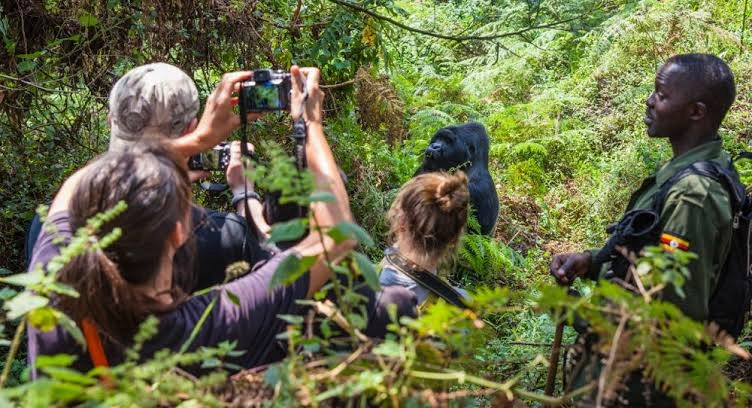
Meet the Rangers Behind Gorilla Habituation. When travelers picture the Gorilla Habituation Experience, they tend to picture the gorillas themselves. Less visible, but arguably just as central to the experience, is the small team of Uganda Wildlife Authority rangers, senior trackers, and researchers who spend years, not days, building the trust that makes the encounter possible at all. At Pick and Transfer Safaris, we think this team deserves more attention than it usually gets, since understanding their work genuinely changes how the experience feels once you’re in the forest with them. This guide introduces the people behind Rushaga’s Gorilla Habituation Experience and the process they carry out.
Who Makes Up the Habituation Team
A Gorilla Habituation Experience day is led not by a single guide but by a coordinated team: senior trackers who know the family’s individual members and daily patterns intimately, researchers monitoring behavior and health, and armed ranger guides responsible for safety and security throughout the trek. This is a noticeably different structure from standard gorilla trekking, where a single ranger guide typically leads a group to a fully habituated family. Because the gorillas visited during the habituation experience are still in the process of accepting human presence, the team accompanying visitors is correspondingly larger and more specialized, reflecting how much more delicate this stage of the relationship between gorillas and people actually is.
How the Habituation Process Actually Works
Habituating a wild gorilla family to human presence is a slow, deliberate undertaking that typically takes two to three years, and by some accounts up to five, of near-daily contact. The process begins with trackers and rangers approaching a chosen family from a distance, in a calm, non-threatening manner, gradually reducing that distance over months and years as the gorillas grow accustomed to the team’s presence. Early encounters can involve genuine risk, since a dominant silverback protecting his family may respond with displays of aggression toward unfamiliar visitors, and much of the early habituation work centers on earning that silverback’s tolerance specifically, since his acceptance tends to open the door to the rest of the family.
Progress is rarely linear. A family that seems to be settling into tolerance one month can become wary again after a disruption, a shift in territory, an encounter with another gorilla group, or simply the natural caution of individual members who take longer to adjust than others. Trackers adapt their approach accordingly, sometimes pulling back distance for a period before resuming, which is part of why the overall timeline stretches across years rather than months.
As the years pass and the team’s visits become a normal part of the family’s daily rhythm, trackers begin to recognize individual gorillas by their unique facial features and personalities, eventually assigning names to each member, a milestone that reflects just how much sustained, careful observation has gone into reaching that point. Only once a family reliably tolerates human presence at close range are researchers, and eventually paying visitors, permitted to join.
Why This Team Structure Matters for Visitors
Because the families visited during the Gorilla Habituation Experience are still mid-process rather than fully habituated, the extra rangers and researchers accompanying each group aren’t a luxury addition, they’re a genuine operational necessity. Their accumulated knowledge of each family’s specific temperament, warning signs, and typical daily movement patterns is what allows the experience to run safely with only four visitors and a correspondingly larger support team, compared to the eight-visitor, single-guide structure of standard trekking with fully habituated families elsewhere in Bwindi.
This also means the four hours visitors spend with the family aren’t purely passive observation. Much of the value lies in the team’s running commentary and explanation, individual gorilla identification, behavioral context, and insight into where a particular family sits in its multi-year habituation journey, delivered by people who have spent years building the very relationship visitors are now briefly part of.
The Two Families Currently in Rushaga
At present, two specific gorilla families in Rushaga are undergoing active habituation, with the daily eight-permit quota split between them. Because habituation status changes as families progress or as new groups enter the process, which specific families are involved can shift over time, and your guide team on the day will have the most current, accurate information about exactly where each group’s habituation journey stands.
Research Alongside Tourism
Beyond the tourism dimension, the presence of a dedicated research team reflects the broader conservation purpose behind habituation itself. Ongoing monitoring supports health surveillance, genuinely important given gorillas’ susceptibility to human diseases, alongside behavioral research that contributes to the wider scientific understanding of mountain gorilla social structure. Visitors on a Gorilla Habituation Experience day are, in a real sense, participating in an active research and conservation program rather than simply observing wildlife that has been prepared in advance purely for tourism purposes, a distinction several travelers describe as adding genuine weight to the experience beyond the visual spectacle of the gorillas themselves.
Safety Protocols the Team Maintains
Because habituation-stage gorillas are less predictable than fully habituated families, the team maintains particularly close attention to distancing, movement, and behavioral cues throughout the four-hour visit. Standard Uganda Wildlife Authority protocols, including maintaining a minimum viewing distance and wearing masks to reduce disease transmission risk, given how genetically close gorillas are to humans, apply with particular rigor during habituation visits specifically, since the relationship between this team and the gorillas is still actively being built rather than long established. Armed rangers accompany every group primarily as a security measure against external threats like poaching, rather than as protection from the gorillas themselves, who are guided with care rather than force throughout the encounter.
How the Trackers’ Work Continues Beyond Your Visit
It’s worth understanding that a single Gorilla Habituation Experience day represents a tiny fraction of the team’s ongoing work. Long after your group returns to the lodge, the same trackers and researchers continue their near-daily visits, monitoring the family’s health, movement, and social dynamics, work that continues regardless of whether paying visitors are present that day. Permit fees directly fund this ongoing effort, alongside broader park operations including anti-poaching patrols and community revenue-sharing programs in the settlements surrounding Rushaga.
What This Means for How You Experience the Day
Understanding the team’s role tends to shift how visitors engage with the Gorilla Habituation Experience itself. Rather than treating the four hours purely as an extended photo opportunity, many travelers find genuine value in asking their guides about specific individuals, the habituation timeline for that particular family, or the challenges encountered along the way, questions this larger, more specialized team is uniquely positioned to answer given how closely they know the gorillas in front of you.
Visa and Border Requirements
Since most travelers reach Rushaga via Rwanda, the East African Tourist Visa tends to be the most convenient option, covering multiple entries across Uganda, Rwanda, and Kenya over 90 days for 100 US dollars through Uganda’s official immigration portal. A standard single-entry Uganda Tourist Visa works just as well for travelers not planning to re-enter Rwanda. A valid yellow fever vaccination certificate is required for entry into Uganda regardless of visa type.
Planning Your Gorilla Habituation Experience with Pick and Transfer Safaris
The rangers, trackers, and researchers behind Rushaga’s Gorilla Habituation Experience are as much a part of the story as the gorillas themselves, having spent years earning the trust that makes a single four-hour visit possible. If you would like help confirming your Gorilla Habituation Experience permit or arranging your private transfer from Kigali to Rushaga, get in touch through our Contact Us page. We’ll make sure you arrive with enough context to appreciate not just the gorillas, but the work that made meeting them possible.