- LET'S PLAN YOUR SAFARI
- +256 200 921 002
- +256 793 194 703
- info@pickandtransfersafaris.com

Short Chimp Tracking Safaris in Uganda
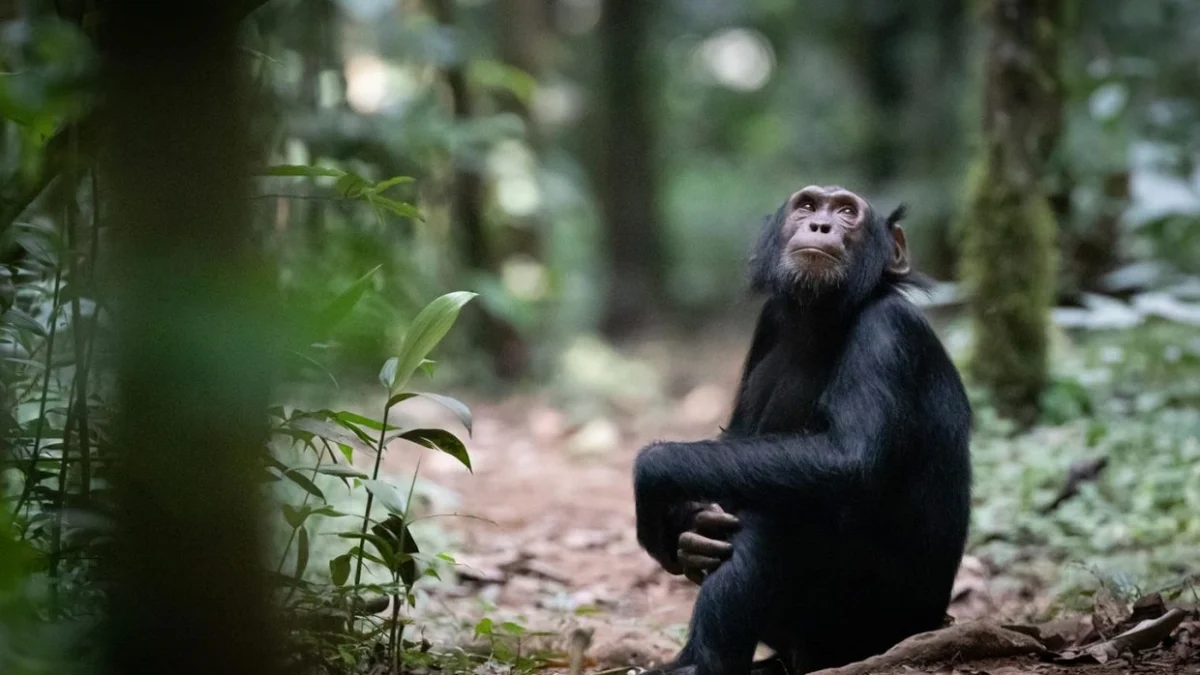
Short Chimp Tracking Safaris in Uganda. You do not need two weeks and a bottomless travel budget to look a wild chimpanzee in the eye. A short chimp tracking safari in Uganda can be as brief as a single day trip from Kampala or Entebbe, or a relaxed two- to three-day escape into the rainforest, and it still delivers one of the most emotionally powerful wildlife encounters on the African continent. Uganda shares roughly 98% of its DNA-defining traits with chimpanzees with humans, and watching a family group groom, forage, and squabble in the wild has a way of humbling even seasoned safari travelers. At Pick and Transfer Safaris, our short chimp tracking itineraries are built for travelers who want maximum reward from a minimum amount of time, without cutting corners on comfort, safety, or authenticity. This guide walks through every practical detail — where to go, what it costs, how many days you actually need, and how to combine chimp tracking with gorillas or classic Uganda wildlife — so you can plan a trip that fits your schedule and still feels like the trip of a lifetime.
Uganda: The Best Country in Africa for Chimpanzee Trekking
Chimpanzees survive in only a handful of African countries today, and Uganda is consistently ranked among the very best places to see them in the wild. The country is home to an estimated 5,000 chimpanzees spread across several forest ecosystems, more habituated groups open to tourism than almost anywhere else on the continent, and a road network compact enough that you can reach prime chimp habitat within a half-day’s drive of the capital. Unlike gorilla trekking, which is confined to a narrow band of highland forest along the Rwanda and DRC borders, chimpanzee tracking in Uganda is spread across multiple parks — Kibale Forest, Budongo Forest inside Murchison Falls National Park, and Kyambura Gorge within Queen Elizabeth National Park — which means a short chimp safari can be tacked onto almost any Uganda itinerary without a major detour. Uganda’s guiding standards, ranger-to-visitor ratios, and forest infrastructure (boardwalks, visitor centres, trained trackers) are also considered among the most professional in East Africa, giving first-time trekkers a safe and well-organized introduction to great ape tourism. If you would like a broader country-level overview before narrowing down your itinerary, Kenlink Tours’ guide to Uganda is a useful independent reference covering the country’s parks, culture, and travel logistics.
Kibale Forest National Park — Uganda’s Chimpanzee Capital
If Uganda has a chimpanzee capital, it is Kibale Forest National Park. Covering roughly 795 square kilometres of dense, moist evergreen rainforest near Fort Portal in western Uganda, Kibale shelters more than 1,500 individual chimpanzees, making it the single best location on earth to reliably encounter wild chimps on foot. Beyond chimpanzees, the forest holds twelve other primate species, including red colobus, black-and-white colobus, grey-cheeked mangabeys, L’Hoest’s monkeys, red-tailed monkeys, and blue monkeys, along with over 370 recorded bird species. Kibale’s terrain is comparatively flat and its trails well maintained, which makes it an excellent choice for travelers who want a rewarding trek without the steep, muddy slopes associated with gorilla trekking in Bwindi. Nearly every short chimp tracking safari built by Pick and Transfer Safaris is centred on Kibale precisely because of this combination of chimp density, accessibility, and forest comfort.
Kanyanchu Visitor Centre and the Chimpanzee Trekking Experience
All standard chimpanzee treks in Kibale begin at the Kanyanchu Visitor Centre, a small but well-organized hub deep inside the forest. Trekkers gather for a briefing around 8:00am, where a Uganda Wildlife Authority ranger-guide explains the day’s plan, forest etiquette, and safety rules before splitting the group into smaller trekking parties of no more than six people per habituated chimp community. From there, the search begins. Because chimpanzees are highly mobile and range widely through the canopy and undergrowth in search of fruiting trees, tracking time is unpredictable — some groups find their chimps within 30 minutes, while others trek for up to three hours. Once located, visitors are permitted one hour in the company of the community, watching behaviours ranging from grooming and nesting to tool use and dramatic pant-hoot calls that can be heard echoing through the forest from over a kilometre away. It is intense, intimate, and over almost as quickly as it begins — which is exactly why so many travelers choose to build in extra time with the habituation experience described further below. Rangers at Kanyanchu are also skilled naturalists in their own right, pointing out fresh nest sites, feeding signs, and the calls of other forest species along the way, so even the walk itself, before any chimps are located, tends to feel productive rather than like a simple approach march. Photographers in particular benefit from the guides’ habit of positioning groups with the light and sightlines in mind wherever the terrain allows it.
Bigodi Wetland Sanctuary — The Perfect Add-On Walk
A short chimp tracking safari to Kibale is rarely complete without an afternoon detour to Bigodi Wetland Sanctuary, a community-run papyrus swamp just outside the park boundary. Local guides lead visitors along a raised boardwalk through the wetland, pointing out eight primate species (including the striking black-and-white colobus), over 200 bird species such as the great blue turaco and papyrus gonolek, and a healthy population of sitatunga antelope. Because the walk is managed entirely by the local community association, tourism revenue goes directly into schools, clean water projects, and conservation incentives for the villages bordering the park — making it as meaningful for local livelihoods as it is memorable for visitors. Most of our itineraries, including the 3-Day Chimpanzee Tour in Uganda, pair the morning chimp trek with a Bigodi walk on the same afternoon, giving travelers a fuller picture of Kibale’s ecosystem in a single day.
Budongo Forest and Kaniyo Pabidi — Chimp Tracking Near Murchison Falls
Kibale is not the only place to track chimpanzees in Uganda. Budongo Forest, Uganda’s largest natural mahogany forest, sits along the southern approach to Murchison Falls National Park and is home to an estimated 600 to 800 chimpanzees, with a well-habituated community accessible from the Kaniyo Pabidi trailhead. Because Budongo sees far fewer visitors than Kibale, travelers who value a quieter, more solitary forest experience often prefer it, and its permits are typically priced lower than Kibale’s. Budongo is a natural add-on for anyone already exploring Murchison Falls National Park for game drives and the dramatic Nile boat cruise to the base of the falls, allowing a short chimp trek to slot neatly into a wider northern Uganda wildlife circuit such as our 3-Day Murchison Falls Safari.
Kyambura Gorge — The Valley of the Apes in Queen Elizabeth National Park
Tucked into the floor of a steep, forested ravine inside Queen Elizabeth National Park, Kyambura Gorge is often nicknamed the “Valley of the Apes.” A small, semi-isolated chimpanzee community survives here in a lush riverine forest that feels almost otherworldly compared to the open savannah above the gorge rim. Chimp sightings in Kyambura are less guaranteed than in Kibale simply because the community is smaller and more dispersed, but the setting — descending into a hidden gorge lined with fig and euphorbia trees — is spectacular in its own right, and the gorge also offers excellent birding. Because Queen Elizabeth National Park is already a fixture on most Uganda wildlife itineraries for its tree-climbing lions and Kazinga Channel boat cruise, adding a Kyambura chimp walk is an efficient way to fold chimp tracking into a broader safari, such as our 3-Day Safari to Queen Elizabeth National Park.
Standard Chimpanzee Trekking vs the Chimpanzee Habituation Experience
Uganda offers two distinct ways to spend time with wild chimpanzees, and choosing between them is one of the most important decisions in planning a short chimp tracking safari. Standard chimpanzee trekking, available in Kibale, Budongo, and Kyambura, gives visitors a maximum of one hour with a habituated community once located, and departs on a fixed morning schedule. The chimpanzee habituation experience, offered only in Kibale, is a longer and more immersive alternative: small groups of no more than four visitors join researchers and trackers from as early as 6:00am, following a semi-habituated community for four hours or more as they wake, feed, travel, and interact, well before the forest opens to standard tourist groups. Because the habituation experience prioritizes research access over guaranteed viewing comfort, it suits travelers who want depth and authenticity over a quick, structured encounter. Both experiences are represented across our Kibale Forest destination page and can be booked as an upgrade on our 3-day itinerary.
How Many Days Do You Need? Short Chimp Tracking Safari Options
One of the most common questions we receive is simply: how many days does a proper chimp tracking safari actually require? The honest answer is that meaningful chimp tracking can be done in as little as one long day, though most travelers get significantly more value — and far less road fatigue — from a two- or three-day itinerary that allows an overnight near the forest edge rather than a punishing same-day round trip from Kampala. Below we break down the three most popular short formats offered by Pick and Transfer Safaris, so you can match the itinerary to your available time and appetite for early starts.
1-Day Chimpanzee Trekking from Kampala or Entebbe
For travelers on a tight layover or those extending a business trip, a one-day chimp trek is possible, though it demands an early departure — typically before 4:00am — to reach Kanyanchu in time for the 8:00am briefing, followed by an equally long drive back the same evening. It is an intense, rewarding day but not a relaxed one, and we generally recommend it only for travelers who genuinely cannot spare an overnight stay. A far more comfortable alternative for those short on time but not willing to sacrifice comfort is to fly into the nearby Kasese airstrip, cutting driving time dramatically and freeing up hours for the actual trek and a proper lunch before departure.
2-Day Short Chimp Tracking Safari to Kibale Forest
A two-day itinerary is, in our experience, the sweet spot for travelers who want chimp tracking without committing several days to it. Day one covers the scenic drive west from Entebbe or Kampala, crossing the Equator at Kayabwe and passing through Fort Portal before settling into a forest-edge lodge by early afternoon. Day two begins with the chimpanzee trek at Kanyanchu, followed by either the Bigodi Wetland walk or a relaxed crater lake visit, before the return drive to Entebbe that evening. This format delivers the full Kibale experience — trek, wetland, scenery — without an extra night away from the rest of your trip, and pairs neatly with a short extension such as our 4-Day Wildlife and Primate Safari for travelers who decide, once there, that they want more time in the forest.
3-Day Chimpanzee Tour in Uganda — Our Most Popular Short Safari
Our 3-Day Chimpanzee Tour in Uganda remains the most booked short chimp itinerary we run, and for good reason: it adds one additional day of flexibility that transforms a good trip into a genuinely satisfying one. Day one is the drive to Kibale with an optional Equator stop and Fort Portal lunch. Day two combines the morning chimp trek with the Bigodi Wetland walk in the afternoon. Day three offers a free morning to choose between the chimpanzee habituation experience, a second forest nature walk, or simply relaxing at the lodge before the drive back to Entebbe. That extra day of choice is what makes the three-day format so popular among both first-time visitors and travelers who have already done a standard gorilla trek and want a genuinely different forest experience on the same trip.
Combining Chimp Tracking with Gorilla Trekking
Uganda is one of only a small number of countries where you can track both chimpanzees and mountain gorillas on the same trip without excessive backtracking, and many of our clients consider this pairing the single best wildlife combination in Africa. Chimpanzees and gorillas behave, move, and organize themselves in strikingly different ways — chimps are fast, vocal, and highly social across large territories, while gorillas are calmer, more sedentary, and live in tighter family units — so seeing both within days of each other offers a genuinely educational contrast, not just a checklist of primates. Our 5-Day Uganda Gorilla and Chimpanzee Safari combines a Kibale chimp trek with gorilla tracking in Bwindi Impenetrable Forest, while travelers with more time available can extend further with the 10-Day Uganda Primates and Wildlife itinerary, which folds in Queen Elizabeth and Murchison Falls National Parks around the primate tracking days. If your journey starts in Rwanda, our 5-Day Uganda Gorilla and Chimps Safari from Rwanda is built specifically to bridge the two countries efficiently. It is also worth comparing notes across operators when researching this pairing: Kenlink Tours’ 3-Day Uganda Gorilla Safari and their dedicated 3-Day Chimpanzee Tracking Safari offer a useful independent benchmark for pacing and pricing if you are weighing several short itinerary options before booking.
Combining Chimp Tracking with Queen Elizabeth or Murchison Falls Wildlife Safaris
Beyond gorillas, chimp tracking also pairs naturally with Uganda’s classic savannah wildlife parks. Because Kyambura Gorge sits inside Queen Elizabeth National Park itself, a chimp walk can be added to any Queen Elizabeth game-drive itinerary without adding extra travel days at all. Similarly, Budongo Forest’s Kaniyo Pabidi trailhead lies directly on the main approach road into Murchison Falls National Park, meaning a chimp trek fits naturally into the same itinerary as the famous Nile launch cruise and top-of-the-falls hike. Travelers who want to see the fullest possible cross-section of Uganda’s wildlife in a short window often choose our 7-Day Uganda Safari One Week Tour, which loops through Kibale, Queen Elizabeth, and Bwindi, or the more extensive 10-Days Uganda Primates and Wildlife itinerary for a slower-paced version of the same circuit.
Chimpanzee Trekking Permits and Costs in 2026
Chimpanzee trekking in Uganda requires a permit issued by the Uganda Wildlife Authority, and prices vary by location and experience type. In Kibale Forest, a standard chimpanzee trekking permit for foreign non-resident visitors is generally priced around $200 per person, occasionally rising to roughly $250 during the busiest travel months, while the more immersive chimpanzee habituation experience is priced at approximately $300 per person because of its smaller group size and extended forest time. Permits in Budongo Forest tend to be notably cheaper than Kibale, reflecting its lower visitor volume, while Kyambura Gorge permits inside Queen Elizabeth National Park sit at a broadly similar level to standard Kibale trekking. Because permit pricing is set by the Uganda Wildlife Authority and can be revised from year to year, we always recommend confirming the current rate at the time of booking rather than relying on any single published figure — our team at Pick and Transfer Safaris reserves permits directly and will always quote the live, up-to-date price for your travel dates. Every one of our short chimp itineraries, including the 3-Day Chimpanzee Tour, includes the trekking permit in the quoted package price, so there are no surprise costs to budget for separately. Beyond the permit itself, budget travelers should also factor in park entrance fees (usually bundled into the permit cost in Kibale), lodge rates near the forest edge, and private transport, all of which our quoted package prices already consolidate into a single upfront figure. Because permits are purchased in advance and are strictly non-transferable between travelers, we recommend confirming your trekking dates and traveler names at least a few weeks ahead of peak season travel, and ideally several months out for December, January, June, July, and August departures when permit availability is tightest.
Rules and Etiquette for Chimpanzee Trekking in Uganda
Because chimpanzees share so much genetic and biological similarity with humans, they are also highly susceptible to human respiratory illnesses, so Uganda Wildlife Authority rules are strict and non-negotiable. Trekkers must be at least 15 years old, in reasonably good physical health, and free of any visible signs of cold, flu, or other communicable illness on the day of the trek — anyone showing symptoms will be asked to skip the activity for the safety of the chimp community. Groups are capped at six visitors per community for standard trekking, and four for the habituation experience, both accompanied at all times by trained UWA ranger-guides. Visitors must maintain a minimum distance of roughly seven to eight metres from the chimps, avoid direct eye contact interpreted as aggressive, speak quietly, and never eat, drink, or use flash photography near the animals. Face masks are recommended, and in some seasons required, given how easily respiratory pathogens can transfer between species. These rules exist because chimpanzee populations, much like mountain gorillas, remain vulnerable, and responsible tourism is one of the primary funding mechanisms keeping their forest habitat protected. It is also worth remembering that chimpanzees are considerably more physically powerful than their size suggests, and while attacks on trekkers are extremely rare, ranger-guides carry radios and follow strict protocols for backing groups away calmly if a community shows signs of agitation. Listening carefully to your guide’s instructions, moving slowly, and resisting the urge to chase a moving group for a better photo angle are simple habits that keep both visitors and chimpanzees safe throughout the encounter.
Best Time of Year for Chimp Tracking in Uganda
Chimpanzee trekking in Uganda is a year-round activity, since the forests remain accessible in every season, but conditions do shift noticeably between the two dry periods (June to September and December to February) and the two wetter periods (March to May and October to November). The dry seasons bring firmer trails, easier hiking, and generally higher permit availability, making them the most popular — and therefore most heavily booked — months for chimp tracking. The wetter months bring a real trade-off worth considering: trails are muddier and rain showers more frequent, but the forest is lusher, fruiting trees attract more active chimp behaviour, and birdlife is at its most vibrant, all while lodges and permits are noticeably easier to secure at short notice. Travelers building a short chimp tracking safari around a specific set of dates should treat this less as a strict rule and more as a planning consideration, since even during the wetter months, chimp sightings in Kibale remain reliably high. If your travel dates are fixed well in advance — for example, around a December or August holiday window — booking permits and lodges early is far more important than chasing a particular season, since availability, not weather, is usually the binding constraint during peak periods.
What to Pack for a Short Chimp Tracking Safari
Packing for chimpanzee trekking is broadly similar to packing for gorilla trekking, though the terrain is generally gentler. Sturdy, ankle-supporting hiking boots are essential, along with long, lightweight trousers and long-sleeved shirts in neutral colours to protect against thorns, nettles, and biting insects on the forest floor. A light rain jacket is worth carrying even in the dry season, since rainforest weather can shift quickly. Gardening-style gloves help when grabbing vegetation on steep or slippery sections, and a walking stick — often provided free at the trailhead — is genuinely useful on uneven ground. Insect repellent, a reusable water bottle, a small day pack, and a camera with a zoom lens (flash strictly prohibited) round out the essentials. Because permits are non-refundable and trekking slots are limited, we strongly encourage confirming your gear checklist with your safari consultant well ahead of departure.
Getting to Kibale Forest — Road and Air Options
Kibale Forest National Park lies roughly 300 kilometres, or a four-to-five-hour drive, west of Kampala via Mubende and Fort Portal, a well-maintained tarmac route for most of the journey. Travelers who prefer to save travel time, or who are combining the chimp trek with parks further west such as Queen Elizabeth, can also fly by scheduled or chartered light aircraft into the Kasese airstrip, roughly one hour from Kibale by road, cutting a full day of driving down to little more than an hour in the air. All of our short chimp tracking itineraries include private 4×4 transport with an experienced driver-guide, so whichever route you choose, transfers, fuel, and park entry logistics are fully arranged in advance. Independent travelers who prefer to self-drive can also compare rental options through resources such as Kenlink Tours’ car hire page, though we generally recommend a guided transfer for forest roads that can be unpredictable outside the main dry seasons.
Where to Stay Near Kibale Forest
Accommodation near Kibale Forest ranges from comfortable mid-range lodges to more intimate boutique properties, almost all set along the forest edge within a short drive of the Kanyanchu trailhead. Because the park itself has no internal tourist accommodation, every itinerary is built around one of these forest-fringe properties, chosen for proximity to the trailhead, food quality, and — for early departures — how quickly guests can reach the 8:00am briefing without an unreasonably early wake-up call. Our team selects lodges based on each traveler’s budget and preferred style, whether that means a rustic eco-lodge overlooking the canopy or a slightly more polished property with a swimming pool for relaxing after the trek.
Starting Your Chimp Safari from Kigali, Rwanda
Travelers already in Rwanda do not need to fly all the way back to Entebbe to add chimp tracking to their trip. While Kibale itself sits deep in western Uganda, several of our gorilla-focused itineraries departing from Kigali can be extended or combined with chimpanzee tracking, either at Kibale or, for those staying within Rwanda, at Nyungwe Forest National Park, home to its own significant chimpanzee population. Our 2-Days Nyungwe Chimps Tracking Trip is a Rwanda-based short chimp safari built for exactly this kind of traveler, and can be paired with our 2-Day Uganda Gorilla Tour Starting from Kigali or the longer 3-Days Uganda Gorilla Safari from Rwanda for travelers who want both primates without leaving the Kigali–southwest Uganda corridor.
Combining Uganda and Rwanda Chimp Tracking on One Trip
7 Days Uganda Safari – One week tour
This 7-day itinerary is the classic one-week introduction to Uganda, covering the country’s three most iconic wildlife experiences: chimpanzee tracking in Kibale Forest National Park, Big Five game drives and a boat cruise in Queen
Tour Details →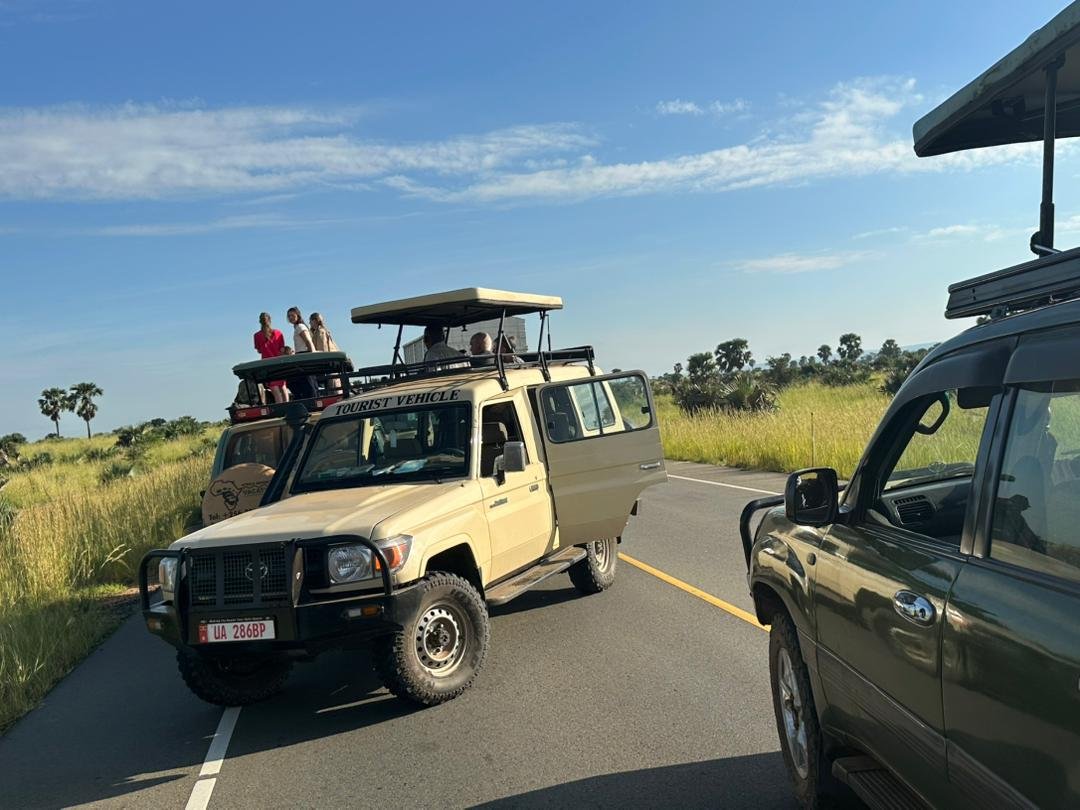
10 Days Uganda Primates and Wildlife
This 10-day Uganda Grand Safari is the most complete Uganda itinerary we offer at Pick and Transfer Safaris. It begins with a scenic northward drive from Entebbe to the vast open plains of Murchison
Tour Details →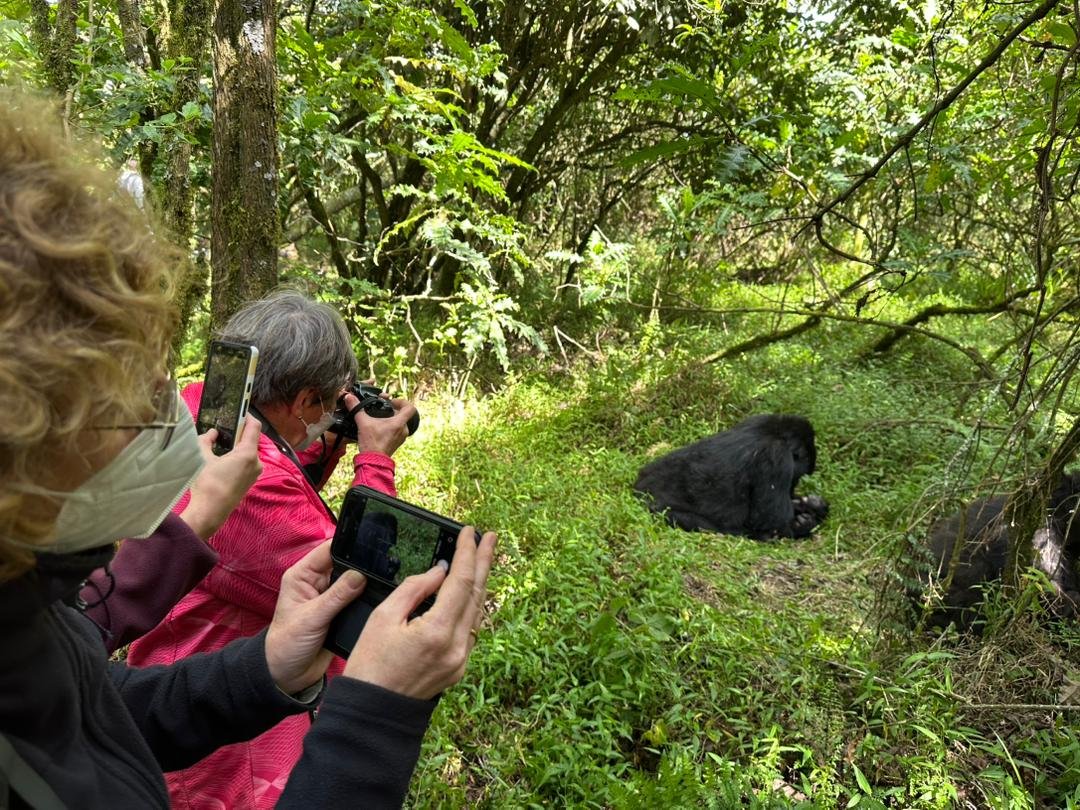
2 Days Uganda Gorilla Tour Starting from Kigali
This is the gentler cousin of our 1-Day Uganda Gorilla Safari Starting from Kigali — same idea, twice the breathing room. Instead of squeezing a 3,000-metre forest trek and two border crossings into a single very long day
Tour Details →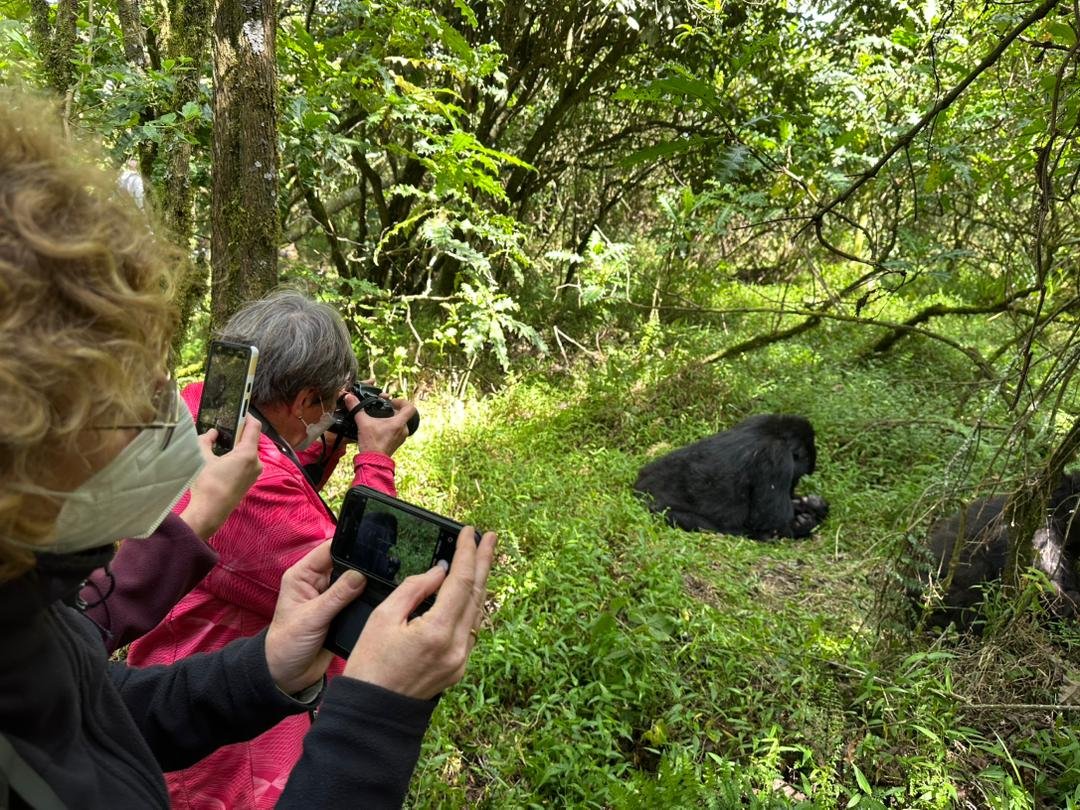
5-Day Uganda Gorilla and Chimpanzee Safari
This itinerary can be combined with a Rwanda extension or a wildlife-focused add-on through Queen Elizabeth National Park — browse our Uganda & Rwanda Safaris and Primate Safaris collections for ideas.
Tour Details →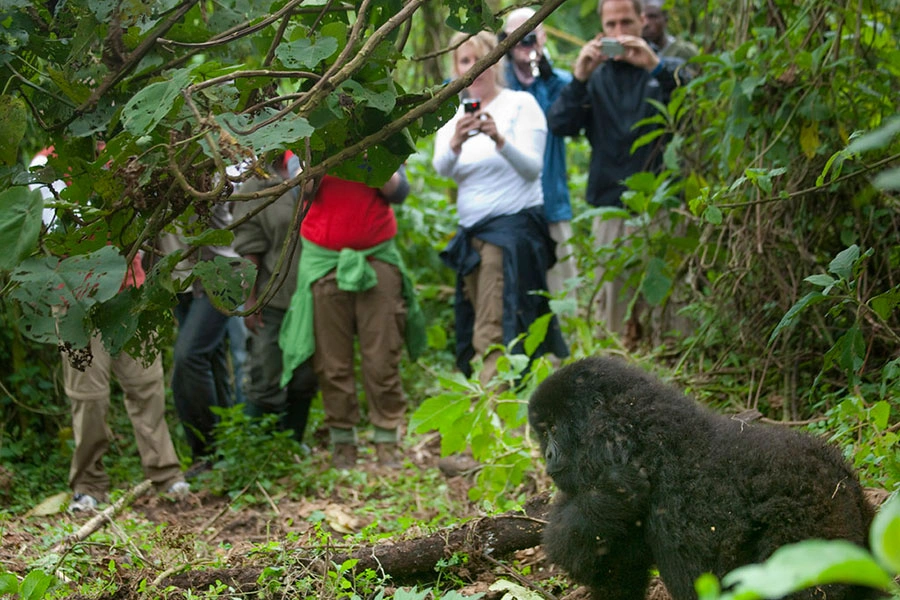
5 Days Rwanda Wildlife and Gorillas
This 5-day itinerary brings together Rwanda’s two flagship wildlife experiences: open savannah game drives and a boat safari in Akagera National Park, followed by a face-to-face encounters
Tour Details →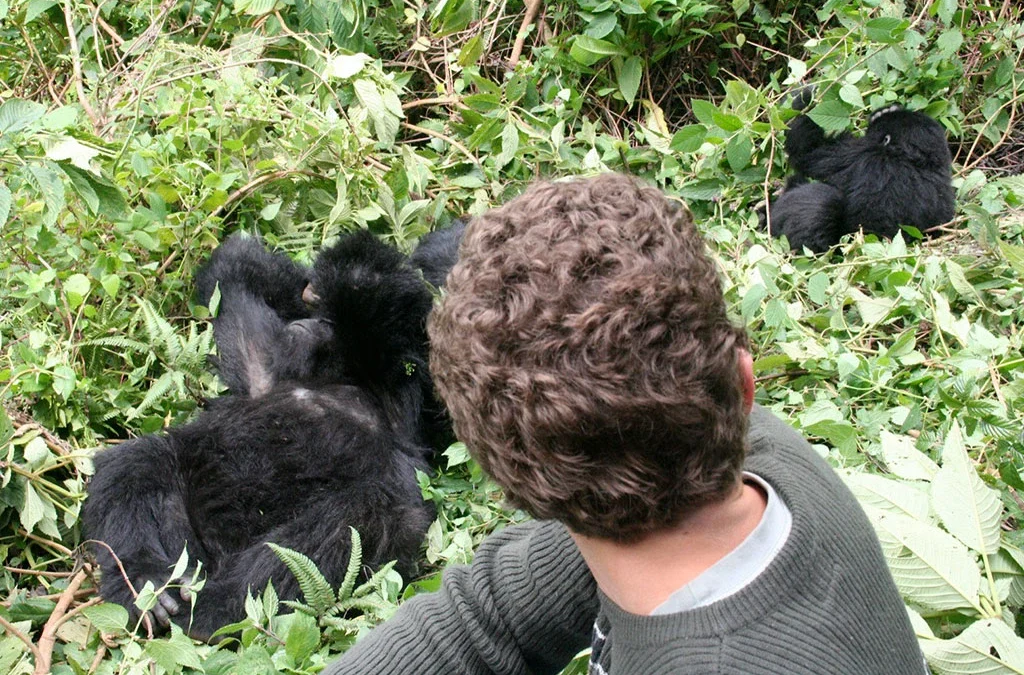
3 Days Uganda Gorilla Safari
For travelers who arrive in Entebbe with a tight schedule and a clear ambition, a 3-day gorilla safari to Bwindi Impenetrable Forest National Park is the most focused and rewarding short trip the country has to offer.
Tour Details →Because Kigali International Airport is often the cheapest and most convenient entry point into East Africa for long-haul travelers, many visitors end up planning Uganda and Rwanda together rather than choosing one country over the other. Rwanda’s own Nyungwe Forest National Park holds a healthy chimpanzee population and a dramatic canopy walkway, giving travelers the option of tracking chimps in Rwanda before crossing the border for gorilla trekking or a Kibale extension in Uganda. Operators on both sides of the border publish itineraries built around this exact routing — for comparison, Kenlink Tours’ 3-Day Nyungwe Forest National Park Tour and their 10-Day Rwanda-Uganda Combination Safari illustrate how a longer cross-border primate circuit is typically structured. Whichever operator you eventually book with, the underlying logic is the same: pair Nyungwe or Volcanoes National Park on the Rwanda side with Kibale, Bwindi, or Queen Elizabeth on the Uganda side, and you can realistically see chimpanzees, mountain gorillas, and golden monkeys within a single, well-organized two-country trip.
Extending Your Trip Beyond Chimp Tracking — More of East Africa
A short chimp tracking safari is, for many of our clients, simply the opening chapter of a longer East African journey rather than the whole trip. Once chimp tracking and, if chosen, gorilla trekking are checked off, travelers frequently ask about tacking on a classic savannah safari, a Rwanda cultural extension, or even a Kenya add-on before flying home. Independent Uganda-Rwanda specialists such as Kenlink Tours publish a wide range of longer combination itineraries worth reviewing for inspiration, including options built around Kenya safaris, dedicated Rwanda safaris, and small-group group tours for travelers who prefer joining a scheduled departure rather than a fully private itinerary. Reviewing a range of published itineraries, whichever operator you eventually travel with, is a genuinely useful step for benchmarking pacing, park combinations, and realistic trip lengths before you commit to a final plan with our team.
Chimp Tracking for Families and First-Time Safari Travelers
Because Kibale’s terrain is comparatively gentle and its minimum trekking age of 15 is lower than the typical minimum for gorilla trekking, chimpanzee tracking is often a better entry point than gorilla trekking for families travelling with teenagers or for first-time safari-goers wary of a physically demanding trek. The shorter one-hour viewing window also keeps the activity manageable for less experienced hikers, while the vocal, highly animated behaviour of chimpanzees tends to hold younger travelers’ attention more easily than the quieter, slower-moving gorilla groups. For families looking to build a broader itinerary around the chimp trek, wildlife-viewing days in Queen Elizabeth National Park pair naturally with a Kibale add-on, giving children a mix of vehicle-based game drives and the more active forest walk. Families who prefer a scheduled, small-group departure rather than a fully private itinerary can also look at fixed-date options such as Kenlink Tours’ scheduled departure safaris for a sense of how joining a set-date group trip typically works logistically and price-wise.
Why Book Your Short Chimp Tracking Safari with Pick and Transfer Safaris
Chimpanzee permits are limited and non-refundable once purchased, which makes reliable, experienced logistics planning essential rather than optional. Pick and Transfer Safaris has built its short chimp tracking itineraries around years of on-the-ground experience in western Uganda, working directly with the Uganda Wildlife Authority to secure permits, private 4×4 vehicles and vetted driver-guides, and forest-edge lodges that match each traveler’s comfort level and budget. Because every one of our chimp safaris — from the 3-Day Chimpanzee Tour to our longer combined itineraries — is custom-built rather than sold as a rigid package, we can adjust pacing, add the habituation experience, or fold in gorilla trekking or classic wildlife parks depending on how much time you actually have. Our full range of short and extended options is listed on our Wildlife Safaris and Gorilla Safaris pages, and our team is always available through our contact page to help shape an itinerary around your dates.
Frequently Asked Questions About Short Chimp Tracking Safaris in Uganda
Can I really do a chimp trek in just one day? Yes, though it requires a very early departure from Kampala or Entebbe and a long drive; most travelers find a two- or three-day itinerary considerably more comfortable.
Is chimp tracking harder than gorilla trekking? Generally no — Kibale’s terrain is flatter and better maintained than Bwindi’s steep gorilla trekking trails, though chimps move faster and can occasionally require longer tracking times.
What is the minimum age for chimpanzee trekking? Fifteen years old, compared with a typical minimum of ten for gorilla trekking in Uganda.
Can I combine chimp tracking with gorilla trekking on one trip? Absolutely — this is one of the most popular combinations we arrange, and itineraries such as our 5-Day Uganda Gorilla and Chimpanzee Safari are built specifically for it.
How much does a chimpanzee permit cost? Expect a standard Kibale trekking permit to cost roughly $200 to $250 per person, with the habituation experience priced higher; we always confirm the exact current rate when you book.
What if I don’t see chimpanzees during my trek? Sightings in Kibale are extremely reliable given the size of the resident population, though as with any wildlife encounter there is no absolute guarantee — your ranger-guide will make every effort to locate a community within the trekking window.
Do I need a visa or vaccination certificate to enter Uganda? Most nationalities require a Uganda visa, obtainable online in advance or on arrival, and travelers arriving from a yellow fever risk country must present a valid yellow fever vaccination certificate; we recommend checking current entry requirements with the Uganda Immigration Directorate well before departure.
Can I photograph the chimpanzees? Yes, standard photography is welcome and encouraged, but flash photography is strictly prohibited because it can startle or distress the animals; a zoom lens is far more useful than a flash in the low light of the forest canopy.
Is chimp tracking suitable if I am not very fit? Kibale’s flat, well-maintained trails make it accessible to most reasonably active travelers, though the pace can pick up quickly once a chimp community is located, so a moderate baseline fitness level is genuinely helpful.
Short Chimp Tracking Safaris in Uganda
A short chimp tracking safari in Uganda proves that unforgettable wildlife experiences do not require weeks of travel time. Whether you have a single spare day, a relaxed long weekend, or three days to fully savour Kibale Forest, Budongo, or Kyambura Gorge, Uganda offers one of the most accessible and reliable chimpanzee encounters anywhere on earth. Ready to build your itinerary? Explore our full 3-Day Chimpanzee Tour in Uganda, browse our broader Wildlife Safaris collection, or reach out directly through our contact page and let our team turn your available days into a short safari you will talk about for years.