- LET'S PLAN YOUR SAFARI
- +256 200 921 002
- +256 793 194 703
- info@pickandtransfersafaris.com

Short Trips in Mgahinga starting from Rwanda
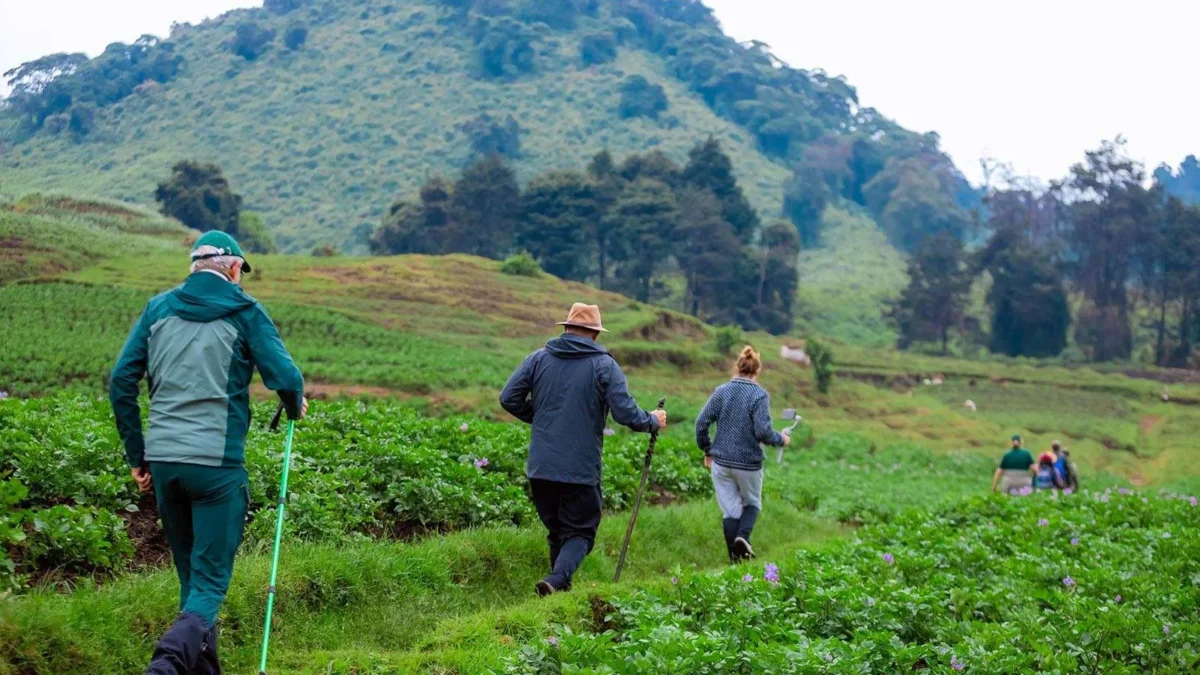
Short Trips in Mgahinga starting from Rwanda. Most travelers planning a gorilla trekking safari think first of Bwindi, and understandably so — it’s Uganda’s best-known gorilla destination and home to the majority of the country’s habituated families. But tucked into the far southwestern corner of Uganda, at the base of three dormant volcanoes shared with Rwanda and the Democratic Republic of Congo, sits a smaller, quieter alternative: Mgahinga Gorilla National Park. For travelers already in Rwanda, or arriving through Kigali, Mgahinga is remarkably easy to reach, and it makes an excellent short add-on to a Rwanda itinerary without the long drive across the country to Bwindi. This guide walks through why Mgahinga is worth considering, how to get there from Rwanda, and what a short two-to-four day trip might look like.
Why Start From Rwanda Instead of Kampala
Uganda’s two gorilla trekking parks sit at opposite ends of the country’s southwest, and the distinction matters more than most first-time travelers realize. Bwindi Impenetrable National Park is roughly nine to ten hours by road from Entebbe or Kampala, which is why most Bwindi itineraries build in a full travel day, sometimes two, just to reach the park. Mgahinga, by contrast, sits directly on the Rwandan border near the town of Kisoro, only a short drive from the Cyanika border post that separates Uganda from Rwanda’s Musanze district. For travelers who are already in Kigali, or who have just finished gorilla trekking in Rwanda’s own Volcanoes National Park, the drive to Mgahinga can take as little as two to three hours once you’ve crossed the border. That single fact changes the entire shape of the trip: instead of needing ten days or more to justify the travel time, a meaningful Mgahinga visit can be built around a long weekend.
This is exactly the kind of route Pick and Transfer Safaris specializes in — cross-border itineraries that treat Uganda and Rwanda as one connected region rather than two separate trips, so you’re not paying for extra driving days you don’t need.
What Makes Mgahinga Different From Bwindi
Mgahinga is Uganda’s smallest national park, covering just under 34 square kilometers, but its compact size is part of the appeal. The park sits within the wider Virunga Conservation Area, the same volcanic range that stretches into Rwanda’s Volcanoes National Park and DR Congo’s Virunga National Park, and it protects three of the eight Virunga volcanoes: Mount Muhabura, Mount Gahinga, and Mount Sabyinyo. Because the terrain is largely open bamboo forest rather than Bwindi’s dense, tangled hardwood undergrowth, many visitors find the trekking here noticeably more comfortable, with a landscape closer to what gorilla trekkers experience on the Rwandan side of the border.
Mgahinga is currently home to one habituated gorilla family, the Nyakagezi group, which has occasionally been known to wander across the unfenced border into Rwanda or Congo, meaning trekking here isn’t always guaranteed on a given day — a detail worth knowing before you commit to a tight schedule. What Mgahinga offers reliably, though, is golden monkey tracking. Alongside Rwanda’s Volcanoes National Park, this is one of only two places where visitors can track these energetic, endangered primates, and unlike gorilla trekking, sightings here are close to guaranteed thanks to the monkeys’ large troop sizes and habituated behavior.
A Sample 2-Day Mgahinga Trip from Kigali
For travelers with limited time, a two-day trip is enough to experience the park’s headline activity. Day one typically starts with an early departure from Kigali, crossing the border at Cyanika and continuing to Kisoro, with enough time on arrival for an afternoon nature walk or a visit to a local Batwa community, depending on what the day’s schedule allows. Day two is built around the main event — an early morning gorilla trek or golden monkey tracking excursion, followed by the drive back across the border to Kigali in the afternoon. It’s a compact but genuinely rewarding way to add a second primate encounter to a Rwanda-based trip without extending your stay by very much.
A Sample 3-Day Mgahinga Trip with Golden Monkeys and Gorillas
Travelers who’d rather not choose between gorillas and golden monkeys can extend the trip by a single day to do both. This version follows the same first day — border crossing and transfer to Kisoro — but splits the activities across two full days: one dedicated to gorilla trekking, and a second to golden monkey tracking, with time in between for a Batwa cultural walk or a half-day hike partway up one of the park’s volcanic peaks for those who want a taste of the Virunga scenery without committing to a full summit attempt. This is close to what our gorilla safaris collection offers for travelers who want variety without a long itinerary.
A Sample 4-Day Trip Combining Mgahinga with Bwindi
For travelers who have a little more time and want to compare both of Uganda’s gorilla parks in one trip, a four-day version adds a scenic transfer from Kisoro to Bwindi Impenetrable National Park, roughly two to three hours by road, for a second gorilla trek through Bwindi’s denser forest interior before returning toward the border or continuing on into the rest of Uganda. This is a shortened version of the logic behind our longer 10 Days Uganda Rwanda Safari and 15 Days Rwanda Uganda Safari itineraries, compressed into a shorter window for travelers who don’t have two or three weeks to spare but still want to see both parks.
Practical Notes: Permits, Timing, and What to Pack
Gorilla trekking and golden monkey tracking permits for Mgahinga are issued and regulated by the Uganda Wildlife Authority, the same body responsible for Bwindi, and it’s worth booking well ahead of your travel dates, particularly during the June–September and December–February peak seasons when demand across both parks is highest. Because Mgahinga has only one habituated gorilla family compared to Bwindi’s several, availability on any given day can be more limited, so building in some flexibility — or prioritizing the golden monkey activity if gorilla permits aren’t available on your preferred date — is a sensible backup plan. On the Rwandan side of the border, permit systems and park information for Volcanoes National Park are managed by the Rwanda Development Board, which is useful to check if you’re weighing up whether to trek gorillas in Rwanda or cross into Mgahinga instead.
Trekking conditions in Mgahinga call for the same preparation as any Virunga-region hike: waterproof hiking boots, long trousers and sleeves to guard against nettles and safari ants, a light rain jacket even in the dry season, and gardening gloves if you’re prone to blisters from grabbing at vegetation on steeper sections. Porters are available at the park headquarters and are well worth hiring, both for the practical help on uneven terrain and as a direct way to support the local community around Kisoro.
Beyond Primates: Volcanoes, Birds, and Batwa Culture
Gorillas and golden monkeys understandably get top billing, but Mgahinga has more to offer travelers with an extra half-day to spare. The park’s three volcanic peaks each present a different level of challenge: Mount Gahinga is the most accessible, a six-to-seven-hour round trip through bamboo forest to a crater lake at the summit, while Mount Muhabura, the highest of the three, is a tougher full-day climb rewarded with views across Uganda, Rwanda, and Congo on a clear day. Birders will also find the park worthwhile, with over 180 recorded species overlapping with the birdlife found in Rwanda’s Volcanoes National Park just across the border. For a lower-key half-day option, guided walks with local Batwa guides offer insight into the community’s history in these forests — a cultural counterpart to the wildlife activities.
Best Time of Year to Visit
Mgahinga can be visited year-round, and there isn’t a dramatically better season for either gorilla trekking or golden monkey tracking. The two dry seasons — June to August and December to February — bring firmer trails on the volcanic slopes, which matters more here than in flatter parks. The rainier months from March to May and September to November bring greener scenery and fewer visitors, at the cost of muddier treks. For a short trip on a tight window, either season works; it’s mostly a trade-off between comfort and quiet.
Is a Short Mgahinga Trip Worth It?
For travelers who’ve already trekked gorillas once, whether in Rwanda or Uganda, and are looking for something a little different rather than a repeat of the same experience, Mgahinga’s quieter trails, golden monkey tracking, and volcanic scenery offer a genuinely distinct add-on rather than a diminished version of Bwindi. And for travelers building a Rwanda-based itinerary who want to include a taste of Uganda without restructuring their entire trip around it, the short drive from Kigali makes Mgahinga one of the easiest cross-border additions available in the region.
If you’re planning a trip through Kigali and want to explore whether a short Mgahinga extension fits your schedule, browse our full range of wildlife safaris and destinations, or get in touch with our team and we’ll help you build a short trip around your exact travel dates.