- LET'S PLAN YOUR SAFARI
- +256 200 921 002
- +256 793 194 703
- info@pickandtransfersafaris.com

Stargazing & Astro Tours in Africa
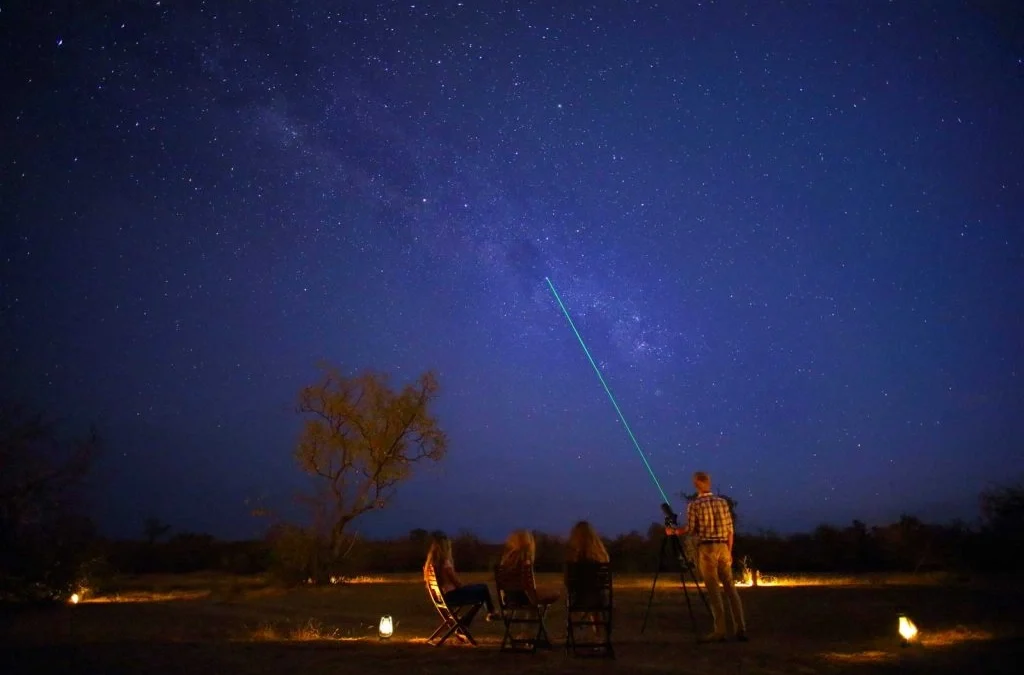
Stargazing & Astro Tours in Africa. Long after the gorilla trek is over and the game drive vehicles have parked for the night, Africa’s skies put on a show that rivals anything the continent offers by daylight. Astro-tourism — travel planned specifically around experiencing a truly dark night sky — has become one of the fastest-growing niches in African travel, making Stargazing & Astro Tours in Africa an exciting choice. For good reason: the continent holds some of the darkest, clearest, most light-pollution-free skies, from the Namib Desert’s certified dark-sky reserve to the volcanic highlands of Rwanda and the remote plains of northern Uganda, making Stargazing & Astro Tours in Africa truly unique.
This guide covers what stargazing and astro tourism in Africa actually involves — which destinations offer the darkest skies, what to expect from a guided stargazing experience, how to plan around moon phases and seasons, and how a night under the stars pairs naturally with the kind of gorilla trekking and wildlife safaris we specialise in at Pick and Transfer Safaris. Whether stargazing is the main reason for your trip or a memorable extra layered onto a Uganda or Rwanda safari, this guide will help you plan it well.
Many travelers seek Stargazing & Astro Tours in Africa as a way to connect with the universe, experiencing the beauty of the cosmos in locations conducive to clear night skies.
For those considering a trip, Stargazing & Astro Tours in Africa can be a breathtaking addition to any itinerary, especially for nature lovers.
For those interested in an immersive experience, consider booking one of the Stargazing & Astro Tours in Africa offered by local experts.
Stargazing & Astro Tours in Africa provide unique opportunities for personal reflection and awe.
Global surveys increasingly show a growing share of travellers actively planning trips around night-sky experiences, and Africa’s combination of remote wilderness, high altitude, and minimal light pollution puts the continent squarely at the centre of that trend — this guide is written to help you navigate the full range of options, from a dedicated desert astronomy expedition to a single memorable evening tacked onto a trip you were already planning.
Stargazing & Astro Tours in Africa not only offer a chance to observe celestial phenomena but also to learn about the cultural significance of the night sky in various African communities.
Many travelers find that Stargazing & Astro Tours in Africa provide a perfect blend of adventure and tranquility under a blanket of stars.
Whether you are a seasoned astronomer or a casual stargazer, Stargazing & Astro Tours in Africa can cater to all levels of interest.
For an unforgettable experience, be sure to consider Stargazing & Astro Tours in Africa during your travels.
Stargazing & Astro Tours in Africa can make for a unique evening activity after a day of wildlife exploration.
Destinations like the NamibRand Nature Reserve are ideal for Stargazing & Astro Tours in Africa, providing unparalleled views of the night sky.
What Makes African Skies So Good for Stargazing
Three factors combine to make so much of Africa exceptional for astro-tourism: remoteness, altitude, and dryness. Vast stretches of the continent — the Namib and Kalahari deserts, Uganda’s Karamoja region, Kenya’s northern rangelands, the high plains of the Karoo — sit far from any significant population centre, meaning the artificial light pollution that washes out the night sky in and around most cities simply doesn’t exist. Combine that with the high altitude of many East and Southern African landscapes, which reduces the amount of atmosphere starlight has to pass through, and the dry air common across much of the region, which keeps atmospheric distortion to a minimum, and you get conditions that rival or exceed most dedicated observatory sites elsewhere in the world.
Many lodges offer stargazing facilities, making Stargazing & Astro Tours in Africa a seamless addition to your stay.
To enhance your experience, inquire about the Stargazing & Astro Tours in Africa available at your accommodation.
Combining your wildlife safari with Stargazing & Astro Tours in Africa will create a memorable adventure.
Gain a deeper appreciation for the night sky through Stargazing & Astro Tours in Africa.
With Stargazing & Astro Tours in Africa, you can witness the wonders of the solar system and beyond.
Stargazing & Astro Tours in Africa allow you to appreciate the vastness of the universe in a unique way.
Africa’s low latitude across much of its landmass adds a further advantage specific to the continent: destinations near the equator, including large parts of Uganda and Kenya, offer views of both the northern and southern celestial hemispheres from the same location — a genuinely rare vantage point most stargazers elsewhere in the world never get to experience without significant travel between hemispheres.
Experience the tranquility of the night sky with Stargazing & Astro Tours in Africa.
Stargazing & Astro Tours in Africa can lead you to breathtaking locations with minimal light interference.
Stargazing & Astro Tours in Africa provide an exceptional viewing experience for all.
Understanding Dark Sky Certification
Participating in Stargazing & Astro Tours in Africa offers a chance to connect deeply with nature.
For many, Stargazing & Astro Tours in Africa turn out to be a highlight of their journey.
Much of the language around astro-tourism in Africa references “Dark Sky” status, a certification system worth understanding before you start comparing destinations. Independent dark-sky organisations assess and certify locations — reserves, parks, and sometimes entire communities — based on measured light pollution levels and the protective lighting policies in place to preserve them, awarding tiers that range from bronze through to the rare gold standard reserved for only the very darkest, most rigorously protected sites in the world.
Plan your itinerary to include Stargazing & Astro Tours in Africa for an unforgettable experience.
Namibia’s NamibRand Nature Reserve, in the southwestern part of the country, holds Gold Tier certification and is widely considered the benchmark for astro-tourism not just in Africa but globally — only a small handful of locations worldwide have ever received this top rating. It remains, at the time of writing, the continent’s most established and internationally recognised certified dark-sky site, though other African countries — South Africa, Botswana, and increasingly Kenya — are actively pursuing similar certifications for their own remote, low-light regions.
Namibia: Africa’s Undisputed Astro-Tourism Capital
Exploring Stargazing & Astro Tours in Africa
Take a moment to appreciate the beauty of the cosmos during Stargazing & Astro Tours in Africa.
If stargazing is genuinely the primary purpose of your African trip rather than a complementary layer on a wildlife safari, Namibia is worth serious consideration on its own merits. The NamibRand Nature Reserve, bordering Namib-Naukluft National Park, protects a vast stretch of desert wilderness with almost no artificial light for hundreds of kilometers in any direction — roughly 15% of the reserve remains entirely untouched wilderness, contributing directly to its Gold Tier status.
Lodges within and near the reserve are specifically designed around this darkness: several offer dedicated observatory domes with research-grade telescopes, guided evening sessions led by trained astronomy guides, and — for the most immersive option — sleep-out platforms with open-air or mesh-roofed beds where guests fall asleep directly beneath the visible Milky Way. Beyond NamibRand, the wider Namib Desert and the dramatic red dunes of Sossusvlei offer similarly excellent conditions for independent stargazing even outside the formally certified reserve boundaries. The best season for Namibian stargazing generally runs from May to August, corresponding to the region’s dry winter months, when skies are driest and clearest.
South Africa: The Karoo, Sutherland, and Professional Astronomy
South Africa offers a different flavour of astro-tourism, blending genuinely excellent dark skies with access to serious professional astronomical infrastructure. The town of Sutherland, in the Northern Cape’s Karoo region, hosts the Southern African Large Telescope (SALT) — one of the largest single optical telescopes in the Southern Hemisphere — alongside several smaller observatories and dedicated astro-tourism lodges built specifically around near-zero light pollution.
The wider Karoo region, along with the Cederberg Mountains and Kgalagadi Transfrontier Park, offers similarly excellent conditions for both casual stargazing and serious astrophotography, with several destinations holding or actively pursuing formal dark-sky certification as part of South Africa’s broader national astro-tourism strategy. As with Namibia, the dry Karoo winter, roughly May to August, offers the clearest and darkest skies, though nights during this period can drop well below freezing — worth planning for with genuinely warm clothing regardless of how mild your days have been.
Botswana: Desert Pans and Wilderness Darkness
Stargazing & Astro Tours in Africa present a unique opportunity to view the cosmos up close.
Botswana’s Makgadikgadi Pans — one of the largest salt pan systems on Earth — offer a stargazing experience unlike almost anywhere else on the continent: a completely flat, treeless horizon in every direction, with the night sky forming an unbroken dome from ground level to ground level on the opposite side. Combined with the country’s famously low population density and vast protected wilderness areas, including the Kgalagadi Transfrontier Park shared with South Africa, Botswana consistently ranks among the top handful of African countries for genuine, uninterrupted dark-sky viewing.
Engage with local guides for the best Stargazing & Astro Tours in Africa.
Several remote camps across Botswana’s wilderness areas now incorporate stargazing directly into their evening programming, often alongside night drives that combine nocturnal wildlife spotting with the same dark conditions that make the stars so vivid overhead.
Kenya: Astro-Tourism on the Equator
Kenya has emerged in recent years as one of Africa’s more actively developing astro-tourism destinations, anchored by a national initiative centred on Samburu National Reserve in the country’s north. Northern Kenya’s remote rangelands offer some of the darkest accessible skies on the continent, and Samburu’s astro-tourism programming has grown to include guided telescope sessions, cultural astronomy storytelling from local Samburu communities, and dedicated stargazing infrastructure built around the region’s exceptionally high number of clear nights annually.
Kenya’s position essentially on the equator gives it a genuine practical advantage over destinations further from the equator: from the right location, both northern and southern hemisphere constellations are visible from the same spot over the course of a night, a vantage point most of the world’s stargazers never experience without travelling between hemispheres. Beyond Samburu, remote conservancies and reserves across Kenya’s northern and southern circuits increasingly offer their own stargazing programming as part of standard evening activities.
Stargazing & Astro Tours in Africa can leave you with a sense of wonder and discovery.
Uganda: Karamoja and Kidepo Valley’s Hidden Dark Skies
Within Uganda specifically, the country’s best-kept stargazing secret sits in its far northeast: the Karamoja region, home to Kidepo Valley National Park. Much of Uganda’s population and infrastructure — and, with it, its light pollution — is concentrated in the country’s central and southern regions, leaving Karamoja’s sparse, largely pastoral landscape with genuinely minimal artificial light across hundreds of kilometres. Apoka Safari Lodge, perched on a hill overlooking Kidepo’s Narus Valley, offers 360-degree open horizons and sits at an altitude that further improves atmospheric clarity, with visitors during the June–September dry season reporting sky conditions comparable to established desert observatory sites elsewhere in the world.
Closer to the gorilla trekking parks most travellers on this site are planning around, Bwindi Impenetrable Forest and Rwanda’s Volcanoes National Park sit in genuinely remote highland terrain with limited surrounding light pollution, and a small but growing number of lodges near both parks have begun incorporating basic stargazing into their evening offerings — worth asking about specifically when booking, since it isn’t yet as standardised or widely marketed as in Namibia or Kenya. The volcanic silhouettes of the Virunga range against a clear night sky make for a genuinely dramatic backdrop, particularly appealing to travellers interested in astrophotography.
Night Drives and Stargazing: A Natural Pairing
Beyond static stargazing sessions, several safari destinations across the region combine a night game drive with the same dark conditions that make the stars so vivid overhead — a pairing that makes practical sense, since both activities depend entirely on genuine darkness to work well. A typical night drive begins with an early dinner, followed by departure into the reserve or conservancy after dark, with a dedicated spotter using a red or amber-filtered spotlight to search for the reflective eye-shine of nocturnal wildlife while the vehicle moves slowly through the landscape.
Engage in Stargazing & Astro Tours in Africa for a unique blend of adventure and relaxation.
Periodically, guides will switch off the vehicle’s engine and lights entirely, allowing the darkness and silence to settle before pointing out visible constellations, planets, or the Milky Way overhead — a genuinely effective way to fold astro-tourism into a wildlife-focused evening without needing a separate, dedicated stargazing excursion. While gorilla trekking areas in Uganda and Rwanda don’t typically offer formal night drives given the density of forest terrain, savannah-based extensions like Queen Elizabeth National Park offer more open terrain where this kind of combined evening activity becomes genuinely practical.
Cultural Astronomy: Traditional Star Knowledge Across Africa
One of the more distinctive elements of astro-tourism in parts of Africa is the presence of genuine traditional astronomical knowledge, developed over generations by communities whose livelihoods — herding, navigation, seasonal planning — depended directly on reading the night sky. In Kenya’s Samburu region, local cultural astronomers share ancestral knowledge of specific stars and constellations used historically for tracking seasons and guiding livestock movements, often woven directly into guided stargazing sessions alongside more conventional Western astronomical explanations.
Similar traditions exist among pastoral communities in Uganda’s Karamoja region, where star patterns have historically informed seasonal and agricultural timing for generations, though this knowledge is less formally packaged into tourism experiences here than in parts of Kenya. For travellers with a genuine interest in this dimension of astro-tourism — not just what the sky looks like, but what it has historically meant to the people living beneath it — seeking out destinations that specifically incorporate cultural astronomy alongside standard telescope sessions adds a meaningfully different layer to the experience.
Safety and Practical Considerations for Nighttime Activities
Stargazing and night-focused activities come with a few practical safety considerations worth planning around, particularly at wildlife-adjacent destinations. Always stay within areas your guide or lodge has specifically designated as safe for evening activity — wild animals remain active at night in and around most safari destinations, and wandering beyond a lodge’s immediate grounds after dark without a guide is inadvisable regardless of how tempting a clear sky might be.
Dress for temperatures considerably colder than daytime, particularly in desert and highland destinations where clear skies — ideal for stargazing — also mean rapid heat loss after sunset. If you’re prone to motion sickness or discomfort lying flat for extended periods, consider this before committing to an extended sleep-out or fly-camping stargazing experience, since these typically involve several hours in a reclined position. Finally, altitude matters in some of the highland destinations covered in this guide, including parts of Uganda and Rwanda’s gorilla trekking regions — travellers unaccustomed to higher elevations may notice mild effects like reduced stamina or occasional headaches, worth factoring in if your stargazing evening follows a physically demanding day of trekking.
Combining Stargazing with a Uganda or Rwanda Gorilla Safari
For most travellers reading this guide, stargazing isn’t the sole purpose of an African trip — it’s a natural, low-effort addition to a gorilla trekking safari already planned around Uganda or Rwanda. Because both countries’ primary trekking areas sit in remote, sparsely populated highland regions with limited artificial light, many lodges near Bwindi, Mgahinga, and Volcanoes National Park offer genuinely good stargazing conditions simply by virtue of their location, even without formal dark-sky infrastructure or dedicated astronomy guides.
If stargazing is a genuine priority rather than a happy accident, it’s worth mentioning this specifically when booking your itinerary — some lodges can offer a telescope on request, arrange a guide with basic astronomy knowledge for an evening session, or simply confirm which nights during your stay coincide with the darkest sky conditions. Our 3 Days Uganda Gorilla Safari from Rwanda and longer itineraries, including the 5 Days Uganda Gorilla and Chimps Safari starting from Rwanda, include enough evenings at forest-edge or highland lodges to make a dedicated stargazing evening a realistic addition without requiring a separate trip.
When to Plan Your Trip: Season and Moon Phase
Indulge in the wonders of the cosmos with Stargazing & Astro Tours in Africa.
Two separate timing factors matter for a successful stargazing trip, and it’s worth planning around both rather than either alone. Seasonally, the dry months across most of Africa’s key stargazing regions — roughly May to September across Namibia, South Africa, and much of East Africa’s dry-season window — offer the clearest, least humid skies, since dry air scatters and refracts starlight considerably less than moisture-laden air. Cloud cover during wet seasons can obscure the sky entirely for days at a time, making dry-season travel a near-essential consideration for anyone specifically prioritising stargazing.
Lunar phase matters just as much within any given season. A full moon washes out much of the faint detail in the Milky Way and dimmer stars, effectively acting as its own light pollution even in an otherwise perfectly dark location. For the most vivid Milky Way viewing and the best conditions for astrophotography, plan your stargazing nights around the new moon, when the sky is at its darkest and celestial detail is most visible to the naked eye. Most astro-tourism operators and dedicated stargazing lodges publish their booking calendars with new-moon periods highlighted for exactly this reason.
Explore the beauty of Stargazing & Astro Tours in Africa on your next adventure.
What to Expect from a Guided Stargazing Experience
Taking part in Stargazing & Astro Tours in Africa can enrich your understanding of the universe.
Guided stargazing sessions vary considerably in format depending on the destination and the level of astronomical infrastructure available, but most share a similar basic structure. An evening typically begins with a briefing on what’s visible that particular night — which planets, constellations, and deep-sky objects are positioned favourably given the date and your location — followed by naked-eye orientation to major landmarks like the Southern Cross, the arc of the Milky Way, and prominent constellations, before moving to telescope viewing of specific targets: Saturn’s rings, Jupiter’s larger moons, star clusters, or nebulae, depending on what’s available and visible.
More developed astro-tourism destinations, particularly in Namibia and South Africa, offer access to genuinely serious equipment — research-grade telescopes capable of resolving detail well beyond what a standard consumer telescope can achieve — while more improvised sessions at safari lodges elsewhere in the region might involve a portable telescope and a knowledgeable guide rather than dedicated observatory infrastructure. Neither approach is inherently better; the more developed sites suit visitors specifically prioritising astronomy, while the lighter-touch versions found at many East African lodges suit travellers for whom stargazing is a meaningful but secondary part of a broader wildlife-focused trip.
Stargazing & Astro Tours in Africa can enhance your understanding of the cosmos.
Astrophotography Tips for African Night Skies
For travellers hoping to photograph rather than simply observe the night sky, a few practical considerations are worth planning around before you travel. A sturdy tripod is essential, since any meaningful night-sky photography requires exposures too long to hand-hold steadily. A wide-angle lens with a fast maximum aperture — ideally f/2.8 or wider — captures the most light in the shortest exposure time, reducing the star-trailing that longer exposures introduce as the Earth’s rotation becomes visible in the frame.
Open your eyes to the spectacular night sky during Stargazing & Astro Tours in Africa.
Stargazing & Astro Tours in Africa are an unforgettable experience in any travel itinerary.
A camera capable of manual control over ISO, aperture, and shutter speed is necessary, since automatic modes are rarely suited to the very low light conditions genuine dark-sky photography involves; a remote shutter release or built-in timer helps avoid camera shake from pressing the shutter button directly. Bring a red-light headlamp or flashlight rather than a standard white one — red light preserves night vision for both you and anyone else nearby, a small courtesy that matters considerably at any genuinely dark site, and one most experienced astro-tourism guides will specifically request.
Immerse yourself in nature with Stargazing & Astro Tours in Africa as an essential part of your adventure.
Make your trip memorable with Stargazing & Astro Tours in Africa, combining adventure with tranquility.
Practical Packing List for a Stargazing Trip
- Warm layers, including a proper jacket and hat — clear desert or highland nights are frequently colder than daytime temperatures suggest.
- A red-light headlamp or flashlight, to preserve night vision without disturbing others.
- Binoculars, a genuinely useful and often underrated alternative or supplement to a telescope for wide-field viewing of the Milky Way and star clusters.
- A tripod and wide-angle lens, if astrophotography is a priority.
- A star chart or astronomy app with offline functionality, useful for orienting yourself between guided sessions or at destinations without a dedicated guide.
- Insect repellent, even in cooler or drier climates, since evening activity often coincides with insect activity near water sources or vegetation.
- A blanket or sleeping bag, particularly relevant for any fly-camping or open-air sleep-out experience.
Find serenity in the night sky through Stargazing & Astro Tours in Africa.
Responsible Stargazing and Dark Sky Conservation
Stargazing & Astro Tours in Africa are a fantastic way to reconnect with nature.
Dark skies, much like the gorilla populations covered elsewhere on this site, are a genuinely finite resource under active pressure from expanding light pollution worldwide — a fact that makes responsible behaviour around stargazing tourism worth taking seriously rather than treating purely as a scenic bonus. Choosing destinations and operators that actively support dark-sky conservation, rather than contributing unnecessary artificial lighting to remote areas, helps preserve the very conditions that make astro-tourism possible in the first place.
On a practical level, this means minimising your own light use at any stargazing site — sticking to red-light torches, avoiding phone screens at full brightness, and following any lighting guidelines your lodge or guide provides. Many of the destinations covered in this guide, particularly certified dark-sky reserves, directly fund conservation and community programming through visitor fees in much the same way gorilla trekking permits do, making thoughtful, well-chosen astro-tourism a genuinely positive contribution to the regions hosting it rather than a purely extractive form of travel.
Choosing Between a Dedicated Astro Trip and a Safari Add-On
With the range of options covered in this guide, it’s worth a final word on how to decide between treating stargazing as the centrepiece of a dedicated trip versus a meaningful addition to a wildlife-focused itinerary already planned around Uganda or Rwanda. Travellers with a genuine, dedicated interest in astronomy — wanting access to serious telescope infrastructure, guided sessions with trained astronomers, or specifically certified dark-sky conditions — are generally best served by a Namibia- or South Africa-focused trip built specifically around that priority.
For the large majority of travellers planning a gorilla trekking safari through Uganda or Rwanda, however, the more practical and cost-effective approach is treating stargazing as a genuinely worthwhile evening addition to an already-planned itinerary, rather than a separate trip in its own right. The remote, low-light locations most gorilla trekking lodges already occupy mean a clear night during your stay often delivers a genuinely memorable sky with no additional planning required beyond stepping outside after dinner — and asking your lodge in advance whether a telescope or knowledgeable guide is available can turn that casual evening into something considerably more structured.
Participate in Stargazing & Astro Tours in Africa to deepen your connection with the environment.
Stargazing After a Gorilla Trekking
To make this concrete, here’s roughly how a stargazing evening fits into a typical evening following a day’s gorilla trekking in Uganda or Rwanda. After the physical demands of the day’s trek and an early dinner, most lodges near Bwindi, Mgahinga, or Volcanoes National Park sit far enough from any significant town or city that stepping outside onto a veranda or common deck after dark reveals a sky dramatically different from what most travellers see at home, even without any formal stargazing programming.
If your lodge offers a telescope or a guide with astronomy knowledge, this is the natural window to request it — most guests are tired enough after a trekking day that a shorter, thirty-to-forty-five-minute session before an early night suits the day’s overall pace better than an extended multi-hour astronomy programme. For travellers on a longer itinerary with a rest day built in, or those specifically prioritising stargazing, a longer session — including telescope viewing of visible planets and a guided tour of major constellations — fits naturally into an evening without a demanding trek scheduled for the following morning.
Choosing Lodges with Genuine Stargazing Potential
Not every lodge near a gorilla trekking park is equally well positioned for stargazing, even within the same general region, and it’s worth asking a few specific questions when booking if this is a genuine priority. Elevation and openness matter — a lodge with an open veranda or deck facing away from any nearby settlement will generally offer better views than one enclosed by dense forest canopy on all sides, even if both sit in an otherwise dark, remote area. Ask specifically whether the lodge has any history of hosting stargazing evenings, whether informally with staff pointing out constellations or through a more structured telescope session, since this varies considerably even among lodges in the same immediate area.
It’s also worth asking about outdoor lighting policy — some lodges, increasingly aware of the value dark skies add to the guest experience, deliberately minimise exterior lighting after a certain hour, while others maintain brighter security or pathway lighting that can meaningfully reduce the darkness available for stargazing directly around the property. A lodge that actively manages its own light footprint is often a reliable signal that stargazing is taken seriously as part of the overall guest experience, rather than treated as an incidental bonus.
Frequently Asked Questions
Which African country has the best stargazing conditions overall? Namibia is widely regarded as the top destination for pure sky quality, largely due to the NamibRand Nature Reserve’s Gold Tier dark-sky certification, the Namib Desert’s extreme remoteness, and the country’s very low population density.
Can I see stars well from Uganda or Rwanda’s gorilla trekking areas? Yes, generally — both countries’ trekking regions sit in remote highland terrain with limited light pollution, though formal astro-tourism infrastructure (dedicated telescopes, trained astronomy guides) is less developed here than in Namibia or Kenya.
What’s the best time of year for stargazing in Africa? Dry seasons offer the clearest skies almost everywhere on the continent — roughly May to September across Namibia, South Africa, and much of East Africa — since dry air scatters and refracts starlight far less than humid air.
Does the moon phase matter for stargazing? Significantly — a full moon washes out much of the Milky Way’s fainter detail, so plan around the new moon for the darkest skies and the most vivid stargazing or astrophotography conditions.
Do I need my own telescope, or will lodges provide one? Most dedicated astro-tourism destinations, particularly in Namibia and South Africa, provide telescopes and trained guides as standard; at general safari lodges elsewhere, it’s worth asking specifically whether a telescope is available rather than assuming.
Is stargazing possible during a standard gorilla trekking safari, or does it require a separate trip? It’s genuinely possible as an add-on to a standard Uganda or Rwanda gorilla safari, given how remote most trekking lodges already are — worth flagging your interest when booking so your operator can recommend lodges with the best conditions or available equipment.
What’s the difference between Kenya’s and Uganda’s stargazing regions? Kenya’s Samburu region has more actively developed, nationally promoted astro-tourism infrastructure; Uganda’s best conditions, in the remote Karamoja region near Kidepo Valley, remain less formally developed but offer comparably dark skies.
Is astrophotography difficult for beginners in these remote locations? It requires specific gear — a tripod, a wide-angle fast lens, and manual camera control — but the genuinely dark skies at most African astro-tourism destinations make the results considerably more rewarding for beginners than attempting the same photography under typical urban or suburban conditions.
Are night game drives the same thing as stargazing? Not exactly, though they’re often combined — a night drive focuses primarily on spotting nocturnal wildlife, with stargazing typically included as a secondary element when the vehicle stops and the lights are switched off.
Is it safe to stargaze at a safari lodge in Uganda or Rwanda? Generally yes, provided you stay within areas your lodge designates as safe for evening activity and don’t wander beyond the immediate grounds after dark without a guide, given that wildlife remains active at night around many safari destinations.
Do I need to book a stargazing session in advance, or can I arrange it on arrival? It varies by lodge — more established astro-tourism destinations in Namibia and South Africa often require advance booking for telescope sessions, while many East African safari lodges can arrange something more informal on request during your stay, though asking ahead is always the safer approach.
Can children participate in stargazing tours? Yes, generally — unlike gorilla trekking, which has a strict minimum age requirement, most stargazing activities are suitable for travellers of all ages, making it a good complementary activity for families travelling with younger children who can’t yet join a gorilla trek.
How cold does it actually get during stargazing sessions in desert or highland regions? Temperatures can drop well below what daytime conditions suggest, particularly in the Karoo and Namib Desert during the dry winter season, sometimes falling below freezing — genuinely warm layers are essential rather than optional.
Finally,
Africa’s night skies are, for many travellers, an unplanned highlight of a trip built primarily around daytime wildlife encounters — a byproduct of the same remoteness and low population density that makes the continent’s gorilla trekking parks and safari destinations so rewarding in the first place. Whether you build an entire trip around a certified dark-sky reserve in Namibia or simply step outside after dinner during a Uganda or Rwanda gorilla safari, the night sky over much of this continent offers a genuinely rare, increasingly precious view of the universe that’s disappeared entirely from most of the world’s populated places.
If you’re planning a Uganda or Rwanda safari and want to build in genuine stargazing time alongside your gorilla trekking, get in touch with our team and we’ll help match your itinerary to lodges and evenings with the best night-sky conditions available.