- LET'S PLAN YOUR SAFARI
- +256 200 921 002
- +256 793 194 703
- info@pickandtransfersafaris.com

The Best Road Trips in Rwanda
The Best Road Trips in Rwanda. Rwanda’s nickname, the Land of a Thousand Hills, is not a marketing invention, and nowhere is that clearer than from behind a windshield. The country’s road network is unusually good by regional standards, mostly paved, well signposted and winding through some of the most consistently scenic terrain in East Africa, terraced hillsides, volcanic peaks, tea plantations and lakeside villages, often within the same single day of driving. This guide covers the best road trips in Rwanda, the routes worth building a day or several around, with realistic drive times, what to stop for along the way, and how each route fits into a broader Rwanda itinerary, based on the routes we drive with clients every week at Pick and Transfer Safaris.
If you already have a full itinerary in mind and want the day-by-day version rather than a route guide, our companion posts cover exactly that: a 5-day itinerary, a 7-day itinerary, a 10-day itinerary, and our full 2-week itinerary. This guide focuses specifically on the driving itself, the roads, the scenery and the stops worth making, which is a slightly different lens on the same country and one that matters if you plan to spend real time behind the wheel rather than simply flying between destinations.
For many travellers, the drive between destinations turns out to be as memorable as the destinations themselves, a detail easy to overlook when planning a Rwanda trip around permit dates and park entry fees alone. What follows treats the road as a genuine part of the experience rather than dead time between activities, with enough practical detail on drive times, road surfaces and worthwhile stops to actually plan around, whether you are behind the wheel yourself or simply want to know what to expect from the passenger seat of a private vehicle.
Why Rwanda Is One of Africa’s Best Road Trip Countries
Rwanda’s small size, roughly 26,000 square kilometers, means almost every major destination sits within a single day’s drive of Kigali, and the country’s mountainous terrain, rather than making driving difficult, is precisely what makes the routes so rewarding. Unlike many East African road trips, which involve long, flat, monotonous stretches between points of interest, a Rwanda drive rarely goes more than a few minutes without a view worth stopping for, terraced hillsides carrying banana and tea plantations up impossibly steep slopes, volcanic peaks appearing and disappearing behind cloud, or a lakeside village visible far below the road. The country’s investment in road infrastructure, considerably ahead of many of its neighbours, means most of the routes below are comfortable in a standard vehicle, with 4×4 genuinely necessary only on specific unpaved stretches noted route by route.
There is also a practical dimension to why Rwanda works so well for road-based travel specifically: the absence of long, empty transit stretches means every hour spent driving tends to double as sightseeing rather than time to simply be endured between destinations. Compare this to safari circuits elsewhere on the continent, where a transfer between parks can mean hours of flat, repetitive bushland with little to look at, and it becomes clear why so many repeat visitors to Rwanda describe the driving itself as one of the trip’s highlights rather than a necessary inconvenience.
How This List Was Chosen
The eight routes below were chosen for the same reason as the destinations in our companion guide to the 10 best places to visit in Rwanda: a mix of practicality and reward, routes that get you somewhere worth going while being genuinely enjoyable to drive in their own right. Some are the unavoidable backbone of any Rwanda safari, the road to the gorillas, the road to the Big Five, while others are true detours, worth driving for the journey itself rather than only the destination at the end of it.
Road Trip 1: Kigali to Volcanoes National Park — The Gorilla Trekking Route
The drive from Kigali to Musanze, the gateway town for Volcanoes National Park, is the single most-driven route in Rwanda tourism, and deservedly so. The roughly two-and-a-half-hour, fully paved drive climbs steadily out of Kigali through a dense patchwork of terraced hillsides before the Virunga volcanoes themselves come into view on the final approach, often the first proper look most visitors get of the peaks they will be climbing the following morning. The road passes through Musanze town itself, worth a brief stop for its lively market, before continuing to whichever lodge or camp is your base for gorilla trekking. This route forms the opening leg of nearly every itinerary in our series, including our 2-Day Volcanoes Gorilla Trek.
The road itself is well engineered given the terrain it crosses, a steady sequence of climbs and descents rather than sharp switchbacks, which makes it a comfortable introduction to Rwandan mountain driving for travellers about to tackle steeper routes later in their trip. Roadside stalls selling fresh produce, particularly the potatoes and pyrethrum flowers the region is known for, appear regularly along the final stretch into Musanze, and a quick stop at one is a good way to support the local economy directly rather than only through park fees and lodge bills.
Road Trip 2: The Lake Kivu Coast Road — Rubavu to Rusizi
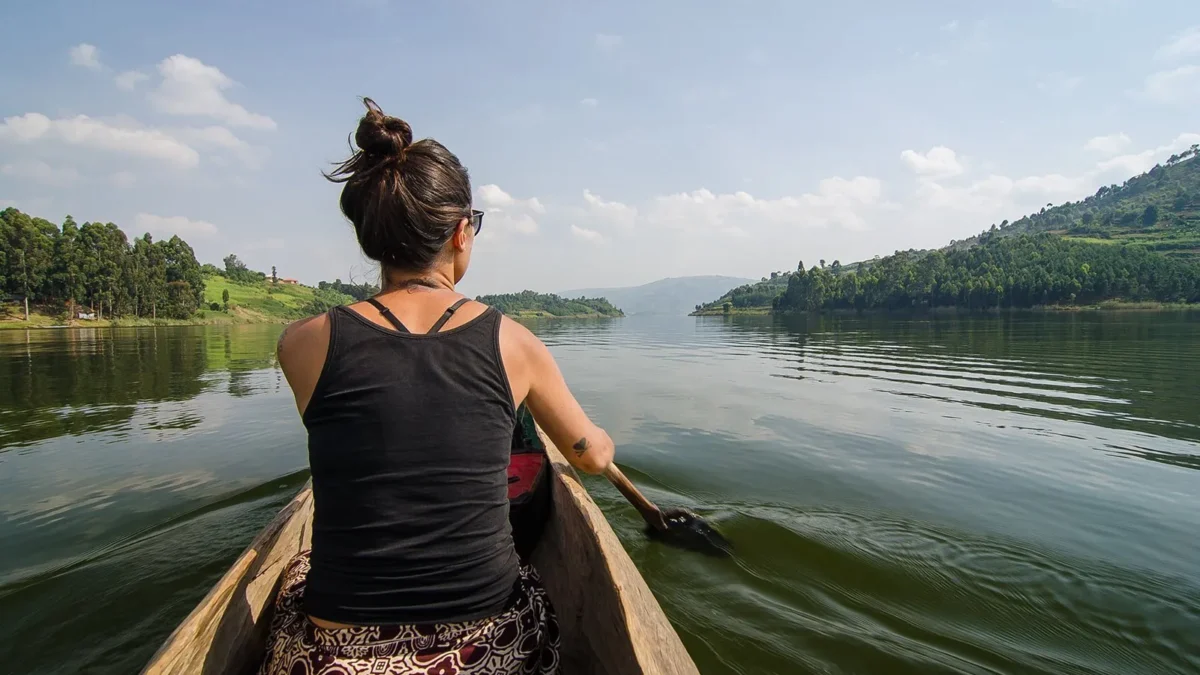
The road running the length of Lake Kivu’s eastern shore, from Rubavu in the north to Rusizi in the south, is widely considered the single most scenic drive in Rwanda, and one of the most scenic in East Africa. The full route takes the better part of a day, winding along cliffs and terraced tea estates with the lake in view for long stretches, passing through Karongi roughly halfway along, a natural overnight stop that breaks the drive into two comfortable days rather than one long one. Much of the route follows the same corridor as the Congo Nile Trail, covered separately below, and the road itself has been steadily upgraded in recent years, though sections still call for a careful pace given the tight curves and steep drop-offs. Our partner Kenlink Tours’ 6-Day Rwanda Adventure covering great apes and Lake Kivu follows a version of this route as part of a longer itinerary.
Few travellers drive the full Rubavu-to-Rusizi stretch in a single push, and most itineraries treat it instead as two shorter, more enjoyable legs, Rubavu to Karongi on one day and Karongi to Rusizi or onward to Nyungwe on the next, which also happens to be the pacing that lines up naturally with a Lake Kivu stopover on our own 10-day itinerary. Coffee plantations line much of the route, and several now offer roadside tastings, a worthwhile break on a drive with this much natural scenery to pace yourself against.
Road Trip 3: Kigali to Akagera National Park — The Savannah Route
The drive east from Kigali to Akagera National Park offers a genuinely different landscape from the volcanic highlands in the north and west, rolling savannah and open sky replacing the terraced hills, a visible shift that makes clear you are approaching Rwanda’s only Big Five park well before you reach the gate. The route runs through Kayonza town, roughly the halfway point, before the final stretch turns onto an unpaved road for the last 28 kilometres to the park’s south gate at Mutumba, the one section of this drive where a 4×4 is genuinely worth having, particularly in the wetter months. The full drive takes roughly two and a half hours, and it is the backbone of our 3-Day Akagera National Park Safari, a route we cover in more depth, including exactly where the Big Five are best spotted once you arrive, in our guide to Akagera’s Big Five.
The landscape change on this route is gradual enough to genuinely appreciate rather than sudden, terraced hills giving way to flatter, drier country over the course of an hour or so, and the drive is comfortably manageable as a single push without an overnight stop, unlike the longer southern and Lake Kivu routes above. Pre-registering online before arrival at the park gate, a step worth doing before setting out rather than on arrival, meaningfully shortens the queue at Mutumba during busier periods.
Road Trip 4: Kigali to Nyungwe Forest via Nyanza and Huye — The Southern Cultural Route
The road south from Kigali to Nyungwe Forest National Park is the most culturally rich of all the routes on this list, passing directly through Nyanza, Rwanda’s former royal capital and home to the King’s Palace Museum, and Huye, formerly Butare, home to the National Museum of Rwanda. Rather than a straight transit drive, this route rewards travellers who break it into a full day with stops at both towns, before the final approach into Nyungwe climbs through tea plantations and increasingly dense montane forest. The full drive from Kigali to Nyungwe runs five to six hours without stops, so most itineraries, including our own 10-day itinerary, treat this as a full travel day built around the Nyanza and Huye stops rather than a rushed pass-through.
The final hour or so of this drive, climbing from Huye into Nyungwe’s montane forest, is a noticeable shift in both temperature and vegetation, cooler air and denser tree cover replacing the open farmland of the preceding stretch, and it is often the point at which travellers first sense they have left the country’s central plateau for genuine rainforest. Fuel and food options thin out considerably past Huye, so it is worth topping up on both before continuing the final leg into the park.
Road Trip 5: Musanze to Lake Burera and Lake Ruhondo — The Twin Lakes Detour
A short, easily overlooked detour from Musanze north into the hills leads to Lake Burera and Lake Ruhondo, two connected crater lakes offering some of the most striking scenery in the entire Virunga region without the crowds of the main gorilla trekking circuit. The drive itself, roughly forty-five minutes to an hour from central Musanze, winds through terraced farmland and small fishing villages, with the lakes appearing suddenly around a bend, still water framed by steep green hillsides and, on a clear day, the volcanoes visible in the distance. This is the shortest route on this list and the easiest to add onto an existing Volcanoes National Park stay without any additional overnight, making it one of the best-value half-day drives in the entire country.
The unpaved sections of this detour are generally manageable in a standard vehicle in dry conditions, though a careful pace is worth keeping given the narrow, occasionally single-lane stretches shared with local pedestrian and bicycle traffic. This is one of the few routes on this list where slowing down and simply enjoying the drive matters more than reaching a specific destination on time, since the journey between the two lakes is arguably as memorable as either lake itself.
Road Trip 6: The Congo Nile Trail — Rwanda’s Ultimate Adventure Route
The Congo Nile Trail is less a single road than a 227-kilometre, six-stage hiking and mountain biking route tracing the entire length of Lake Kivu’s shoreline, but sections of it double as some of the most rewarding scenic driving in the country for travellers not attempting the full trail on foot or by bike. Rolling between tea and coffee plantations, small lakeside communities and dramatic drop-offs toward the water, the trail corridor offers a genuinely different pace from the paved coast road covered above, unpaved in long stretches and best approached with a 4×4 and time to spare rather than a fixed schedule. Travellers who want the adventure of the Congo Nile Trail without committing to the full multi-day trek can drive or arrange guided sections of it as day excursions from Rubavu or Karongi, a worthwhile addition for anyone spending more than a single night on Lake Kivu.
Cyclists and hikers tackling the full trail typically allow six days to cover all six stages, camping or staying in small guesthouses along the way, while travellers exploring it by vehicle can sample the most scenic middle stages, generally considered the section between Karongi and Nyamasheke, in a single half-day without committing to the full route. Local guides based in Rubavu and Karongi can arrange either a guided drive or a supported cycling day along specific stages, useful for travellers who want the experience without independently navigating the trail’s less-signposted sections.
Road Trip 7: Kigali to Bugesera — The Nyamata and Ntarama Memorial Route
A shorter, more solemn route runs south from Kigali into Bugesera district, roughly 30 kilometres and forty-five minutes to an hour by road, to the Nyamata and Ntarama genocide memorials. Both memorials are preserved churches where thousands of people sought shelter during the 1994 genocide against the Tutsi and were killed, and both remain much as they were found, personal belongings, clothing and, in Nyamata’s case, underground crypts holding victims’ remains. These are profoundly difficult places to visit, and they are visited respectfully rather than as a typical tourist stop: modest dress, quiet conduct inside the exhibit areas, and permission asked before any photography are expected of every visitor. Both sites typically operate daily from 8am to 5pm, sit close enough to each other to visit together in a single half-day, and are best paired with the Kigali Genocide Memorial for travellers who want a fuller, more complete understanding of this period of Rwanda’s history before continuing on to the rest of the country.
Road Trip 8: The Grand Rwanda Loop — Combining Every Major Park in One Circuit
For travellers with enough time to drive the country properly rather than fly between destinations, the Grand Rwanda Loop connects Kigali, Volcanoes National Park, Lake Kivu, Nyungwe Forest and Akagera into a single clockwise circuit that never doubles back on the same road twice. This is precisely the route behind our full 2-week Rwanda itinerary, and driving it in full typically takes twelve to fourteen days at a comfortable pace, six to seven of them genuine driving days, with the remainder spent at each destination. It is the single most complete way to see Rwanda by road, and the country’s compact size and consistently good road network are precisely what make a loop this ambitious realistic within a two-week trip, something that would be far harder to pull off in almost any other country of comparable size in the region.
What makes the loop work as a single continuous route, rather than a series of disconnected out-and-back trips from Kigali, is that each leg naturally sets up the next: the drive north to the volcanoes flows into the Lake Kivu coast road, which flows into the southern route through Nyanza and Huye toward Nyungwe, before a final long transfer east to Akagera and back to Kigali closes the circuit. Very few travellers drive this full loop on a first visit, but for a second or third trip to Rwanda, or for travellers who simply prefer covering ground by road over flying, it remains the single most rewarding way to experience the country’s geography as a connected whole rather than a series of isolated stops. Travellers weighing whether they have time for the full loop versus a shorter version often start by comparing it against our 10-day Rwanda itinerary, which covers most of the same parks in a slightly tighter window by trimming a day or two from each stop rather than dropping a destination entirely.
Which Route Should You Prioritise?
With eight routes above and most travellers working with far less than the two weeks the Grand Rwanda Loop deserves, it helps to know which drives are essential and which are genuine bonuses. The Kigali-to-Volcanoes and Kigali-to-Akagera routes are non-negotiable for almost every visitor, since they connect the capital to Rwanda’s two headline wildlife experiences, gorilla trekking and the Big Five, and appear in some form on nearly every itinerary regardless of length. The Lake Kivu coast road and the southern route through Nyanza and Huye to Nyungwe are the next tier, genuinely worthwhile additions for travellers with seven or more days who want depth beyond the two flagship parks. The twin lakes detour, the Congo Nile Trail and the Bugesera memorial route are the destinations most travellers add on a second visit, or a particularly generous first trip with two weeks or more to work with.
Combining a Rwanda Road Trip with Uganda
Travellers with extra time sometimes extend one of these routes across the border into Uganda, adding a second country’s own scenic driving and wildlife stops to the trip. The road from Kigali to Uganda’s southwest, connecting toward Bwindi Impenetrable Forest and Queen Elizabeth National Park, follows a similarly hilly, well-maintained route and adds two to three days to a Rwanda-only itinerary. Our long-time partner Kenlink Tours runs strong Uganda-side options for exactly this kind of cross-border extension, including their 3-Day Rwanda Gorilla Safari as a shorter standalone alternative and their 3-Day Akagera Game Drive Safari for travellers who want a dedicated Akagera add-on, both worth reviewing through their Rwanda safaris and Uganda safaris collections when planning a longer, two-country road trip.
Photography Tips for a Rwanda Road Trip
Rwanda’s road trips reward photographers more consistently than almost any other country in the region, and a few practical habits make a real difference to the results. Golden hour light in the first and last hour of daylight transforms the terraced hillsides along the Kigali-to-Musanze and Kigali-to-Nyungwe routes, turning ordinary farmland into genuinely striking landscape shots, so building in a slightly earlier or later departure than strictly necessary is often worth it. The Lake Kivu coast road offers frequent, safe pull-off points for photographing the water against the surrounding hills, while the approach to Volcanoes National Park is best photographed on a clear morning, since the volcanic peaks are frequently obscured by cloud later in the day. A vehicle with a driver-guide, rather than self-driving, makes spontaneous photo stops considerably easier to arrange without the driver needing to also navigate unfamiliar roads.
Self-Drive vs Private Driver-Guide: Which Is Right for Your Road Trip
Rwanda’s road quality makes self-driving genuinely feasible for confident, experienced drivers, particularly on the paved routes described above, and travellers who want full control over their pace can compare independent car hire options through Kenlink Tours’ car hire service. That said, the majority of visitors, including many experienced independent travellers, choose a private vehicle with driver-guide instead, standard across our own Rwanda and Uganda safari packages, mainly because national park roads require licensed access that not every hire vehicle is automatically cleared for, unpaved sections around Volcanoes National Park and Akagera’s northern circuit are genuinely easier with local experience, and a driver-guide frees every passenger to actually look at the scenery rather than concentrate on unfamiliar mountain roads. Travelling in a small group of three or four also meaningfully reduces the per-person cost of a private vehicle, an option worth reviewing through Kenlink Tours’ own group tour departures if you are travelling solo or as a couple and open to joining others.
There is a middle-ground option worth knowing about as well: some operators offer a self-drive vehicle with a local guide riding along purely for navigation and park-access purposes, rather than doing the driving themselves. This suits confident drivers who want the independence of controlling the vehicle while still benefiting from local route knowledge and licensed park access, though it is a less common arrangement than either fully self-drive hire or a full driver-guide package, and it is worth confirming availability directly with your chosen operator rather than assuming it is standard.
Road Conditions and Driving Rules in Rwanda
Rwanda drives on the right, and its main highways connecting Kigali to Musanze, Kayonza, Huye and the Lake Kivu towns are well-maintained and mostly paved, considerably ahead of the regional average. Conditions deteriorate on the unpaved sections specifically noted in the routes above, the final approach to Akagera’s south gate and much of the Congo Nile Trail corridor, both of which are genuinely more comfortable with a 4×4, particularly during the wetter months from March to May and in November. Speed limits are enforced, including inside the national parks, where a 40 kilometres per hour cap applies on game drives, and Rwanda’s traffic police maintain a visible, generally courteous presence on the main highways, with checkpoints an ordinary part of longer drives rather than a cause for concern. Mountain roads, particularly the routes to and around Volcanoes National Park and Nyungwe Forest, involve near-constant switchbacks, so travellers prone to motion sickness should plan accordingly and consider breaking longer drives into two days where the itinerary allows.
Best Time of Year for a Rwanda Road Trip
Rwanda’s two dry seasons, June through September and December through February, offer the most comfortable driving conditions across every route on this list, with less risk of the unpaved sections becoming difficult and generally clearer views on the scenic stretches. The shoulder and low season months, particularly April, May, October and November, bring a real chance of rain, which can make the Congo Nile Trail corridor and Akagera’s final unpaved approach noticeably more challenging, though the paved routes, Kigali to Musanze, Kigali to Nyungwe and the main Lake Kivu coast road, remain comfortable to drive year-round regardless of season.
Fuel, Costs and Practical Budgeting for a Road Trip
Fuel stations are reliable and reasonably frequent along every major route described above, though it is worth filling up before the final unpaved stretches into Akagera or along the Congo Nile Trail, where stations thin out considerably. A private vehicle and driver-guide for a multi-day road trip typically runs $80 to $150 per day depending on vehicle type, a cost usually bundled into a packaged itinerary rather than charged separately, and self-drive hire runs somewhat less but adds fuel, insurance and any cross-border or park access permits as separate line items. We break down the fuller cost picture for a complete Rwanda trip, including transport, in our detailed gorilla trekking cost guide, which applies to the transport costs behind these road trips as well.
Mobile Connectivity and Navigation on the Road
Mobile data coverage from Rwanda’s main networks is genuinely strong along every paved route on this list, including most of the Kigali-Musanze, Kigali-Nyungwe and Lake Kivu coast corridors, which makes offline map downloads more of a safety net than a strict necessity for the majority of the itinerary. Coverage does thin out on the more remote unpaved sections, particularly deep into the Congo Nile Trail and on the final approach to Akagera’s south gate, so downloading offline map tiles for those specific stretches before setting out is worth the five minutes it takes. A local SIM card, available on arrival at Kigali International Airport or from any of the main network kiosks in the city, is inexpensive and makes both navigation and staying in touch with your driver-guide or operator considerably simpler than relying on international roaming. Google Maps and Maps.me both perform well for the main highways, though local knowledge still matters for timing river crossings, confirming which of Akagera’s gates is currently in better condition, or judging whether a particular unpaved stretch is passable after heavy rain, which is one of the clearest arguments for travelling with a driver-guide rather than navigating entirely solo.
Safety Tips for Driving in Rwanda
Rwanda is widely regarded as one of the safest countries in the region to drive through, with low crime rates and generally disciplined road behaviour by regional standards, but a few practical precautions apply to any of the routes above. Avoid driving after dark outside major towns where possible, since unlit roads, pedestrians and livestock on rural stretches become considerably harder to see at night, particularly on the mountain routes around Volcanoes National Park and Nyungwe. Carry a printed map or offline navigation as a backup, since mobile signal drops out on some of the more remote stretches, including parts of the Congo Nile Trail and the approach to Akagera’s north gate. Always carry your passport and any relevant park permits when driving toward a national park, since checkpoints are a routine feature of these routes and documentation is regularly requested.
What to Pack for a Rwanda Road Trip
Beyond the standard packing list for a Rwanda trip, a road trip specifically benefits from a few additional items: a phone mount and offline maps downloaded in advance, a portable charger for longer driving days, motion sickness remedies for the mountain switchback sections, and snacks and water for stretches between towns where roadside stops are limited. Cash in small denominations of Rwandan francs is useful for the informal roadside stalls and fruit vendors common along the Lake Kivu and southern cultural routes, since card payment is rarely available outside towns and lodges.
Working with a Local Operator to Plan Your Road Trip
Assembling a multi-leg Rwanda road trip independently, coordinating vehicle logistics, park permit access and accommodation across several regions, is genuinely more complex than it first appears, particularly for travellers unfamiliar with which roads require licensed park access and which stretches are best avoided after dark. Most travellers, even confident independent ones, choose to have a local operator handle the vehicle and route planning rather than assembling it piece by piece. If you are still comparing operators or want a second quote to benchmark against, our partner Kenlink Tours can be reached through their contact page, and their track record is outlined on their about us page, both useful references alongside our own route guide above when deciding who to book your driving and transport through.
How These Road Trips Connect to Our Itineraries
Every route in this guide is a leg of at least one of the itineraries in our broader Rwanda planning series, and matching the road trip to the itinerary length that suits your schedule is the fastest way to turn this route guide into an actual trip. The Kigali-to-Volcanoes and Kigali-to-Akagera routes anchor our shorter 5-day and 7-day itineraries. The Nyungwe and Lake Kivu routes join the mix on our 10-day itinerary, and the full Grand Rwanda Loop is, in effect, the road-trip version of our 2-week itinerary. For a broader look at what each destination along these routes actually offers once you arrive, our companion guide to the 10 best places to visit in Rwanda covers exactly that.
Frequently Asked Questions About Road Trips in Rwanda
Is it safe to self-drive in Rwanda? Yes, for confident, experienced drivers, particularly on the paved main routes. Rwanda’s roads and traffic discipline are considerably better than the regional average, though national park access requires licensed vehicles and drivers, which limits self-drive on some legs.
Do I need a 4×4 for a Rwanda road trip? Not for the main paved routes, Kigali to Musanze, Kigali to Nyungwe and the primary Lake Kivu coast road are all comfortable in a standard vehicle. A 4×4 is genuinely useful for the final unpaved approach to Akagera’s south gate and for sections of the Congo Nile Trail corridor, particularly in the wetter months.
Which road trip has the best scenery in Rwanda? The Lake Kivu coast road between Rubavu and Rusizi is the most consistently cited answer, with the lake in view for long stretches alongside terraced tea estates, though the approach to Volcanoes National Park runs a close second thanks to the volcanoes themselves coming into view.
How long does the Grand Rwanda Loop take? Roughly twelve to fourteen days at a comfortable pace, matching our full 2-week Rwanda itinerary, with six to seven of those days spent driving and the remainder at each destination.
Can I combine a road trip with gorilla trekking and a Big Five safari? Yes, and nearly every route in this guide does exactly that. The Kigali-to-Volcanoes and Kigali-to-Akagera routes are the two most-driven legs in Rwanda tourism precisely because they connect Kigali to the country’s two headline wildlife experiences, and travellers comparing the two primate-trekking options before deciding which to build a route around often start with our gorilla trekking versus chimpanzee trekking comparison.
Is it better to book a road trip as part of a fixed itinerary or arrange it independently? Both approaches work, and the right choice depends on how much flexibility you want. A fixed itinerary, such as our 5-day Rwanda safari itinerary or the longer 10-day and 2-week versions, bundles the driving, permits and accommodation into a single planned route with no logistics left to chance, which suits most first-time visitors. Arranging the road trip independently with a self-drive hire or a driver-guide booked separately gives more day-to-day flexibility to linger somewhere longer or skip a stop that doesn’t interest you, though it does require more advance planning around park permit availability and accommodation bookings, particularly in peak season.
What is the single most common mistake travellers make when planning a Rwanda road trip? Underestimating how much time the mountain sections genuinely take. Distances on a map look short because Rwanda is a small country, but the switchback roads around Volcanoes National Park and Nyungwe Forest move considerably slower than the same distance on a flat highway, and travellers who schedule these legs at highway speed routinely arrive late, tired or both. Building in the extra hour or two that local operators typically allow for these specific stretches is the easiest way to avoid an otherwise avoidable frustration.
Plan Your Rwanda Road Trip
Every route in this guide, from the gorilla trekking road to the Lake Kivu coast and the savannah drive to Akagera, is something we build into custom Rwanda itineraries every week at Pick and Transfer Safaris. Explore our gorilla safari packages, our full wildlife safari collection, or browse every destination these routes connect. Learn more about us, or get in touch through our contact page for a personalised road trip itinerary built around exactly how much time you have behind the wheel.
7 Days Uganda Safari – One week tour
This 7-day itinerary is the classic one-week introduction to Uganda, covering the country’s three most iconic wildlife experiences: chimpanzee tracking in Kibale Forest National Park, Big Five game drives and a boat cruise in Queen
Tour Details →
10 Days Uganda Primates and Wildlife
This 10-day Uganda Grand Safari is the most complete Uganda itinerary we offer at Pick and Transfer Safaris. It begins with a scenic northward drive from Entebbe to the vast open plains of Murchison
Tour Details →
2 Days Uganda Gorilla Tour Starting from Kigali
This is the gentler cousin of our 1-Day Uganda Gorilla Safari Starting from Kigali — same idea, twice the breathing room. Instead of squeezing a 3,000-metre forest trek and two border crossings into a single very long day
Tour Details →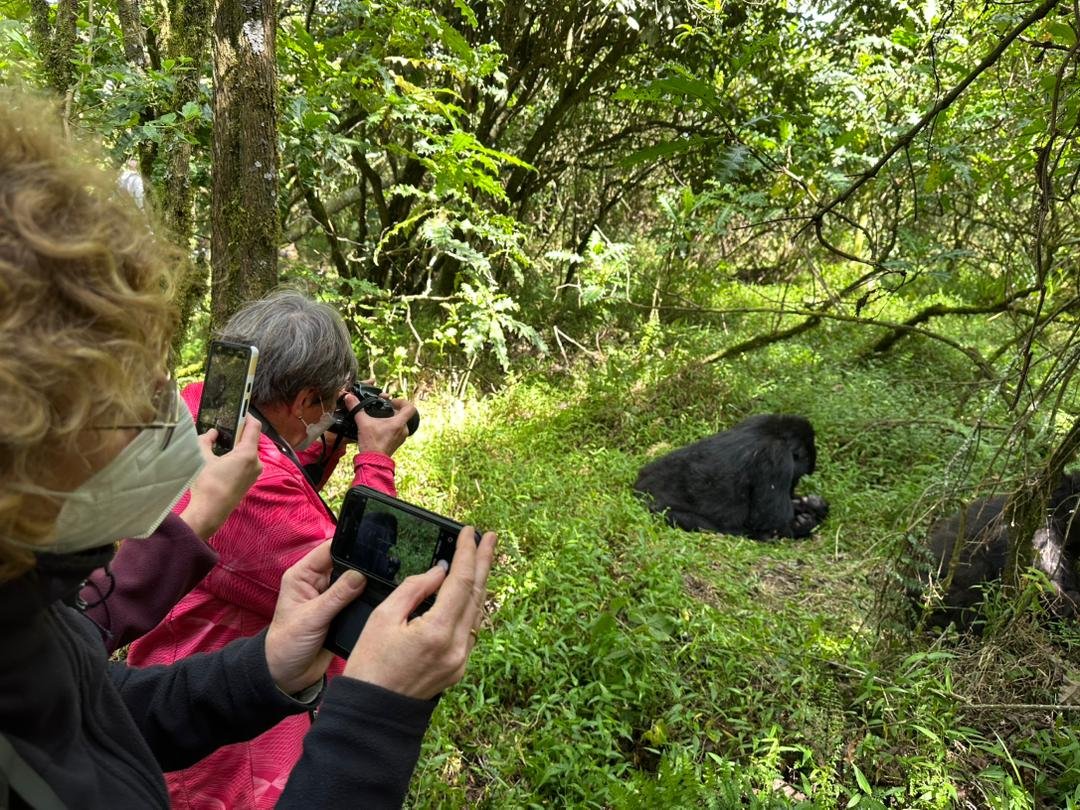
5-Day Uganda Gorilla and Chimpanzee Safari
This itinerary can be combined with a Rwanda extension or a wildlife-focused add-on through Queen Elizabeth National Park — browse our Uganda & Rwanda Safaris and Primate Safaris collections for ideas.
Tour Details →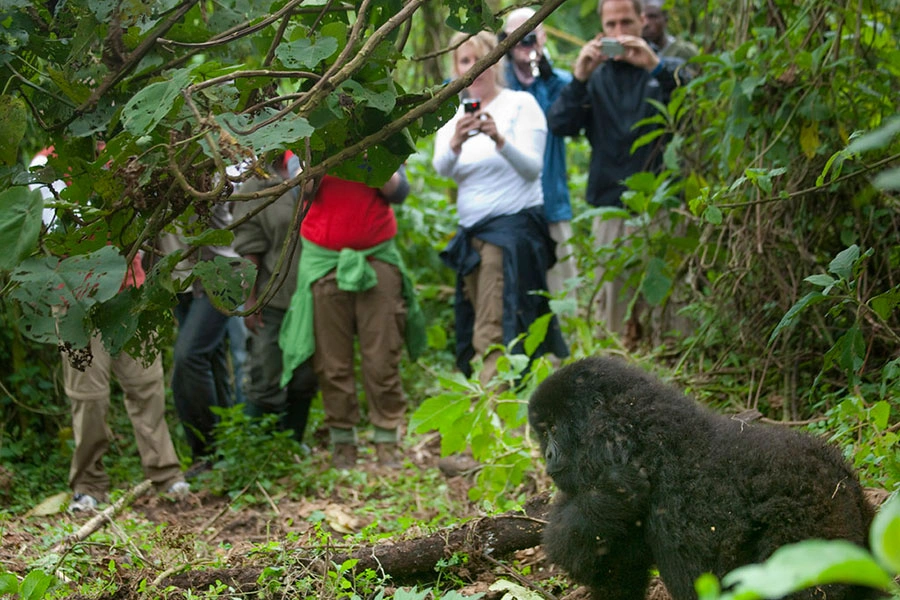
5 Days Rwanda Wildlife and Gorillas
This 5-day itinerary brings together Rwanda’s two flagship wildlife experiences: open savannah game drives and a boat safari in Akagera National Park, followed by a face-to-face encounters
Tour Details →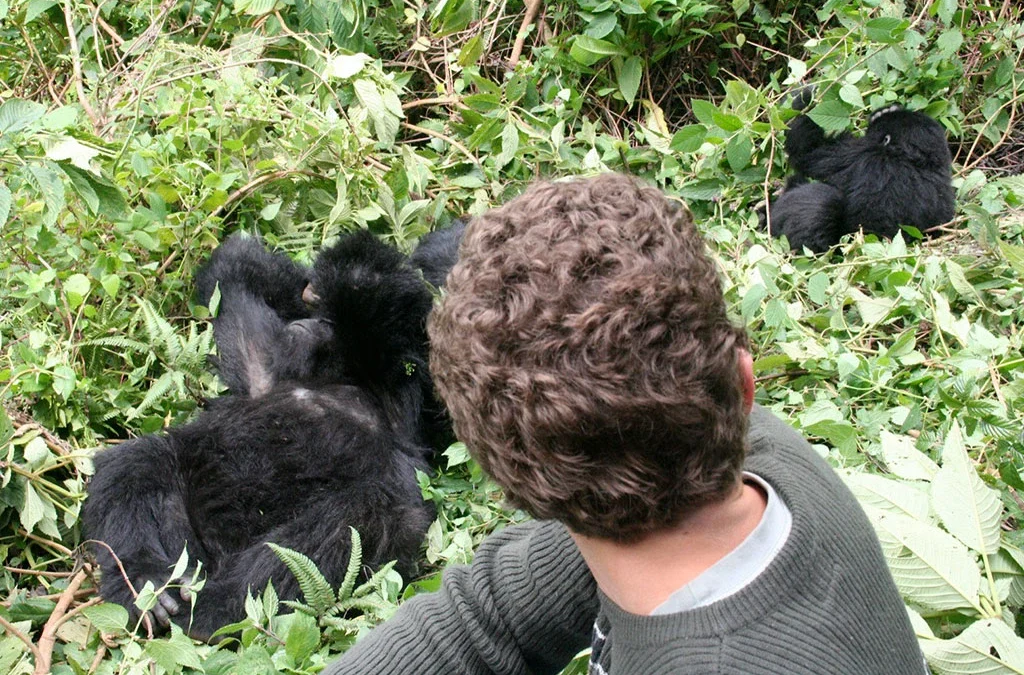
3 Days Uganda Gorilla Safari
For travelers who arrive in Entebbe with a tight schedule and a clear ambition, a 3-day gorilla safari to Bwindi Impenetrable Forest National Park is the most focused and rewarding short trip the country has to offer.
Tour Details →