- LET'S PLAN YOUR SAFARI
- +256 200 921 002
- +256 793 194 703
- info@pickandtransfersafaris.com

The History of Gorilla Habituation in Bwindi
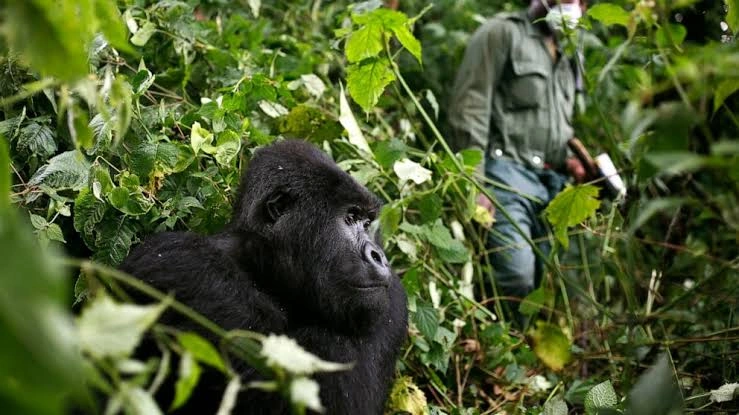
The History of Gorilla Habituation in Bwindi. Every Gorilla Habituation Experience day in Rushaga today traces back to a single, much slower experiment that began over three decades ago in a different part of the same forest. Understanding how gorilla habituation in Bwindi actually started, and how it evolved from a research necessity into the tourism activity travelers book today, adds real context to what can otherwise feel like just another line item on a safari itinerary. At Pick and Transfer Safaris, we think this history is worth knowing before you set foot in the forest, and this guide walks through it.
Before Habituation: A Park Under Pressure
Bwindi Impenetrable National Park was officially gazetted in 1991, consolidating what had previously been forest reserves into a protected area specifically intended to safeguard its mountain gorilla population. This designation came with real human cost: the Batwa people, who had lived in these forests for generations, were displaced and no longer permitted to enter the park, a history that continues to shape the region’s cultural tourism offerings today. At the time of gazetting, Uganda’s gorilla tourism prospects looked genuinely uncertain, with civil conflict in the wider region disrupting wildlife tourism across East and Central Africa more broadly.
The First Habituation: Mubare
The origin of everything that followed traces to a single group in Bwindi’s Buhoma sector, the Mubare family, whose formal habituation began on October 15, 1991, just months after the park’s gazetting. This was uncharted territory for Uganda specifically, since sustained gorilla habituation work in the wider Virunga region had been underway since the 1960s but Bwindi represented a genuinely new population and forest environment. Trackers and researchers spent two years gradually reducing distance and building tolerance with the family, led by a silverback named Ruhondeza, whose notably calm temperament around the habituation team is widely credited with the process’s eventual success.
On October 13, 1993, Mubare received its first official tourist visitors, marking the actual birth of gorilla tourism in Uganda. Ruhondeza went on to lead the family for over two decades before being displaced by a rival male in 2012 and living out his final months in a nearby human settlement, a story still told by guides in Buhoma today as part of the sector’s own oral history.
Expansion Through the 1990s and 2000s
Mubare’s success provided the template for expanding habituation across the rest of the park. A second group, the Katendegyere family, began habituation around the same period, though it was later lost to monitoring after crossing into the neighboring Democratic Republic of Congo, a reminder that even successful habituation work carries genuine uncertainty given how freely gorilla groups can range across porous forest borders. Through the following decade, additional families were progressively habituated and opened to tourism: by 2004, four families, including the Rushegura, Habinyanja, and Nkuringo groups, were available across what had grown into multiple trailheads. By 2012, Bwindi had grown to nine habituated families, with the Uganda Wildlife Authority having opened new trailheads in Ruhija and Rushaga specifically to accommodate this growth, bringing the total to the four sectors travelers recognize today: Buhoma, Ruhija, Nkuringo, and Rushaga.
This steady expansion reflected a broader strategic shift within the Uganda Wildlife Authority, treating gorilla tourism not merely as a visitor attraction but as a direct conservation funding mechanism and a source of alternative income for communities surrounding the park, reducing the economic pressure that had historically driven encroachment and poaching. Each new family added to the tourism roster represented years of the same patient, incremental work first proven with Mubare, extended across an increasingly large and complex program spanning the entire park.
Rushaga’s Rise as a Trekking Hub
As habituation work extended into Bwindi’s southern reaches through the 2000s and into the 2010s, Rushaga developed into the sector with the largest concentration of habituated families in the entire park, a distinction it still holds today. This wasn’t accidental: Rushaga’s terrain, proximity to Kisoro town, and the sustained research and tracking infrastructure built up around its growing number of families made it a natural center of gravity for Bwindi’s gorilla program more broadly, laying the groundwork for what would eventually become the Gorilla Habituation Experience itself.
The Introduction of the Gorilla Habituation Experience
The Gorilla Habituation Experience as travelers know it today, extended access to families still mid-process rather than fully habituated, was introduced by the Uganda Wildlife Authority around 2014 to 2015, building directly on Rushaga’s accumulated research capacity. The idea addressed a genuine gap in what Uganda’s gorilla tourism offered: standard trekking’s strict one-hour limit, while essential for protecting fully habituated families from excessive stress, left little room for travelers, photographers, and researchers wanting deeper engagement with the habituation process itself. By opening access to families still being acclimated, under close supervision from the same research and tracking teams already doing this work daily, the program created a genuinely new category of experience rather than simply extending existing trekking hours.
Why This Innovation Stayed Unique to Uganda
To date, the Gorilla Habituation Experience remains something found nowhere else among the four countries offering mountain gorilla trekking, Uganda, Rwanda, and the Democratic Republic of Congo. This reflects Uganda’s particular approach to balancing tourism revenue against research needs: rather than treating habituation purely as invisible groundwork ahead of eventual tourism, the program turned part of that process into a chargeable, carefully managed visitor experience in its own right, generating additional funding specifically earmarked for the resource-intensive work of habituating new families.
From Two Decades of Growth to Today’s Program
Bwindi now holds around 20 habituated gorilla families across its four sectors, a substantial expansion from the single Mubare group that opened the park to tourism in 1993. Within this broader program, the Gorilla Habituation Experience continues to operate on a genuinely small scale by design, currently involving two specific families in Rushaga at any given time, reflecting the same careful, incremental philosophy that guided Mubare’s original two-year habituation process over three decades ago.
What This History Means for Today’s Visitors
Understanding this trajectory, from a single experimental group in 1991 to today’s structured, multi-sector program, adds genuine weight to a Gorilla Habituation Experience day. The rangers and trackers accompanying your group in Rushaga are working within a tradition that stretches back to Ruhondeza and Mubare, applying decades of accumulated institutional knowledge about how to safely and respectfully build trust between gorilla families and people. It’s worth asking your guide about this history during your trek; many have their own connections to or stories about this longer institutional memory, adding depth well beyond the four hours you personally spend in the forest.
Visa and Border Requirements
Since most travelers reach Rushaga via Rwanda, the East African Tourist Visa tends to be the most convenient option, covering multiple entries across Uganda, Rwanda, and Kenya over 90 days for 100 US dollars through Uganda’s official immigration portal. A standard single-entry Uganda Tourist Visa works just as well for travelers not planning to re-enter Rwanda. A valid yellow fever vaccination certificate is required for entry into Uganda regardless of visa type.
Planning Your Gorilla Habituation Experience with Pick and Transfer Safaris
Rushaga’s Gorilla Habituation Experience is the product of over three decades of accumulated conservation work, starting with a single group in Buhoma and expanding into the structured, research-backed program it is today. If you would like help confirming permit availability, arranging your private transfer from Kigali, or building an itinerary that gives this history the appreciation it deserves, get in touch through our Contact Us page. We’ll help you experience Rushaga’s forest with the full context of how it got here.