- LET'S PLAN YOUR SAFARI
- +256 200 921 002
- +256 793 194 703
- info@pickandtransfersafaris.com

Uganda Gorilla and Lake Bunyonyi Tour from Kigali
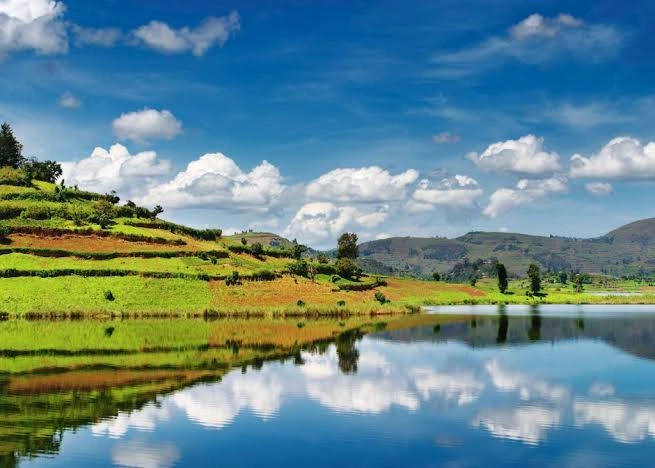
Uganda Gorilla and Lake Bunyonyi Tour from Kigali. A gorilla trek is intense by design — an early start, a physically demanding walk, and an hour of concentrated, adrenaline-charged encounter that most travellers describe as one of the most powerful experiences of their lives. What it isn’t, on its own, is restful. Pairing it with a stop at Lake Bunyonyi solves that in the simplest way possible: a crater lake with no crocodiles, no hippos, and nothing more strenuous to do than paddle a canoe, sitting almost exactly between Uganda’s two gorilla parks and reachable from Kigali without any serious detour.
Why This Combination Works So Well
The logic here is straightforward. Mgahinga Gorilla National Park and Bwindi Impenetrable Forest both sit within a couple of hours of Lake Bunyonyi, which itself sits roughly midway between them. That means a Kigali-based itinerary can trek gorillas at either park and then drop straight into Bunyonyi on the way back toward the border, adding a genuine change of pace to the trip without adding a meaningful amount of extra driving. For a lot of travellers, this is the single easiest upgrade available to a standard gorilla trekking itinerary.
A Sample Three-Day Itinerary
Day one covers the drive from Kigali to your chosen gorilla park. For Mgahinga, that’s a two-to-three-hour crossing via Cyanika or Gatuna; for Bwindi’s southern sectors, closer to four to five hours via the same crossings. Either way, you settle into a lodge near the park that evening, ready for an early start.
Day two is the trek itself — a briefing at first light, a search through the forest that can run anywhere from thirty minutes to several hours, and the standard one-hour encounter once the gorillas are found. By early afternoon, most travellers are free, and this is where the itinerary diverges from a standard gorilla-only trip: rather than heading straight back to Kigali, you drive the short distance to Lake Bunyonyi instead, arriving in time to settle in and watch the sunset over the water.
Day three is Bunyonyi itself — a morning canoe paddle between the lake’s islands, a swim if you’re so inclined, and as little or as much activity as you want, before the return drive to Kigali in the afternoon.
This three-day structure is the minimum needed to do the combination justice. Travellers with an extra day often add a second night at Bunyonyi, since one evening rarely feels like enough once you’re there.
Choosing Mgahinga or Bwindi as Your Base
Which gorilla park you choose shapes the rest of this itinerary more than almost any other decision. Mgahinga is closer to Kigali, has a single habituated family, and sits within a dramatic volcanic landscape that also offers golden monkey tracking — the natural choice if you want to keep the whole trip as short as possible while still including Bunyonyi. Bwindi takes longer to reach but offers around twenty habituated families across four sectors and the option of the Gorilla Habituation Experience, suiting travellers with a little more time who want greater choice of gorilla encounter before they head to the lake to recover from it.
What There Actually Is to Do at Bunyonyi
Bunyonyi’s appeal is precisely that there isn’t very much required of you. Canoeing is the standard activity — dugout canoes are available to rent from almost every lodge around the lake, and a couple of hours spent paddling between islands, with no motorised traffic and only birdsong for company, is how most visitors spend at least one morning or evening. Swimming is genuinely safe here, unusually for a lake in this part of Africa, and many travellers treat it as the first proper swim of the entire trip. Guided walks through the surrounding terraced hills, and cultural visits with local Bakiga and Batwa communities, round out the options for anyone wanting a bit more structure to their downtime.
The Cost Case for This Combination
Because Bunyonyi requires no separate permit, adding it to a gorilla trekking itinerary costs relatively little beyond an extra night’s accommodation and a modest amount of additional driving. Set against the core saving of trekking in Uganda rather than Rwanda — Uganda’s permit costs USD 800 per person, against USD 1,500 for Volcanoes National Park — the Bunyonyi extension is easily absorbed within a budget that’s already considerably lower than the equivalent Rwanda-based trip.
Where to Stay
Accommodation around Lake Bunyonyi ranges from simple campsites and dormitory-style lodges to more comfortable island retreats, most concentrated around Rutinda village or on islands such as Bushara. Given that rest and recovery are the whole point of this stop, most travellers lean toward the more comfortable end of the range after a physically demanding trek, though the budget options are plentiful and perfectly serviceable for anyone prioritising cost over comfort for this particular leg.
Documentation and Timing
The same basic requirements apply here as for any Kigali-based Uganda trip: a valid passport, the correct Uganda visa arrangement for your nationality, and a current yellow fever certificate, all confirmed before you travel rather than assumed at the border. There’s no permit to book for Bunyonyi itself, which makes this one of the simpler legs of the itinerary to plan — the main scheduling consideration is simply making sure your gorilla trek date, lodge bookings, and border crossing all line up correctly across the full three or four days.
Getting the Whole Itinerary to Flow Smoothly
Because this trip involves a gorilla permit, a border crossing, and at least two separate accommodation bookings across two different locations, coordinating the whole route through a single operator rather than arranging each piece independently makes a meaningful difference to how smoothly the trip actually runs. This matters especially around the transition from the gorilla park to Bunyonyi, since getting the timing wrong here can mean arriving at the lake too late to enjoy the first evening, or leaving too early to make the most of the following morning.
Extending the Trip Further
For travellers with more than three or four days, this combination extends naturally into a longer Uganda circuit. Queen Elizabeth National Park, with its tree-climbing lions and Kazinga Channel boat cruise, and Kibale Forest National Park for chimpanzee trekking, are both reachable from this part of the country without doubling back through the border you originally crossed, meaning Bunyonyi can serve as either the restful conclusion to a short trip or the midpoint of a much longer one.
Is This the Right Combination for You
If you’re already planning a gorilla trek from Kigali, adding Lake Bunyonyi is one of the easiest and most worthwhile decisions you can make to the itinerary. It costs relatively little, requires no separate permit, and gives the trip a rhythm — intensity followed by genuine rest — that a gorilla-only itinerary simply doesn’t offer. For travellers who’ve never done a physically demanding trek before, that contrast is often what turns the trip from a single, exhausting highlight into a properly well-rounded few days away.
Ready to build this into your itinerary? Get in touch with our travel experts and we’ll arrange your gorilla permit, choose between Mgahinga and Bwindi based on your schedule, and work out the right number of nights at Bunyonyi to make the whole trip feel properly paced. Our destinations page covers both gorilla parks in more detail if you’re still deciding which one to trek.