- LET'S PLAN YOUR SAFARI
- +256 200 921 002
- +256 793 194 703
- info@pickandtransfersafaris.com

Uganda Gorilla Safari Under $1500
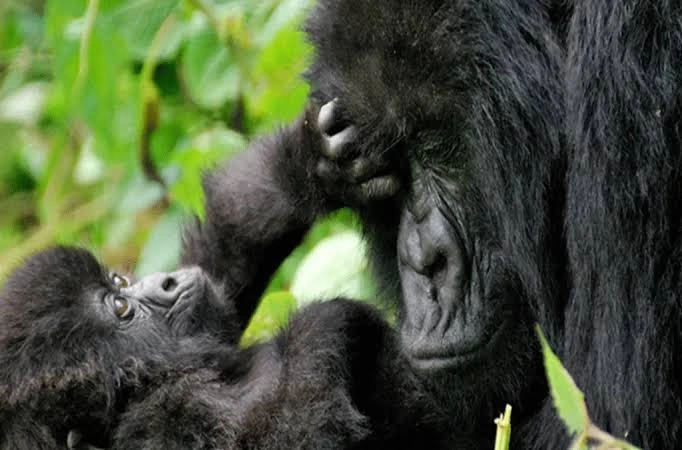
Uganda Gorilla Safari Under $1500. Here’s the number worth sitting with for a moment: a single gorilla trekking permit in Rwanda costs USD 1,500. In Uganda, that same figure can cover an entire gorilla safari — permit, transport, accommodation, and meals included, with room to spare. This isn’t a marketing trick or a stripped-down compromise version of the experience. It’s simply what happens when you start from Kigali, choose Uganda’s cheaper permit, and build the rest of the trip around sensible, achievable choices rather than the premium end of the market.
Below is a realistic breakdown of what a complete Uganda gorilla safari under USD 1,500 per person actually looks like, and where the money goes.
The Permit: USD 800
Every version of this trip starts with the same fixed cost. A Uganda gorilla trekking permit, issued by the Uganda Wildlife Authority for either Mgahinga Gorilla National Park or Bwindi Impenetrable Forest, costs USD 800 per person. That leaves USD 700 to cover everything else — transport, accommodation, meals, and any border crossing costs — while still coming in under the budget ceiling. For context, that same USD 700 wouldn’t even cover the gap between Uganda’s permit and Rwanda’s equivalent at Volcanoes National Park.
Choosing Mgahinga to Keep Transport Costs Down
Of Uganda’s two gorilla parks, Mgahinga is the more budget-friendly starting point specifically because of its proximity to Kigali — two to three hours each way, compared with Bwindi’s four to five. Shorter drive time means less fuel, a shorter vehicle hire period, and, for travellers doing this as a single-day trip, the option of skipping Uganda accommodation altogether. Mgahinga also has just one habituated gorilla family, which simplifies planning without in any way reducing the quality of the encounter itself.
Option One: The Single-Day Trip, No Accommodation Required
The cheapest complete version of this trip skips Uganda accommodation entirely. A pre-dawn departure from Kigali, a same-day round trip to Mgahinga, the trek itself, and a return to Kigali that evening removes an entire cost category from the budget. With the permit at USD 800, a shared or budget vehicle transfer typically running somewhere in the USD 150 to USD 300 range depending on group size, and no lodge night at all, this version of the trip comfortably lands several hundred dollars under the USD 1,500 ceiling — often with room left over for a meal or two along the way.
Option Two: The Two-Day Trip With Budget Accommodation
Adding one night at a simple guesthouse in Kisoro town, rather than one of the lodges directly at the park entrance, keeps the total cost only modestly higher than the single-day version while removing almost all the time pressure. Budget guesthouse accommodation in this area typically runs a fraction of what the flagship lodges charge, and for a single night, the saving compared with premium accommodation is considerable. Even with a night’s lodging, dinner, and breakfast added to the permit and transfer costs, this version of the trip still fits comfortably within the USD 1,500 budget for most travellers.
What Eats Into the Budget Fastest
If there’s a single line item that pushes this trip over budget, it’s premium accommodation. A night at one of the flagship lodges near Mgahinga or Bwindi can, on its own, approach or exceed the entire remaining budget after the permit is accounted for. The same applies to add-on activities: the Gorilla Habituation Experience at Bwindi’s Rushaga sector carries a substantial premium over the standard permit, and while genuinely worthwhile, it’s not compatible with a strict under-USD-1,500 target unless other costs are trimmed elsewhere. Golden monkey tracking at Mgahinga is considerably more affordable and easier to fit into this budget if you want an additional activity beyond the core trek.
Keeping Transport Costs Down
Private vehicle transfers cost more per person than shared ones, and asking specifically about shared or group transfer options when booking can meaningfully reduce this line item. Travelling with at least one other person and splitting a private 4×4 also brings the per-person cost down considerably compared with a solo private transfer. For solo travellers determined to stay under this budget, a shared transfer arranged through an operator running scheduled departures on this route is usually the difference between comfortably fitting the budget and going over it.
Timing the Trip to Stretch the Budget Further
Because the permit price is fixed year-round, the seasonal variable that actually affects this budget is accommodation and transport pricing, both of which run noticeably higher during the June-to-September and December-to-February dry seasons. Travellers with flexible dates who can travel during the quieter wetter months — March to May and October to November — often find genuinely lower lodge rates without any change to the quality of the trekking experience itself, which remains rewarding throughout the year.
A Sample Budget Breakdown
For a two-day trip to Mgahinga with a companion, sharing a private vehicle transfer, and staying at a budget guesthouse in Kisoro, a realistic per-person total looks something like: USD 800 for the permit, roughly USD 150 to USD 200 for the shared transfer, USD 30 to USD 60 for a night’s guesthouse accommodation with breakfast, and a modest allowance for meals and incidentals along the way. Even allowing generously for each of these categories, the total sits comfortably under USD 1,500, with the permit itself accounting for well over half of the entire budget.
What This Budget Doesn’t Include
It’s worth being upfront about what sits outside this figure. International flights to Kigali, a Uganda visa or East Africa Tourist Visa fee where applicable, travel insurance, and tips for guides and porters are all separate from the core trip costs outlined above, and should be budgeted for independently. None of these are unique to a budget trip — they’d apply to any gorilla trekking itinerary regardless of price point — but they’re worth factoring in when deciding whether the overall trip, rather than just the trekking component, fits your total travel budget.
Don’t Cut the Wrong Corners
However tight the budget, a few things are worth paying for regardless. The permit must always be booked through the Uganda Wildlife Authority or a registered operator — there’s no legitimate discounted route to a cheaper permit, and any offer suggesting otherwise is a warning sign rather than a bargain. Vehicle condition and driver experience also matter more on this route than the price tag alone suggests, given the international border crossing and the rough final approach roads into the park itself. A slightly higher spend on a reliable vehicle and an experienced guide is worth protecting even within a strict overall budget.
Is a Sub-$1,500 Gorilla Safari Really the Full Experience
Yes. Every cost saved in this breakdown comes from choosing a shorter drive, simpler accommodation, shared transport, and skipping optional add-ons — none of it touches the actual gorilla trek itself. The permit still buys the same strict one hour with a wild, habituated family, guided by the same rangers who work across both of Uganda’s gorilla parks. A Rwanda-based trip spends its entire USD 1,500 budget on the permit alone; a Uganda-based trip from Kigali spends the same amount on the permit, the transport, the accommodation, and the meals, and still has money left over.
If you’d like help building a gorilla safari that fits this budget precisely, get in touch with our travel experts and we’ll put together the right combination of park, transfer type, and accommodation to keep your trip within reach. Our destinations page has more detail on both Mgahinga and Bwindi if you’re still weighing up which one suits your budget and schedule best.