- LET'S PLAN YOUR SAFARI
- +256 200 921 002
- +256 793 194 703
- info@pickandtransfersafaris.com

Uganda Safaris to Lake Bunyonyi
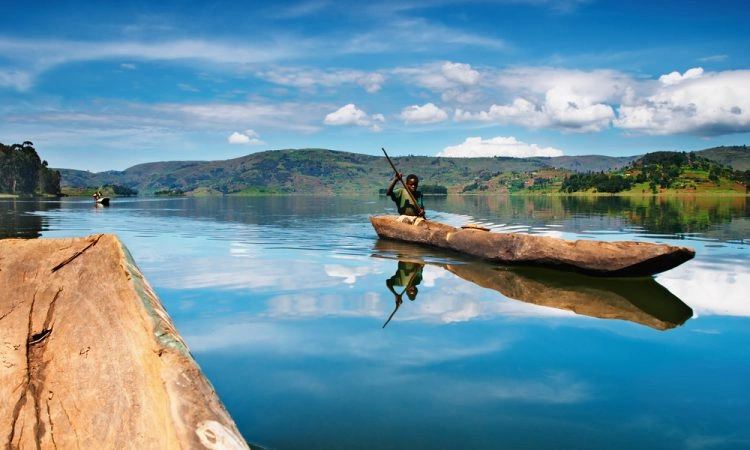
Uganda Safaris to Lake Bunyonyi. Lake Bunyonyi rarely appears as the sole reason travelers book a Uganda safari, yet it has quietly become one of the country’s most valued stops — a scenic, relaxed counterweight to the early starts and physically demanding hikes that define gorilla trekking and wildlife viewing elsewhere in the country. For travelers building a Uganda-based itinerary starting from Entebbe or Kampala, rather than crossing overland from Kigali, the lake fits naturally into a broader circuit through Queen Elizabeth National Park, Kibale Forest, and Bwindi. This guide focuses specifically on how Lake Bunyonyi works within Uganda-origin safari itineraries — which packages include it, how it’s typically sequenced into a multi-park route, and what to expect when you get there. It’s a deliberately different angle from a Kigali-to-Bunyonyi border crossing, since a Uganda safari built from Entebbe or Kampala treats the lake as one stop within a longer national circuit rather than the destination of a short cross-border trip, and the planning considerations differ accordingly.
Operators with a genuine presence across the whole of Uganda’s tourism industry tend to treat Lake Bunyonyi as one component of a much larger route map rather than a standalone product, which is the framing this guide follows as well.
Where Does Lake Bunyonyi Fit into a Uganda Safari?
Lake Bunyonyi sits in the far southwest of Uganda, close to the town of Kabale, at the tail end of the country’s western safari circuit. For travelers starting their trip in Entebbe or Kampala rather than Kigali, the lake is usually visited as the final or penultimate stop on a longer westward journey that already includes chimpanzee tracking in Kibale Forest National Park, game drives in Queen Elizabeth National Park, and gorilla trekking in Bwindi.
This sequencing matters for planning purposes. Because Lake Bunyonyi sits roughly two to three hours south of Bwindi’s main trailheads, it works best as a stop after your gorilla trekking permit has already been used, giving you a full rest day before either continuing on toward Rwanda or turning back east toward Entebbe. Building the lake into the itinerary in the wrong order — before rather than after the physically demanding trek — is one of the more common planning mistakes travelers make when assembling a Uganda safari independently rather than through an operator experienced with this specific route.
There’s also a geographic logic worth understanding before mapping out the rest of the trip. Uganda’s safari circuits are generally described in terms of a northern route (Murchison Falls and the Nile), a western route (Kibale, Queen Elizabeth, and Bwindi), and a southern extension into the Kigezi highlands where Lake Bunyonyi sits. A Uganda-origin safari that includes the lake is, by definition, following the western route through to its southern extreme, which has direct implications for how much driving the trip involves and how it should be paced across the available days.
Getting to Lake Bunyonyi from Entebbe and Kampala
The drive from Entebbe or Kampala to Lake Bunyonyi covers roughly 450 to 480 kilometers and typically takes eight to ten hours if driven in a single stretch, which is why almost no Uganda safari itinerary attempts it as a direct journey. Instead, the drive is broken up across the wider safari route — a first leg to Kibale or Queen Elizabeth, a second leg on to Bwindi, and a final short hop of two to three hours down to the lake once the gorilla trekking is complete.
For travelers short on time, a domestic flight from Entebbe to an airstrip near Kihihi or Kisoro can cut the westbound leg down substantially, with only the final one-to-two-hour road transfer remaining to reach the lake itself. Most operators can combine flights for the outbound leg with road transport for the return, or vice versa, depending on which stops are prioritized earlier in the trip.
Independent travelers assembling their own route sometimes consider self-driving the entire circuit, and options such as Kenlink Tours’ car hire service make that possible, though it’s worth being realistic about the distances involved. Uganda’s rural roads, particularly the final unpaved stretches into individual parks and lodges, are considerably more demanding to navigate than an equivalent distance on a well-maintained highway, and self-driving the full Entebbe-to-Bunyonyi loop without local experience adds a meaningful layer of complexity on top of an already long itinerary.
7 Days Uganda Safari – One week tour
This 7-day itinerary is the classic one-week introduction to Uganda, covering the country’s three most iconic wildlife experiences: chimpanzee tracking in Kibale Forest National Park, Big Five game drives and a boat cruise in Queen
Tour Details →
10 Days Uganda Primates and Wildlife
This 10-day Uganda Grand Safari is the most complete Uganda itinerary we offer at Pick and Transfer Safaris. It begins with a scenic northward drive from Entebbe to the vast open plains of Murchison
Tour Details →
2 Days Uganda Gorilla Tour Starting from Kigali
This is the gentler cousin of our 1-Day Uganda Gorilla Safari Starting from Kigali — same idea, twice the breathing room. Instead of squeezing a 3,000-metre forest trek and two border crossings into a single very long day
Tour Details →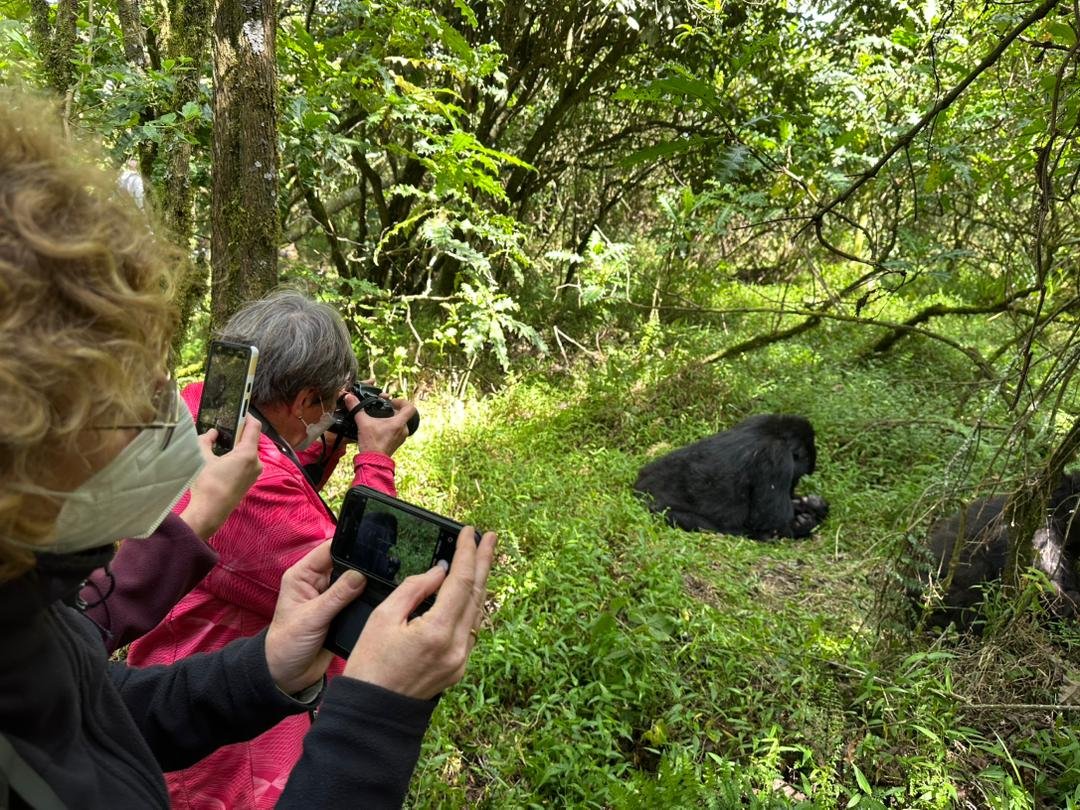
5-Day Uganda Gorilla and Chimpanzee Safari
This itinerary can be combined with a Rwanda extension or a wildlife-focused add-on through Queen Elizabeth National Park — browse our Uganda & Rwanda Safaris and Primate Safaris collections for ideas.
Tour Details →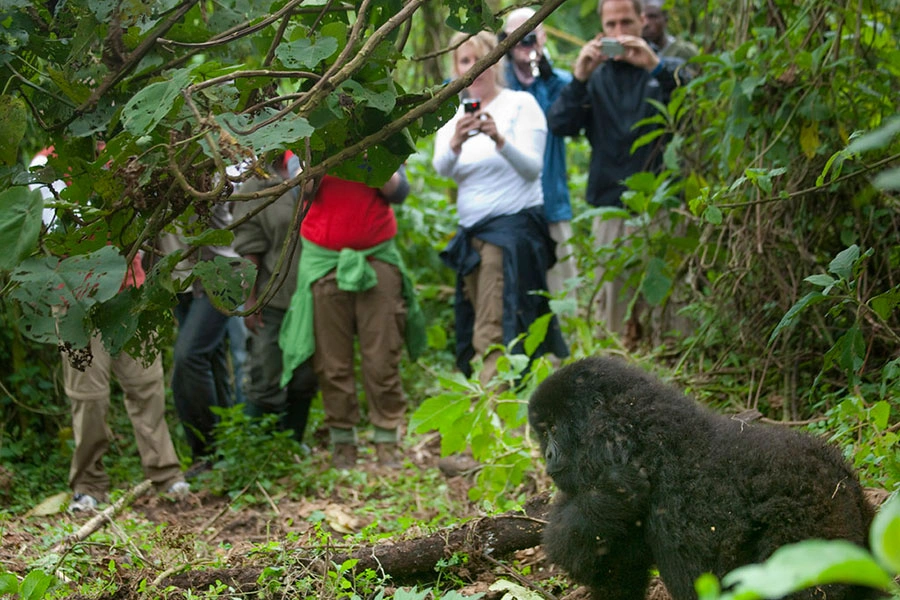
5 Days Rwanda Wildlife and Gorillas
This 5-day itinerary brings together Rwanda’s two flagship wildlife experiences: open savannah game drives and a boat safari in Akagera National Park, followed by a face-to-face encounters
Tour Details →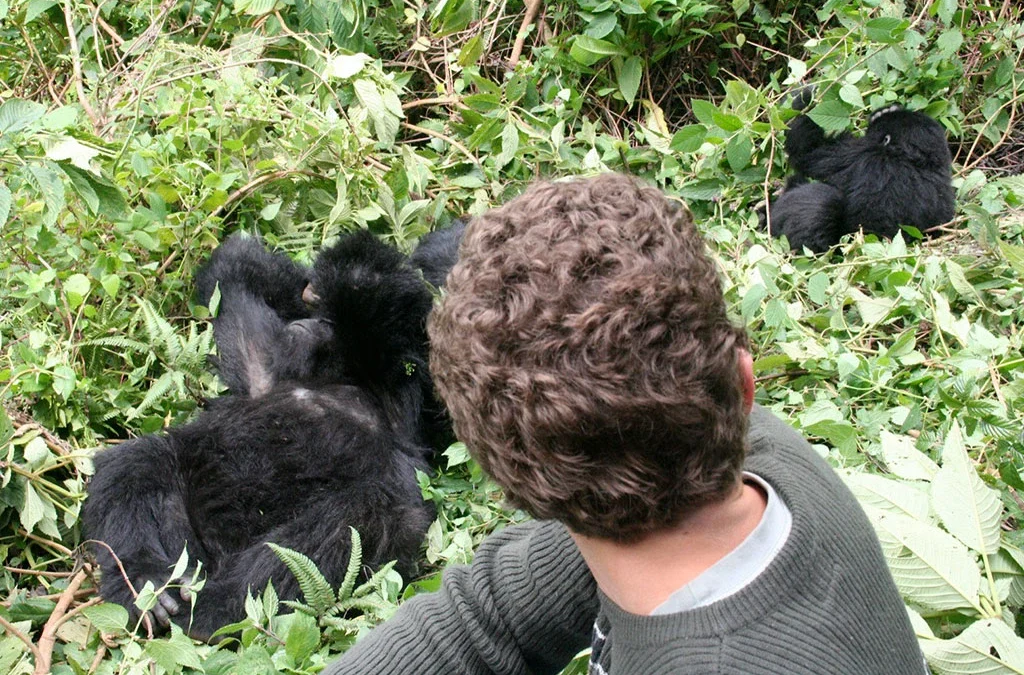
3 Days Uganda Gorilla Safari
For travelers who arrive in Entebbe with a tight schedule and a clear ambition, a 3-day gorilla safari to Bwindi Impenetrable Forest National Park is the most focused and rewarding short trip the country has to offer.
Tour Details →Why Uganda Safari Itineraries Increasingly Include Lake Bunyonyi
Uganda’s safari industry has grown noticeably more itinerary-conscious over the past several years, with operators increasingly building in deliberate rest days rather than stacking wildlife activity after wildlife activity without a break. Lake Bunyonyi has become the default choice for that rest day in the southwest simply because nothing else nearby offers a comparable combination of safety, scenery, and genuine relaxation — swimmable water, calm canoeing, and cool highland air after days spent in hotter, lower-altitude parks.
This shift is visible in how many long-format Uganda itineraries now write the lake in explicitly rather than leaving it as an optional add-on. Kenlink Tours’ 20 Days Ultimate Uganda Safari, for instance, schedules a dedicated afternoon at the lake for canoeing and relaxation roughly two-thirds of the way through the trip — a deliberate pacing decision rather than an afterthought.
This trend also reflects a broader shift in how Uganda safaris are marketed and sold. A decade ago, most packages were built almost entirely around headline wildlife activities — gorilla permits, game drives, chimp tracking — with accommodation and rest days treated as logistics rather than experience. Increasingly, operators recognize that a well-paced itinerary with a genuine rest stop produces better client satisfaction and stronger reviews than a itinerary that maximizes activity density at the expense of comfort, and Lake Bunyonyi has become the standard answer to that pacing problem in Uganda’s southwest specifically.
Best Uganda Safari Packages That Include Lake Bunyonyi
Because Lake Bunyonyi rarely anchors a itinerary on its own, the most useful way to plan around it is to look at which multi-day Uganda packages already build it in. On the Uganda-origin side, longer circuits such as the 10 Days Uganda Primates and Wildlife package and the 14-Day Uganda Primates and Safari Adventure are structured with enough flexibility to route through the southwest and pause at the lake before continuing the circuit.
Kenlink Tours’ catalogue includes several comparable options built around the same logic, including the 20-Day Wildlife and Nature Experience in Uganda, the 18-Day Adventure to Africa tailored safari, and a shorter 5-Day Uganda Primate Safari Experience for travelers who want the essentials — chimp tracking, gorilla trekking, and a Bunyonyi stop — without committing to a multi-week trip.
When comparing packages like these, it’s worth reading the day-by-day breakdown rather than relying on the headline duration alone, since two 10-day itineraries can allocate their time very differently. Some front-load the trip with consecutive early starts for game drives and trekking before finishing with the lake as a single reward day, while others spread rest days more evenly throughout, alternating activity-heavy days with lighter ones. Neither approach is inherently better, but knowing which structure a given package follows makes it much easier to judge whether the pacing suits your own travel style and fitness level.
Combining Lake Bunyonyi with Bwindi Gorilla Trekking
The pairing of Lake Bunyonyi with Bwindi Impenetrable National Park is by far the most common way the lake appears in a Uganda safari itinerary, and for good reason: several of Bwindi’s trekking sectors, particularly Rushaga and Nkuringo, sit close enough to the lake that a same-day or next-day transfer is entirely comfortable. Packages like the 3 Days Uganda Gorilla Safari can typically be extended with a Bunyonyi night either as a pre-trek rest stop or a post-trek reward, depending on how the rest of the itinerary is structured.
For travelers who also want a second primate experience, the 5-Day Uganda Gorilla and Chimpanzee Safari offers enough days to fold in both chimp tracking earlier in the trip and a lake stop after the gorilla trek, without needing to extend the overall trip length significantly.
The specific trekking sector assigned to your gorilla permit also affects how smoothly this pairing works. Permits issued for the Rushaga or Nkuringo sectors sit closest to the lake, meaning the drive afterward is comparatively short, while permits for the Buhoma or Ruhija sectors on Bwindi’s northern side require a longer transfer south. Because trekking sector assignment is usually confirmed only a few days before the trek itself, it’s worth discussing this possibility with your operator in advance so the itinerary can flex accordingly rather than assuming a fixed drive time regardless of which sector you’re assigned.
Combining Lake Bunyonyi with Queen Elizabeth and Kibale (The Western Circuit)
Travelers approaching from Entebbe or Kampala rather than Kigali typically build their itinerary around what’s known locally as the western circuit — Kibale Forest for chimpanzee tracking, Queen Elizabeth National Park for game drives and the Kazinga Channel boat cruise, and Bwindi for gorillas, with Lake Bunyonyi added as the closing stop before either returning east or crossing south into Rwanda. Packages such as the 3 Days Safari to Queen Elizabeth National Park and the 4 Days Wildlife and Primate Safari are commonly used as the earlier legs of this broader route, with a Bunyonyi extension added once gorilla trekking has been confirmed.
This western circuit structure is also where Kenlink Tours’ own multi-park tour covering Bwindi, Queen Elizabeth, Kibale, and Bunyonyi is most instructive, since it demonstrates exactly how these four stops sequence together across a single trip regardless of which city the trip technically starts or ends in.
What makes the western circuit particularly efficient as a route is that each stop naturally leads into the next without significant backtracking. Kibale sits north of Queen Elizabeth, Queen Elizabeth connects directly south to Bwindi via the Ishasha sector, and Bwindi in turn connects south to Lake Bunyonyi — meaning a well-planned itinerary essentially moves in one continuous direction rather than criss-crossing the country. This is part of why the western circuit, Bunyonyi included, remains one of the most commonly recommended structures for a first Uganda safari, since it delivers primates, savannah wildlife, and lakeside relaxation without wasted driving time.
Extended Multi-Week Uganda Safaris Featuring Lake Bunyonyi
Travelers with two weeks or more available often use Lake Bunyonyi as one of several rest points spaced through a longer national itinerary rather than a single stopover near the end. Uganda’s longer packaged circuits — including the 18 Days Uganda Birding and Wildlife Safari and, for travelers extending into neighboring countries, the 20 Days Uganda Rwanda Burundi Combo Safari — typically schedule a Bunyonyi stop at a natural midpoint in the trip, after the physically demanding western parks and before a lower-intensity eastern or northern leg.
Kenlink Tours offers a comparable structure with its own overview of exploring western Uganda, which similarly treats the lake as a deliberate recovery period rather than a rushed half-day stop. For travelers planning their own extended itinerary independently, the general rule worth borrowing from these packaged routes is to place Bunyonyi immediately after the most demanding stretch of trekking or early-morning game drives, rather than scattering rest days evenly throughout the trip regardless of what precedes them.
Multi-week itineraries that combine Uganda with neighboring countries add another layer of planning complexity, since Lake Bunyonyi’s location near the Rwandan border means it can sit either near the middle of a Uganda-only trip or near a border crossing on a combined Uganda-Rwanda route. Packages such as the 15 Days Rwanda Uganda Safari and the 10 Days Uganda Rwanda Safari illustrate how the lake can double as both a Uganda rest stop and a natural staging point before or after crossing into Rwanda for Volcanoes National Park, effectively serving two purposes within the same multi-country itinerary.
Lake Bunyonyi for Families and First-Time Safari Visitors
Because gorilla trekking has a minimum age of fifteen and involves genuinely strenuous hiking, families traveling with younger children often need alternative activities built into an otherwise wildlife-heavy itinerary, and Lake Bunyonyi fills that gap well. Kenlink Tours’ Uganda family safaris page specifically lists canoeing and cultural village visits at the lake as an alternative activity for children too young to trek, allowing one parent to trek while the rest of the family enjoys a safer, calmer day at the lakeside.
The lake is also a frequent recommendation for first-time African safari visitors more broadly, since it offers an accessible, low-intensity introduction to Uganda’s landscape without requiring the fitness or advance permit booking that gorilla trekking demands. Kenlink Tours’ overview of the best safari destinations in East Africa for first-time visitors highlights Lake Bunyonyi alongside Lake Mburo as an easier entry point into Uganda’s tourism circuit for travelers still deciding how much of the country’s more demanding trekking activities to include.
For first-time visitors specifically, Lake Bunyonyi also serves a useful psychological function partway through a trip: after several days spent adjusting to early wake-up calls, unfamiliar wildlife-viewing etiquette, and the physical demands of forest trekking, a day with no scheduled activity beyond an optional canoe trip gives newer travelers a chance to process the experience so far before continuing on. Operators who work frequently with first-time African travelers often mention this pacing benefit as being just as valuable as the scenery itself.
Lake Bunyonyi for Birdwatchers
Birdwatchers extending a Uganda safari specifically for species diversity often add Lake Bunyonyi to their route for its wetland-fringe habitat, which differs meaningfully from the forest and savannah birding found elsewhere on a typical circuit. The lake’s shoreline and surrounding terraced hills support a range of species not easily seen in Bwindi’s dense canopy or Queen Elizabeth’s open plains, making it a worthwhile stop even for travelers who have already covered Uganda’s headline birding sites.
Longer birding-focused itineraries, including the 18 Days Uganda Birding and Wildlife Safari, typically schedule a dedicated morning at the lake specifically for this reason, pairing it with a guided walk along the shoreline rather than treating the stop purely as downtime.
Species commonly recorded around the lake’s fringes include various sunbirds, weavers, and a range of wetland-associated species that favor the reed beds and cultivated hillside edges rather than closed forest canopy. Because Bunyonyi’s birding is genuinely complementary to, rather than a repeat of, what’s typically seen in Bwindi or Kibale, dedicated birders are encouraged to treat the stop as an active addition to their trip list rather than skip it in favor of extra time in the forest parks.
What to Do at Lake Bunyonyi During a Uganda Safari
Most travelers arriving at Lake Bunyonyi as part of a broader Uganda safari have limited time — often just one afternoon and the following morning — so activities tend to be chosen for how much value they deliver in a short window. Popular choices include a guided dugout canoe trip to one or two of the lake’s smaller islands, an afternoon swim directly from the lodge dock, and a short sunset walk along the terraced hillside above the water.
- Canoeing: The classic Bunyonyi activity, available as a self-paddled or guided trip lasting anywhere from thirty minutes to a few hours.
- Swimming: Safe and common, since the lake has no bilharzia or crocodiles, unlike most of Uganda’s other major lakes.
- Island visits: Short excursions to islands such as Punishment Island offer both scenery and a window into local Bakiga history.
- Birdwatching walks: Guided shoreline walks are a low-effort way to add species to a trip list without an early alarm.
- Cultural village visits: Several community-run initiatives near the lake offer a genuine, locally guided look at Bakiga and Batwa life.
Where to Stay: Lodges Along a Uganda Safari Route
Because Lake Bunyonyi is almost always visited as one stop within a longer itinerary rather than a dedicated multi-night stay, accommodation choice tends to prioritize convenience and a comfortable rest over the more elaborate island properties favored by travelers spending several nights at the lake. Mainland lodges closer to the main access road are the more common choice for Uganda-origin safaris, since they minimize the boat transfer time needed after a long driving day from Bwindi or Queen Elizabeth.
Operators who run this route regularly, such as Pick and Transfer Safaris, typically pre-select two or three lodge options at this stage of a longer itinerary based on what suits the day’s arrival time, rather than leaving accommodation choice entirely open — a detail worth asking about directly if you’re comparing a custom quote against a fixed packaged itinerary.
Arrival time is a genuinely important factor in this decision, more so than for a dedicated multi-night Bunyonyi stay. A group arriving at dusk after a long day of gorilla trekking followed by several hours of driving is generally better served by a mainland lodge reachable directly by vehicle than by a scenic island property requiring a canoe or motorboat transfer in fading light. Reserving the more remote, more atmospheric lodges for a future trip specifically built around the lake — rather than squeezing one into the tail end of an already long travel day — is often the more comfortable choice in practice.
Because a Uganda-origin itinerary that includes the lake usually involves several nights of accommodation booked well in advance across multiple parks, it’s also worth asking whether your operator can offer any flexibility if an earlier leg of the trip runs long — a delayed chimp tracking permit or an especially long gorilla trek, for instance. Operators with strong relationships with lodges along this specific route are generally better positioned to shift a Bunyonyi arrival time by a few hours without losing the booking entirely, which matters more on a long, multi-stop circuit than it would on a simple point-to-point trip.
Best Time of Year for a Uganda Safari Including Lake Bunyonyi
Because Lake Bunyonyi is almost never the primary driver of when a Uganda safari is booked, the best time to visit is generally whichever window suits the gorilla trekking or wildlife viewing portions of the trip. Uganda’s two dry seasons — June to September and December to February — remain the most popular overall, offering easier trekking conditions in Bwindi and Kibale as well as more predictable driving conditions on the unpaved sections of road leading to the lake.
Travelers visiting during the wetter months of March to May and October to November will find the lake’s terraced hillsides at their most vividly green, along with noticeably fewer visitors at lodges throughout the southwest, though the added rainfall can make some of the steeper access roads down to individual lodges more challenging to navigate.
One timing consideration specific to longer Uganda-origin itineraries is that a trip spanning two or three weeks will almost inevitably cross from one season into another, particularly around the shoulder months. Travelers departing in late May, for example, may begin their trip in fading rains and finish it in the early dry season, which means packing and expectations should account for both conditions rather than assuming a single weather pattern will hold for the entire journey.
How Much Does a Uganda Safari to Lake Bunyonyi Cost?
Because Lake Bunyonyi is bundled into a broader itinerary rather than booked as a standalone destination, its cost is best understood as a marginal addition to whatever multi-day package you’ve already chosen — typically one or two extra nights of accommodation plus a short additional driving segment, rather than a significant new line item. The larger cost drivers in a Uganda safari that includes the lake remain the same as for any multi-park circuit: gorilla and chimpanzee permits, vehicle and driver-guide fees for the full route, and the accommodation tier chosen at each stop along the way.
Extended itineraries of two weeks or more naturally carry a higher total cost simply due to length, but the per-day cost of adding Lake Bunyonyi specifically remains modest compared to permit fees or park entry costs elsewhere on the circuit. When comparing quotes for a longer Uganda safari, it’s worth confirming explicitly whether the Bunyonyi stop is already included in the base itinerary or offered as a paid extension, since packages marketed under similar names sometimes handle this detail differently.
A useful benchmarking exercise is to request two versions of the same quote from an operator — one with the Bunyonyi stop included and one without — so you can see the actual marginal cost rather than guessing at it from a single bundled price. In most cases, the difference amounts to little more than one or two nights of lodge accommodation plus a modest transport supplement, which makes it easy to justify given how much pacing and scenic value the stop typically adds to an otherwise wildlife-focused itinerary.
Choosing a Safari Company for a Uganda-Based Bunyonyi Trip
For a Uganda-origin itinerary that includes Lake Bunyonyi, the operator’s depth of experience across the full western circuit matters more than for a simple point-to-point transfer, since the trip typically involves multiple parks, several vehicle days, and at least one gorilla or chimpanzee permit booking. Look for operators with clearly documented multi-park itineraries — such as Pick and Transfer Safaris’ gorilla safari packages and its broader wildlife safaris and extended safaris ranges — rather than a single generic listing that vaguely promises to “include” the lake without specifying where in the itinerary it falls.
It’s also worth reviewing an operator’s general Uganda safari experiences to see how they typically structure longer circuits, and comparing that against your own priorities — whether that’s birding, family-friendly pacing, or simply the shortest possible route that still includes the lake. Travelers who want a custom quote built specifically around a Bunyonyi stop can reach Pick and Transfer Safaris directly through its contact page.
What to Pack for a Uganda Safari That Includes Lake Bunyonyi
Packing for a Uganda safari that includes Lake Bunyonyi means balancing gear for two very different environments — the physically demanding trekking conditions of Bwindi or Kibale, and the far more relaxed lakeside stop that follows. A few items worth prioritizing include:
- Waterproof hiking boots and long trousers for gorilla or chimpanzee trekking earlier in the itinerary.
- Swimwear and a light change of clothes specifically for the Bunyonyi stop.
- A warm layer for cool evenings at the lake’s higher altitude, even during the dry season.
- A dry bag or waterproof phone pouch for canoe trips between islands.
- Binoculars, particularly useful for both forest birding earlier in the trip and shoreline birding at the lake.
- A flexible daypack that works equally well for a forest hike and a relaxed lakeside walk.
Responsible Tourism on a Uganda Safari to Lake Bunyonyi
A Uganda safari that includes Lake Bunyonyi touches several distinct communities and ecosystems across a single trip, and responsible travel choices matter at each stop rather than just at the headline gorilla trekking permit. Around the lake itself, choosing locally owned lodges and community-guided canoe trips channels tourism revenue directly to the Bakiga farming communities whose terraced hillsides define the landscape, rather than to outside operators alone.
Because longer, multi-park itineraries often move quickly between very different environments, it’s also worth asking your operator how they manage plastic waste, water use, and wildlife-viewing distances across the whole route, not only within the national parks themselves — a genuinely responsible operator applies the same standards at a community-run lakeside lodge as it does inside a national park boundary.
Wildlife-viewing etiquette also carries over meaningfully between stops on a multi-park trip. The same discipline expected around gorilla families in Bwindi — keeping a respectful distance, minimizing noise, following guide instructions — is equally appropriate around Lake Bunyonyi’s birdlife and any wildlife encountered on shoreline walks, even though the lake itself sits outside formal park boundaries and enforcement is far more relaxed. Travelers who carry that same standard of care through every stop on the itinerary, rather than only within the parks where it’s formally required, tend to leave a noticeably lighter footprint across the whole trip.
Frequently Asked Questions About Uganda Safaris to Lake Bunyonyi
Is Lake Bunyonyi included in most Uganda safari packages by default?
Not always. Many standard gorilla trekking or wildlife packages don’t include it automatically, so it’s worth confirming with your operator whether a Bunyonyi stop is part of the base itinerary or needs to be added as an extension.
How many extra days does adding Lake Bunyonyi require?
Typically just one to two extra days, since the lake is usually reached via a short additional drive from Bwindi rather than requiring a separate journey from Entebbe or Kampala.
Can I visit Lake Bunyonyi without doing gorilla trekking?
Yes. While most Uganda-origin visits combine the two, the lake can be included in a wildlife-only itinerary through Queen Elizabeth and Kibale without a gorilla trekking permit.
Is Lake Bunyonyi suitable for a short 3 or 4-day Uganda safari?
It’s possible but tight, since most of a short trip’s time is needed for gorilla trekking logistics. Travelers on very short itineraries often skip the lake and add it on a future, longer trip instead.
What’s the difference between visiting Lake Bunyonyi from Uganda versus from Kigali?
A Uganda-origin visit typically follows a longer western circuit through Kibale, Queen Elizabeth, and Bwindi before reaching the lake, while a Kigali-based visit crosses the border directly and reaches the lake with a shorter overall drive.
Do I need any special permit to visit Lake Bunyonyi itself?
No. Unlike gorilla trekking, there’s no permit system for visiting the lake — activities such as canoeing and island visits are arranged directly through your lodge or guide.
Can Lake Bunyonyi be combined with Murchison Falls in one Uganda safari?
Yes, though it requires a longer itinerary since the two sit at opposite ends of the country. Extended multi-week packages typically route through the west and south, including Bunyonyi, before heading north to Murchison Falls, or vice versa.
Is it better to visit Lake Bunyonyi at the start or end of a Uganda safari?
The end. Most itineraries are structured to place the lake after the more physically demanding trekking and game-drive days, using it as a restorative close to the trip rather than a warm-up before more strenuous activities.
Final Thoughts: Planning a Uganda Safari to Lake Bunyonyi
Lake Bunyonyi works best in a Uganda safari when it’s treated as a deliberate part of the itinerary’s pacing rather than an optional afterthought squeezed in at the last minute. Whether you’re following a short gorilla-focused trip, a longer western circuit through Kibale and Queen Elizabeth, or an extended multi-week national tour, placing the lake immediately after your most demanding trekking days consistently produces the most rewarding version of the trip. The planning itself is straightforward once the sequencing is right: confirm your gorilla or chimpanzee permits first, build the rest of the western circuit around those fixed dates, and then let an experienced operator slot Lake Bunyonyi in at the point in the trip where a genuine rest day will do the most good.
Ready to build a Uganda safari around Lake Bunyonyi? Explore wildlife safari packages, browse extended multi-day itineraries, or get in touch for a custom Uganda itinerary that includes a stop at the lake.