- LET'S PLAN YOUR SAFARI
- +256 200 921 002
- +256 793 194 703
- info@pickandtransfersafaris.com

Why Rushaga Is the Only Place for Gorilla Habituation in Uganda
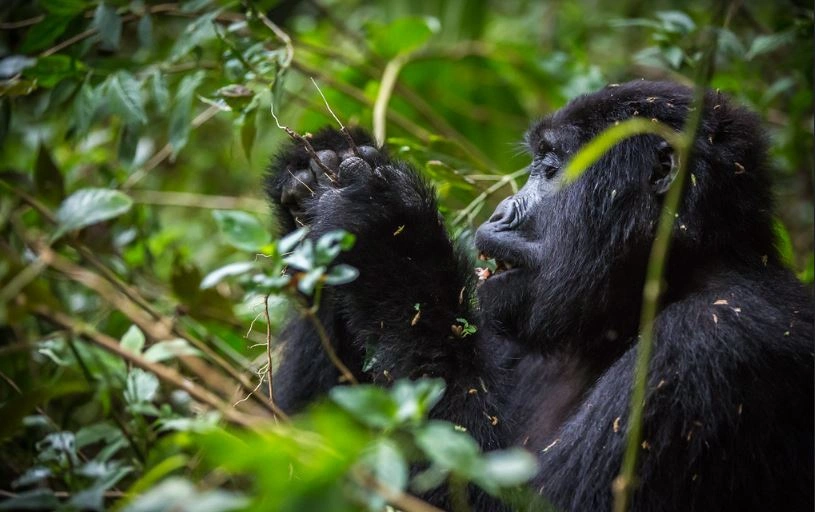
Why Rushaga Is the Only Place for Gorilla Habituation in Uganda. Bwindi Impenetrable National Park has four gorilla trekking sectors, Buhoma, Ruhija, Nkuringo, and Rushaga, each with its own habituated families, lodges, and trailheads. Yet the Gorilla Habituation Experience exists in exactly one of them. Understanding why Rushaga specifically holds this distinction, rather than any of Bwindi’s other equally forested, equally remote sectors, helps explain both the exclusivity of the experience and why it can’t simply be arranged elsewhere in the park. At Pick and Transfer Safaris, travelers ask us this fairly often, so this guide lays out the actual reasons.
It Comes Down to Which Families Are Mid-Process
The most direct answer is also the simplest: the Gorilla Habituation Experience exists wherever the Uganda Wildlife Authority happens to have gorilla families actively undergoing habituation at a given time, and currently, that’s specifically in Rushaga. Two families, generally identified as Bukingyi and Bushaho, are the groups presently in this transitional stage, still becoming accustomed to human presence rather than fully habituated for standard trekking. Since habituation is tied to specific families rather than specific geography in any fixed sense, the sector hosting the experience is really a reflection of where those particular families’ territories happen to fall, not an inherent property of Rushaga itself.
This is worth understanding because it means the sector hosting the experience isn’t necessarily permanent. As families complete habituation and graduate to standard trekking status, and as new families are selected to begin the process elsewhere in the park, the sector offering this experience could theoretically shift over time, though for the foreseeable future, Rushaga remains the confirmed location.
Rushaga’s Geography Made It a Practical Choice
Beyond simply hosting the right families at the right time, Rushaga’s position in Bwindi’s southern reaches has practical advantages that likely factored into why habituation work concentrated here. The sector sits close to Kisoro town and the Cyanika border crossing, making it considerably more accessible from Rwanda than Bwindi’s northern sectors, and its terrain, while still genuinely demanding, connects to a network of trailheads that Uganda Wildlife Authority trackers and researchers have developed extensively given how many habituated families already call this sector home. Rushaga hosts the largest concentration of habituated gorilla families of any single Bwindi sector, reflecting years of sustained tracking and research infrastructure already built up in this specific area, infrastructure that made extending into active habituation work here a logical next step.
This concentration of existing research infrastructure matters more than it might first seem. Trackers already working daily in Rushaga’s forest, monitoring the sector’s many established families, are well positioned to extend their work to a newly forming group without needing to build an entirely separate research presence elsewhere in the park. In effect, Rushaga’s existing depth of gorilla research made it the natural place for new habituation work to take root, rather than the sector being selected for this purpose from a blank slate.
Some Sources Reference Nkuringo Too
It’s worth flagging a detail that occasionally causes confusion: some older or less current sources describe the Gorilla Habituation Experience as available in both Rushaga and neighboring Nkuringo. This reflects how the program has evolved over time rather than a current split between the two sectors. As of the most recent guidance from operators working directly with the Uganda Wildlife Authority, the experience is confirmed as exclusively available in Rushaga, with the specific families involved subject to change as habituation progresses. If you encounter conflicting information referencing Nkuringo specifically, it’s worth confirming directly with a licensed operator or the Uganda Wildlife Authority before booking, since habituation status is exactly the kind of detail that shifts as families complete the process.
Why the Experience Can’t Simply Be Offered in Buhoma or Ruhija
Buhoma and Ruhija, Bwindi’s other two sectors, currently host only fully habituated families available for standard trekking. Since the entire premise of the Gorilla Habituation Experience is spending time with a family still mid-process, rather than fully settled, there’s simply no equivalent activity available in sectors where every resident family has already completed habituation. This isn’t a matter of infrastructure or demand in those sectors; it’s a direct consequence of which specific gorilla groups happen to be undergoing the habituation process at any given time, and right now, none of them are in Buhoma or Ruhija.
The Small Scale Is Deliberate
Even within Rushaga, the Gorilla Habituation Experience remains tightly limited, just eight permits per day across the two habituating families, compared to considerably larger daily allocations for standard trekking across the rest of the park. This isn’t a capacity constraint that could simply be expanded; it reflects a genuine conservation principle. Semi-habituated gorillas are more sensitive to human presence than fully habituated families, and limiting both group size, four visitors rather than the standard eight, and total daily permits protects the family from the stress that excessive human contact could introduce during this sensitive stage of their relationship with people.
What This Means for Trip Planning
Because the experience is genuinely tied to Rushaga specifically, and not something that can be substituted or found in another sector if your preferred dates or lodge happen to be elsewhere in Bwindi, travelers set on the Gorilla Habituation Experience need to build their entire itinerary, permits, lodge, and transfer route, around this one sector from the outset. This is a meaningfully different planning approach than standard trekking, where travelers have genuine flexibility across four sectors and can often adjust which one they visit based on lodge availability or route convenience. For the Gorilla Habituation Experience, that flexibility simply doesn’t exist, since there’s only one place to book it.
Reaching Rushaga Specifically
Given this constraint, most travelers approach Rushaga either via the Cyanika border crossing from Kigali, roughly four to five hours by road, or via a considerably longer overland journey from Entebbe or Kampala, generally eight to ten hours given Rushaga’s position in Bwindi’s far southern reaches. For travelers weighing whether the habituation experience is worth this dedicated routing, understanding that no other sector offers an equivalent activity helps clarify that this isn’t a matter of picking the most convenient sector and hoping for a similar experience, it genuinely is Rushaga or nothing for this specific activity.
Whether This Could Change in the Future
Because habituation is an ongoing, active process rather than a fixed program, it’s reasonable to expect that other sectors could eventually host their own version of this experience if the Uganda Wildlife Authority begins habituating new families elsewhere in the park. There’s no current indication of this happening in the near term, and travelers planning a trip today should proceed on the assumption that Rushaga remains the only option, but it’s worth understanding that this exclusivity reflects the current state of an evolving conservation program rather than a permanent geographic rule.
Visa and Border Requirements
Since most travelers reach Rushaga via Rwanda, the East African Tourist Visa tends to be the most convenient option, covering multiple entries across Uganda, Rwanda, and Kenya over 90 days for 100 US dollars through Uganda’s official immigration portal. A standard single-entry Uganda Tourist Visa works just as well for travelers not planning to re-enter Rwanda. A valid yellow fever vaccination certificate is required for entry into Uganda regardless of visa type.
Planning Your Rushaga Gorilla Habituation Trip with Pick and Transfer Safaris
Understanding why Rushaga specifically hosts the Gorilla Habituation Experience, rather than assuming it might be available elsewhere in Bwindi, helps travelers plan a realistic, correctly routed itinerary from the start. If you would like help confirming current permit details, arranging your transfer specifically to Rushaga, or building the rest of your Uganda trip around this one non-negotiable sector, get in touch through our Contact Us page. We’ll make sure your itinerary is built around where this experience actually happens, not where it might once have been offered.