- LET'S PLAN YOUR SAFARI
- +256 200 921 002
- +256 793 194 703
- info@pickandtransfersafaris.com

Why Wildlife Photographers Love Gorilla Habituation
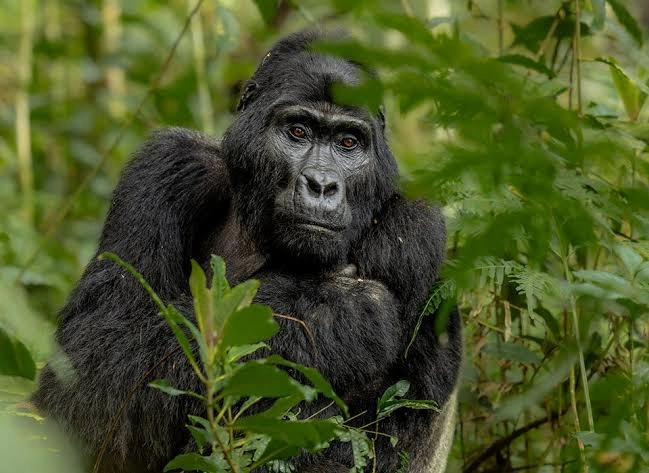
Why Wildlife Photographers Love Gorilla Habituation. Ask any serious wildlife photographer who’s done both standard gorilla trekking and the Gorilla Habituation Experience which one they’d choose again, and the answer is almost always the same. The extra three hours aren’t just more time with the subject, they’re the difference between a handful of rushed frames and the kind of patient, considered shooting that produces genuinely strong images. At Pick and Transfer Safaris, we work with a fair number of photographers planning Rushaga trips specifically for this reason, and this guide explains why the habituation experience has become something of an open secret among serious gorilla photographers.
The Core Problem with Standard Trekking for Photography
A standard gorilla trek grants exactly one hour with the family, and that hour includes settling in, getting oriented, and often waiting for the right moment as gorillas move, feed, or simply sit obscured behind vegetation. For photographers, this compresses an already technically challenging shoot, low light, moving subjects, unpredictable positioning, into a genuinely tight window. Many photographers describe standard trekking as spending as much of the hour reacting to whatever’s in front of them as actually composing and executing considered shots.
What Four Hours Actually Buys You
The Gorilla Habituation Experience’s extended four-hour window changes this equation fundamentally. Rather than one narrow opportunity, photographers get multiple chances at the same behaviors, feeding, grooming, play between juveniles, a mother with an infant, spread across a much longer period. This matters because gorilla behavior is inherently unpredictable within any given window; the difference between a mediocre shoot and a genuinely great one often comes down to whether you happened to be positioned correctly when a specific moment occurred. Four hours simply multiplies your chances of being in the right place when something worth photographing happens.
It also allows for patience in a way a single hour doesn’t. Rather than shooting continuously out of anxiety about missed opportunities, experienced photographers on the habituation experience often describe periods of simply observing without shooting, waiting for light or positioning to improve, something the standard trek’s tight window makes genuinely difficult to justify.
Smaller Groups Mean Better Positioning
Because the Gorilla Habituation Experience caps at four visitors rather than the standard eight, photographers face considerably less competition for angles and positioning. On a crowded standard trek, getting an unobstructed shot with the light behind you rather than a fellow trekker’s shoulder in frame can be genuinely difficult. With only three other people in the group, and often fellow photographers who understand the value of space and patience, the habituation experience tends to offer meaningfully better physical access to good compositions.
The Light and Technical Challenge
Regardless of which experience you choose, Bwindi’s dense canopy creates genuinely difficult shooting conditions: dim, inconsistent light, deep shadows where gorillas often rest, and constant subject movement. Most experienced gorilla photographers recommend a fast zoom lens in the 70-200mm range as the best all-around choice, paired with a camera body with strong high-ISO performance given how often you’ll be shooting at ISO 800 to 1600 or higher, sometimes considerably more in the darkest pockets of forest. Aperture Priority mode, with the camera handling shutter speed while you control depth of field, is widely recommended, along with continuous autofocus to track moving subjects and spot or center-weighted metering to avoid the camera being fooled by dark fur against a bright forest background.
A mid-range aperture, roughly f/4 to f/5.6, is often a better choice than shooting wide open at f/2.8, since a fully open aperture can leave only a single eye in sharp focus while the rest of the gorilla’s face falls outside the plane of focus, a subtle but genuinely important distinction for portrait-style shots. Flash photography is strictly prohibited across every gorilla-related activity in Uganda, which means mastering these settings, rather than relying on artificial light, is non-negotiable regardless of which experience you book. The extended time of the habituation experience gives photographers considerably more room to experiment with these settings and adapt as light conditions shift throughout the visit, rather than locking in a single approach and hoping it works for the entire hour.
Working Alongside Researchers Adds Context
Beyond the technical advantages, photographers on the Gorilla Habituation Experience often value the presence of researchers and trackers who know individual gorillas’ personalities, typical behaviors, and current position in the family hierarchy. This context genuinely helps anticipate moments worth photographing, a particular juvenile’s tendency to interact playfully, a specific individual’s typical resting position, in a way that a standard trek’s single guide, focused primarily on safety and logistics, often can’t offer in the same depth.
Semi-Habituated Behavior Can Be More Visually Compelling
Because the families visited during the habituation experience are still adjusting to human presence, their behavior can feel less settled and more genuinely wild than a long-established, fully habituated family’s calm indifference to visitors. Some photographers specifically seek this out, since it can produce more dynamic, less posed-feeling images, moments of genuine wariness, curiosity, or protective behavior from a silverback that a fully habituated group rarely displays anymore. This is a matter of personal preference rather than a universal advantage, but it’s a genuine reason some photographers prefer the habituation experience beyond simply the extra time.
Practical Gear Advice Specific to the Longer Day
Given how much longer the habituation experience runs compared to standard trekking, packing decisions matter more. Extra batteries and memory cards are essential given how much more shooting time you’ll have, and cold mountain air at Rushaga’s altitude drains batteries faster than photographers accustomed to warmer climates might expect. Committing to a single lens before entering the forest, rather than planning to swap lenses mid-visit, protects your gear from Bwindi’s humidity and reduces the risk of missing moments while changing equipment; if a second focal range is genuinely necessary, a second camera body is a safer option than swapping lenses in the field. A rain cover or waterproof sleeve is worth carrying regardless of season, given how quickly weather can shift under the forest canopy, along with a simple lens cloth for the condensation and humidity that build up over a genuinely long day outdoors.
A monopod, rather than a full tripod, tends to be the more practical stabilization choice given Bwindi’s uneven terrain and the pace at which the group moves, and many photographers ultimately end up shooting handheld given how often positioning shifts unpredictably as the family moves through the forest.
Is It Worth the Premium for Photographers Specifically?
For photographers weighing the Gorilla Habituation Experience’s higher cost against standard trekking, the calculation tends to look different than it does for a typical traveler. Where a general visitor might weigh cost purely against personal enjoyment, photographers often frame the decision around the quality and volume of usable images the extra time is likely to produce, four hours of shooting opportunities against one, a considerably more favorable ratio for anyone whose primary goal is coming home with genuinely strong photographs rather than simply the memory of the encounter itself.
Visa and Border Requirements
Since most photographers reach Rushaga via Rwanda, the East African Tourist Visa tends to be the most convenient option, covering multiple entries across Uganda, Rwanda, and Kenya over 90 days for 100 US dollars through Uganda’s official immigration portal. A standard single-entry Uganda Tourist Visa works just as well for travelers not planning to re-enter Rwanda. A valid yellow fever vaccination certificate is required for entry into Uganda regardless of visa type.
Planning Your Photography-Focused Gorilla Habituation Trip with Pick and Transfer Safaris
For photographers, the extra three hours the Gorilla Habituation Experience offers over standard trekking translate directly into more chances at the shot that actually justifies the trip. If you would like help confirming permit availability, arranging a lodge with good facilities for camera gear and charging, or planning your private transfer from Kigali, get in touch through our Contact Us page. We’ll help you build a trip that gives your photography the time it genuinely needs.