- LET'S PLAN YOUR SAFARI
- +256 200 921 002
- +256 793 194 703
- info@pickandtransfersafaris.com

Where Can I See the Big Five in Uganda?

Where Can I See the Big Five in Uganda? Uganda rarely tops the “Big Five” conversation the way Kenya or South Africa does, and that reputation is only half deserved. It’s true that no single Ugandan park hands you all five animals in one easy game drive the way the Serengeti or Kruger sometimes can. But once you understand which park does which job — lions here, leopards there, rhinos in a very specific sanctuary — Uganda becomes a genuinely excellent Big Five destination, and one with far fewer vehicles crowding every sighting. At Pick and Transfer Safaris, this is one of the questions we get asked more than almost any other, so we’ve put together the definitive, park-by-park answer.
This guide walks through exactly where to find lions, leopards, elephants, buffalo, and rhinos in Uganda, which parks come closest to delivering all five, how to combine them into a single itinerary, and what’s genuinely changing in 2026 as Uganda quietly relaunches its rhino population back into the wild for the first time in over four decades. Whether you’re weighing a quick three-day Queen Elizabeth trip against a longer multi-park route, or simply trying to work out whether Uganda can compete with Kenya and Tanzania for Big Five viewing at all, this is the answer we’d give you in person.
What Are the “Big Five” and Why Uganda Is a Special Case
The term “Big Five” — lion, leopard, elephant, African buffalo, and rhinoceros — was coined by big-game hunters, not conservationists, referring to the five animals considered most dangerous to hunt on foot. Today it’s a checklist tourists use instead, and it remains a useful shorthand even though it says nothing about a park’s overall wildlife quality (Uganda’s mountain gorillas and chimpanzees, for instance, aren’t part of the Big Five at all, despite being the animals most people actually travel here for).
Uganda’s special case is simple: four of the five are genuinely findable across several parks, but the fifth — rhino — vanished from the wild entirely by the early 1980s due to poaching and civil conflict, and has only existed in a single fenced sanctuary since 2005. That changed in 2026, when Uganda began actively reintroducing rhinos back into protected wild habitat for the first time in more than forty years, a development that’s reshaping how the Big Five conversation in Uganda will look over the next decade. We’ll cover exactly where that stands further down, and if you want a second local perspective on the same question, Kenlink Tours’ own breakdown of where to see Big Five animals in Uganda is worth reading alongside this guide.
Lions in Uganda: Where to See Them
Uganda’s lion population is estimated at fewer than 500 individuals nationwide, concentrated in three parks: Queen Elizabeth National Park, Murchison Falls National Park, and the remote Kidepo Valley National Park in the far northeast. Queen Elizabeth is by far the most reliable and most famous of the three, thanks to the Ishasha sector’s tree-climbing lions — one of only two lion populations in Africa known to regularly climb into fig and sycamore trees during the heat of the day, a behavior scientists still don’t fully agree on the reason for. The Kasenyi Plains, in the park’s northern section, offer a second, more classic style of lion sighting: prides resting in open grassland, often near recent kills.
At Murchison Falls National Park, lions roam the northern savannah on the far bank of the Nile, sighted less predictably than in Queen Elizabeth but rewarding for travelers already combining the boat cruise and top-of-the-falls hike with a game drive on our 3-Day Murchison Falls Safari or the more condensed two days tour to Murchison Falls National Park. Kidepo Valley, discussed in more detail below, offers lion sightings too, though on a smaller, less certain scale than the other two.
Leopards in Uganda: Where to See Them
Leopards are the most widely distributed of Uganda’s Big Five, present in nearly every major park and forest reserve in the country, from Queen Elizabeth and Murchison Falls to Kibale Forest and even Lake Mburo, yet they remain by far the hardest to actually spot. Solitary, mostly nocturnal, and masters of staying in dense cover, a confirmed leopard sighting on any single game drive is genuinely a matter of luck rather than guaranteed itinerary planning, wherever you go.
That said, some locations improve your odds. Kidepo Valley’s dry riverbeds and rocky kopjes are considered Uganda’s best leopard habitat, since the more open terrain makes a resting leopard easier to spot than in denser parks. Queen Elizabeth’s Kazinga Channel area and the acacia woodland around Ishasha also produce regular sightings, often of leopards draped over branches in a similar pose to Ishasha’s tree-climbing lions. If leopards are your priority above all else, patience and multiple game drives across a longer stay will always beat a single rushed attempt.
Elephants in Uganda: Where to See Them
Elephant sightings in Uganda are considerably more reliable than leopards, with healthy populations in three parks. Queen Elizabeth’s Kazinga Channel is arguably the single best elephant-viewing spot in the country, where the boat cruise between Lake Edward and Lake George brings you within meters of large herds drinking, bathing, and interacting along the channel’s banks — often alongside hippos, buffalo, and crocodiles in the same frame. Murchison Falls’ northern savannah supports equally large herds, with the Nile boat cruise offering a similarly close vantage point, a highlight we cover in our post on what you can see in Murchison Falls.
Kidepo Valley also hosts sizeable elephant herds, particularly during the dry season when animals concentrate around the Narus Valley’s permanent water sources, and smaller, more forest-adapted elephant populations exist at the edges of Kibale Forest, though sightings there are far less predictable than in the open savannah parks.
Buffalo in Uganda: Where to See Them
Of all five species, African buffalo are the easiest to see in Uganda, found in genuinely large numbers across almost every savannah park in the country. Queen Elizabeth’s Kasenyi Plains and Murchison Falls’ northern sector both regularly produce herds numbering in the hundreds, and interestingly, Uganda’s buffalo populations here are a natural hybrid between the larger East African savanna buffalo and the smaller West African forest buffalo, a genetic quirk of the country’s position between the two subspecies’ ranges.
Lake Mburo National Park (technically not linked here, but worth noting) and Kidepo Valley both add to the picture — Kidepo in particular is known for buffalo herds that can swell to several thousand animals during peak dry-season gatherings, among the largest single-herd counts recorded anywhere in East Africa. If buffalo alone were the goal, almost any of Uganda’s savannah parks would deliver, making this the one Big Five member you genuinely don’t need to plan around.
Rhinos in Uganda: Ziwa Rhino Sanctuary and the New Wild Reintroductions
Rhinos are Uganda’s Big Five outlier, and understanding why changes how you should plan around them. Both black and white rhino were hunted to local extinction inside Uganda’s national parks by the early 1980s, and for over two decades the country had no wild rhino population at all. That began to change in 2005, when Rhino Fund Uganda established Ziwa Rhino Sanctuary, a private, fenced 70-square-kilometer reserve near Nakasongola, roughly two and a half hours north of Kampala on the way to Murchison Falls. Ziwa’s population of southern white rhinos has grown steadily through careful breeding, reaching around sixty individuals by early 2026, including a fresh injection of genetic diversity from South Africa in December 2025.
What makes 2026 genuinely significant is that Uganda has finally begun moving rhinos out of Ziwa and back into unfenced, protected wild habitat for the first time in more than forty years — an initial group was released into Ajai Wildlife Reserve in January 2026, and Kidepo Valley National Park received its first rhinos in March 2026, the same park where Uganda’s last wild rhinos were recorded roaming free back in 1983. Conservationists have also named Murchison Falls National Park as a future release site, though no confirmed timeline exists yet for that specific reintroduction.
For now, if seeing a rhino is non-negotiable for your trip, Ziwa Rhino Sanctuary remains the only reliable option, and it’s a genuinely excellent one: guided rhino tracking is done entirely on foot, walking through open acacia scrub with an armed ranger until you’re within a safe, respectful distance of grazing rhinos, an experience arguably more intimate than a vehicle-based sighting anywhere else on the continent. It pairs naturally with a Murchison Falls itinerary, since Ziwa sits directly on the main road north — ask us about adding it to your 3-Day Murchison Falls Safari when you book.
Queen Elizabeth National Park: Uganda’s Best All-Round Big Five Destination
If you had to pick just one Ugandan park to maximize your Big Four (everything except rhino), Queen Elizabeth National Park would be the clear answer. It’s the only park in the country that reliably delivers lions (via Ishasha’s tree-climbers and the Kasenyi Plains), elephants and buffalo (via the Kazinga Channel and surrounding plains), and a genuine, if not guaranteed, shot at leopards, all within a single well-organized itinerary.
Our 3-Day Queen Elizabeth Safari is built specifically around this — a full day exploring the Kasenyi Plains and Ishasha sector, paired with the Kazinga Channel boat cruise, gives you the best realistic odds at four of the five in one trip. You can read more about the park’s terrain and wildlife zones on our Queen Elizabeth National Park destination page.
Murchison Falls National Park: The Big Four Plus a Rhino Day Trip
Murchison Falls covers the same four species as Queen Elizabeth — lions, leopards, elephants, and buffalo — across its northern savannah, with the added bonus of Uganda’s most dramatic waterfall and river cruise thrown in. What sets it apart for Big Five hunters specifically is its proximity to Ziwa Rhino Sanctuary, sitting almost directly on the route north from Kampala, making it the one Uganda park where you can realistically add rhino tracking to the same overall trip without a major detour.
Our 3-Day Murchison Falls Safari and shorter two days tour to Murchison Falls National Park both cover the game drive, boat cruise, and top-of-the-falls hike, and our game drive guide for Murchison Falls goes into more detail on exactly which tracks our guides favor for lion and elephant sightings.
Kidepo Valley National Park: Uganda’s Wildest Big Five Frontier
Kidepo Valley, tucked into Uganda’s remote northeastern corner near the South Sudan and Kenya borders, is technically the only park in the country where you have at least some chance at all five species in a single visit — lion, leopard, elephant, buffalo, and now, following the March 2026 reintroduction, a small, newly established rhino population. Its isolation is both its charm and its drawback: the park sees a fraction of the visitors of Queen Elizabeth or Murchison Falls, and its wildlife density genuinely rivals East Africa’s more famous savannas, but reaching it typically requires a longer overland drive or a short charter flight, making it a poor fit for a quick two-day trip.
For travelers with a week or more to spend, Kidepo deserves serious consideration, and it’s a park we can build into our longer itineraries such as the 10-Day Uganda Primates and Wildlife safari or a custom extended safari — reach out via our contact page if Kidepo is on your radar and we’ll help you weigh the extra travel time against the payoff.
Lake Mburo National Park: Great for Buffalo (But Not the Full Big Five)
Lake Mburo, Uganda’s smallest and most accessible savannah park, is worth mentioning here mainly to set expectations correctly: it offers reliable buffalo sightings and occasional, elusive leopard encounters, but it has no elephants and, historically, no resident lion population at all — which is precisely what makes its walking and horseback safaris possible in the first place. If Big Five completeness is your main goal, Lake Mburo is not the park to build your trip around.
Where it does shine is as an easy, low-key first or last stop on a longer route toward the parks that do deliver more of the Big Five, and it remains one of our most popular short getaways in its own right — our full two days tour to Lake Mburo National Park covers exactly what to expect if a horseback safari and zebra-filled plains sound more appealing than a checklist chase.
Which Uganda National Park Is the Most Visited?
It’s a fair question to ask before choosing where to focus a Big Five trip, since visitor numbers usually correlate with well-developed infrastructure, better road access, and a wider choice of lodges. Queen Elizabeth National Park and Murchison Falls National Park consistently rank as Uganda’s two most-visited parks, a status covered in more detail in Kenlink Tours’ look at Uganda’s most visited national park, and it’s not a coincidence that these are also the two parks we recommend most strongly for Big Five viewing above.
Higher visitor numbers do mean more vehicles at popular sightings like the Ishasha fig trees during peak season, but they also mean better-maintained tracks, more experienced guides familiar with current animal movements, and a wider range of accommodation to fit any budget — trade-offs well worth making if maximizing your Big Five odds is the priority.
Can You See All Big Five in One Uganda Safari Itinerary?
Realistically, yes, but it takes deliberate planning rather than a single standard package. The most efficient combination pairs Murchison Falls (lion, leopard, elephant, buffalo, plus a Ziwa Rhino Sanctuary stop) with a few extra days in Queen Elizabeth (a stronger, more reliable shot at lion and leopard via Ishasha and Kasenyi) — a route that also happens to work beautifully alongside Kibale Forest chimpanzee tracking or Bwindi gorilla trekking if you want to go beyond the Big Five entirely.
The alternative route runs through Kidepo Valley alone, which technically holds all five, but with lower sighting odds for lion, leopard, and rhino than the more established parks offer individually. Most of our guests find the Murchison Falls plus Queen Elizabeth combination the more satisfying and time-efficient choice, reserving Kidepo for a dedicated northern Uganda trip on a future visit.
Sample Itinerary: A Big Five Safari Combining Murchison Falls, Queen Elizabeth and Ziwa
For travelers with around seven to ten days, here is roughly how we’d structure a genuine Big Five-focused Uganda itinerary: Day 1 travels from Kampala to Murchison Falls via a stop at Ziwa Rhino Sanctuary for guided rhino tracking on foot. Days 2 and 3 cover the Nile boat cruise, a northern savannah game drive for lion, elephant, and buffalo, and the hike to the top of the falls. From there, the route continues south to Queen Elizabeth National Park for two to three days split between the Kasenyi Plains, the Ishasha sector’s tree-climbing lions, and a Kazinga Channel boat cruise for elephant, buffalo, and hippo. A final day or two can be added for Kibale Forest chimpanzee tracking or Bwindi gorilla trekking before returning to Kampala.
This exact shape of trip is close to what our 7-Day Uganda Safari and 4-Day Wildlife and Primate Safari already cover, and we can easily adjust either to prioritize Big Five viewing time over primate tracking if that’s your main goal. For a similar multi-park combination from another established operator, Kenlink Tours’ 10-day trip covering Murchison Falls, Kibale, Queen Elizabeth and Bwindi follows a comparable route if you’d like to compare itineraries before booking, and for travelers with even more time available, their 20-Day Wildlife and Nature Experience in Uganda shows how far a Big Five focus can be extended across the whole country, including Kidepo Valley.
Other Wildlife You’ll See Along the Way
Chasing the Big Five shouldn’t come at the expense of noticing everything else Uganda’s parks put in front of you, and there’s a great deal of it. Giraffes, topi, Uganda kob, waterbuck, and warthog fill in the gaps between major sightings on almost every game drive covered in this guide, while hippos and Nile crocodiles are a near-guarantee on any boat cruise, whether on the Kazinga Channel, the Victoria Nile, or the smaller waters of Lake Mburo.
Uganda’s real specialty, though, sits outside the Big Five entirely: mountain gorillas in Bwindi Impenetrable Forest, chimpanzees in Kibale Forest National Park, and over 1,000 recorded bird species nationwide, including the prehistoric-looking shoebill stork. A useful broader reference on the full range of species you might encounter across a Uganda trip is Kenlink Tours’ guide to the top wild animals to see on a Uganda wildlife safari, which covers predators, primates, and birdlife well beyond the five species this guide focuses on.
Best Time of Year to See the Big Five in Uganda
Uganda’s two dry seasons — December to February and June to September — offer the best overall Big Five viewing conditions across every park mentioned here. Thinner grass cover makes lions, leopards, and buffalo far easier to spot, firmer roads mean more ground covered per game drive, and animals concentrate more predictably around remaining water sources, particularly noticeable in Kidepo’s Narus Valley and along Murchison Falls’ Nile corridor.
The wetter months bring lush scenery and noticeably fewer vehicles at popular sightings like Ishasha’s fig trees, but denser vegetation genuinely does reduce visibility, especially for leopards. If your itinerary allows flexibility, aligning a Big Five-focused trip with the dry season will meaningfully improve your odds, particularly if you only have a few days to work with.
How Uganda’s Big Five Compares to Kenya and Tanzania
It’s a fair question, and an honest answer serves travelers better than an oversold one: Kenya’s Maasai Mara and Tanzania’s Serengeti and Ngorongoro Crater offer higher sighting density and, crucially, an actual wild rhino population you can see on a normal game drive rather than a fenced sanctuary or a brand-new, still-establishing reintroduction site. If ticking all five species with maximum certainty in the shortest possible time is your only goal, those destinations currently have the edge.
What Uganda offers instead is a genuinely different kind of experience around the same five animals: tree-climbing lions found in only one other population on the continent, elephant and buffalo viewed from a boat rather than a vehicle roof, on-foot rhino tracking rather than a drive-by sighting, and a fraction of the tourist traffic at every stop. For travelers who’ve already done a classic East African game-drive circuit and want the Big Five with a different texture — or who are combining it with gorilla and chimpanzee trekking that Kenya and Tanzania simply can’t offer — Uganda remains an excellent, underrated choice.
There’s also a practical, budget-driven argument worth making: because Uganda receives a fraction of the visitor numbers of Kenya’s Maasai Mara or Tanzania’s northern circuit, park fees, lodge rates, and vehicle hire tend to be noticeably lower for a comparable standard of experience, which matters if your Big Five trip is one leg of a longer, multi-country East African itinerary rather than the entire holiday.
Tips for Maximizing Your Big Five Sightings
Book multiple game drives rather than a single attempt wherever your schedule allows — leopards in particular reward persistence far more than luck on any one outing. Start every game drive as early as your lodge permits, since the first two hours after sunrise consistently produce the most predator activity across every park mentioned here, before the day’s heat pushes animals into shade and cover.
Hire an experienced local guide rather than attempting extensive self-drive game viewing, since local knowledge of current pride locations, recent kills, and favored leopard trees genuinely outperforms guesswork, especially on a tight schedule. If you’ve never been on an African game drive before and aren’t sure what to expect in terms of pacing, vehicle setup, or how close you’ll realistically get to wildlife, Kenlink Tours’ guide to what to expect on a game drive is a helpful primer before you travel.
Finally, treat the Ziwa Rhino Sanctuary stop as a priority booking rather than an afterthought if rhino sightings matter to you — it’s the one component of a Uganda Big Five trip that has no vehicle-based alternative anywhere else in the country.
What to Pack for a Big Five Safari in Uganda
Neutral-colored clothing — khaki, olive, and brown — works best across all the parks covered here, along with a warm layer for early-morning game drives and a light rain jacket regardless of season. Binoculars are close to essential for confirming distant lion, leopard, and elephant sightings across open savannah, and a telephoto lens in the 200-400mm range will serve you far better than a standard kit lens for predator photography specifically.
Comfortable closed shoes matter for the Ziwa Rhino Sanctuary walk and any guided nature walks along the way, and sun protection — a hat, sunglasses, and high-SPF sunscreen — is non-negotiable given how much of a Big Five trip happens in open vehicles and on foot under direct sun.
Big Five Safari Cost in Uganda: What to Expect
Costs scale with how many parks your itinerary covers and how much ground you need to travel between them. A single-park trip focused on Queen Elizabeth or Murchison Falls sits in a similar range to our standard 3-day safaris, while a full Big Five combination spanning both parks plus a Ziwa Rhino Sanctuary stop naturally costs more, largely due to the additional driving days, park entry fees, and lodge nights involved rather than any single expensive activity.
Most of our packages include private transport with an English-speaking driver-guide, accommodation, meals as specified, all relevant park entry fees, and the featured boat cruises. Typically excluded are international flights, visas, travel insurance, tips, and specialist add-ons like rhino tracking permits at Ziwa. Reach out through our contact page for an accurate quote based on which parks and how many days you have in mind, and for a broader sense of how a wildlife-focused trip is typically priced and packaged elsewhere, Kenlink Tours’ guide to choosing the best Uganda safari is a useful comparison point.
Conservation and the Future of Uganda’s Big Five
Every one of Uganda’s Big Five species carries a conservation story worth knowing before you go. Elephant and buffalo numbers have rebounded substantially since the poaching crises of the 1970s and 1980s, largely thanks to sustained Uganda Wildlife Authority anti-poaching efforts funded in large part by park entry and activity fees. Lions remain more precarious, with Uganda’s total population estimated at under 500 individuals and ongoing threats from human-wildlife conflict at the edges of Queen Elizabeth in particular, where lion killings in retaliation for livestock predation remain a real challenge conservation groups are actively working to reduce.
Rhinos represent the most dramatic turnaround story of all five: from zero wild rhinos in Uganda for over two decades to an actively growing Ziwa Sanctuary population and, as of 2026, the first tentative reintroductions back into Ajai Wildlife Reserve and Kidepo Valley National Park. It’s a genuinely rare thing to be able to witness a species’ return to the wild in close to real time, and every visitor who books a rhino tracking excursion at Ziwa is, in a small but real way, funding that continued expansion.
None of this progress is guaranteed to hold without continued tourism revenue and community buy-in. Human-wildlife conflict remains a genuine pressure point around Queen Elizabeth’s more densely settled boundaries, and the newly released rhino populations at Ajai and Kidepo will need years of dedicated ranger protection before they’re considered fully secure. Choosing operators and lodges that visibly reinvest in local communities and conservation, as we aim to do at Pick and Transfer Safaris, is a small but meaningful way for every visitor to support that trajectory rather than simply observe it.
A Quick Reference: Uganda’s National Parks Beyond the Big Five
It’s worth remembering that Uganda has ten national parks in total, and only a handful of them factor into a Big Five itinerary at all. Beyond the parks covered in depth above, destinations like Rwenzori Mountains, Semuliki, and Mount Elgon are built around hiking and forest ecosystems rather than savannah game viewing, while Bwindi and Kibale exist primarily for primate trekking rather than Big Five species. For a fuller picture of how all ten parks fit together and which ones suit which type of traveler, Kenlink Tours’ overview of Uganda’s national parks and their companion piece on the 10 beautiful Uganda national parks are both useful starting points if you’re planning a trip that goes beyond this guide’s scope.
Frequently Asked Questions About Seeing the Big Five in Uganda
Can I see all five Big Five animals in one Uganda national park?
Kidepo Valley National Park is technically the only park with all five present, including a newly established small rhino population since March 2026, though sighting odds for lion, leopard, and rhino there are lower than in more established, higher-traffic parks. Most travelers get a more reliable overall experience combining Murchison Falls or Queen Elizabeth with a dedicated Ziwa Rhino Sanctuary visit.
Where is the best place to see lions in Uganda?
Queen Elizabeth National Park, specifically the Ishasha sector’s famous tree-climbing lions and the Kasenyi Plains, offers Uganda’s most reliable lion sightings. Murchison Falls and Kidepo Valley both host lions as well, but with less predictable viewing.
Are there wild rhinos in Uganda that I can see on a normal game drive?
Not yet in significant, tourist-accessible numbers. Ziwa Rhino Sanctuary near Nakasongola remains the only reliable place to see rhinos in Uganda, via guided on-foot tracking rather than a vehicle-based game drive. Small reintroduced populations exist at Ajai Wildlife Reserve and Kidepo Valley National Park as of 2026, but these are newly established and not yet a dependable sighting option for most visitors.
How many days do I need for a Big Five safari in Uganda?
A single-park trip to Queen Elizabeth or Murchison Falls can be done in three to four days and will deliver a strong shot at four of the five species. A full Big Five itinerary including Ziwa Rhino Sanctuary and both major savannah parks typically needs seven to ten days to cover comfortably without excessive driving.
Is Uganda a good Big Five destination compared to Kenya or Tanzania?
For pure sighting density and guaranteed wild rhino viewing, Kenya and Tanzania currently have the advantage. Uganda offers a different, arguably richer overall experience — tree-climbing lions, boat-based elephant and buffalo viewing, on-foot rhino tracking, and the chance to combine the Big Five with gorilla and chimpanzee trekking that neither Kenya nor Tanzania can offer.
Which Uganda park is best for a first-time Big Five safari?
Queen Elizabeth National Park is generally the best starting point, thanks to its combination of reliable lion sightings, strong elephant and buffalo viewing via the Kazinga Channel, and a genuine chance at leopards, all within a well-established, easy-to-navigate park.
Why Book Your Big Five Safari with Pick and Transfer Safaris
Planning a genuine Big Five trip across two or three Ugandan parks takes more coordination than a single-park getaway: matching your Ziwa Rhino Sanctuary visit to the right day of your Murchison Falls stay, timing the drive south to Queen Elizabeth to arrive with enough daylight for an Ishasha game drive, and knowing which lodges sit closest to each park’s best game-viewing tracks. That kind of route planning is exactly what we do for every Big Five itinerary we build, backed by well-maintained vehicles, licensed guides, and transparent pricing with no surprise add-ons.
Learn more about our team and approach on our About Us page, browse our full range of Uganda wildlife safaris, or start from our complete safaris overview if you’d rather browse every itinerary at once. If you’re comparing operators, it’s worth looking at how Kenlink Tours’ Uganda safaris and their team approach the same routes, or their car hire service if self-driving between parks appeals to you — we’re confident our local expertise and attention to detail on multi-park routing will stand out either way.
Where Can I See the Big Five in Uganda?
Uganda’s Big Five story is more layered than a simple checklist — it’s tree-climbing lions found almost nowhere else on Earth, elephant herds viewed from the deck of a boat rather than a truck, and a rhino comeback story still being written in real time. Knowing which park does which job, and how to string them together efficiently, is the difference between a frustrating scavenger hunt and a genuinely satisfying safari.
Ready to plan your Big Five trip, or still deciding which parks and how many days make sense for you? Learn more about our team on our About Us page, browse our complete range of Uganda and Rwanda safari destinations, or get in touch directly through our contact page and let Pick and Transfer Safaris build the right Big Five itinerary around your time and budget.
7 Days Uganda Safari – One week tour
This 7-day itinerary is the classic one-week introduction to Uganda, covering the country’s three most iconic wildlife experiences: chimpanzee tracking in Kibale Forest National Park, Big Five game drives and a boat cruise in Queen
Tour Details →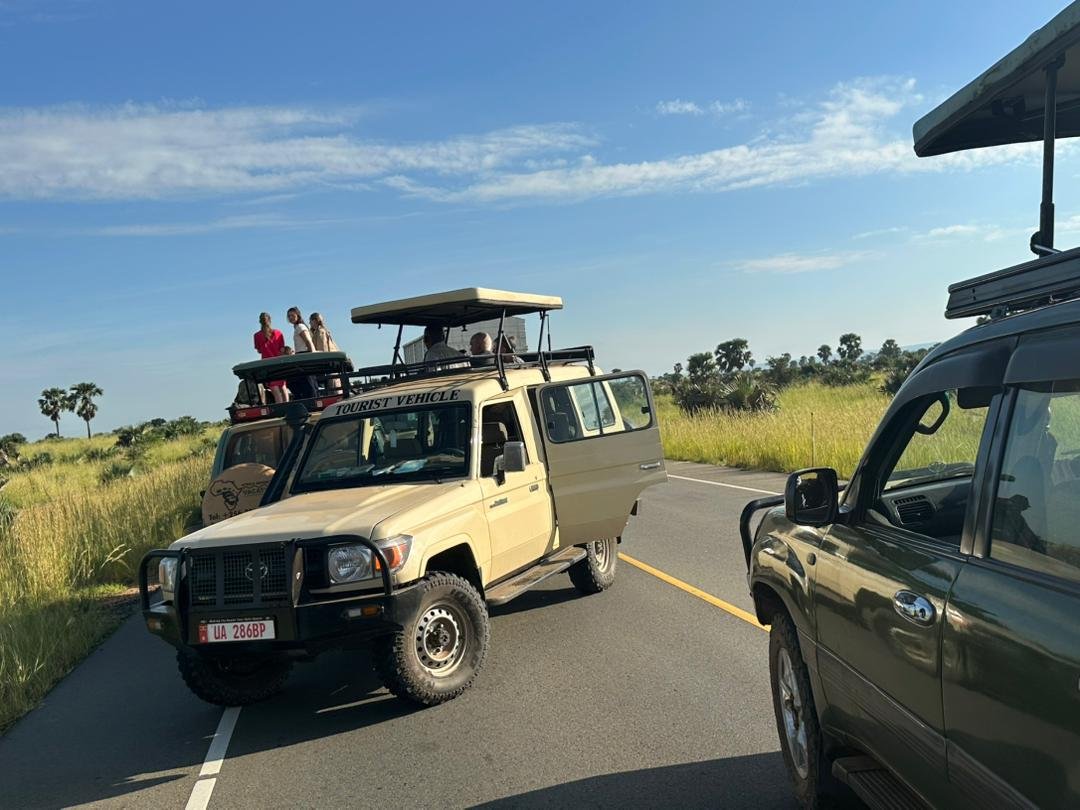
10 Days Uganda Primates and Wildlife
This 10-day Uganda Grand Safari is the most complete Uganda itinerary we offer at Pick and Transfer Safaris. It begins with a scenic northward drive from Entebbe to the vast open plains of Murchison
Tour Details →
2 Days Uganda Gorilla Tour Starting from Kigali
This is the gentler cousin of our 1-Day Uganda Gorilla Safari Starting from Kigali — same idea, twice the breathing room. Instead of squeezing a 3,000-metre forest trek and two border crossings into a single very long day
Tour Details →
5-Day Uganda Gorilla and Chimpanzee Safari
This itinerary can be combined with a Rwanda extension or a wildlife-focused add-on through Queen Elizabeth National Park — browse our Uganda & Rwanda Safaris and Primate Safaris collections for ideas.
Tour Details →
5 Days Rwanda Wildlife and Gorillas
This 5-day itinerary brings together Rwanda’s two flagship wildlife experiences: open savannah game drives and a boat safari in Akagera National Park, followed by a face-to-face encounters
Tour Details →
3 Days Uganda Gorilla Safari
For travelers who arrive in Entebbe with a tight schedule and a clear ambition, a 3-day gorilla safari to Bwindi Impenetrable Forest National Park is the most focused and rewarding short trip the country has to offer.
Tour Details →