- LET'S PLAN YOUR SAFARI
- +256 200 921 002
- +256 793 194 703
- info@pickandtransfersafaris.com

Mgahinga or Bwindi, which is better for Gorilla Trekking
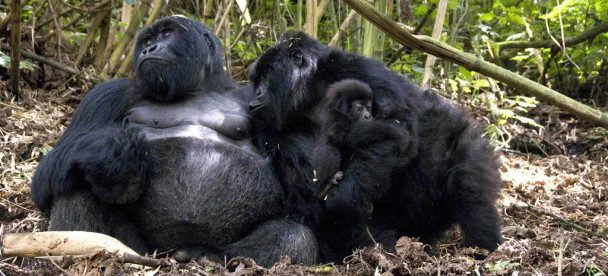
Mgahinga or Bwindi, which is better for Gorilla Trekking. Uganda holds two of the world’s handful of places where you can trek mountain gorillas, and travelers planning their trip almost always end up asking the same question: Mgahinga or Bwindi, which one should I actually book? The honest answer is that it depends on what you want from the day — but it’s not a coin toss either, since the two parks differ in real, practical ways that should shape your decision. At Pick and Transfer Safaris, we book both, and this guide lays out exactly how they compare so you can choose with confidence rather than guesswork.
We’ll walk through gorilla family numbers, trekking difficulty, scenery, cost, access, and which park suits which kind of traveler, plus how to combine both into one trip if you decide you don’t want to choose at all. If you’re also weighing whether to add gorilla trekking to a wider Uganda wildlife itinerary, this guide pairs well with our earlier look at where to see the Big Five in Uganda, since several of the same southwestern travel routes overlap.
Mgahinga and Bwindi at a Glance
Before the detail, here’s the short version. Bwindi Impenetrable Forest National Park is Uganda’s flagship gorilla destination: 321 square kilometers of ancient rainforest, home to nearly half the world’s remaining mountain gorillas, spread across four separate trekking sectors with roughly twenty habituated families between them. Mgahinga Gorilla National Park is the opposite in scale: Uganda’s smallest national park at just 33.7 square kilometers, with a single habituated gorilla family, set against the dramatic backdrop of three extinct volcanoes shared with Rwanda and the Democratic Republic of Congo.
Neither park is objectively “better” in isolation — Bwindi wins on choice, flexibility, and sheer gorilla density, while Mgahinga wins on scenery, add-on activities like golden monkey tracking and volcano hiking, and its convenient position for travelers crossing between Uganda and Rwanda. The rest of this guide breaks down exactly why, section by section, so that by the end you can match the right park to your own fitness level, timeline, and travel route rather than relying on someone else’s generic recommendation.
Where Are Mgahinga and Bwindi National Parks Located?
Both parks sit in Uganda’s far southwest, in Kisoro and Kanungu districts respectively, within a couple of hours’ drive of each other. Bwindi straddles the Albertine Rift along the Democratic Republic of Congo border, roughly 530 kilometers (eight to nine hours by road) from Kampala, or about an hour by charter flight from Entebbe. Mgahinga sits further south in Kisoro District, directly on the point where Uganda, Rwanda, and the DRC meet, around 540 kilometers (nine to ten hours by road) from Kampala, though it’s considerably closer to Kigali, Rwanda — just four to five hours by road.
That proximity to Rwanda is one of Mgahinga’s defining practical features, since the park forms part of the wider Virunga Conservation Area that also includes Rwanda’s Volcanoes National Park. You can browse our complete Uganda and Rwanda destinations list to see exactly how the two countries’ gorilla parks connect geographically.
Gorilla Families: How Many Can You Trek at Each Park?
This is the single biggest practical difference between the two parks. Bwindi has roughly twenty habituated gorilla families spread across its four sectors, meaning far more daily trekking permits are available and far more flexibility in choosing a family whose difficulty level matches your fitness and preferences. Mgahinga, by contrast, has exactly one habituated group available for trekking: the Nyakagyezi family, which means permit availability is genuinely limited and tends to sell out faster during peak season, particularly since it’s the only gorilla-trekking option in the park.
If your travel dates are fixed and flexibility matters, Bwindi’s sheer number of families makes it the safer booking choice. If you’ve already secured a Mgahinga permit for your dates, though, there’s nothing to worry about — the Nyakagyezi family is a genuinely excellent trek in its own right, covered in detail next.
Meet the Nyakagyezi Family: Mgahinga’s Only Habituated Gorillas
The Nyakagyezi group is one of the largest habituated mountain gorilla families in the entire Virunga region, and its trekking history is unusual: the family has, at various points over the decades, crossed the border into Rwanda and Congo and back again, since mountain gorillas naturally roam across the unfenced Virunga massif regardless of national boundaries. When the family is present on the Ugandan side, which is most of the time, Mgahinga rangers track their movement daily to guide trekkers to them.
Treks to the Nyakagyezi family typically move through a mix of bamboo forest and volcanic slope vegetation rather than the dense lowland rainforest travelers associate with Bwindi, giving the whole experience a distinctly different visual character even though the gorillas themselves are the same species and behavior. Because the family is large by regional standards, sightings often include a good mix of ages, from the imposing silverback down to playful juveniles, giving trekkers a genuinely rich hour of observation once the group is located.
Our gorilla safari packages can include a Mgahinga trek specifically if this family’s story and setting appeal to you more than Bwindi’s larger family roster, and because there is only ever one trekking group heading out at Mgahinga each morning, the experience tends to feel noticeably more exclusive and less crowded at the trailhead than a peak-season morning at Bwindi’s busier sectors.
Bwindi’s Four Trekking Sectors Explained
Bwindi is really four distinct trekking experiences under one park name, and choosing the right sector matters as much as choosing the park itself. Buhoma, in the north, is Bwindi’s original and most developed sector, home to the Mubare family — Uganda’s very first habituated gorilla group — and the widest range of established lodges. Rushaga, in the south, has the largest number of habituated families of any single sector and is also the only place in Bwindi offering the extended Gorilla Habituation Experience, covered in more detail below.
Ruhija sits at Bwindi’s highest altitude, prized as much for its birding around Mubwindi Swamp as for its gorilla families, while Nkuringo, perched on a ridge overlooking the forest, is generally considered the most physically demanding sector thanks to its steep terrain, though it rewards trekkers with genuinely spectacular views toward the Virunga volcanoes on a clear day. Our 3-Day Uganda Gorilla Safari can be tailored to any of the four sectors depending on your fitness level and which lodges fit your budget.
Trekking Difficulty: Mgahinga vs Bwindi
Neither park guarantees an easy walk, since gorilla trekking anywhere in the Virunga-Bwindi region depends heavily on where the tracked family happens to be on any given day, but there are general tendencies worth knowing. Mgahinga’s terrain climbs volcanic slopes with genuinely steep sections, particularly since the Nyakagyezi family often ranges at higher altitude near the base of the volcanoes, and treks here can run notably longer when the gorillas have moved further from the trailhead overnight.
Bwindi’s difficulty varies dramatically by sector and by family — Buhoma and Rushaga generally offer gentler, shorter treks, while Nkuringo is consistently ranked among the toughest treks in either country due to its steep ridge terrain. In practice, this means Bwindi actually gives you more control over difficulty, since you can select an easier sector in advance, whereas Mgahinga’s single-family structure means you get whatever terrain the Nyakagyezi group happens to be occupying that day.
Scenery and Habitat: Volcanic Slopes vs Ancient Rainforest
This is where the two parks diverge most dramatically in character, and it’s worth weighing seriously alongside the practical factors. Bwindi earns its name honestly — “impenetrable” describes dense, tangled, genuinely ancient montane and lowland rainforest, thick with vines, ferns, and towering hardwood trees that create a closed, cathedral-like canopy overhead throughout most of the trek.
Mgahinga is the visual opposite: open bamboo forest giving way to volcanic scrub and grassland on the lower slopes of Mount Gahinga, Mount Sabinyo, and Mount Muhavura, with sweeping views across the Virunga range whenever the cloud cover lifts. Photographers and travelers who prioritize landscape as much as the gorillas themselves often find Mgahinga’s dramatic volcanic backdrop the more memorable setting, even with only one gorilla family to track.
Beyond Gorillas: What Else Can You Do at Each Park?
Bwindi’s activities beyond gorilla trekking are more limited but still worthwhile: guided nature walks through the forest, birdwatching (the park hosts over 350 recorded species and 120 mammal species), and cultural visits to Batwa communities who lived in the forest before it became a protected national park. Mgahinga, despite its tiny size, punches well above its weight for add-on activities, and this is arguably its biggest single advantage over Bwindi for travelers with an extra day to spend.
We cover Mgahinga’s two standout extras — golden monkey tracking and volcano hiking — in the next section, since either one is genuinely worth building a full extra day around, something Bwindi simply doesn’t offer in the same concentrated way within a single park.
Golden Monkey Tracking and Volcano Hiking at Mgahinga
Golden monkey tracking is Mgahinga’s other headline activity, taking place in the park’s bamboo zones where troops of these strikingly colored, endangered primates — found only in the Virunga volcanoes region — can be observed at close range, usually over a shorter, gentler outing than gorilla trekking. It’s an excellent complement on a second day at the park, and considerably cheaper than a second gorilla permit.
Volcano hiking is the other reason serious hikers choose Mgahinga specifically: Mount Sabinyo’s summit trail is famous for reaching the exact tripoint where Uganda, Rwanda, and the DRC meet, letting you stand in three countries at once, while Mount Muhavura, the tallest of the three at over 4,100 meters, rewards a demanding full-day hike with a crater lake at the summit. Mount Gahinga offers a shorter, slightly gentler climb than either. None of these hikes are available at Bwindi, which has no comparable volcanic terrain. Kenlink Tours’ overview of visiting Mgahinga safely is a useful additional read if the park’s position on three international borders gives you pause — in practice, security around the tourism zones is well managed.
The Gorilla Habituation Experience at Bwindi
Bwindi offers one experience Mgahinga does not: the Gorilla Habituation Experience, available exclusively in the Rushaga sector, which lets a small group of up to four visitors spend up to four hours with a gorilla family that is still in the process of being habituated to human presence, rather than the standard one-hour visit with a fully habituated group. It’s a significantly more immersive, research-oriented experience, priced considerably higher than a standard permit, and it sells out well in advance given the tiny daily quota.
If a longer, deeper gorilla encounter matters more to you than ticking the activity off in the shortest possible time, this is a genuine point in Bwindi’s favor that Mgahinga, with only one standard-format family, simply can’t match.
Gorilla Permit Cost: Is There a Price Difference?
No — this is one area where the two parks are identical. The Uganda Wildlife Authority sets a single national gorilla permit price that applies equally to Bwindi and Mgahinga, currently around $800 per person for foreign non-residents, regardless of which park or sector you trek in. The only cost difference at Bwindi comes from the optional Gorilla Habituation Experience, priced separately and substantially higher than the standard permit, which has no Mgahinga equivalent.
Because pricing is identical, your decision between the two parks should be driven entirely by the practical and experiential factors covered in this guide rather than cost. Our blog post on how to buy a gorilla permit in Uganda walks through the booking process in full, and Kenlink Tours’ guide to gorilla trekking rules and regulations in Uganda covers the standard conditions that apply at both parks, from minimum age limits to health screening before a trek.
Gorilla Trekking Rules and Physical Requirements at Both Parks
Because the same government body regulates both destinations, the core rules are identical whichever park you choose. The minimum age for gorilla trekking is 15 years at both Bwindi and Mgahinga, visitors showing symptoms of a contagious illness such as a cold or flu can be turned away at the briefing point to protect the gorillas’ health, and a maximum of eight visitors is permitted per gorilla family per day, split into one-hour viewing sessions once the group is located.
Both parks also require a reasonable baseline of fitness, since trek duration is entirely dependent on where the gorillas happen to be that morning and can range from a gentle thirty-minute walk to a demanding full-day hike through steep, often muddy terrain. Porters are available for hire at both parks, and we generally recommend them regardless of fitness level, both as a genuine help on the climb and as a direct, meaningful way to support the local community economy around each park.
Health and Fitness Preparation for Your Trek
Neither park requires elite fitness, but a reasonable level of cardiovascular conditioning in the weeks before your trip will make a real difference to how much you enjoy the day, particularly at higher-altitude sectors like Bwindi’s Nkuringo or anywhere on Mgahinga’s volcanic slopes. Regular hill walking, stair climbing, or general cardio training in the month before your trek is a sensible, achievable goal for most travelers, regardless of age.
Malaria prophylaxis, discussed with your doctor well ahead of travel, is recommended for both regions, and travelers with any pre-existing respiratory or cardiac conditions should mention gorilla trekking specifically to their physician before booking, given the altitude and exertion involved. Neither park’s rangers expect trekkers to be athletes, but they do expect a realistic, honest assessment of your own limits when requesting an easier or harder family or trail.
A Note on Rwanda Gorilla Permit Pricing for Comparison
It’s worth a brief mention here since Mgahinga sits so close to the Rwanda border: Rwanda’s Volcanoes National Park charges a notably higher gorilla permit fee than either Ugandan park, a pricing gap that has existed for years and is a large part of why travelers on a budget increasingly choose Uganda over Rwanda for gorilla trekking specifically. Our post on why Rwanda gorilla trekking is more expensive than Uganda breaks down the full reasoning behind that price difference in more detail.
What this means practically for the Mgahinga-versus-Bwindi decision is simple: since both Ugandan parks charge the same lower price, cost is never a reason to choose one over the other, but it is a reason many travelers choose Mgahinga specifically over crossing into Rwanda for a Volcanoes National Park trek, while still enjoying the same Virunga scenery and proximity to Kigali.
How to Get to Mgahinga vs Bwindi
Both parks are reached via the same general southwestern Uganda route from Kampala, typically eight to ten hours by road through Mbarara and Kabale, or roughly one hour by charter flight from Entebbe to airstrips serving each region. Bwindi has multiple entry points depending on which sector you’re trekking, while Mgahinga’s single entrance sits just outside Kisoro town.
What’s genuinely useful to know is that the two parks are close enough to each other to combine directly: the drive between Bwindi and Mgahinga covers roughly 80 to 100 kilometers and takes two to four hours depending on which Bwindi sector you’re starting from, largely along winding mountain roads through Kisoro. Kenlink Tours’ detailed breakdown of driving from Bwindi to Mgahinga is worth reading if you’re planning to visit both parks back to back, and our team can arrange this exact transfer as part of a combined itinerary — reach out through our contact page to discuss routing.
Which Park Is Easier to Combine with Rwanda’s Volcanoes National Park?
Mgahinga wins decisively here. Because it forms part of the same Virunga Conservation Area as Rwanda’s Volcanoes National Park, and sits just four to five hours from Kigali by road, Mgahinga is the natural choice for travelers doing a Uganda-Rwanda combination trip who want to minimize driving between countries. Bwindi can still be combined with Rwanda, but the transfer is longer and less direct.
Our 2-Day Volcanoes Gorilla Trek from Kigali and 3-Day Uganda Gorilla Safari from Rwanda both illustrate how naturally this cross-border routing works, and for a broader comparison of trekking on both sides of the border, our post on combining gorilla trekking in Uganda and Rwanda and Kenlink Tours’ Uganda Rwanda gorilla safaris are both worth a read. If golden monkeys specifically are the draw, Rwanda’s own tracking program is covered in Kenlink Tours’ guide to golden monkey tracking in Rwanda, as an alternative to doing it at Mgahinga, and their broader Rwanda safaris listings are worth browsing if you’re building a two-country trip around Mgahinga’s border location rather than treating it as a standalone stop.
Best Time to Visit for Gorilla Trekking
Both parks share Uganda’s same two dry seasons — December to February and June to September — as the most favorable trekking windows, when forest and volcanic trails are less muddy and generally easier underfoot. Gorilla trekking is possible year-round at both parks, however, since gorillas don’t disappear in the wetter months, and the rainy season brings noticeably fewer trekkers and quieter trails at both destinations.
If you’re planning to combine Mgahinga’s volcano hikes with your gorilla trek, dry season conditions matter more than usual, since Mount Muhavura’s summit trail in particular becomes considerably more strenuous and slippery in heavy rain.
Where to Stay: Lodges Near Mgahinga and Bwindi
Bwindi’s four sectors each have their own cluster of accommodation, ranging from budget guesthouses to genuinely world-class luxury lodges, with Buhoma and Rushaga generally offering the widest choice given their longer history as trekking bases. Expect luxury properties in the $300 to $700 per night range, solid mid-range lodges from roughly $120 to $250, and budget guesthouses from around $40 to $90, with prices varying somewhat by sector and season.
Mgahinga, being far smaller and less developed, has a more limited but still comfortable set of options clustered around Kisoro town and the park entrance itself, spanning a similar budget-to-luxury range on a smaller scale. Because Kisoro sits almost exactly between the two parks, many travelers doing a combined itinerary base themselves there for both the Mgahinga trek and the transfer to or from Bwindi — our post on sleeping in Kisoro while trekking gorillas in Bwindi covers this exact strategy in more depth. Whichever park or combination you choose, our contact page is the fastest way to get lodge recommendations matched to your budget.
Photography Tips for Gorilla Trekking
Gorilla trekking photography works best with a mid-range zoom lens somewhere around 70-200mm, since regulations at both parks require a minimum seven-meter distance from the gorillas, close enough for excellent shots without a super-telephoto, but too far for a fixed wide-angle lens to capture much detail. Bwindi’s dense rainforest canopy means lower light levels than you might expect, so a lens with a wide maximum aperture (f/2.8 or f/4) and a camera body that handles higher ISO settings cleanly will serve you far better than a compact point-and-shoot.
Mgahinga’s more open volcanic terrain generally offers better natural light, but the trade-off is more dust and, occasionally, direct overhead sun that can wash out details in a gorilla’s dark coat — a polarizing filter helps manage this. At both parks, resist the urge to use flash photography, which is against park rules and can startle the gorillas, and keep your camera settings simple and pre-adjusted before you arrive at the family, since the one-hour viewing window disappears quickly once you start fumbling with dials.
Which Park Has a Higher Chance of a Successful Trek?
Success rates — meaning the odds of actually finding and spending time with the gorillas once a trek begins — are high at both parks, generally cited in the 95%+ range across Uganda as a whole, thanks to daily ranger tracking of each family’s overnight location. Bwindi’s larger number of trackable families arguably gives it a very slight statistical edge simply through redundancy, though in practice this rarely translates into a meaningful real-world difference for visitors at either park.
What matters more than the park itself is showing up reasonably fit for the terrain and following your guide’s pace, since both Nyakagyezi at Mgahinga and Bwindi’s various families can range widely overnight regardless of which park you’ve booked.
What to Pack for Gorilla Trekking at Either Park
Sturdy, waterproof hiking boots with good ankle support are non-negotiable at both parks, given the steep, often muddy terrain, and long trousers plus a long-sleeved shirt tucked in at the wrists and ankles will protect you from stinging nettles and biting ants along the trail — a genuinely common minor annoyance both at Bwindi and on Mgahinga’s lower bamboo slopes. Gardening gloves are a small, often-overlooked addition that make a real difference when grabbing vegetation on steep sections.
A lightweight rain jacket is essential year-round at Bwindi given its rainforest climate, and worth carrying at Mgahinga too despite its more open terrain, since weather on the volcanic slopes can shift quickly. Pack a daypack with water, snacks, and your permit and passport, hire a walking stick at the trailhead if offered (most parks provide these free or for a small tip), and bring a dry bag or plastic sleeve to protect your camera given how much of both treks passes through genuinely wet vegetation.
Mgahinga or Bwindi: Which Should Families and First-Timers Choose?
For most first-time gorilla trekkers, Bwindi is the safer overall choice, purely because of the flexibility it offers: more families to choose from, sectors ranging from gentle to demanding, established lodges and infrastructure built up over decades, and the fallback of simply requesting an easier family if fitness is a concern. It’s also the park most of our first-time clients book, and for good reason.
Mgahinga suits a different kind of traveler well: those who already have a Rwanda leg on their itinerary, hikers who want the volcano-climbing option, or travelers who’ve already done Bwindi on a previous trip and want a genuinely different gorilla-trekking experience the second time around. Our gorilla tours and trekking safaris in Rwanda and Uganda post covers how we typically match travelers to the right park based on exactly these preferences.
Can You Visit Both Mgahinga and Bwindi on the Same Trip?
Yes, and given how close the two parks sit to each other, it’s a genuinely popular choice rather than an inefficient compromise. A typical combined itinerary treks Bwindi first (often in Rushaga or Nkuringo, given their proximity to Mgahinga), transfers the two-to-four-hour drive south through Kisoro, then treks the Nyakagyezi family at Mgahinga on a following day, optionally adding golden monkey tracking or a volcano hike before continuing on to Rwanda.
Our post on sleeping in Kisoro while trekking gorillas in Bwindi covers the logistics of basing yourself in the town that sits almost exactly between the two parks, which is exactly how we typically structure a combined itinerary for clients who want both experiences without excessive backtracking.
Sample Itinerary Combining Both Parks
For travelers with four to five days to spend on gorillas specifically, here’s roughly how we’d structure it: Day 1 travels from Kampala or Entebbe to Bwindi’s Rushaga or Nkuringo sector, with Day 2 dedicated to the gorilla trek itself. Day 3 covers the scenic drive south to Kisoro and on to Mgahinga, with Day 4 spent trekking the Nyakagyezi family, and an optional Day 5 for golden monkey tracking or a half-day hike up Mount Gahinga before departing toward Kigali or back to Kampala.
This shape of trip pairs naturally with our 4-Day Uganda Gorilla Trekking and Hiking itinerary, or can be extended further using our 5-Day Gorilla and Chimps Safari starting from Rwanda if you want to add chimpanzee tracking into the same trip. Kenlink Tours’ Uganda primate tracking safaris and general gorilla trekking in Uganda pages are useful further reading if you want to compare how other operators structure a similar combined route.
Travelers with less time can still fit a scaled-down version of this route into three days by trekking only one park and treating the other as a scenic drive-through rather than a full stop, though we’d generally recommend at least four full days if seeing both Bwindi and Mgahinga’s gorilla families properly is genuinely the goal, rather than rushing either trek to fit a tighter schedule.
Our Verdict: Which Is Better for Gorilla Trekking?
If we had to give a single, direct answer: Bwindi is the better all-round choice for most travelers, thanks to its far greater number of habituated families, the flexibility to choose sector and difficulty, and the option of the Gorilla Habituation Experience for a deeper encounter. It’s the park we recommend by default when a client has no strong reason to choose otherwise.
Mgahinga earns its place, though, for a specific and genuinely compelling set of travelers: anyone combining Uganda with Rwanda’s Volcanoes National Park, serious hikers drawn to the three-country volcano summits, and repeat visitors looking for a different gorilla-trekking story than the one Bwindi already told them. Neither park is a wrong choice — they’re simply built for slightly different trips, and now you know which one matches yours.
Why Book Your Gorilla Trek with Pick and Transfer Safaris
Whichever park you land on, the difference between an average trip and a genuinely well-run one usually comes down to permit booking timing, sector selection, and honest guidance about your own fitness level — all things a good local operator handles properly rather than leaving to guesswork. We book permits directly with the Uganda Wildlife Authority for both Bwindi and Mgahinga, match clients to the sector or family that fits their fitness and interests, and arrange every transfer in between, including the Bwindi-to-Mgahinga drive covered earlier in this guide.
Learn more about our approach on our About Us page, and feel free to compare us against other established operators offering the same routes, including Kenlink Tours’ About Us page and their 3-Day Uganda Gorillas Safari — we’re confident our local knowledge of both parks and straightforward pricing will stand out.
Frequently Asked Questions About Mgahinga vs Bwindi Gorilla Trekking
Is Mgahinga cheaper than Bwindi for gorilla trekking?
No. The Uganda Wildlife Authority charges the same standard gorilla permit price, currently around $800 per person, at both parks. The only cost difference comes from Bwindi’s optional Gorilla Habituation Experience, which has no Mgahinga equivalent and costs significantly more than a standard permit.
Which park has more gorilla families to choose from?
Bwindi, by a wide margin — roughly twenty habituated families spread across its four sectors, compared to Mgahinga’s single habituated group, the Nyakagyezi family.
Can I do gorilla trekking and volcano hiking on the same trip?
Yes, and Mgahinga is the park to do it in, since Mount Gahinga, Mount Sabinyo, and Mount Muhavura all rise directly from the park itself. Bwindi has no comparable volcanic terrain for hiking.
How far apart are Mgahinga and Bwindi?
Roughly 80 to 100 kilometers, taking two to four hours to drive depending on which Bwindi sector you start from, mostly along winding mountain roads through Kisoro town.
Which park is better for combining with Rwanda?
Mgahinga, since it forms part of the same Virunga Conservation Area as Rwanda’s Volcanoes National Park and sits only four to five hours from Kigali by road, making it the more natural fit for a Uganda-Rwanda combination trip.
Is trekking at Mgahinga harder than at Bwindi?
It can be, since the Nyakagyezi family often ranges on steep volcanic terrain at altitude, but difficulty at Bwindi varies just as widely depending on the sector and family, with Nkuringo in particular ranking among the toughest treks at either park.
Book Your Uganda Gorilla Trekking Mgahinga or Bwindi
Whether you choose Bwindi’s rainforest and family flexibility, Mgahinga’s volcanoes and cross-border convenience, or both parks back to back, gorilla trekking remains the single most extraordinary wildlife encounter Uganda offers. Getting the choice of park right, matched to your fitness, schedule, and wider itinerary, is what turns a good trek into an unforgettable one.
Ready to book, or still weighing Mgahinga against Bwindi for your dates? Learn more about our approach on our About Us page, browse our full range of gorilla safari packages, or reach out directly through our contact page and let Pick and Transfer Safaris help you choose — and book — the right park for your trip.
7 Days Uganda Safari – One week tour
This 7-day itinerary is the classic one-week introduction to Uganda, covering the country’s three most iconic wildlife experiences: chimpanzee tracking in Kibale Forest National Park, Big Five game drives and a boat cruise in Queen
Tour Details →
10 Days Uganda Primates and Wildlife
This 10-day Uganda Grand Safari is the most complete Uganda itinerary we offer at Pick and Transfer Safaris. It begins with a scenic northward drive from Entebbe to the vast open plains of Murchison
Tour Details →
2 Days Uganda Gorilla Tour Starting from Kigali
This is the gentler cousin of our 1-Day Uganda Gorilla Safari Starting from Kigali — same idea, twice the breathing room. Instead of squeezing a 3,000-metre forest trek and two border crossings into a single very long day
Tour Details →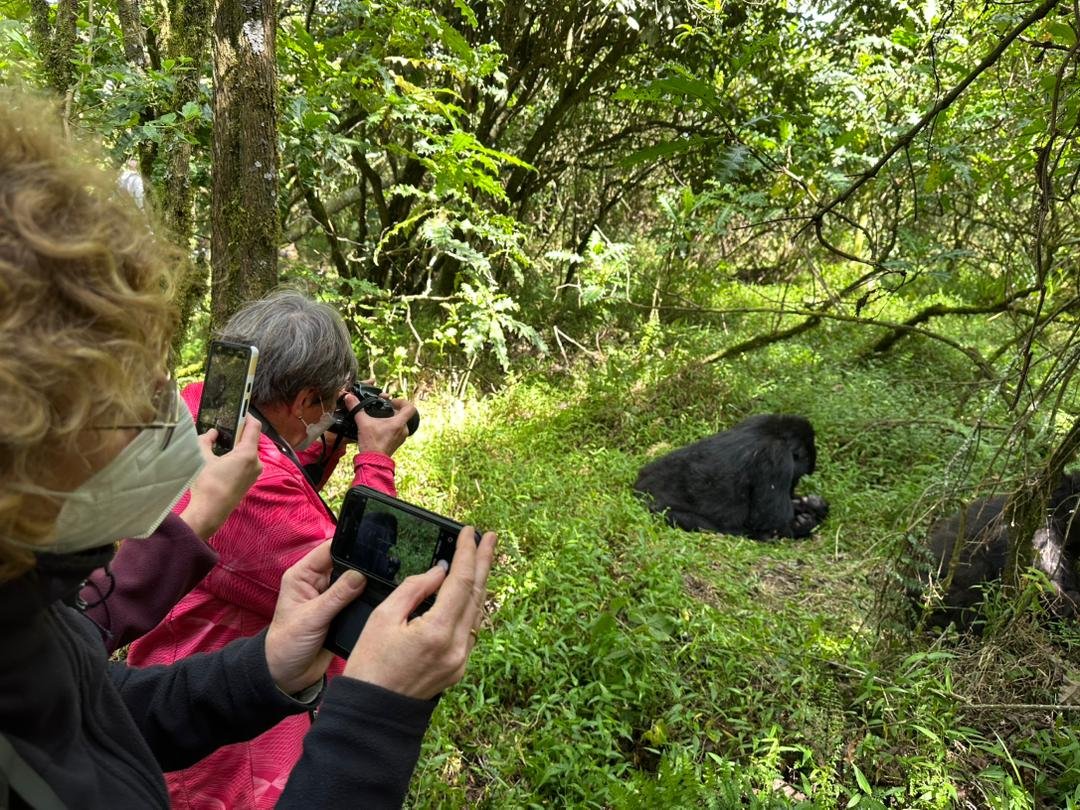
5-Day Uganda Gorilla and Chimpanzee Safari
This itinerary can be combined with a Rwanda extension or a wildlife-focused add-on through Queen Elizabeth National Park — browse our Uganda & Rwanda Safaris and Primate Safaris collections for ideas.
Tour Details →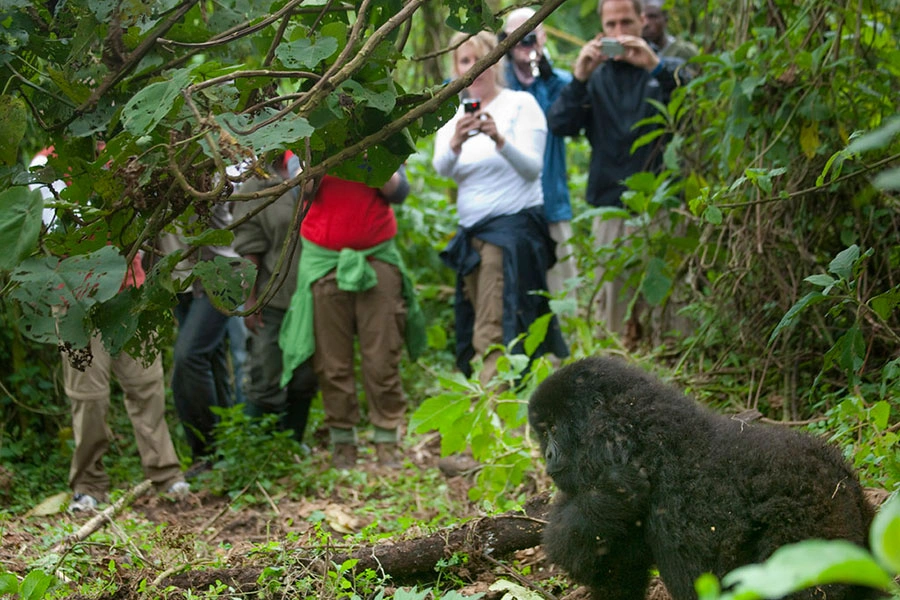
5 Days Rwanda Wildlife and Gorillas
This 5-day itinerary brings together Rwanda’s two flagship wildlife experiences: open savannah game drives and a boat safari in Akagera National Park, followed by a face-to-face encounters
Tour Details →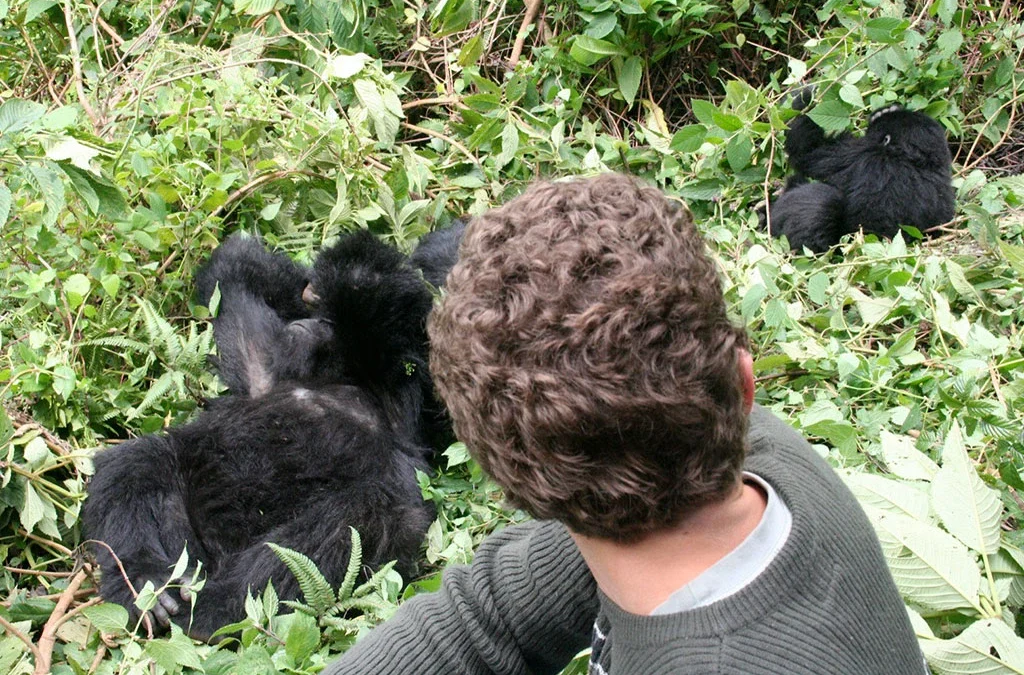
3 Days Uganda Gorilla Safari
For travelers who arrive in Entebbe with a tight schedule and a clear ambition, a 3-day gorilla safari to Bwindi Impenetrable Forest National Park is the most focused and rewarding short trip the country has to offer.
Tour Details →