- LET'S PLAN YOUR SAFARI
- +256 200 921 002
- +256 793 194 703
- info@pickandtransfersafaris.com

Gorilla Safari FAQs
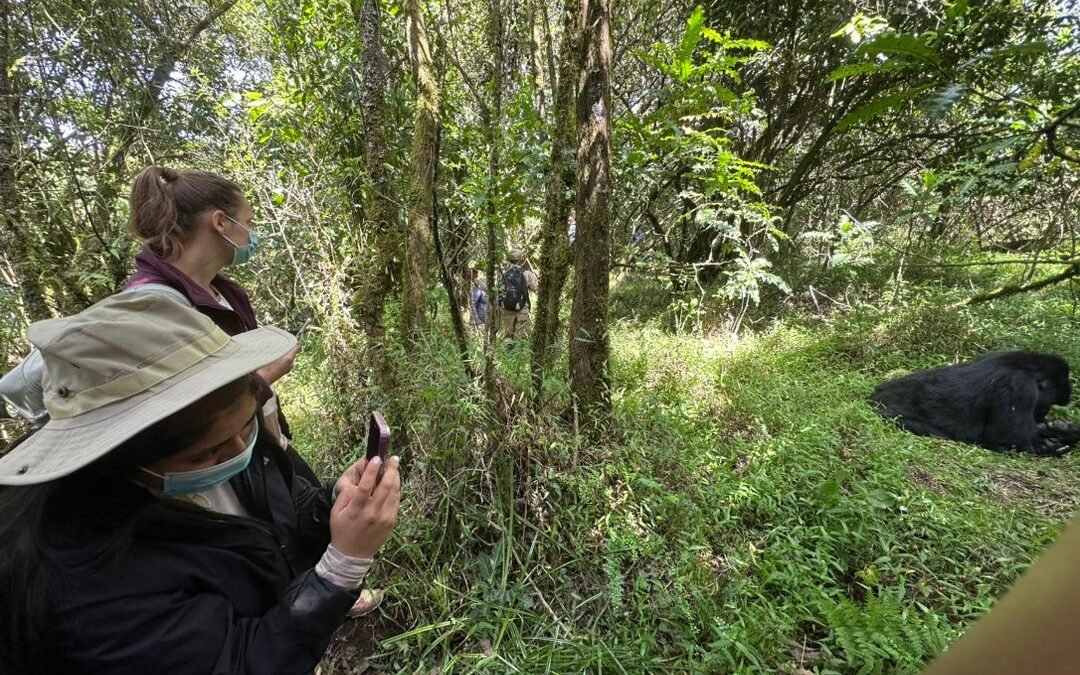
Gorilla Safari FAQs. If you are dreaming of standing a few meters from a wild mountain gorilla in the misty forests of East Africa, you probably have a long list of questions. How much does a gorilla permit cost? Which is better, Uganda or Rwanda? How fit do you need to be, and what should you pack? At Pick and Transfer Safaris, we answer these questions from clients every single day, so we have put together this complete gorilla safari FAQ to cover everything you need to know before booking your gorilla trekking safari in Bwindi Impenetrable Forest, Mgahinga Gorilla National Park, or Rwanda’s Volcanoes National Park. Whether this is your first African safari or you have trekked before and want to plan a habituation experience, this guide is written to give you clear, practical, and up-to-date answers for 2026, covering everything from permit prices and best travel seasons to fitness levels, packing lists, border crossings, and how to combine gorillas with the rest of Uganda and Rwanda’s wildlife. Read it end to end before you book, or use the quick links below to jump straight to the section you need.
The first Gorilla Safari FAQs is what exactly is a gorilla safari?
A gorilla safari, often called gorilla trekking, is a guided hike through montane rainforest in search of a habituated family of endangered mountain gorillas. Once your guides and trackers locate the family, you spend a strictly limited hour observing them feed, play, and interact in their natural environment. It is widely regarded as one of the most profound wildlife experiences on the planet, and it is the centrepiece of most Uganda and Rwanda gorilla tours. Unlike a game drive in an open vehicle, gorilla trekking is done entirely on foot, which is part of what makes the encounter feel so personal and unforgettable.
Second of Gorilla Safari FAQs is what is the difference between gorilla trekking and gorilla habituation?
Standard gorilla trekking gives you a strict one hour with a fully habituated gorilla family and costs less than the habituation experience. Gorilla habituation, on the other hand, allows you to join researchers and trackers for up to four hours with a family that is still being acclimatized to human presence, offering a deeper, more research-focused encounter with far fewer visitors per group. You can read a full breakdown of the two options on our page comparing gorilla habituation versus gorilla trekking, and see what a real day looks like in our gorilla habituation experience in Rushaga guide. If you want to build a full itinerary around it, our 3-day gorilla habituation safari itinerary is a great starting point, and Kenlink Tours’ overview of Uganda and Rwanda gorilla safaris is another useful comparison if you want a second opinion before deciding.
Where can I see mountain gorillas in the wild?
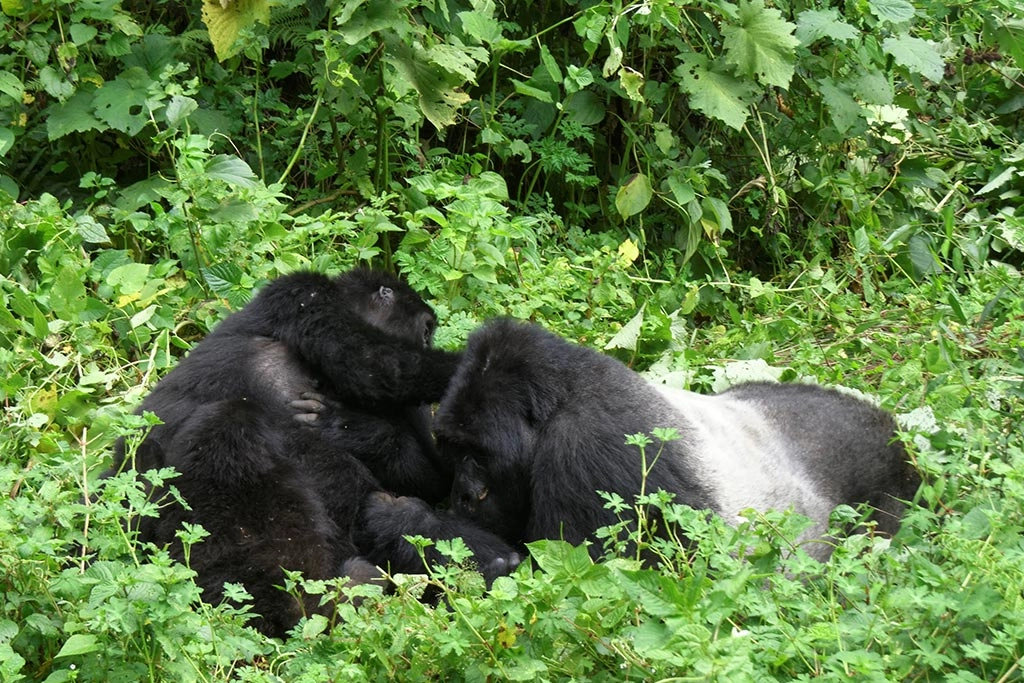
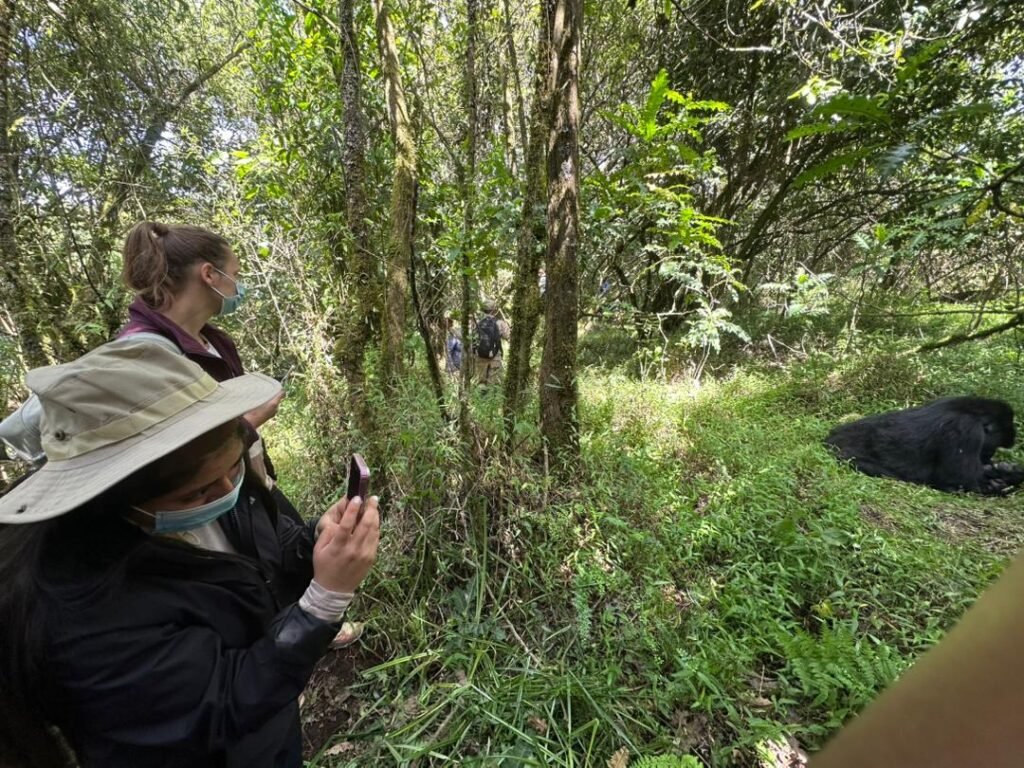
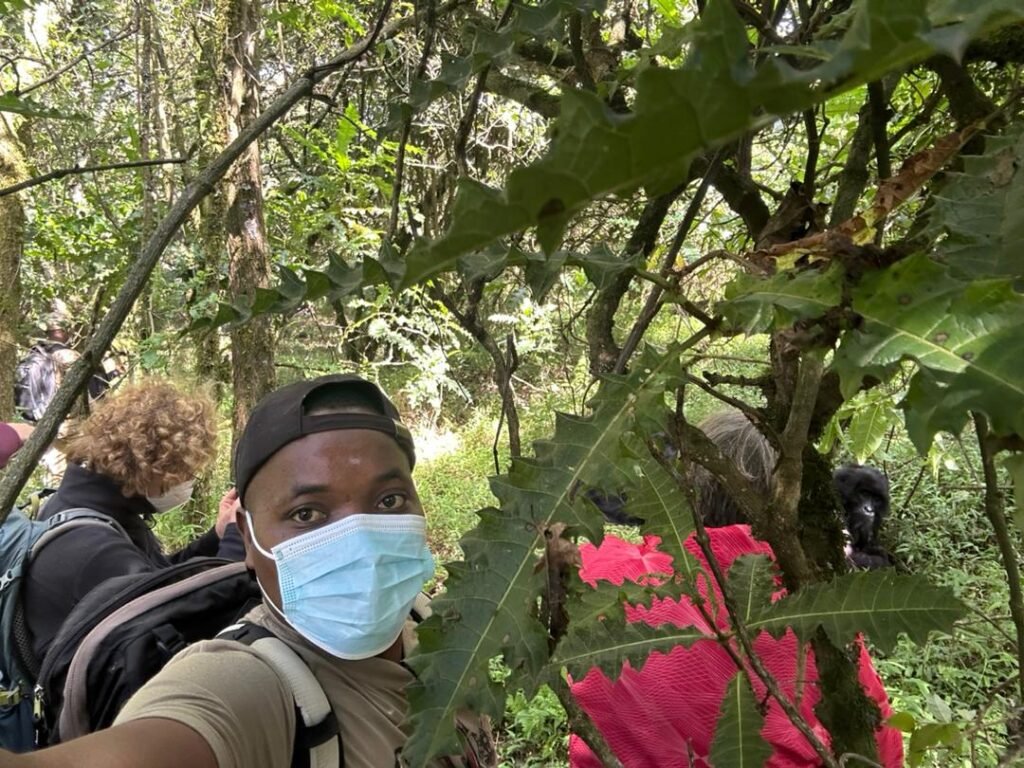
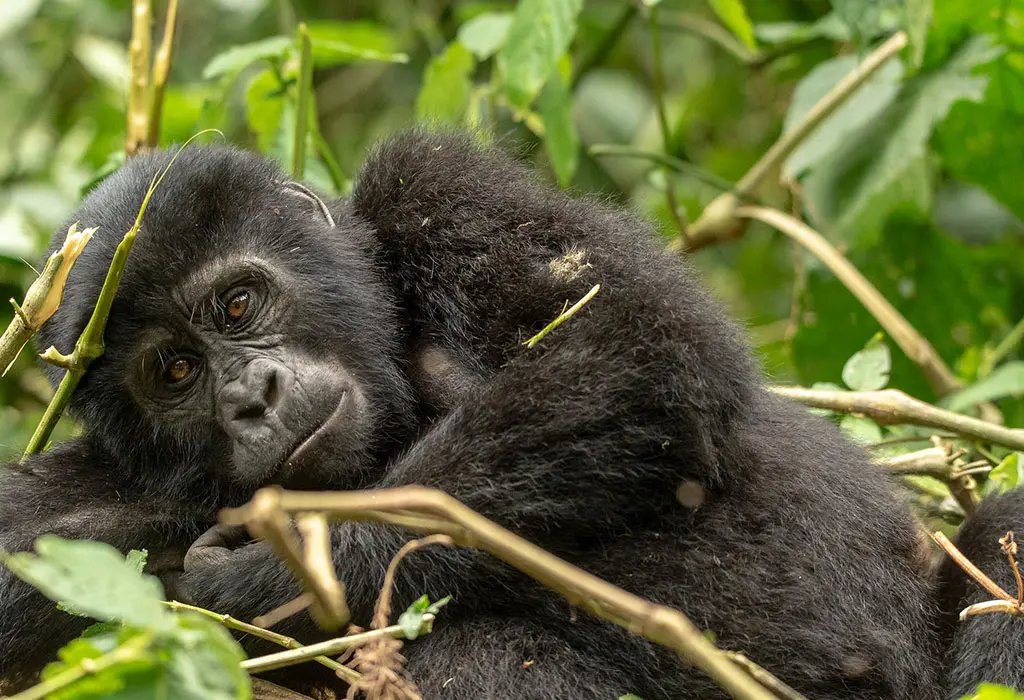
Mountain gorillas survive in only two isolated ecosystems on earth: the Virunga Massif, shared by Rwanda, Uganda, and the Democratic Republic of Congo, and the Bwindi Impenetrable Forest in southwestern Uganda. In practice, this means three countries offer permits: Uganda (Bwindi and Mgahinga), Rwanda (Volcanoes National Park), and DR Congo (Virunga National Park). Most travellers choose Uganda or Rwanda because of easier logistics, more stable travel conditions, and a wider range of lodges. Our Bwindi Impenetrable Forest National Park and Volcanoes National Park destination guides break down exactly what each park offers.
Which country is best for gorilla trekking: Uganda, Rwanda, or Congo?
There is no single right answer for Gorilla Safari FAQs; it depends on your budget, travel style, and how much time you have. Uganda offers the best value, the largest number of habituated gorilla families, and pairs naturally with wildlife safaris in Queen Elizabeth National Park and Murchison Falls National Park. Rwanda offers the fastest, most convenient access from Kigali International Airport and excellent infrastructure around Volcanoes National Park. DR Congo is the most affordable on paper but comes with more variable security and travel conditions. Many of our clients solve this dilemma by flying into Kigali and trekking gorillas in Uganda the same week, an approach detailed in Kenlink Tours’ guide to starting a trip from Rwanda to Uganda.
Is gorilla trekking worth the money?
For the overwhelming majority of travellers, yes. Gorilla trekking is expensive relative to other safari activities, but the experience is tightly regulated, deeply conservation-funded, and genuinely once-in-a-lifetime. Permit revenue directly funds anti-poaching patrols, veterinary care, and community development around the parks, which is part of why the mountain gorilla is one of the few great ape populations that has grown in recent decades rather than declined. If you are still weighing the decision, our Kigali to Bwindi gorilla trek cost breakdown shows exactly where your money goes.
How much does a gorilla trekking permit cost in 2026?
Permit prices vary significantly by country. In Uganda, a standard gorilla trekking permit costs US$800 per person, issued by the Uganda Wildlife Authority. In Rwanda, a permit costs US$1,500 per person through the Rwanda Development Board. In DR Congo, permits are considerably cheaper, generally around US$400 per person, through Virunga National Park. These are government-set prices and are the same whichever tour operator you book through, so the real differentiator between operators is the quality of guiding, transport, and accommodation built around the permit.
What does the gorilla permit fee actually include?
Your permit fee covers park entrance for the day, an armed ranger escort, professional trackers who locate the gorilla family before your group arrives, a guide who leads your group during the hike, and your one hour (or up to four hours for habituation) with the gorillas. It does not include transport to the park, accommodation, meals, porter fees, or tips. This is why booking through an established operator like Pick and Transfer Safaris is worthwhile: your permit, transport, and lodging are coordinated as one seamless itinerary rather than several separate bookings.
Is Uganda or Rwanda cheaper for a full gorilla trekking trip?
Uganda is almost always cheaper overall. Beyond the lower permit price, accommodation and ground transport in Uganda tend to cost less than the equivalent standard in Rwanda, where lodges around Volcanoes National Park cater heavily to a luxury market. A well-planned budget option is a short cross-border trip, such as our one-day Uganda gorilla safari starting from Kigali, which lets you fly into Rwanda but trek at Uganda’s lower permit price. For comparison, Kenlink Tours also runs a similarly structured 2-day Uganda gorilla safari from Kigali package worth reviewing while you shop around.
How do I book a gorilla trekking permit?
You can technically buy a permit directly from the Uganda Wildlife Authority or the Rwanda Development Board, but the process involves navigating government booking portals, confirming availability for specific dates and gorilla families, and arranging your own transport and accommodation around it. The far simpler route, and the one we recommend to nearly all our clients, is to let a licensed tour operator secure the permit as part of a full itinerary. We handle the paperwork, payment, and logistics for every gorilla safari package we sell, so all you need to bring is your passport and yellow fever certificate.
Can I get a discount on gorilla permits?
Occasionally. Rwanda offers a well-known low-season discount of 30 percent on gorilla permits between November and mid-May, provided you also spend at least two nights in another Rwandan national park such as Akagera National Park or Nyungwe Forest National Park. Uganda occasionally runs promotional pricing in the low season too, though this is less predictable. East African citizens and foreign residents also pay significantly reduced rates in both countries. Ask us directly and we will tell you if a current discount applies to your travel dates.
How far in advance should I book my gorilla permit?
For the peak travel months of June to September and December to February, we recommend booking three to six months ahead, since only a limited number of permits are issued per gorilla family per day and popular dates sell out quickly. That said, cancellations do happen, and if your travel dates are flexible we can sometimes secure a permit at short notice. Our last-minute gorilla trek from Kigali page explains how this works if you are planning a spontaneous trip.
What is the gorilla habituation permit and how much does it cost?
The gorilla habituation permit, available only in Uganda’s Rushaga sector of Bwindi, costs US$1,500 per person and gives you up to four hours with a semi-habituated gorilla family alongside researchers and trackers, compared to the standard one-hour visit. Only four visitors are allowed per habituation session, making it a far more exclusive and immersive experience. If this appeals to you, our team can build a full itinerary around it starting with our dedicated gorilla habituation experience in Rushaga guide.
When is the best time of year to go gorilla trekking?
Gorilla trekking happens year-round because gorillas do not migrate, but trail conditions vary a great deal with rainfall. The two dry seasons, June to September and December to February, offer the firmest trails and the most comfortable hiking, which is why they are also the busiest and most expensive months to book. The wetter months of March to May and October to November bring muddier, more physically demanding trails, but also thinner crowds, lush scenery, and sometimes discounted permits in Rwanda. Whichever season you choose, book your gorilla trekking dates well ahead, since permit numbers are capped daily regardless of weather.
How many days do I need for a gorilla safari?
A dedicated gorilla trek alone can be done in as little as one day if you are starting from Kigali, as shown in our 1-day Uganda gorilla safari from Kigali. Most travellers, however, prefer at least two to three days to allow for travel time, an overnight near the park, the trek itself, and a buffer day in case of delays. Our 2-day Uganda gorilla tour and 3-day Uganda gorilla safari from Rwanda are both popular for exactly this reason. If you want to combine gorillas with other wildlife, five days or more gives you a far richer trip.
Can I combine gorilla trekking with other safari activities?
Absolutely, and we would actively encourage it. Gorilla trekking pairs beautifully with chimpanzee tracking, classic game drives, and cultural visits. Popular combinations include our 5-day Uganda gorilla and chimps safari from Rwanda, the 5-day Uganda gorilla and chimpanzee safari, and for those with more time, our 10-day Uganda primates and wildlife itinerary, which adds Queen Elizabeth and Murchison Falls national parks to the mix. Kenlink Tours’ 5-day Volcanoes gorillas and Akagera wildlife safari is a good example of how a similar combination looks on the Rwanda side.
Do I need a visa to trek gorillas in Uganda or Rwanda?
Most nationalities need a visa for both Uganda and Rwanda, although both countries offer straightforward e-visas that can be processed online before you travel. A convenient option for many travellers is the East Africa Tourist Visa, which allows a single visa to cover travel between Uganda, Rwanda, and Kenya. Requirements do change from time to time, so always check current rules before booking; our visa guide for crossing from Rwanda to Uganda is kept updated with the latest information, and Kenlink Tours’ overview of Uganda safaris also touches on entry requirements for first-time visitors.
Can I cross the border between Rwanda and Uganda for gorilla trekking?
Yes, and this is actually one of the most popular ways to trek gorillas affordably. Many travellers fly into Kigali, Rwanda, then cross overland into southwestern Uganda to trek in Bwindi at Uganda’s lower permit price. The most common route uses the Cyanika border post, which is close to both Kigali and Bwindi. We cover this in detail in our guide on whether you can go to Bwindi through the Cyanika border from Kigali, and Kenlink Tours’ page on starting a trip from Rwanda to Uganda is a helpful second reference.
How long does it take to drive from Kigali to Bwindi?
The drive from Kigali to Bwindi Impenetrable Forest typically takes between four and five hours, depending on the exact sector you are heading to and road conditions at the border. Travelling to the Rushaga or Nkuringo sectors in the south of Bwindi is generally quicker from Kigali than reaching the Buhoma sector in the north. For a precise breakdown by route and sector, see our detailed guide on how many hours it takes to drive from Kigali to Bwindi, plus our sector-specific guides for Kigali to Nkuringo gorilla trekking and Kigali to Rushaga gorilla trekking.
Which gorilla trekking sector should I choose in Bwindi?
Bwindi Impenetrable Forest is divided into four trekking sectors: Buhoma, Ruhija, Rushaga, and Nkuringo. Rushaga has the most habituated families and is also the only sector offering gorilla habituation permits, making it a favourite for travellers coming from Kigali via our Kigali to Rushaga gorilla trek route. Buhoma is the most established sector with the widest choice of lodges, while Nkuringo and Ruhija offer more remote, less crowded experiences with steeper terrain. Your choice usually comes down to which side of the forest is closest to your entry point and how physically demanding a hike you want.
Where should I stay near Bwindi or Volcanoes National Park?
Accommodation near both parks ranges from simple budget guesthouses to luxury lodges perched on the forest edge, and the right choice depends on your budget and travel style. We match accommodation to your itinerary automatically when you book any of our gorilla safari packages, whether that is a short Uganda-only trip or a longer Rwanda gorilla tracking and cultural tour. If you are also passing through the capital, our Kigali city guide lists good pre- and post-trek options.
What actually happens during a gorilla trek?
Your day starts early with registration and a briefing at the park headquarters around 7:00 am, where rangers organise visitors into groups of a maximum of eight people per gorilla family and explain the rules for the day. You then set off into the forest with an armed ranger, a guide, and trackers who have usually already located the gorilla family’s approximate position that morning. Once you reach the gorillas, you leave your bags and walking sticks a short distance away and spend exactly one hour observing them, before returning to the trailhead and receiving a certificate confirming your trek.
How long does the actual trek take?
This is one of the most common questions we get, and the honest answer is that it varies enormously. Some gorilla families are found within thirty minutes to an hour of easy walking, while others require a full day’s hike of six to eight hours through steep, dense forest. On average, most groups spend between two and four hours walking each way. Because trek length depends on where the gorilla family happens to be that day, no operator, including us, can guarantee an exact duration in advance.
How fit do I need to be for gorilla trekking?
You do not need to be an elite athlete, but a reasonable level of fitness makes the day far more enjoyable, since trails are often steep, muddy, and at altitude. If you can comfortably walk for two to three hours on uneven ground, you will manage most treks without difficulty. For travellers concerned about fitness, hiring a porter is strongly recommended, and in some sectors a sedan chair carried by a team of porters is available for travellers with limited mobility. Our guides always set a pace suited to the slowest member of the group, so nobody is left behind.
What should I pack for gorilla trekking?
Pack sturdy, ankle-supporting waterproof hiking boots, gardening gloves for gripping vegetation, a long-sleeved shirt and trousers in neutral colours, a rain jacket, a wide-brimmed hat, insect repellent, sun protection, and plenty of drinking water. A daypack, energy snacks, and a walking stick, usually provided free at the trailhead, round out the essentials. Binoculars and a camera with a fully charged battery are worth bringing too, though flash photography is not permitted near the gorillas. We send every client a full packing checklist tailored to their exact trekking sector once their gorilla safari is confirmed.
What are the rules during gorilla trekking?
Park authorities enforce a strict set of rules to protect both visitors and gorillas: you must stay at least seven metres from the gorillas at all times, keep your voice low, avoid direct eye contact with a silverback, never eat or drink near the family, and turn away and cover your mouth if you need to cough or sneeze, since gorillas can catch human respiratory illnesses. Visits are also limited to one hour, and children under the minimum age are not permitted on the trek. Anyone showing signs of a cold or flu is asked not to trek that day, both for the visitor’s safety and the gorillas’ health.
Can I take photos and videos of the gorillas?
Yes, photography is one of the highlights of the experience, and most visitors come away with extraordinary images. The only restriction is that flash photography is strictly prohibited, since sudden bright light can startle or agitate the gorillas. We recommend adjusting your camera’s ISO settings in advance, since the forest canopy filters a lot of natural light, and bringing spare batteries, as cold, humid mornings can drain them faster than usual.
What happens if I don’t see gorillas on my trek?
Sightings are extremely reliable, with success rates above 95 percent in both Uganda and Rwanda, because trackers monitor each habituated family’s location daily before visitors even arrive. In the rare event that a group does not find its assigned family, Uganda Wildlife Authority policy allows for a complimentary re-trek on a different day, subject to availability, though this is uncommon in practice. This is another reason we recommend building at least one buffer day into your gorilla safari itinerary.
Should I hire a porter for the trek?
We strongly recommend it, even for fit travellers. Porters are local community members trained to help carry your daypack, offer a steadying hand on steep or slippery sections, and pull you up inclines when needed. Hiring a porter typically costs a modest daily fee, which goes directly to the individual and their family, making it one of the most meaningful ways to support the communities living alongside the park. It is a small cost that noticeably improves comfort and safety on the trail.
How much should I budget for a full gorilla safari trip?
Beyond the permit itself, budget for ground transport, accommodation, meals not included in your package, porter fees, tips for guides and rangers, and any visa costs. A short two- or three-day Uganda gorilla trip booked with a mid-range lodge typically runs a few hundred dollars per person per day on top of the permit, while a Rwanda-based trip staying at the luxury lodges around Volcanoes National Park can run considerably higher. Ground transport is one of the biggest variables, so it is worth comparing a few operators; Kenlink Tours’ car hire page and its list of Uganda safari companies are both useful if you want a sense of typical market rates before you book with us.
What currency should I bring, and is tipping expected?
US dollars are the most widely accepted currency for permits, lodges, and larger payments in both Uganda and Rwanda, though local shillings and francs are useful for small purchases and markets. Bring dollar bills printed after 2009, in good condition, since older or damaged notes are frequently refused. Tipping is expected but not mandatory: a common guideline is US$10 to $20 per day for your safari guide, US$10 to $15 per porter, and a smaller amount for the trekking rangers, though you should tip according to the service you received and your own budget.
How many people are in a gorilla trekking group?
Park authorities cap each habituated gorilla family at a maximum of eight visitors per day, a rule designed to limit stress on the gorillas and reduce disease transmission risk. Gorilla habituation permits are even more exclusive, limited to just four visitors per session. This means your actual trekking group, including your ranger guide and any accompanying trackers, will always feel intimate, regardless of how many total visitors are in the park that day across different families.
Can I go gorilla trekking as a solo traveller?
Yes, solo travellers are welcome and gorilla trekking is one of the more solo-friendly safari activities, since you are automatically grouped with other visitors assigned to the same gorilla family for the day. Many of our clients travel alone and simply join a shared itinerary, which also tends to be more affordable than a fully private departure. If you would prefer complete flexibility and your own vehicle and guide, our private gorilla trek from Kigali option is built exactly for that, and Kenlink Tours’ 3-day Bwindi gorilla safari from Kigali is a comparable shared-departure option worth reviewing.
What is the minimum age for gorilla trekking?
The minimum age for gorilla trekking is 15 years old, a rule enforced consistently across Uganda, Rwanda, and DR Congo. This age limit exists because gorillas are highly susceptible to human respiratory diseases, and young children are considered more likely to make sudden noises or movements that could disturb the family or compromise everyone’s safety on a physically demanding forest trail. There is no upper age limit, provided you are reasonably fit or willing to use a porter or sedan chair.
Can children or elderly travellers go gorilla trekking?
Children under 15 cannot trek gorillas, but they are welcome on most other safari activities, including game drives, guided nature walks, and boat cruises, so a family trip does not need to leave anyone out. If you are travelling with younger children, we can arrange a babysitting service or an alternative activity, such as a visit to the Batwa community or a nature walk, while the rest of the family treks. Elderly travellers, meanwhile, trek regularly and successfully with the help of a porter or the sedan chair service available in some sectors.
Is gorilla trekking safe?
Gorilla trekking is very safe when done through a licensed operator and reputable park authority, both of which enforce strict guiding, ranger escorts, and safety protocols. Habituated gorilla families are calm around visitors who follow the rules, and serious incidents are extremely rare. The greater practical risks are the physical demands of the terrain, such as slipping on muddy trails, which is why fitness preparation, proper footwear, and a porter all matter more than any risk from the gorillas themselves.
What health precautions or vaccinations do I need?
A yellow fever vaccination certificate is mandatory for entry into both Uganda and Rwanda. We also recommend being up to date on routine vaccinations, taking malaria prophylaxis after consulting your doctor, and carrying basic travel insurance that covers medical evacuation. Because gorillas can contract human illnesses, anyone with a cold, flu, or other contagious symptoms on the day of the trek will be asked to sit out, so travel insurance that allows date changes is a smart safeguard.
What is the weather like, and how cold does it get on the trek?
Both Bwindi and Volcanoes National Park sit at high altitude, generally between 1,400 and 2,600 metres above sea level, so mornings can be surprisingly cool and misty even though you are close to the equator. Expect temperatures around 10 to 15 degrees Celsius at the start of the trek, warming into the low twenties by midday as you climb and the sun breaks through the canopy. Rain is possible at any time of year in this rainforest environment, which is why a proper rain jacket and waterproof boots matter more than a warm jacket alone. Layering is the simplest strategy: start in a light jacket you can remove as you warm up, and keep a rain shell in your daypack regardless of season or forecast.
Can I also see chimpanzees or golden monkeys on the same trip?
Yes, and many of our most popular itineraries do exactly this. Kibale Forest National Park in Uganda is considered the chimpanzee tracking capital of East Africa, easily combined with a gorilla trek through packages like our 3-day chimpanzee tour in Uganda. In Rwanda, golden monkey tracking in Volcanoes National Park makes an excellent half-day addition to a gorilla permit, and our 2-day Nyungwe chimps tracking trip covers the chimpanzee side in the south. Kenlink Tours’ 4-day Rwanda-Uganda golden monkey and gorilla trekking package is a useful reference if you want to see how a combined itinerary is typically structured.
What other wildlife can I see in Uganda and Rwanda?
In addition to primate experiences, both Rwanda and Uganda are renowned for their diverse wildlife offerings. Uganda’s Queen Elizabeth National Park and Murchison Falls National Park provide opportunities to observe iconic species such as lions, elephants, and hippos, including the unique tree-climbing lions of Ishasha. Meanwhile, Rwanda’s Akagera National Park boasts a revitalized Big Five population, featuring reintroduced lions and rhinos. For avian enthusiasts, Nyungwe Forest and Mgahinga Gorilla National Park abound with rare montane bird species, enhancing the region’s appeal for wildlife enthusiasts.
Is gorilla trekking ethical, and how does it support conservation?
Gorilla tourism is widely credited by conservationists as one of the reasons mountain gorillas are among the only great ape populations increasing in number, after nearly going extinct in the twentieth century. Permit revenue funds ranger patrols, veterinary monitoring, and a formal revenue-sharing programme that channels a percentage of park income directly into surrounding communities, which reduces poaching and habitat encroachment by giving local people a direct economic stake in the gorillas’ survival. Strict visitor rules, including the seven-metre distance and one-hour limit, are designed specifically to minimise disease transmission and behavioural disruption, keeping the experience sustainable for future generations.
Why book my gorilla safari with Pick and Transfer Safaris?
We are a Uganda and Rwanda based safari operator specialising in gorilla trekking, and we handle every part of the process, from securing your permit and arranging cross-border transport to matching you with accommodation that fits your budget. Because we operate directly on the ground near Bwindi and the Rwandan border, we can offer flexible, well-priced itineraries ranging from a fast one-day gorilla safari from Kigali to comprehensive extended safaris covering multiple parks and countries. You can read more about our team and experience on our about us page.
What if I am travelling from the United States or another far destination?
International travellers, particularly from the United States, Canada, Europe, and Australia, make up the majority of our gorilla trekking clients, and we tailor logistics specifically around long-haul arrivals. Our gorilla trek from Kigali for Americans guide covers flight connections, time zone adjustment, and recommended arrival buffers so that jet lag does not affect your trekking day. We also offer private, fully customised departures rather than fixed group dates, detailed on our private gorilla trek from Kigali page.
How do I actually book my gorilla safari trip?
Booking is straightforward: contact our team through the Pick and Transfer Safaris contact page with your preferred travel dates, group size, and budget, and we will recommend a suitable itinerary, from a compact 2-day Volcanoes gorilla trek from Kigali to a longer 10-day Uganda primates and wildlife adventure. Once you confirm, we secure your permit immediately, since availability is limited, then handle transport, accommodation, and a full pre-departure information pack. If you would like to compare a broader range of Uganda and Rwanda itineraries before deciding, Kenlink Tours’ Uganda safaris and Rwanda safaris pages are also worth browsing.
Ready to start planning? Get in touch with our team through the Pick and Transfer Safaris contact page and we will build a gorilla safari itinerary around your dates, budget, and bucket list.
Final thoughts on planning your gorilla safari
Gorilla trekking rewards travellers who plan ahead, book their permits early, and choose an operator who understands both the practical logistics and the conservation stakes involved. Whether you decide on a lightning-fast one-day trek from Kigali, a relaxed week combining gorillas with classic game drives, or the more immersive gorilla habituation experience in Rushaga, the fundamentals stay the same: secure your permit, pack properly, arrive fit and rested, and follow your rangers’ guidance in the forest. If any question in this guide is not fully answered, or your situation is unique, reach out directly and our team at Pick and Transfer Safaris will walk you through it personally.
Every year, thousands of travellers make the journey into the forests of Bwindi and the Virunga volcanoes for the same reason: nothing else compares to sitting quietly a few meters from a wild silverback and his family, watching them go about an ordinary day completely unbothered by your presence. It is physically demanding, sometimes muddy, occasionally expensive, and consistently described by past clients as one of the most moving things they have ever done. Our role is simply to remove the friction from that experience, so that by the time you are standing at the edge of the forest with your ranger, the only thing left to think about is the moment you are about to have. Browse our full range of gorilla safari itineraries, explore our destinations across Uganda and Rwanda, or simply send us your travel dates and let us build something around them.
Permit prices, visa requirements, and park regulations are updated periodically by the Uganda Wildlife Authority, the Rwanda Development Board, and Virunga National Park authorities. Figures in this guide reflect 2026 rates at time of publication; always confirm current pricing and rules when booking.