- LET'S PLAN YOUR SAFARI
- +256 200 921 002
- +256 793 194 703
- info@pickandtransfersafaris.com

Gorilla Trekking and Lake Bunyonyi Tour
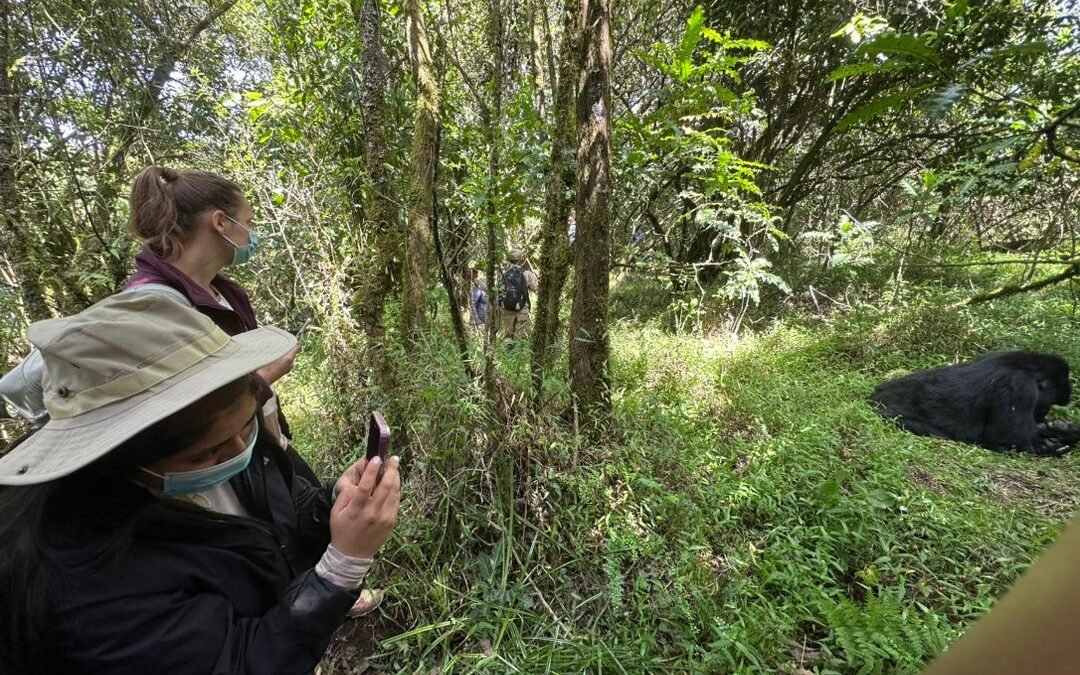
The Gorilla Trekking and Lake Bunyonyi Tour combines an exhilarating morning of tracking mountain gorillas in the Bwindi rainforest with a serene afternoon paddling a dugout canoe on Lake Bunyonyi’s picturesque waters. Offered by Pick and Transfer Safaris, this popular itinerary provides a perfect balance of adventure and tranquility, with the lake conveniently located near major Bwindi trailheads. This guide includes essential information for planning the trip, such as distances, sample itineraries, water activities, accommodation options, costs, and booking details from Kabale, Kisoro, or Kigali.
How is this different from a standard gorilla-only safari?
A standard gorilla-only safari focuses entirely on the forest: you fly or drive in, trek, and head straight back out, often within a single tightly packed day or two. A Gorilla Trekking and Lake Bunyonyi tour deliberately builds in a second, contrasting chapter, using the lake’s proximity to turn what would otherwise be a purely adrenaline-driven trip into one with a genuine change of pace. The permit, trekking logistics, and sector choice are identical to any other gorilla safari we run; the only real difference is where you spend your evenings afterward.
Why combine Kigali to Bwindi Gorilla Trek Cost
Gorilla trekking is physically and emotionally intense: an early start, a demanding hike through steep rainforest, and an unforgettable but adrenaline-heavy hour with a wild gorilla family. Lake Bunyonyi offers the perfect counterbalance immediately afterward, a calm, malaria-free highland lake with no hippos or crocodiles, where you can swim, paddle, and simply decompress. Because the lake sits so close to Bwindi Impenetrable Forest, adding it to your gorilla safari itinerary costs you almost nothing in extra travel time while adding a completely different kind of day to your trip. It is also why the lake earned its nickname, the “Switzerland of Africa,” a landscape of terraced hills and misty water that feels a world away from the forest you just left.
What is Lake Bunyonyi, and why is it so highly rated?
Lake Bunyonyi is a 25-kilometre-long crater lake in southwestern Uganda’s Kigezi highlands, generally regarded as the second-deepest lake in Africa after Lake Tanganyika, with sections plunging to nearly 900 metres. It is scattered with 29 islands, several of which host small eco-lodges, schools, or community projects, and its terraced hillsides are farmed in the same traditional style the Bakiga people have used for generations. Sitting at nearly 2,000 metres above sea level, it enjoys a cool, comfortable climate year-round, and its water is free of bilharzia, hippos, and crocodiles, making it one of the very few lakes in the region genuinely safe to swim in.
How far is Lake Bunyonyi from Bwindi Impenetrable Forest?
Lake Bunyonyi sits roughly 59 kilometres from the main Bwindi trailheads, a drive of about one and a half to two hours depending on which sector you trekked from and current road conditions. This makes it easily reachable as a same-day transfer after your morning trek, or as your overnight base the night before an early trekking start. Our full Bwindi Impenetrable Forest National Park destination guide covers each sector’s exact distance from the lake in more detail.
Which Bwindi sector pairs best with Lake Bunyonyi?
Rushaga and Nkuringo, both in the southern part of Bwindi, sit closest to Lake Bunyonyi and are generally the easiest sectors to combine with a lakeside stay. Ruhija, in the east, is also a reasonable option if you are approaching from Kabale. Buhoma, in the north, is the furthest from the lake and usually pairs better with other post-trek stops instead. If you are trekking in Rushaga, our guides on getting from Kigali to Rushaga for a gorilla trek and from Kigali to Rushaga gorilla trekking both cover the route in detail, while our Kigali to Nkuringo gorilla trekking guide does the same for Nkuringo.
Can I start this tour from Kabale?
Yes, and Kabale is actually the classic gateway town for this exact combination, since it sits right on the edge of Lake Bunyonyi and within one and a half to two and a half hours of every Bwindi sector. Basing yourself in Kabale means you can wake up on the lakeshore, trek gorillas for the day, and be back in time for a sunset canoe paddle. Our dedicated guide to a one-day gorilla trek starting from Kabale explains exactly how this works and already recommends extending your stay at the lake, which is precisely the itinerary this guide expands on.
Can I start this tour from Kisoro instead?
Kisoro is another excellent base, particularly if you are trekking in the Rushaga, Nkuringo, or Mgahinga areas, since it sits even closer to those trailheads than Kabale does. From Kisoro, Lake Bunyonyi is a scenic side trip of roughly an hour and a half, making it easy to add a lake day either before or after your trek. Our one-day gorilla trek starting from Kisoro town guide has full details on trailhead access from this side of the region.
Can I start this tour from Kigali, Rwanda?
Absolutely, and this is one of the most popular starting points for international travellers, since Kigali International Airport has far more direct flight connections than Uganda’s regional airstrips. From Kigali, you cross the border and drive through Kabale, passing directly by Lake Bunyonyi on your way to Bwindi, which means the lake fits naturally into your route rather than requiring a detour. Our guides on how many hours it takes to drive from Kigali to Bwindi and Kigali to Bwindi gorilla trek cost both cover this route, and if you are crossing the border yourself, check our page on whether you can go to Bwindi through the Cyanika border from Kigali and whether you need a visa to cross from Rwanda to Uganda.
Sample itinerary: 2-day gorilla trekking and Lake Bunyonyi tour
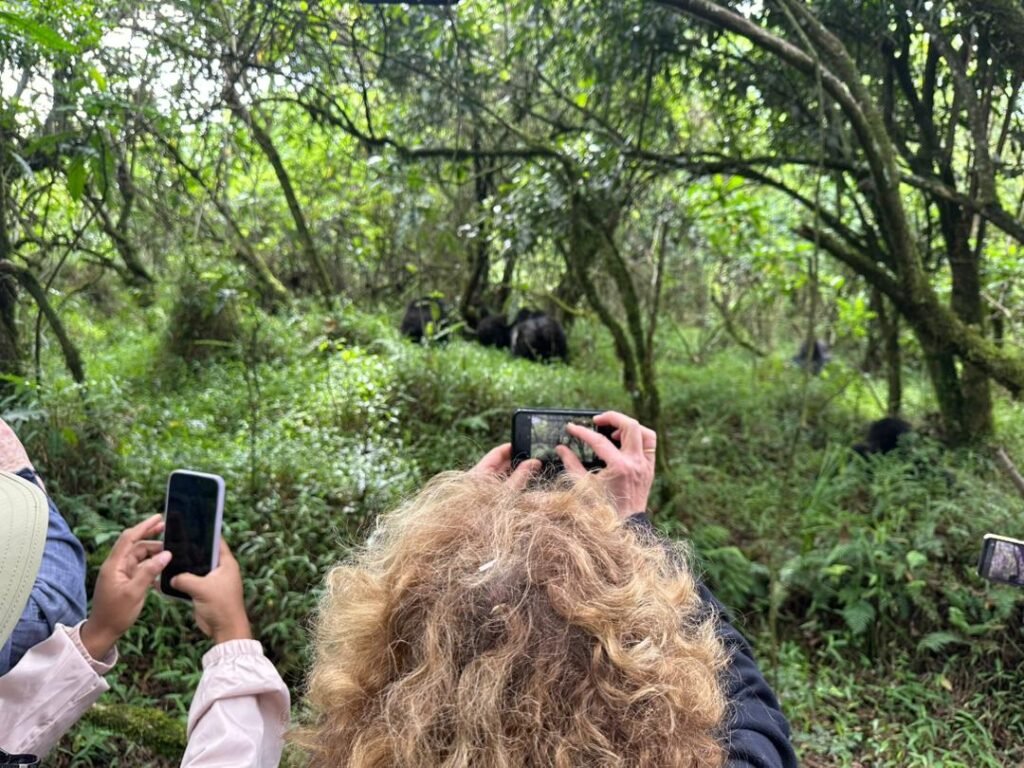
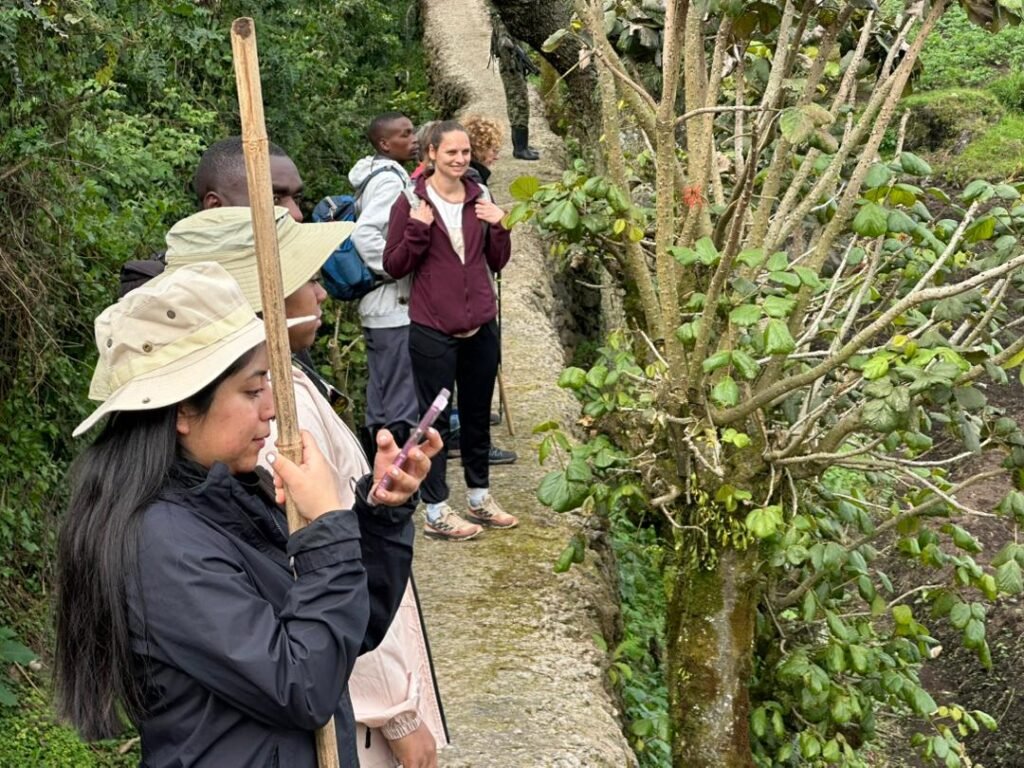
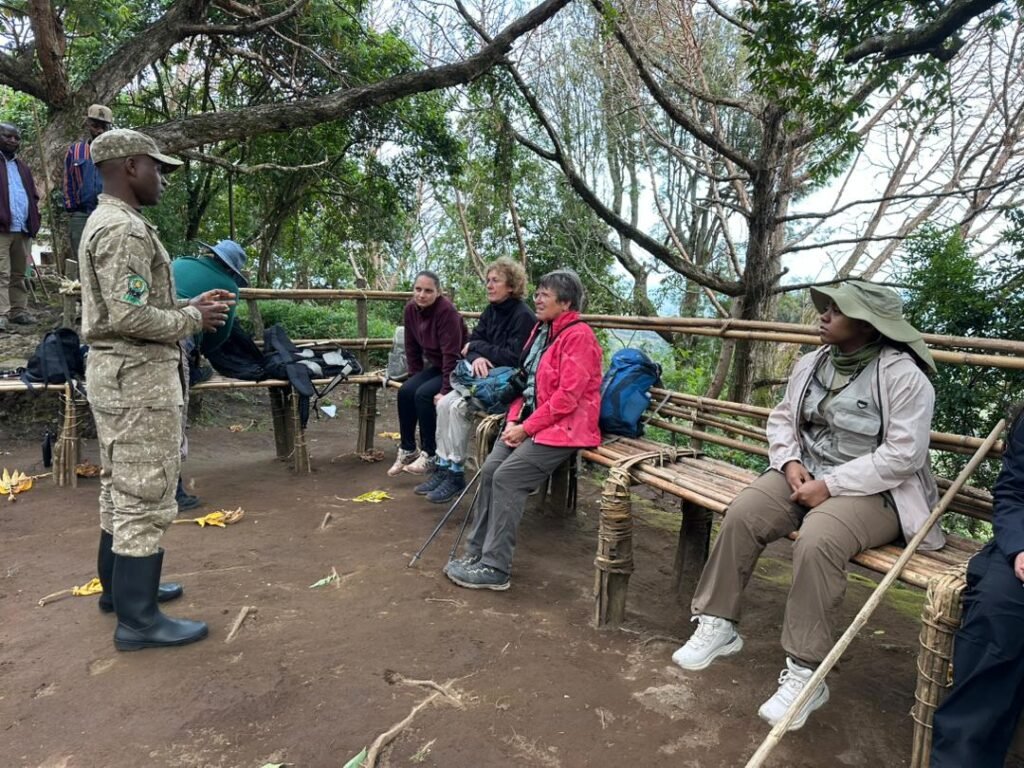
A compact two-day version works well if your schedule is tight. Day one, you travel from Kigali or Entebbe into the Bwindi region, settling into a lodge near your chosen sector by evening. Day two, you complete your gorilla trek in the morning, then transfer to Lake Bunyonyi in the afternoon for a relaxed canoe ride and dinner on the water before departing the next morning. This mirrors the structure of our 2-day Uganda gorilla tour starting from Kigali, with the lake stop added on as an easy extension.
Sample itinerary: 3-day gorilla trekking and Lake Bunyonyi tour
Three days gives the trip much more breathing room. Day one is travel and arrival near Bwindi. Day two is your gorilla trek, followed by a transfer to a lakeside lodge on Lake Bunyonyi in time for sunset. Day three is a full day at the lake, split between a dugout canoe excursion, island hopping, and a relaxed lunch on the water, before your onward transfer or flight departure. This structure closely follows our 3-day Uganda gorilla safari from Rwanda and 3-day Uganda gorilla safari packages, both of which we can extend with a Bunyonyi day at your request.
Sample itinerary: 4 to 5-day gorilla, chimpanzee, and Lake Bunyonyi adventure
If you have more time, adding chimpanzee tracking in Kibale Forest or Nyungwe makes for an outstanding primate-focused week. A typical structure pairs your Bwindi gorilla trek and Lake Bunyonyi relaxation day with a chimpanzee trek, following the same logic as our 5-day Uganda gorilla and chimpanzee safari and 3-day chimpanzee tour in Uganda. Kenlink Tours’ tour from Kigali covering Bwindi, Queen Elizabeth, Kibale, and Bunyonyi is a useful reference for how a longer multi-park itinerary around the lake can be structured, as is Kenlink Tours’ own Uganda Rwanda gorilla safaris overview if you want to compare cross-border options for a longer trip.
Sample day-by-day breakdown of the 3-day tour
To make planning easier, here is how a typical three-day Gorilla Trekking and Lake Bunyonyi tour breaks down hour by hour:
| Day | Morning | Afternoon | Evening |
|---|---|---|---|
| Day 1 | Depart Kigali or Entebbe, drive toward the Bwindi region | Scenic drive through the Kigezi highlands, arrive at your lodge near your trekking sector | Pre-trek briefing and early dinner, rest before the next day’s early start |
| Day 2 | 4:30–6:00 am pickup, park registration and briefing, gorilla trek (2–6 hours round trip) | Certificate ceremony, lunch, transfer to Lake Bunyonyi (roughly 1.5–2 hours) | Check in to your lakeside lodge, sunset canoe paddle, dinner on the water |
| Day 3 | Guided dugout canoe excursion or island-hopping visit | Swimming, relaxation, or a village and cultural walk | Departure transfer to Kigali, Entebbe, or your next destination |
This same framework simply stretches or compresses depending on whether you choose the two-day express version or a longer four to five-day itinerary that adds chimpanzee tracking or a second national park.
What is the Kigezi region, and how does Lake Bunyonyi fit into it?
Lake Bunyonyi sits at the heart of the Kigezi highlands, the same terraced, hill-covered region that also contains Bwindi, Mgahinga, and the town of Kabale, and which locals and travellers alike often call the “Switzerland of Africa” for its cool climate and folded green landscape. Understanding Kigezi as a single connected region, rather than a scattered list of separate stops, helps explain why this combined tour flows so naturally: you are never really leaving the area, just moving between its forest and its water. Kenlink Tours’ overview of tourist attractions in Kigezi is a useful companion read if you want to see the fuller list of what the region offers beyond gorillas and the lake.
Lake Bunyonyi or Lake Mutanda: which should I add to my gorilla trip?
Lake Mutanda, near Kisoro, is a smaller, quieter alternative to Lake Bunyonyi, with striking views of the Virunga volcanoes across the water and a more intimate, less-visited feel. Lake Bunyonyi, by contrast, offers a wider choice of lodges, more established activities, and easier access from Kabale, which makes it the better fit for most travellers combining a relaxed one or two-day stay with their gorilla trek. If you are trekking from Kisoro or Mgahinga specifically, ask us about swapping in Lake Mutanda instead, since the shorter transfer distance can save valuable time on a tight itinerary.
What currency should I carry and what tipping etiquette applies at the lake?
US dollars and Ugandan shillings are both usable around Lake Bunyonyi, though most lodges and canoe operators prefer shillings for small, everyday payments like a canoe guide’s tip or a craft purchase in a lakeside village. A modest tip for your canoe guide, typically a few dollars’ equivalent, is appreciated but not obligatory, and is separate from the tips you would normally give your safari driver-guide and gorilla trekking porter. Carrying a mix of small shilling notes makes these day-to-day transactions much smoother than relying solely on larger dollar bills.
What about combining this tour with the gorilla habituation experience?
If you want more than the standard one-hour gorilla visit, you can swap in the gorilla habituation experience, which allows up to four hours with a semi-habituated family in Bwindi’s Rushaga sector, conveniently one of the sectors closest to Lake Bunyonyi. Our comparison of gorilla habituation versus gorilla trekking explains the differences, and our gorilla habituation experience in Rushaga guide shows how easily a lake extension slots in afterward given the short driving distance.
What activities can you do on Lake Bunyonyi?
Lake Bunyonyi offers a genuinely wide range of activities for a single body of water: dugout canoe paddling, motorised boat cruises, island hopping, swimming, guided nature hikes through the surrounding terraced hills, birdwatching, mountain biking, and cultural visits to lakeside villages. Because the lake is calm and free of dangerous wildlife, most of these activities are relaxed and low-risk, making it an easy add-on regardless of your fitness level after a demanding gorilla trek. Kenlink Tours’ guide to tourist activities in Kabale, Uganda gives a good overview of what a typical day at the lake looks like.
What is it like to take a dugout canoe ride on Lake Bunyonyi?
The traditional wooden dugout canoe, paddled by a local guide or rented for self-paddling, is the classic way to experience Lake Bunyonyi. Gliding silently between the islands, past terraced hillsides and small fishing villages, is a completely different pace from anything else on a Uganda safari, and it is often cited by past clients as one of the most peaceful moments of their entire trip. Kenlink Tours’ page on private boat cruises in Uganda also covers motorized cruise options on the lake for travellers who prefer a shorter, guided outing over a longer paddle.
Which islands on Lake Bunyonyi are worth visiting?
Of the lake’s 29 islands, a handful stand out for visitors. Bushara Island offers walking trails and simple eco-accommodation, Njuyeera (Sharp’s Island) hosts an orphanage and school that welcomes respectful visits, and Punishment Island carries a sobering history as a site where unmarried pregnant women were historically abandoned, now a popular stop for understanding the region’s cultural past. Most lakeside lodges can arrange a half-day island-hopping route that covers two or three islands by canoe or motorboat.
Is it safe to swim in Lake Bunyonyi?
Yes, and this is actually one of the lake’s biggest draws. Unlike most East African lakes, Lake Bunyonyi has no hippos or crocodiles and is free of the bilharzia parasite, making it one of the few large lakes in the region where swimming is genuinely considered safe. Most lakeside lodges have designated swimming areas directly off their jetties, and a relaxed swim is a popular way to end a day that started with an early gorilla trekking briefing.
Is birdwatching good around Lake Bunyonyi?
Very good. The lake and its surrounding wetlands and terraced hills support well over 200 recorded bird species, including several sought-after Albertine Rift endemics that overlap with the birding you would also find around Bwindi and Mgahinga. Early morning canoe trips along the reed-lined shoreline are the best way to spot species without disturbing them, and most lodges can pair you with a local birding guide on request.
Can I visit local communities around Lake Bunyonyi?
Yes, and it is one of the more rewarding cultural add-ons in the region. Guided visits to lakeside Bakiga villages typically include a walk through terraced farmland, a demonstration of traditional basket weaving or brewing, and often a simple home-cooked meal. These visits are usually arranged directly through your lodge or guide and provide meaningful income to the local community, echoing the same conservation-through-tourism model that funds gorilla protection in Bwindi.
What is the story behind Punishment Island, and is it worth visiting?
Punishment Island is one of Lake Bunyonyi’s smallest but most talked-about landmarks, a tiny outcrop historically used to abandon unmarried women who became pregnant, a practice that ended generations ago but remains part of the region’s oral history. Most guides present the story with care and context rather than as a novelty stop, and it tends to prompt genuinely interesting conversation about how far the region’s social customs have shifted. It is a brief stop, usually folded into a longer canoe or island-hopping route, so it adds cultural depth without eating into your relaxation time on the water.
How does the altitude and climate at Lake Bunyonyi compare to Bwindi?
Both sit at high altitude in the same Kigezi highlands, so you will notice similar cool mornings and mild afternoons at each stop, though Lake Bunyonyi, at roughly 1,960 metres, sits slightly lower than the higher Bwindi ridgelines, giving it a marginally warmer, gentler climate that suits swimming and canoeing well. Evenings at both locations can get surprisingly cool for a destination on the equator, so packing a warm layer for after dark is worth doing regardless of which stop you are currently at. Because neither location experiences the intense heat associated with Uganda’s savannah parks, this tour is comfortable to undertake at almost any time of year.
How does this tour support conservation and local livelihoods?
Your gorilla permit fee is the primary funding mechanism for ranger patrols, veterinary monitoring, and community revenue-sharing around Bwindi, while your spending at Lake Bunyonyi, on canoe guides, lodge staff, village visits, and craft purchases, channels tourism income directly into a second community that depends heavily on the same visitor traffic. Choosing locally owned lodges and guided canoe operators over larger international-chain alternatives, where the choice is available, further increases how much of your spending stays within the Kigezi region itself. In this sense, the two halves of the tour reinforce the same principle from different angles: tourism done well funds both wildlife protection and the people who share that landscape.
Where should I stay near Lake Bunyonyi?
Accommodation around Lake Bunyonyi ranges from simple backpacker camps to comfortable mid-range lodges and a handful of more exclusive island retreats, most of them built directly on the water with private jetties. We match lodge selection to your budget and travel style whenever we build a gorilla safari and Lake Bunyonyi package, and Kenlink Tours’ broader look at exploring western Uganda is a useful reference point for how the lake fits into the wider region’s accommodation landscape.
Where should I stay near Bwindi before my gorilla trek?
Your pre-trek lodge should be chosen based on which sector you are trekking, since an early 6:00 to 7:00 am briefing means you want to minimise driving time on trek morning. Rushaga and Nkuringo both have lodges within a short drive of their respective trailheads, and both sectors are also the closest to Lake Bunyonyi, which is why we usually recommend them for travellers planning this particular combination. Our Bwindi destination guide lists lodge options by sector.
What is the best time of year for a gorilla trekking and Lake Bunyonyi tour?
The dry seasons, June to September and December to February, offer the firmest trekking trails and the most reliable weather for lake activities like canoeing and swimming. The wetter months of March to May and October to November bring muddier forest trails but noticeably fewer crowds and cooler, moodier scenery on the lake, which some travellers actually prefer for photography. Because Lake Bunyonyi sits at high altitude, it stays comfortably cool year-round regardless of season, so your choice of timing really comes down to how much rain you are willing to tolerate on the trek itself.
How much does a gorilla trekking and Lake Bunyonyi tour cost?
Your biggest single cost is the gorilla permit itself, US$800 per person in Uganda, on top of which you will budget for ground transport, lodge accommodation both near Bwindi and at the lake, meals, activities on the water such as a guided canoe trip, and tips for your guide, driver, and trekking porter. A two- to three-day version of this tour is one of the more affordable ways to add a genuinely different experience to a gorilla safari, since lake accommodation and activities are considerably cheaper than an extra day of wildlife-focused game driving. We build a transparent, itemised quote for every gorilla trekking package we sell, so you know exactly what is included before you book.
What’s included in a typical Gorilla Trekking and Lake Bunyonyi package?
A standard package with Pick and Transfer Safaris includes your gorilla trekking permit, private ground transport in a 4×4 safari vehicle, an English-speaking driver-guide, accommodation near Bwindi and at Lake Bunyonyi, and at least one guided activity on the lake, typically a canoe excursion or island visit. Meals are usually included at your lodges, while flights, visa fees, tips, and optional extras like a private motorboat cruise are generally quoted separately. We always confirm exact inclusions in writing before you pay a deposit.
How fit do I need to be for this combined tour?
You need reasonable fitness for the gorilla trekking portion, since Bwindi’s trails are steep and can be muddy, but the Lake Bunyonyi portion is genuinely accessible to almost anyone, since canoeing and lakeside relaxation require little physical exertion. This makes the combination well suited to mixed-ability travel groups, where some members may want a physically demanding day in the forest while others prefer a gentler pace on the water. Hiring a porter for the trek is still worth considering regardless of your fitness level.
What should I pack for this trip?
For the trekking portion, pack waterproof hiking boots, long trousers and sleeves, gardening gloves, a rain jacket, and insect repellent. For the lake portion, add swimwear, a light towel, sandals, sun protection, and a light layer for cooler evenings at altitude, since temperatures at Lake Bunyonyi can drop noticeably after sunset. A dry bag for your camera and phone is worth bringing if you plan to canoe, and binoculars are useful for both the forest and the lake’s birdlife.
Can I combine this tour with other parks, like Queen Elizabeth or chimpanzee tracking?
Yes, and many travellers do exactly this to build a longer, more varied Uganda itinerary. Queen Elizabeth National Park, with its tree-climbing lions and Kazinga Channel boat cruise, sits a reasonable drive north of Bwindi and pairs naturally with this tour, as does chimpanzee tracking in Kibale Forest. Our Queen Elizabeth National Park and Kibale Forest National Park destination guides both cover logistics for extending your trip in that direction, and Kenlink Tours’ overview of the most popular places to visit in Uganda is a helpful reference for planning a longer route.
Is this tour good for honeymooners?
It is one of our most popular honeymoon combinations, and for good reason. The gorilla trek delivers the shared adventure and adrenaline that make for a great travel story, while Lake Bunyonyi delivers exactly the kind of quiet, scenic, romantic setting couples want to unwind in afterward, particularly if you choose one of the smaller island lodges with private jetties and sunset views. We can arrange private transport and a more secluded lodge selection for couples specifically requesting a honeymoon itinerary.
Is this tour suitable for families?
It can be, with one important caveat: gorilla trekking has a strict minimum age of 15, so younger children cannot join the trek itself. Lake Bunyonyi, however, is genuinely family friendly, with safe swimming, gentle canoe rides, and relaxed island visits suited to almost any age. A common solution for families with younger children is to arrange a nature walk, cultural visit, or babysitting service near Bwindi while older family members trek, then reunite everyone at the lake for a shared day of swimming and canoeing.
Why is Uganda such a good base for this kind of combined tour?
Uganda’s geography is unusually generous for itinerary planning: within a two-hour radius of Bwindi you have mountain gorillas, a second gorilla population and golden monkeys at Mgahinga, chimpanzees in nearby forests, and a completely different lakeside landscape at Bunyonyi, all connected by manageable drive times rather than the long internal flights many other safari countries require. Kenlink Tours’ piece on why Uganda is called the Pearl of Africa captures this diversity well, and it is exactly why combined itineraries like this one have become so popular over the past decade.
Do I need a visa for this trip if I am arriving through Rwanda?
Most travellers combining Kigali arrival with a Uganda-based gorilla and Bunyonyi tour will need a Ugandan visa, and many also opt for the East Africa Tourist Visa, which covers Uganda, Rwanda, and Kenya on a single application. Requirements can change, so always verify current rules before you travel; our dedicated page on whether you need a visa to cross from Rwanda to Uganda is kept up to date with the latest information.
What souvenirs or local crafts can I buy near Lake Bunyonyi?
Lakeside villages and island communities produce a range of handmade crafts worth bringing home, including woven baskets and mats made from local papyrus and banana fiber, wood carvings, and beaded jewelry, often sold directly by the makers during a village or island visit. Buying directly from local artisans, rather than only from lodge gift shops, puts more of your money straight into the community and pairs well with a guided cultural walk. It is a fitting, low-impact way to close out a trip that began with a gorilla trekking permit fee that itself funds conservation and community programs around Bwindi.
Can I do this as a last-minute trip?
It is possible, though gorilla permits are the limiting factor rather than the lake portion, since Lake Bunyonyi has no advance booking requirements and lodges there are rarely fully booked outside peak wedding and holiday weekends. If your travel dates are flexible, our last-minute gorilla trek from Kigali page explains how we sometimes secure permits on short notice, after which the Bunyonyi extension is simple to add on.
Can I arrange a fully private version of this tour?
Yes, every gorilla trekking and Lake Bunyonyi itinerary we run can be arranged as a fully private departure, with your own vehicle, driver-guide, and flexible daily schedule rather than a fixed group date. This is a popular choice for honeymooners, families, and travellers who simply prefer not to coordinate around other guests’ pace. Our private gorilla trek from Kigali page explains how a private departure works from booking through to your return transfer.
Why book the Gorilla Trekking and Lake Bunyonyi Tour with Pick and Transfer Safaris?
We are based on the ground in southwestern Uganda, close to both Bwindi and Lake Bunyonyi, which means we plan this exact combination regularly and know which lodges, drivers, and canoe operators genuinely deliver a good experience rather than just a convenient itinerary on paper. We handle your gorilla permit, all ground transport, and lodge bookings at both stops as one coordinated package, so you are not left arranging transfers or activities yourself once you arrive. You can read more about our team and local expertise on our about us page, and browse our full range of gorilla safari itineraries for other combinations we offer.
How do I book my Gorilla Trekking and Lake Bunyonyi tour?
Reach out through our contact page with your preferred travel dates, group size, and how many days you would like to spend at the lake, and we will put together a tailored itinerary and quote. Once you confirm, we secure your gorilla permit immediately, since availability is limited, then arrange transport and accommodation for both the trekking and lake portions of your trip. If you would like to compare a broader range of Uganda itineraries before deciding, our Gorilla Safari FAQs guide answers many of the practical questions around permits, fitness, and packing in more depth, and Kenlink Tours’ Uganda safari experiences and Rwanda safaris pages are worth a look if you want a second reference point.
Ready to pair your gorilla trek with a few restful days on the water? Contact our team through the Pick and Transfer Safaris contact page and we will build a Gorilla Trekking and Lake Bunyonyi itinerary around your dates and budget.
Final thoughts on the Gorilla Trekking and Lake Bunyonyi tour
Very few add-ons pair as effortlessly with a gorilla trek as Lake Bunyonyi does. It costs little extra travel time, suits almost every fitness level and travel style, and gives your trip a second, entirely different highlight beyond the forest. Whether you choose a fast two-day version, a more relaxed three-day stay, or a longer week that folds in chimpanzee tracking and classic game viewing, the underlying logic stays the same: trek hard, then rest well on the water. If you would like help shaping the exact balance of adventure and relaxation for your trip, our team at Pick and Transfer Safaris plans this combination often and is happy to walk you through the options.
Most travellers who add Lake Bunyonyi to a gorilla trekking itinerary tell us afterward that it turned out to be one of the most memorable parts of the whole trip, not despite being the quieter half of the tour, but because of it. After the early alarm, the steep climb, and the adrenaline of standing near a wild silverback, there is real value in an afternoon with nowhere to be, a canoe paddle in your hand, and nothing more urgent on the agenda than deciding which island to visit next. That contrast, adventure followed by stillness, is what makes this particular combination stand out among the many ways to structure a Uganda safari, and it is why we keep recommending it to clients planning their first trip to this part of Africa.
If you are still deciding between this combination and a more classic wildlife-only route, remember that you do not have to choose permanently: our itineraries are flexible enough to add or drop the Lake Bunyonyi portion right up until final booking, and many clients who start out planning a gorilla-only trip end up adding a lake day once they see how little it changes the overall route. Send us your rough dates, tell us how much time you have, and we will show you exactly how the numbers and the schedule work out before you commit to anything.